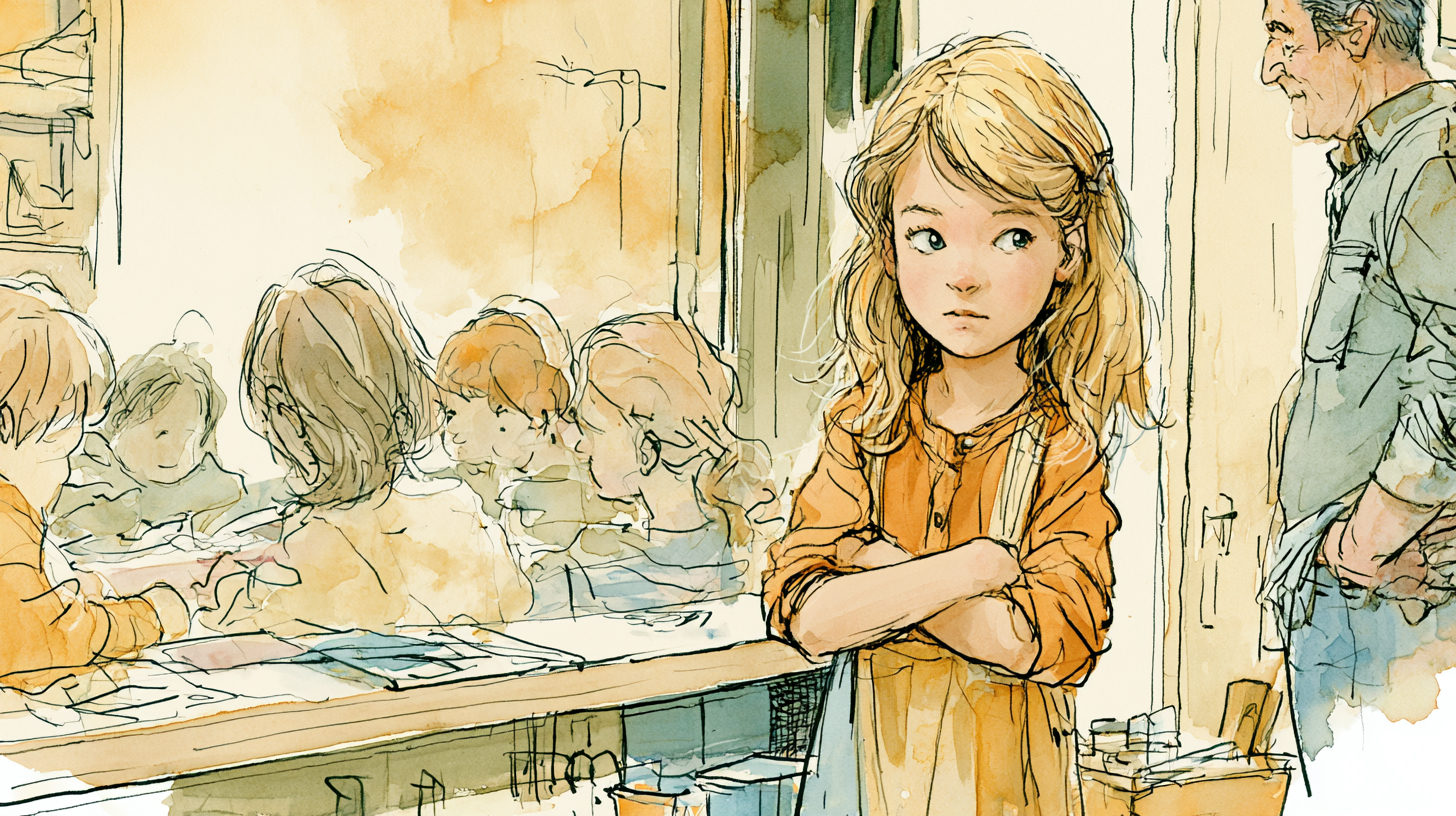
She won't try.
Not "tries and gives up." Not "needs a little encouragement." She simply will not attempt anything — a new sport, an unfamiliar game, an activity where the outcome isn't already clear — unless she has quietly calculated that she is likely to succeed.
She's not lazy. You know this. Watch her at the things she's chosen and she works with an intensity that takes your breath away. She is focused, detailed, persistent in ways that seem almost adult for her age.
But the moment something new appears? Something where the result isn't guaranteed?
She's out.
She says she doesn't want to. She says it looks boring. She says she doesn't care.
But you know she cares. That's the part that sits in your chest a little.
This Is Not Perfectionism
Perfectionism is usually described as wanting to do things perfectly. And there may be some of that here. But what we're looking at in a child who only participates when success is guaranteed is something more specific than that.
It is a child who has learned — through experience, through temperament, or through some combination of both — that the gap between trying and failing feels unsurvivable.
Not disappointing. Not frustrating. Unsurvivable.
For children whose nervous systems are sensitive to evaluation and social comparison, failure doesn't land as information. It lands as verdict. Not "I didn't succeed at that thing" but "now everyone knows something about me that cannot be taken back."
When failure carries that weight, the math is simple: only enter rooms where you already know you'll win.
That is not a character flaw. It is a survival strategy. A very logical one, given how failure feels from the inside.
The Calculation She's Running
Before your child engages with anything new, she is running a rapid internal risk assessment that you mostly can't see.
Do I already have skills that transfer here? If yes, the risk is lower.
Have I watched others do this and do I have a sense of how I'd compare? If yes, she might try — carefully, and with an exit plan.
Is there any chance of visible failure? If yes, the risk spikes.
Will people whose opinions matter to her see her fail? If yes, the risk may feel unsurvivable.
This calculation happens in seconds. The conclusion — "I don't want to do that" — arrives as a feeling, not a reasoned decision. And she may genuinely experience it as not wanting to. The protective layer is that complete.
But underneath it is a nervous system trying to keep her away from something that has felt catastrophic before — or that she has calculated would feel catastrophic, even if it hasn't happened yet.
Where This Pattern Often Develops
Sometimes this begins after a specific early experience of public failure — a moment when a child tried something, didn't succeed, and the response of the people around her, even a perfectly well-intentioned response, registered as devastating.
Sometimes it develops gradually, in environments where comparison is constant. Classrooms where work goes on the wall. Sports where performance is visible to everyone. Families where siblings' achievements are mentioned often, even lovingly. Any environment where the child has repeated experience of her performance being visible and evaluated.
Sometimes it is simply how this child's nervous system has always been wired — an exquisitely tuned sensitivity to evaluation that has been present from very early on, that predates any specific experience.
In all of these cases, the child has arrived at the same conclusion: trying uncertain things is not worth the risk.
While you're here, take the guide
What's Underneath is free: the three body-state triggers under most meltdowns, what to say in the minute before it tips over, and how to reset afterward.

You'll get the guide instantly, plus five free articles in your inbox every week. Real challenges (meltdowns, school mornings, picky eating, big feelings) and how to actually handle them. Unsubscribe anytime.
What We Do That Makes It Harder
We try to convince her that failure is okay. "Even the best athletes fail! Everybody makes mistakes!" This is true. It is also almost completely ineffective, because the issue is not that she doesn't intellectually understand that failure is normal. The issue is that failure doesn't feel survivable in her body. No logical argument changes a felt experience.
We compare her to other children. "Look — she's never done this before either and she's trying." This lands, almost always, as evidence that something is wrong with your child for not trying. It deepens shame. Shame makes the nervous system contract further.
We minimize the stakes. "It doesn't matter if you're good at it, just give it a go." This communicates that we think she's being irrational — that the stakes she feels shouldn't matter. She knows they matter to her. Being told they shouldn't can feel like being told her experience is wrong.
We push. "Just try it once, that's all I'm asking." Sometimes this works in the moment and creates a child who now avoids that activity permanently to prevent being pushed again.
What Sometimes Helps
Private practice before public performance. If a child can try something at home, alone or just with you, before she has to try it in front of anyone else, the calculation changes entirely. She is not risking public failure. She is just exploring. This is often enough for a child to build quiet confidence before the comparison begins.
Reducing the visibility of early attempts. Not everything needs an audience. Not every first attempt needs to happen in the presence of peers, teachers, or siblings. Low-stakes, low-visibility first tries give the nervous system a chance to discover that the thing is survivable before having to perform it publicly.
Asking what she would need to feel okay about trying. This is one of the most powerful questions available to a parent. It treats her as the expert on her own experience. It puts the problem-solving in her hands. And the answers — when they come — are often illuminating.
Celebrating the noticing without requiring the trying. "You looked at that for a while. Something about it caught your attention." Acknowledging the internal experience without demanding action sometimes moves something that demanding action never could.
Letting her see you try uncertain things. Not as a lesson. As a window. Children who are afraid of failure often have very little experience of watching adults be genuinely uncertain about something and go toward it anyway — and be okay on the other side. That image, repeated over time, matters.
What She's Actually Protecting
Underneath the refusal to try is almost always something worth protecting: a sense of self that feels fragile.
This is not a weakness. It is often the other side of a child who cares deeply, feels intensely, and holds herself to standards that most adults would find exhausting. These are qualities that, with the right conditions, become remarkable.
But right now, in this season, they are making it very hard to walk into uncertain rooms.
What she needs is not to be convinced that failure is fine. She needs, slowly and over time, enough safe experiences of trying-and-not-fully-succeeding that her nervous system can begin to update its belief — to learn that uncertain attempts do not, in fact, destroy her.
That learning is slow. It happens in small moments. It requires safety and patience and a parent who can see past the refusal to what's underneath it.
That's you.
Every behavior is a clue.
If you're watching a child who will only enter rooms where success is guaranteed, LightMap can help you track where her edges are and how they shift over time. Explore LightMap at birchandlight.com/lightmap.
For your child: June and the Window That Took Time is about a girl who wants to do something and finds it far harder and slower than she expected.
Sources: Dweck's research on fixed and growth mindsets and responses to failure; peer-reviewed research on fear of failure, perfectionism, and achievement avoidance in children (PMC); research on rejection sensitivity and evaluative threat in ADHD and anxious presentations (PMC).
For education and reflection, not medical advice. Our terms
See what's underneath
Find the trigger instead of chasing the fear
LightMap reads your hard days together and gives you answers. Start with one moment today.
Start with 3 moments Not sure where to start? Ask me.Message Tara on WhatsApp. It really is me, I read everything and will personally respond.Click here to message Tara →

Part of the award-winning Birch & Light Method, honored with the Mom's Choice Gold Award for excellence in family resources.
A story to read together
Sometimes the easiest way in is a story you read side by side.
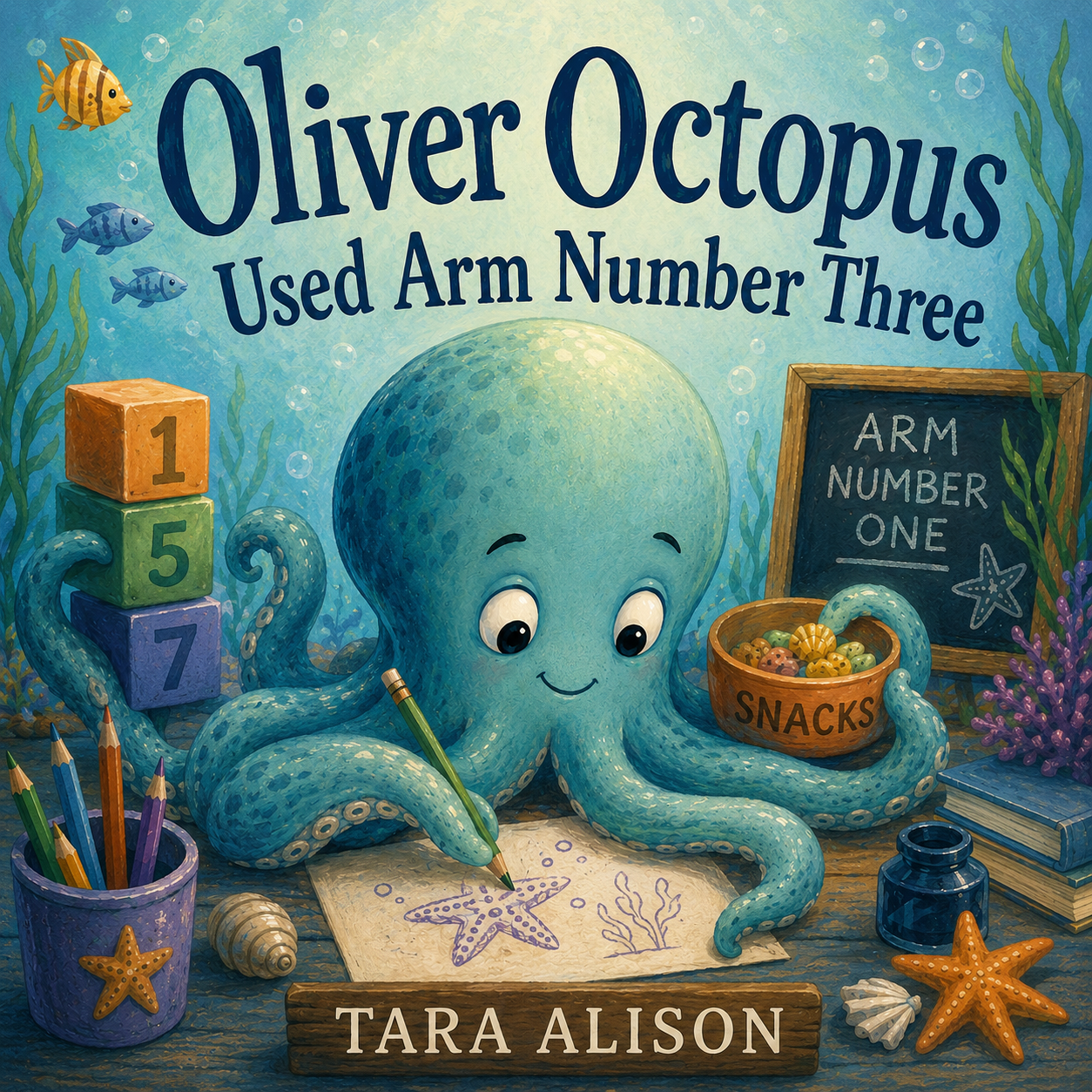 Oliver Octopus Used Arm Number Three
Oliver always drew with Arm Number Three. When his teacher tells him to use Arm Number One instead, something hard slowly grows into something strong.
Read the story HT the Hot Dog
A nervous hot dog learns that worrying about imagined disasters keeps stealing today’s joy.
Read the story
If today was one of those days
A few more from the library, free to read.
Researched and drafted with AI assistance, reviewed before publication. Editorial standards