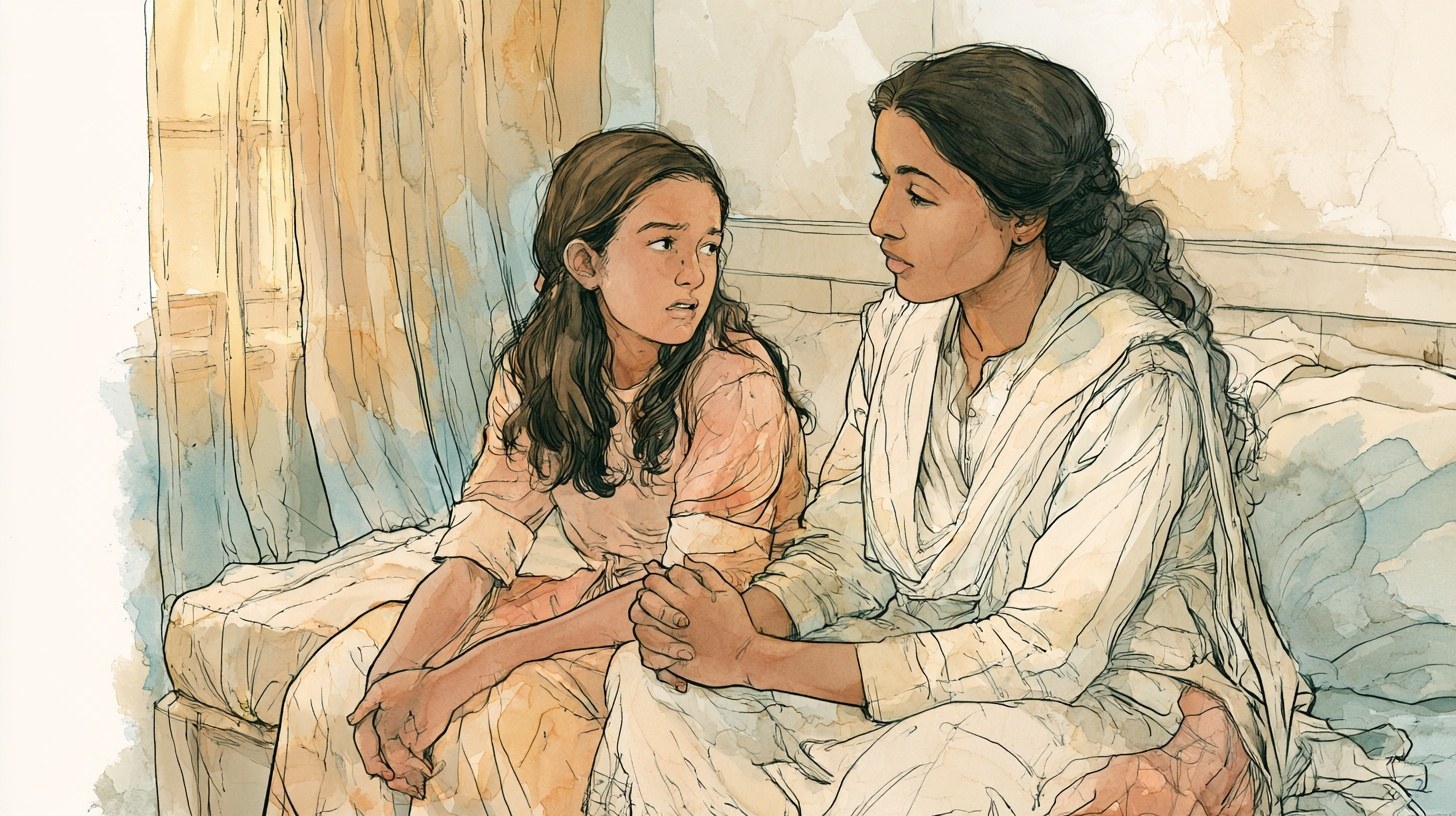
The question with no acceptable answer
"Am I going to get sick?" You say you don't think so. "But you're not sure." The doctor says probably not. "Probably isn't certain." You point out she has been fine all day. "This time could be different."
If you have a child like this, you know the loop. The same question, asked again and again, in slightly different forms. Every answer rejected. Every reassurance failing within minutes. Escalation building until it ends in tears or an explosion, and you standing there wondering what answer she was even looking for.
Here is the reframe that changed how I see it: no answer works because the problem was never the question. The problem is the feeling generated by uncertainty. Her brain is demanding certainty, and certainty does not exist. So every reassurance fails, not because it was the wrong reassurance, but because reassurance was never the thing she needed.
What intolerance of uncertainty is
Intolerance of uncertainty, often shortened to IU, is a psychological construct with a substantial research base, particularly in OCD and anxiety disorders. People high in IU experience uncertainty itself as threatening. It is not simply fear of a bad outcome. It is distress triggered by the state of not knowing, independent of how likely the bad outcome is.
For a child with high IU, "probably not" is not comforting. It is a live threat, because probably contains a gap, and the gap is where the alarm lives.
How it shows up
- Demanding answers that are impossible to give, from parents and from doctors
- Asking the same question repeatedly, sometimes within minutes
- Constant reassurance seeking that never actually reassures
- Rage or collapse when forced to wait for an answer
- Inability to move forward until something is resolved, even something small
- Explosions over confusion: a word she doesn't know, instructions she didn't follow, a plan that changed
From the outside, these look like separate problems. Defiance. Anxiety. Rigidity. Rudeness. Underneath, they can be one problem: an alarm system that cannot tolerate the unresolved.
The thread through everything else
What makes IU so useful as a lens is how many other things it can connect. In a child who also carries OCD, anxiety, a PANS history, sensory sensitivities, or a chronic medical condition, IU is not competing with those diagnoses. It may be the mechanism they share.
OCD is, in many presentations, an uncertainty disorder: the compulsion exists to close the gap the obsession opened. Chronic illness injects daily, unavoidable uncertainty into a child's body. Sensory sensitivity keeps the nervous system closer to threshold, so the uncertainty alarm fires with less provocation. Each condition feeds the same fire, and the fire is the intolerance of not knowing.
This is why the diagnostic question, on its own, can stall out. Asking which label fits may matter less than asking what process makes so many unrelated situations intolerable for this particular child.
While you're here, take the guide
What's Underneath is free: the three body-state triggers under most meltdowns, what to say in the minute before it tips over, and how to reset afterward.
You'll get the guide instantly, plus five free articles in your inbox every week. Real challenges (meltdowns, school mornings, picky eating, big feelings) and how to actually handle them. Unsubscribe anytime.
Why reassurance backfires
This is the hardest part for parents, because reassurance is instinct. But in high IU kids, reassurance works like scratching a mosquito bite. Instant relief, then the itch returns stronger, and the child learns that the only way to survive uncertainty is to eliminate it. Which cannot be done. So the loop tightens.
Every time we successfully answer the unanswerable, we confirm the underlying belief: uncertainty is dangerous and must be resolved. The skill she actually needs, tolerating the open question, never gets practiced.
What actually helps
IU is treatable, and the research here is encouraging. The approaches with the strongest evidence for kids and teens include:
- Exposure and response prevention (ERP). The gold standard for OCD, and it frequently targets IU directly: practicing sitting with unresolved questions without seeking the answer, starting small and building.
- CBT adapted for intolerance of uncertainty. Some protocols treat IU as the core target rather than any single fear, teaching kids to notice the demand for certainty and respond to it differently.
- Parent response training. Programs like SPACE (Supportive Parenting for Anxious Childhood Emotions) coach parents to reduce accommodation, including the reassurance loop, while staying warm and connected. This matters because parents are usually the primary certainty dispensers.
- Supportive statements instead of answers. "I know not knowing feels awful, and you can handle this feeling" is a different move than "I'm sure it will be fine." One builds tolerance. The other rents relief.
None of this is a home program to run solo. If this pattern sounds like your child, bring it to a clinician who treats pediatric OCD and anxiety, and ask specifically whether intolerance of uncertainty is being assessed and targeted. Many families, ours included, went years without hearing the term.
The shift
You may never find the answer that finally satisfies your child, because that answer does not exist. What exists is a skill, buildable and well studied: the capacity to stay standing inside an open question. That is the treatment target. Not better answers. A different relationship with not knowing.
Struggling to see what actually drives your child's hardest moments? LightMap helps you find the thread.
Sources: Peer-reviewed research on intolerance of uncertainty in pediatric anxiety and OCD (Journal of Anxiety Disorders; PMC); Lebowitz et al. on family accommodation and the SPACE treatment program, Yale Child Study Center; International OCD Foundation on exposure and response prevention; research on reassurance seeking as a safety behavior (PMC).
For education and reflection, not medical advice. Our terms
See what's underneath
Find the trigger instead of chasing the fear
LightMap reads your hard days together and gives you answers. Start with one moment today.
Start with 3 moments Not sure where to start? Ask me.Message Tara on WhatsApp. It really is me, I read everything and will personally respond.Click here to message Tara →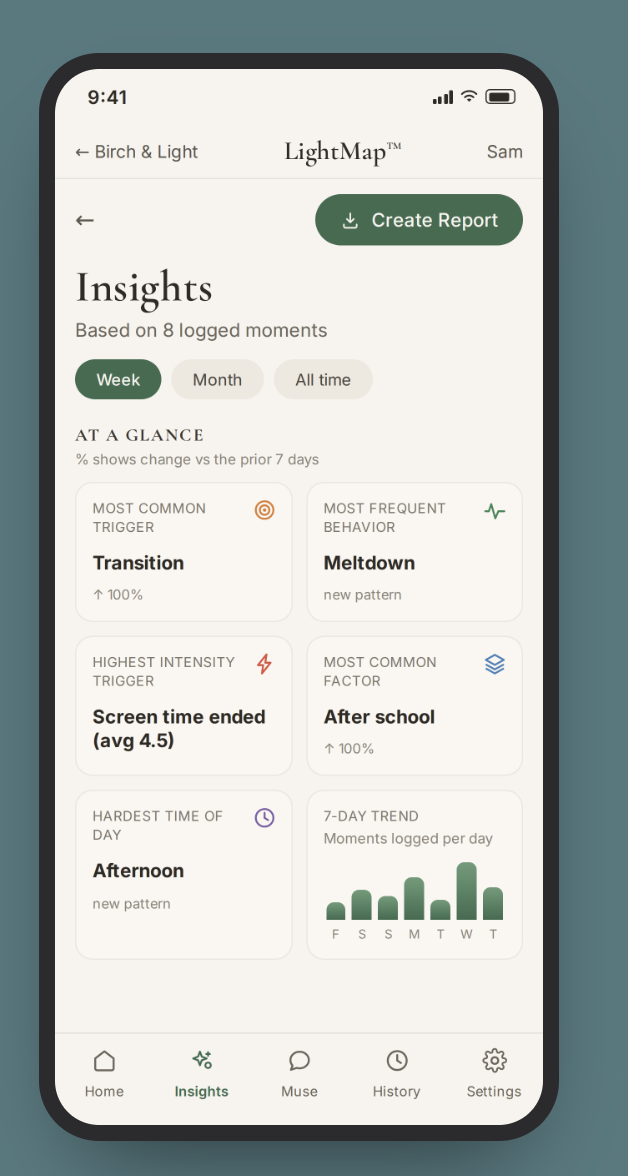

Part of the award-winning Birch & Light Method, honored with the Mom's Choice Gold Award for excellence in family resources.
A story to read together
Sometimes the easiest way in is a story you read side by side.
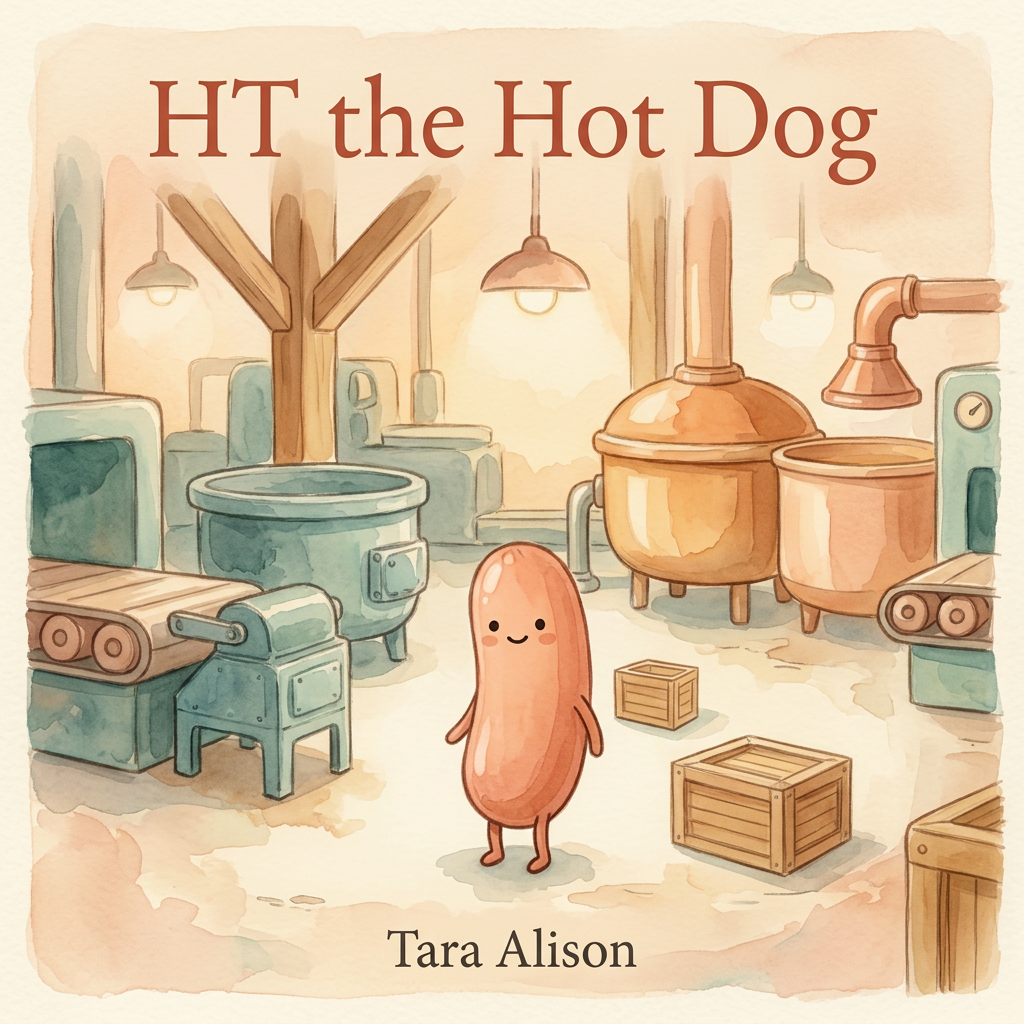 HT the Hot Dog
A nervous hot dog learns that worrying about imagined disasters keeps stealing today’s joy.
Read the story Little Bird
Little Bird used to fly everywhere. Then the forest started to feel too big — and a wise voice helps her see that her wings remember more than her worries do.
Read the story
If today was one of those days
A few more from the library, free to read.
Researched and drafted with AI assistance, reviewed before publication. Editorial standards