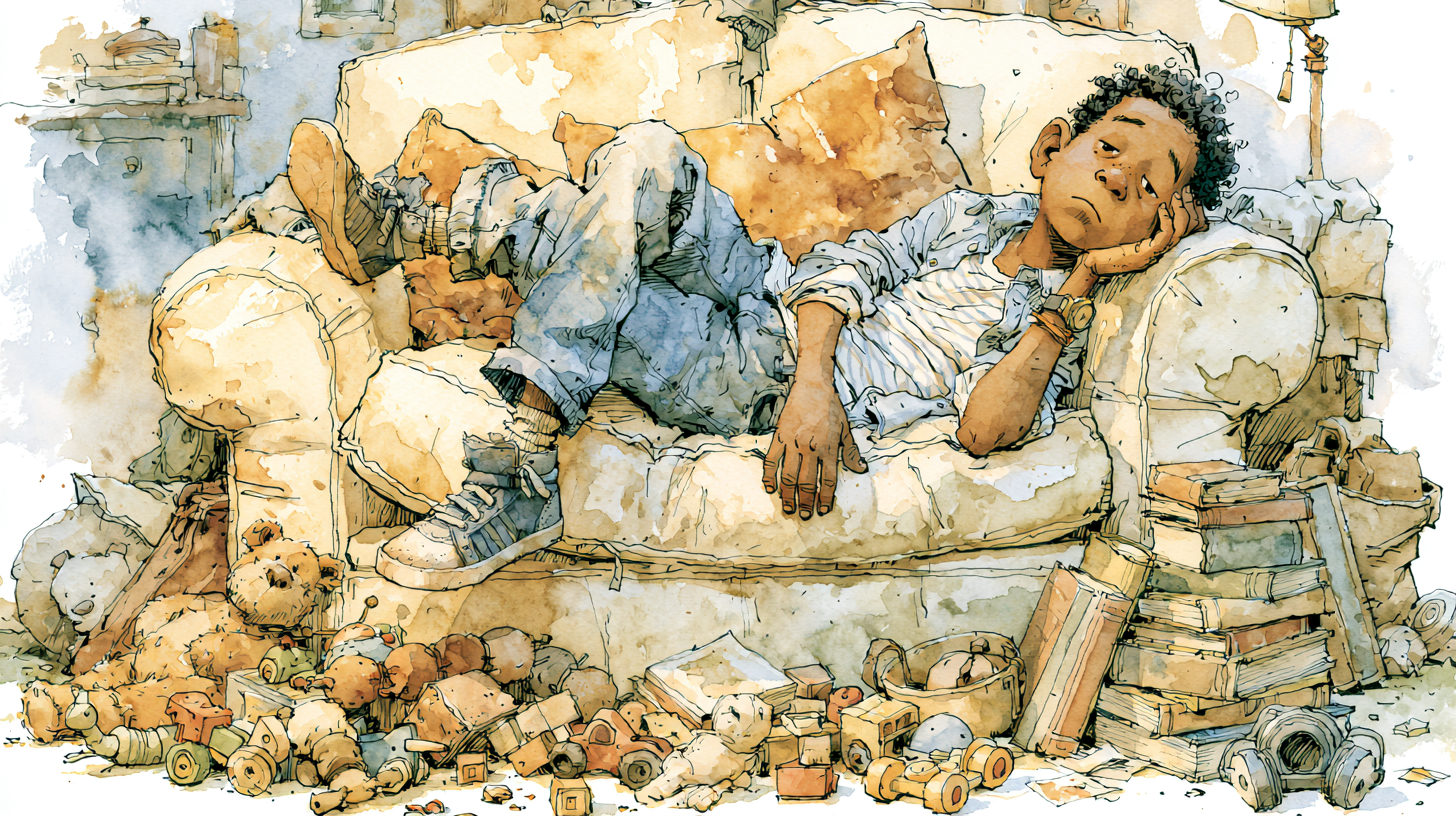
"I''m bored."
You offer the bike. No. The craft stuff. No. Call a friend? No. The game they begged for last month? Eye roll. Twenty minutes later: "I''m boooored." You have now suggested eleven activities, all rejected, and you are starting to suspect the complaining is the activity.
Here is the thing worth knowing: in kids, "I''m bored, but nothing sounds good" is very often not boredom at all. It is a different message wearing boredom''s clothes, and cracking the code changes your entire response.
What "bored" often means instead
"I can''t start." Some kids, especially those with executive function challenges, want to do things but cannot generate the ignition sequence: choose, gather, begin. Every suggestion you make still requires them to do the starting, which is the exact part that is broken. So each idea gets a no, not because it is a bad idea, but because it arrives with an impossible first step attached.
"Nothing feels like anything." Flat, gray, under-stimulated but unable to be interested: kids describe low moods and depleted states as boredom because it is the only word they have for "the wanting is offline." A child who is anxious, burned out, or down does not experience the bike as fun-but-refused. They experience it as cardboard. Watch for this version especially if the "boredom" is constant, if formerly loved things are cardboard too, and if it travels with irritability or withdrawal.
"I want you." Sometimes "I''m bored" means "be with me," and every activity suggestion is rejected because activities were never the request. The tell: the complaint follows you from room to room. The fix costs ten minutes of undivided you, and it works instantly, which is how you confirm the diagnosis.
"I need rescue from the discomfort." Kids marinated in screens and schedules can find unstructured time genuinely uncomfortable at first. The boredom complaint is a bid for you to take the discomfort away. This is the one version where less rescuing, not more, is the answer.
While you're here, take the guide
What's Underneath is free: the three body-state triggers under most meltdowns, what to say in the minute before it tips over, and how to reset afterward.

You'll get the guide instantly, plus five free articles in your inbox every week. Real challenges (meltdowns, school mornings, picky eating, big feelings) and how to actually handle them. Unsubscribe anytime.
Why the suggestion machine fails
Notice what all four versions have in common: none of them are solved by a better suggestion. That is why the eleventh idea fails like the first ten. Worse, the suggestion machine quietly teaches that entertainment is your department, and it hands your child eleven opportunities to exercise the only power available to a stuck person: veto.
What to do instead
Stop suggesting; start co-starting. If it is an ignition problem, skip ideas and lower the first step to the floor: "I''m dumping the LEGO on the table. Come sit with me." You are not entertaining them. You are lending them a starter motor. Once running, these kids often go for an hour.
Offer presence with no agenda. If you suspect the connection version: "I''ve got ten minutes and no plan. Want them?" No activity attached. See what happens.
Let boredom be legal. If it is discomfort-intolerance: "Bored is allowed here. Something will occur to you." Then hold the line, warmly. The first stretch is loud. Kids who are allowed to be bored eventually develop the thing boredom exists to develop, which is an inner life.
Take flat seriously. If nothing has felt like anything for weeks, if the cardboard-ness has spread to friends and favorites, that is not a boredom problem and it is not a discipline problem. Mention it to your pediatrician. "Bored all the time" is one of the most common ways low mood introduces itself in children.
The word is the same every time. The message underneath is not, and the pattern is how you tell them apart: when it happens, what precedes it, what actually ends it.
That pattern is exactly what LightMap surfaces. Log the "bored" moments and what finally worked, and within a couple of weeks you''ll know whether you''re dealing with ignition, connection, discomfort, or flat, because each one needs a different you.
Sources: Peer-reviewed research on task initiation and executive function difficulties in children (PMC); Barkley's work on executive function and ADHD; research on anhedonia and low motivation presenting as boredom in children and adolescents (PMC).
For education and reflection, not medical advice. Our terms
See what's underneath
Find the trigger instead of chasing the fear
LightMap reads your hard days together and gives you answers. Start with one moment today.
Start with 3 moments Not sure where to start? Ask me.Message Tara on WhatsApp. It really is me, I read everything and will personally respond.Click here to message Tara →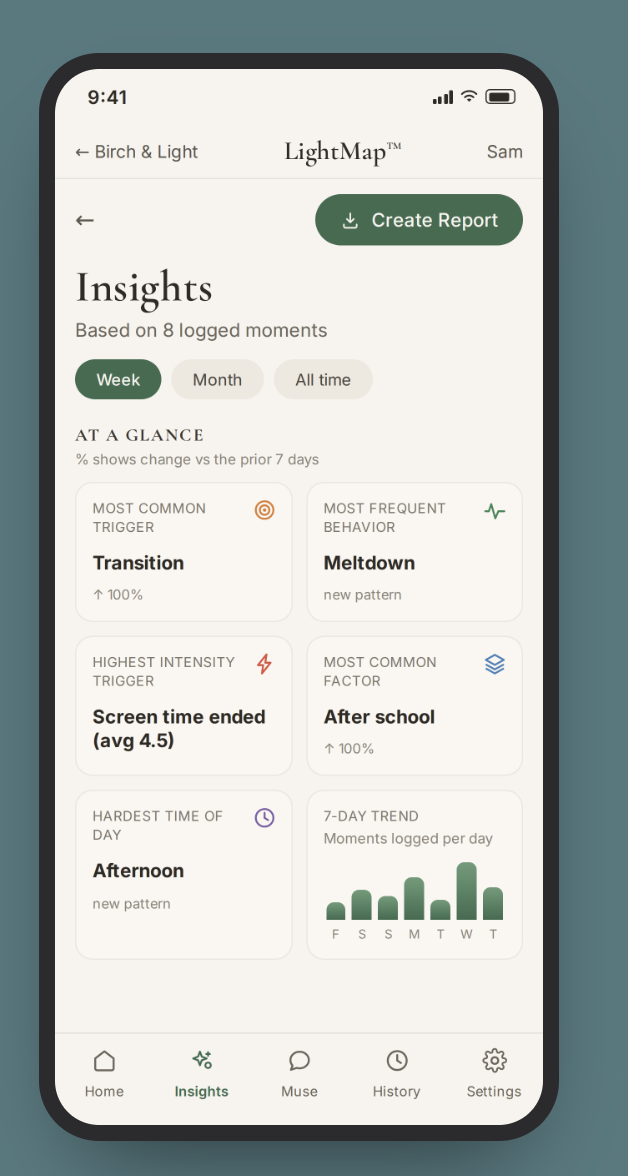

Part of the award-winning Birch & Light Method, honored with the Mom's Choice Gold Award for excellence in family resources.
A story to read together
Sometimes the easiest way in is a story you read side by side.
 HT the Hot Dog
A nervous hot dog learns that worrying about imagined disasters keeps stealing today’s joy.
Read the story Little Bird
Little Bird used to fly everywhere. Then the forest started to feel too big — and a wise voice helps her see that her wings remember more than her worries do.
Read the story
If today was one of those days
A few more from the library, free to read.
Researched and drafted with AI assistance, reviewed before publication. Editorial standards