She talked about it all week.
She picked out the gift. She asked what time you were leaving. She told you what games she hoped they would play and which friends she knew would be there. She was, by every measure, excited.
And then you pulled up to the house.
And she couldn't move.
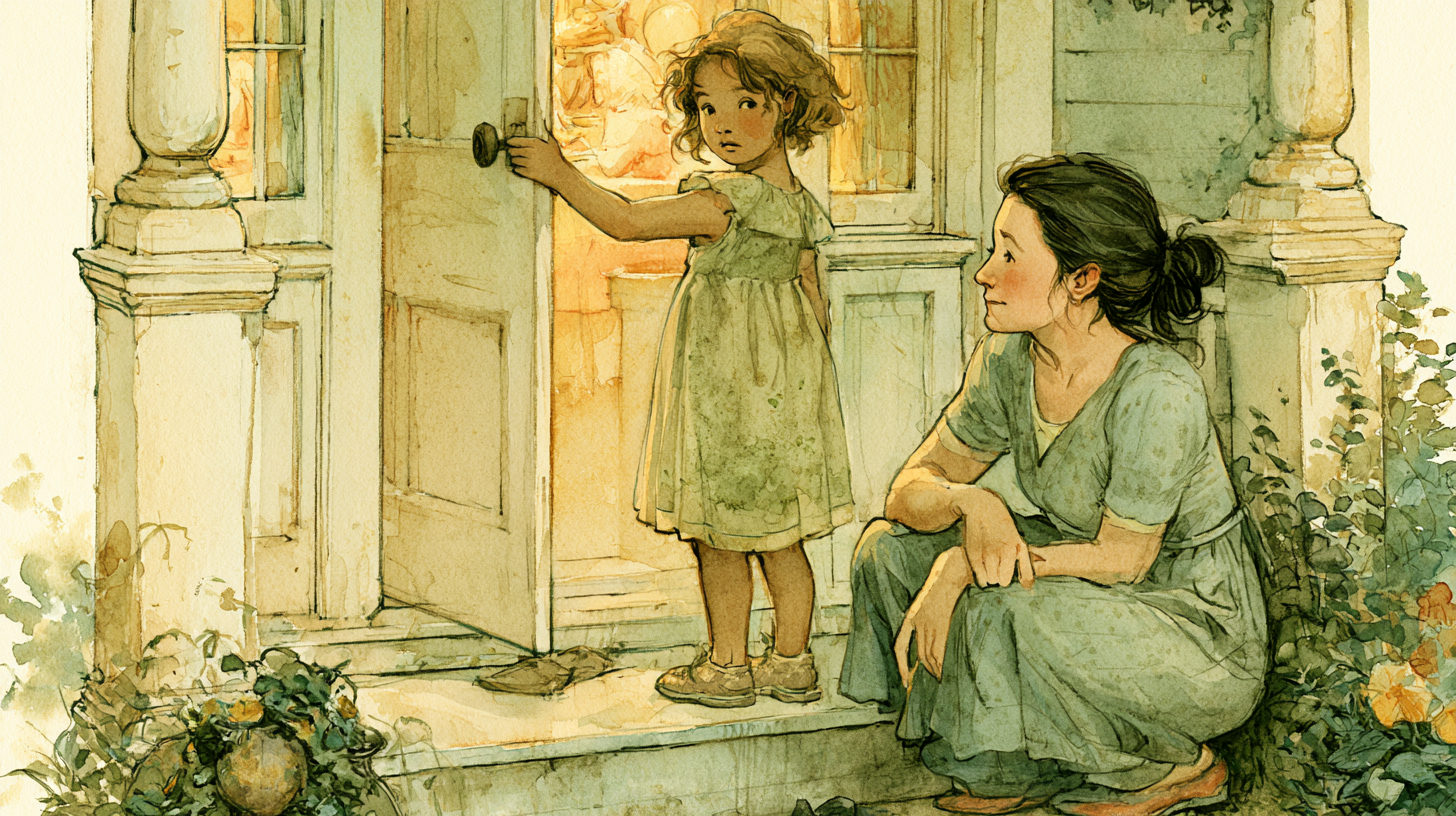
Not wouldn't. Couldn't. Her body simply would not take her through that door. She sat in the car, or stood on the sidewalk, or made it to the front step and stopped — and no amount of reassurance, reminding, or gentle encouragement moved her.
You stood there watching other children walk in easily, wondering what was happening to yours.
Here's what was happening.
The Gap Between Wanting and Doing
One of the most disorienting things about parenting a child whose nervous system works differently is watching them genuinely want something and be genuinely unable to reach for it.
The wanting was real. Every conversation about the party, every moment of anticipation, every excited question — that was real. Nothing about it was performance or manipulation.
What changed when you arrived was not the wanting. What changed was that the party became real.
From home, the party is an idea. A safe, exciting idea populated by the best version of everything — the friends she likes most, the games she enjoys, the happy image of belonging. The nervous system can hold that idea comfortably.
But standing outside the door, the party is no longer an idea. It is noise and movement and a house full of people and a social situation with rules she can't fully predict and moments she can't control and a hundred small unknowns arriving all at once.
For a child whose nervous system is wired to scan for uncertainty and flag it as potential threat, that gap — between the idea of the party and the reality of the party — can feel like standing at the edge of something very high.
The wanting doesn't disappear. It gets drowned out.
What's Happening in Her Nervous System
What your child is experiencing in that moment is not a tantrum and not a choice. It is a threat response.
Her nervous system has assessed the situation — the noise, the crowd, the unpredictability, the social complexity — and sent up a signal: not safe yet. And a nervous system sending that signal does not release the body toward the thing it's signaling against, no matter how much the thinking mind wants to go.
This is sometimes described as the gap between the emotional brain and the thinking brain. Your daughter's thinking brain knows this is a birthday party. It knows these are her friends. It knows she will probably have fun once she's inside. But the part of the brain driving her body's response right now is not the thinking brain. It is the part that is responsible for keeping her safe, and it has decided that safe means staying here, not going in there.
No amount of logic reaches that part of the brain in the moment it is activated. This is why telling her it will be fun, reminding her she knows everyone inside, pointing out that other children are going in fine — none of it moves her. Those are thinking-brain arguments being offered to a nervous system that is not in thinking-brain mode.
While you're here, take the guide
What's Underneath is free: the three body-state triggers under most meltdowns, what to say in the minute before it tips over, and how to reset afterward.

You'll get the guide instantly, plus five free articles in your inbox every week. Real challenges (meltdowns, school mornings, picky eating, big feelings) and how to actually handle them. Unsubscribe anytime.
What Tends to Make It Harder
Some things consistently amplify this kind of threshold freezing, and it helps to know what they are.
Arriving when the party is already in progress. Walking into a room where something is already happening — where everyone else is already settled, already in groups, already mid-game — is significantly harder than arriving early and watching it build. The social complexity of entering an established scene is its own neurological challenge.
Not knowing what to expect inside. A child who doesn't know the layout of the house, whether there will be loud music, what the first activity will be, or where she will go when she walks through the door is managing more uncertainty than one who has that information in advance.
Having had a hard experience at a similar event before. Nervous systems learn. A child who was overwhelmed at a birthday party six months ago may arrive at today's party with her nervous system already primed for threat, before anything has even happened.
Being told she has to stay the whole time. The knowledge that there is no exit available — that once she goes in she is committed for two hours — can make the threshold feel impossible. The same child might walk through the door more easily if she knows she can leave after thirty minutes if she needs to.
What Doesn't Help in That Moment
Urging her to look at the other children going in. Reminding her how much she was looking forward to this. Explaining that there's nothing to be scared of. Counting down. Threatening to go home if she doesn't go in.
All of these responses add pressure to a nervous system that is already overwhelmed by the pressure of the situation itself. They are understandable. They come from love and from the very reasonable desire to help her get to the thing she wants. But they tend to narrow the window further rather than open it.
What Sometimes Helps
Staying close without pushing. Sitting on the front step with her. Not going anywhere, not counting down, not negotiating — just being present and available with no agenda.
Naming what you see without judgment. Not "there's nothing to be scared of" but "you really want to be in there and something is making it really hard to go. That makes sense." Feeling seen and not shamed sometimes moves something that logic can't.
Giving her information that reduces uncertainty. "When you walk in, the living room is right there. The kids are doing a craft at the table. You can go straight to Emma." Specificity reduces the unknown and gives the nervous system something concrete to move toward.
Offering a smaller step. Not "let's go in" but "can we walk to the door and look in for a minute?" A step closer to the thing, with an easy exit route, is sometimes all the nervous system needs to begin to settle.
Giving her a genuine out. "We can leave after thirty minutes if you want to." Knowing that the exit exists often makes the entrance possible.
Coming back next time. And not making this time mean something permanent about who she is.
The Thing Worth Remembering
A child who wants to go to the party and cannot walk through the door is not being dramatic. She is not manipulating you. She is not choosing this.
She is a child whose nervous system is trying to protect her from something that feels genuinely threatening, even when the thinking part of her knows it isn't.
That gap — between what she knows and what her body will let her do — is real. And it is one of the most important things to understand about a child whose nervous system works differently.
She wanted to go. She still wants to go. She just needs a different kind of help getting there.
Every behavior is a clue.
If threshold moments like this are a pattern for your child, LightMap can help you track what helps, what makes it harder, and what your child's nervous system needs in order to move from the edge of something to the inside of it. Explore LightMap at birchandlight.com/lightmap.
Sources: Peer-reviewed research on the gap between approach motivation and avoidance behavior in anxious children (PMC); research on anticipatory anxiety and entry avoidance in pediatric social anxiety (Journal of Anxiety Disorders; PMC); Ross Greene, Collaborative and Proactive Solutions, on capacity versus willingness.
For education and reflection, not medical advice. Our terms
See what's underneath
Find the trigger instead of chasing the fear
LightMap reads your hard days together and gives you answers. Start with one moment today.
Start with 3 moments Not sure where to start? Ask me.Message Tara on WhatsApp. It really is me, I read everything and will personally respond.Click here to message Tara →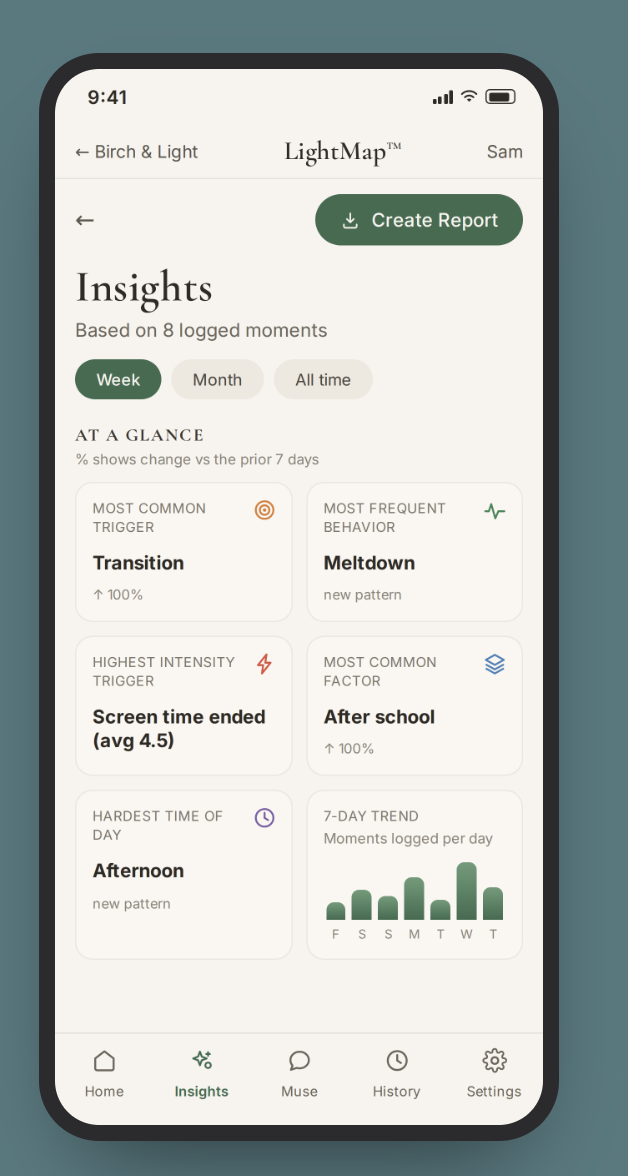

Part of the award-winning Birch & Light Method, honored with the Mom's Choice Gold Award for excellence in family resources.
A story to read together
Sometimes the easiest way in is a story you read side by side.
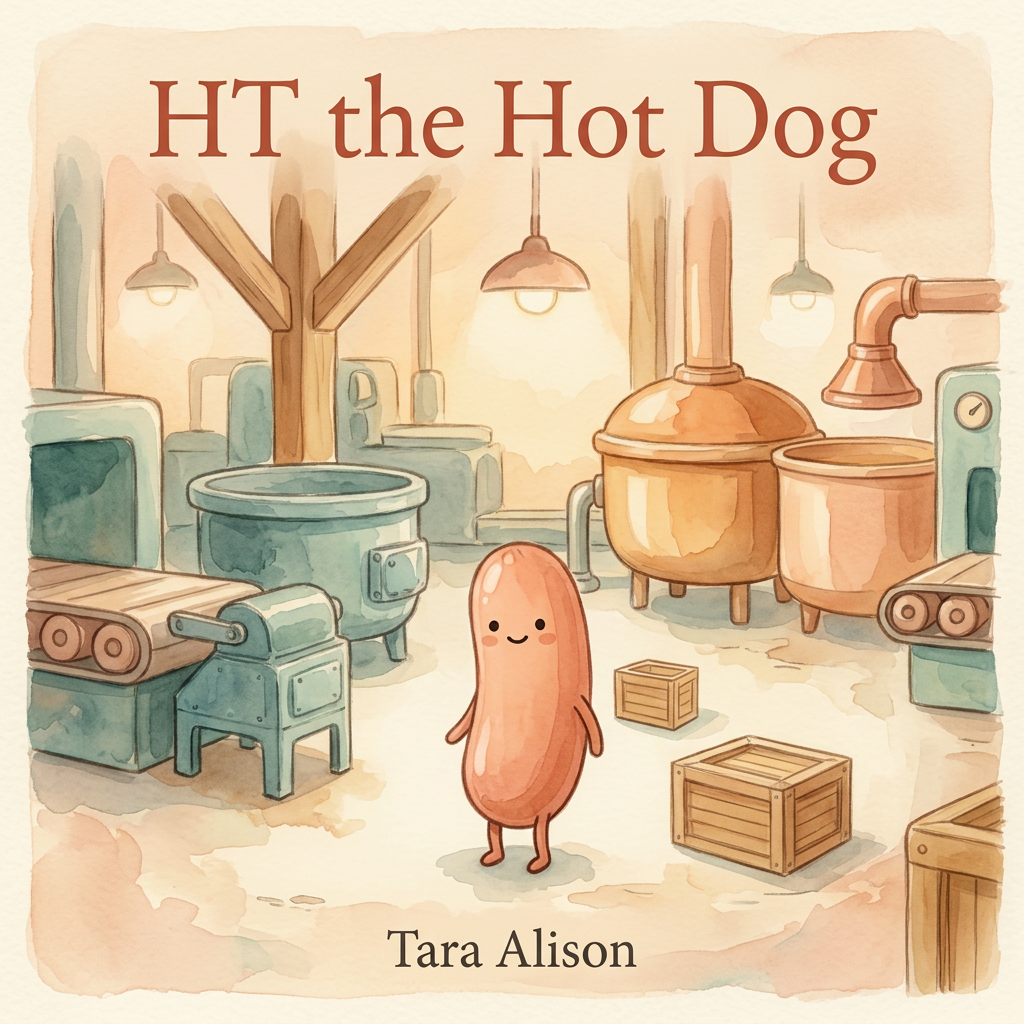 HT the Hot Dog
A nervous hot dog learns that worrying about imagined disasters keeps stealing today’s joy.
Read the story Little Bird
Little Bird used to fly everywhere. Then the forest started to feel too big — and a wise voice helps her see that her wings remember more than her worries do.
Read the story
If today was one of those days
A few more from the library, free to read.
Researched and drafted with AI assistance, reviewed before publication. Editorial standards