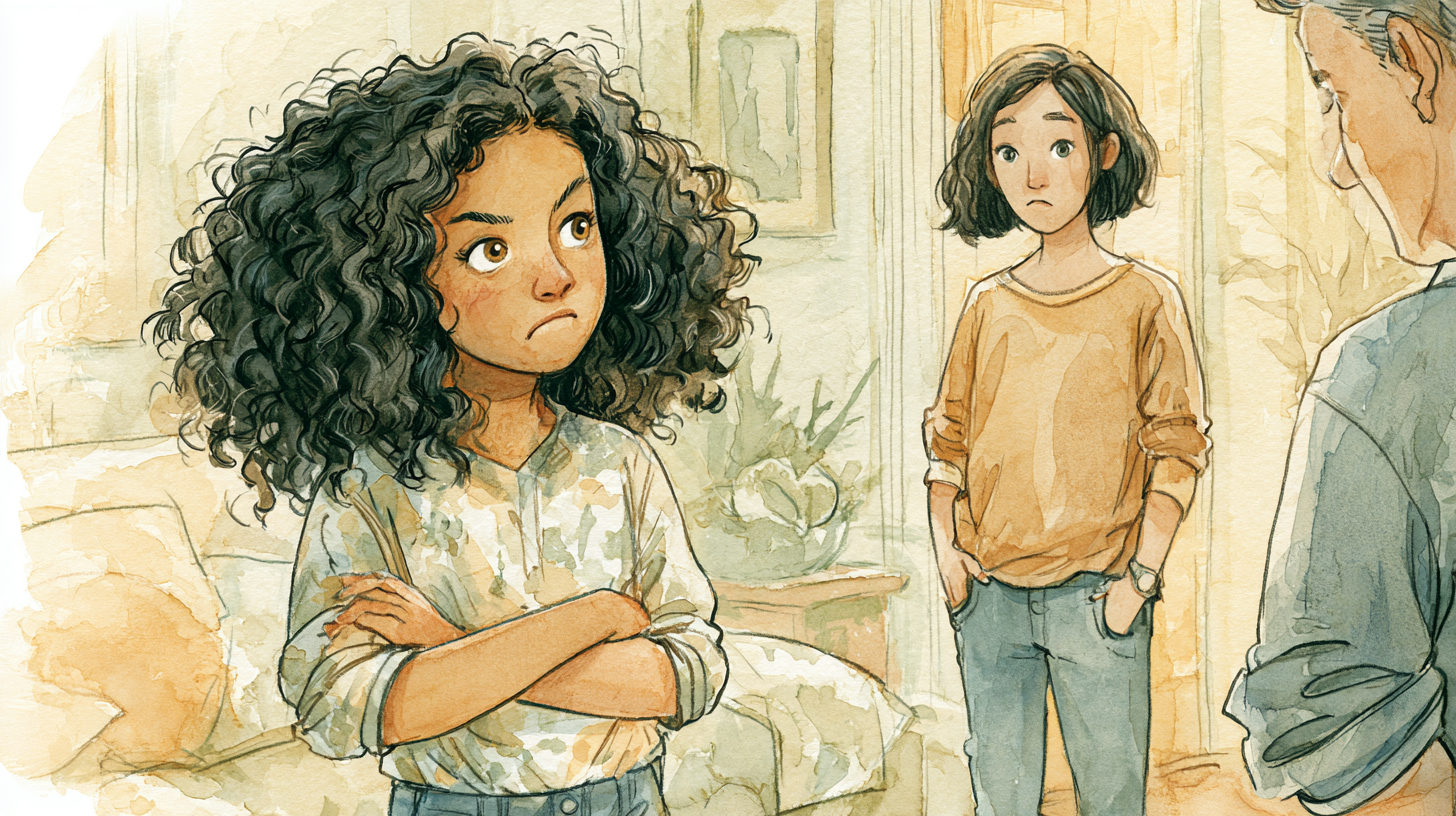
There is a child who argues with everything.
Every request becomes a negotiation. Every limit becomes a battle. Every no produces a bigger no. She pushes back on things that don't matter, resists things that should be easy, and seems, from the outside, like a child who has decided that cooperation is simply not something she's interested in.
She gets sent to the principal. She loses privileges. She gets labeled difficult, oppositional, a handful. The adults around her try harder limits, bigger consequences, firmer boundaries.
And things get worse.
Here's what those adults may be missing: what they are looking at is not defiance. It is anxiety. And anxiety that gets treated like defiance doesn't get better. It escalates.
What Anxiety Looks Like When It Isn't Crying in a Corner
When most people picture an anxious child, they picture someone small and frightened. Tearful. Clingy. Shrinking.
But anxiety in children doesn't always look like fear. For many children — particularly children whose nervous systems respond to threat with activation rather than withdrawal — anxiety looks loud. It looks combative. It looks like a child who is fighting everything and everyone around her.
This happens because anxiety is, at its core, a threat response. When the nervous system detects something that feels dangerous — and for an anxious child, that list of things that feel dangerous can be long and unpredictable — it responds by mobilizing. Fight is one of the responses available to a nervous system under threat. And a child in fight mode looks, to everyone around her, exactly like a defiant child.
The difference is what's driving it.
A defiant child is making a choice. She knows what's being asked, has decided she doesn't want to comply, and is willing to accept the consequences of that decision. There is volition in defiance. There is a child who is in charge of herself, making a calculation, and coming out on the other side with a deliberate no.
An anxious child in fight mode is not making a choice. She is responding. Something in the environment — a demand, a transition, an uncertainty, a sensory experience, a social situation — has triggered her nervous system into a state of alarm, and her behavior is the alarm going off. It looks like a decision. It isn't.
What Tends to Trigger the Fight Response in Anxious Children
Understanding what tends to activate fight-mode anxiety helps parents start to see the pattern beneath what looks like random defiance.
Uncertainty is one of the most common triggers. A child whose nervous system is wired to scan for threat finds uncertainty threatening. Not knowing what comes next, not knowing what is expected, not knowing how something will go — these create a state of alarm that can produce combative behavior before the situation has even fully unfolded.
Transitions are another significant trigger. Moving from one thing to another — ending an activity, starting something new, leaving one environment for another — requires the nervous system to release its grip on the known and move toward the unknown. For an anxious child, this can feel like a genuine threat, and the resistance that follows can look like pure defiance.
Demands that feel impossible are a third trigger. A child who is already at capacity — sensory, emotional, social — may respond to one more demand with what looks like a meltdown of opposition. The demand itself may be completely reasonable. But what it is landing on is a nervous system that has nothing left, and the fight response is what that looks like from the outside.
Social situations that feel unpredictable are another common activator. A party, a group project, an unstructured recess, a situation where the social rules aren't clear — these can produce anxiety that comes out sideways as aggression, bossiness, or explosive behavior with peers.
While you're here, take the guide
What's Underneath is free: the three body-state triggers under most meltdowns, what to say in the minute before it tips over, and how to reset afterward.

You'll get the guide instantly, plus five free articles in your inbox every week. Real challenges (meltdowns, school mornings, picky eating, big feelings) and how to actually handle them. Unsubscribe anytime.
Why Consequences Make It Worse
This is the part that tends to be most confusing for parents and teachers, because consequences are the logical response to defiance. If a child is choosing to push back, increasing the cost of that choice should change the calculation.
But for an anxious child in fight mode, consequences are not experienced as logical deterrents. They are experienced as additional threats.
A nervous system that is already in alarm, already mobilized, already reading the environment as dangerous — receives a consequence and registers it as more danger. More threat. More to fight against. The alarm gets louder. The behavior escalates.
This is why parents of children with anxiety-driven defiance so often describe the same exhausting pattern: the consequence makes it worse, so they add a bigger consequence, which makes it worse still, until everyone is in a full escalation and no one can remember what started it.
The consequence isn't failing because the parent is doing it wrong. It's failing because it's the wrong tool for what's actually happening.
What Actually Helps
The approaches that tend to work with anxiety-driven defiance are almost the opposite of what instinct suggests.
Reducing the threat level in the environment is the first move. This means lowering your voice, not raising it. Stepping back, not stepping closer. Reducing the number of demands in the moment, not adding more. A nervous system in alarm needs the threat level to come down before anything else is possible.
Naming what you see without judgment can help. Not "you're being ridiculous" but "something feels really hard right now." Not a diagnosis, not an accusation — just an acknowledgment that something is happening beneath the behavior.
Offering predictability helps anxious children enormously. Telling them what comes next. Giving them a clear sequence. Removing the uncertainty that may be driving the alarm. This is not the same as giving in — it's addressing the actual source of the problem.
Waiting for the window is often necessary. When a child is in the middle of a fight-mode response, the conversation that matters — about what happened, about what they need, about how to do it differently — cannot happen yet. The nervous system needs to come down first. That conversation, held later in a calm moment, is worth ten conversations held in the middle of the storm.
Building safety over time is the longer game. An anxious child who experiences her environment as unpredictable and threatening needs enough repeated experiences of safety and predictability that her nervous system can begin to update its threat assessment. This takes time. It happens in small moments. And it starts with the adults around her recognizing what they are actually looking at.
The Child Underneath the Fight
Underneath the arguing, the pushing back, the explosive no, the child who seems to be fighting everything — there is almost always a child who is frightened.
Not frightened in a way she can name or explain. Frightened in a way that lives in her body and comes out as combat because combat is what her nervous system has available.
She is not trying to make your life hard. She is trying to feel safe in a world that doesn't always feel safe to her.
That reframe doesn't solve everything. But it changes everything about how you enter the room with her.
Every behavior is a clue.
If the defiance in your house has never quite responded the way defiance is supposed to, LightMap can help you track the moments, notice the patterns, and start to see what might really be driving the behavior. Explore LightMap at birchandlight.com/lightmap.
For your child: The Boy at the Edge is about a quiet boy who keeps drifting to a window because watching settles his body, and the father who treats the drifting as defiance.
Sources: Peer-reviewed research on the overlap between anxiety disorders and oppositional presentations in children (Journal of Abnormal Child Psychology; PMC); Ross Greene, Collaborative and Proactive Solutions, on lagging skills versus willful misbehavior; research on threat-response activation and the fight response in pediatric anxiety (PMC); PDA Society (UK) on demand-avoidant profiles.
For education and reflection, not medical advice. Our terms
See what's underneath
Find the trigger instead of chasing the fear
LightMap reads your hard days together and gives you answers. Start with one moment today.
Start with 3 moments Not sure where to start? Ask me.Message Tara on WhatsApp. It really is me, I read everything and will personally respond.Click here to message Tara →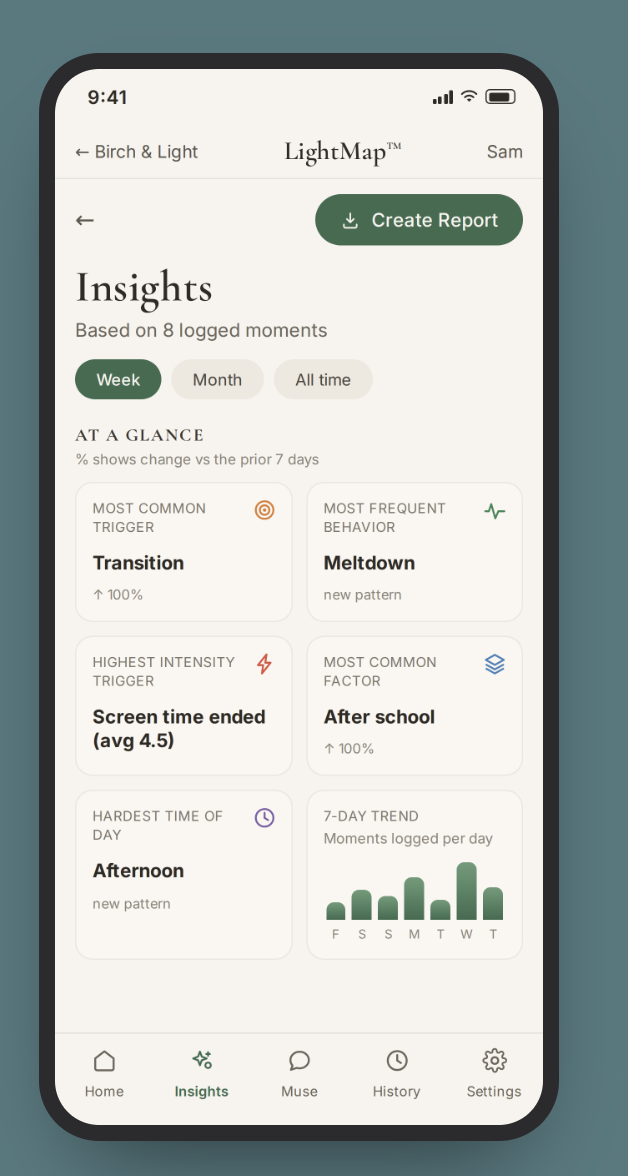

Part of the award-winning Birch & Light Method, honored with the Mom's Choice Gold Award for excellence in family resources.
A story to read together
Sometimes the easiest way in is a story you read side by side.
 HT the Hot Dog
A nervous hot dog learns that worrying about imagined disasters keeps stealing today’s joy.
Read the story Little Bird
Little Bird used to fly everywhere. Then the forest started to feel too big — and a wise voice helps her see that her wings remember more than her worries do.
Read the story
If today was one of those days
A few more from the library, free to read.
Researched and drafted with AI assistance, reviewed before publication. Editorial standards