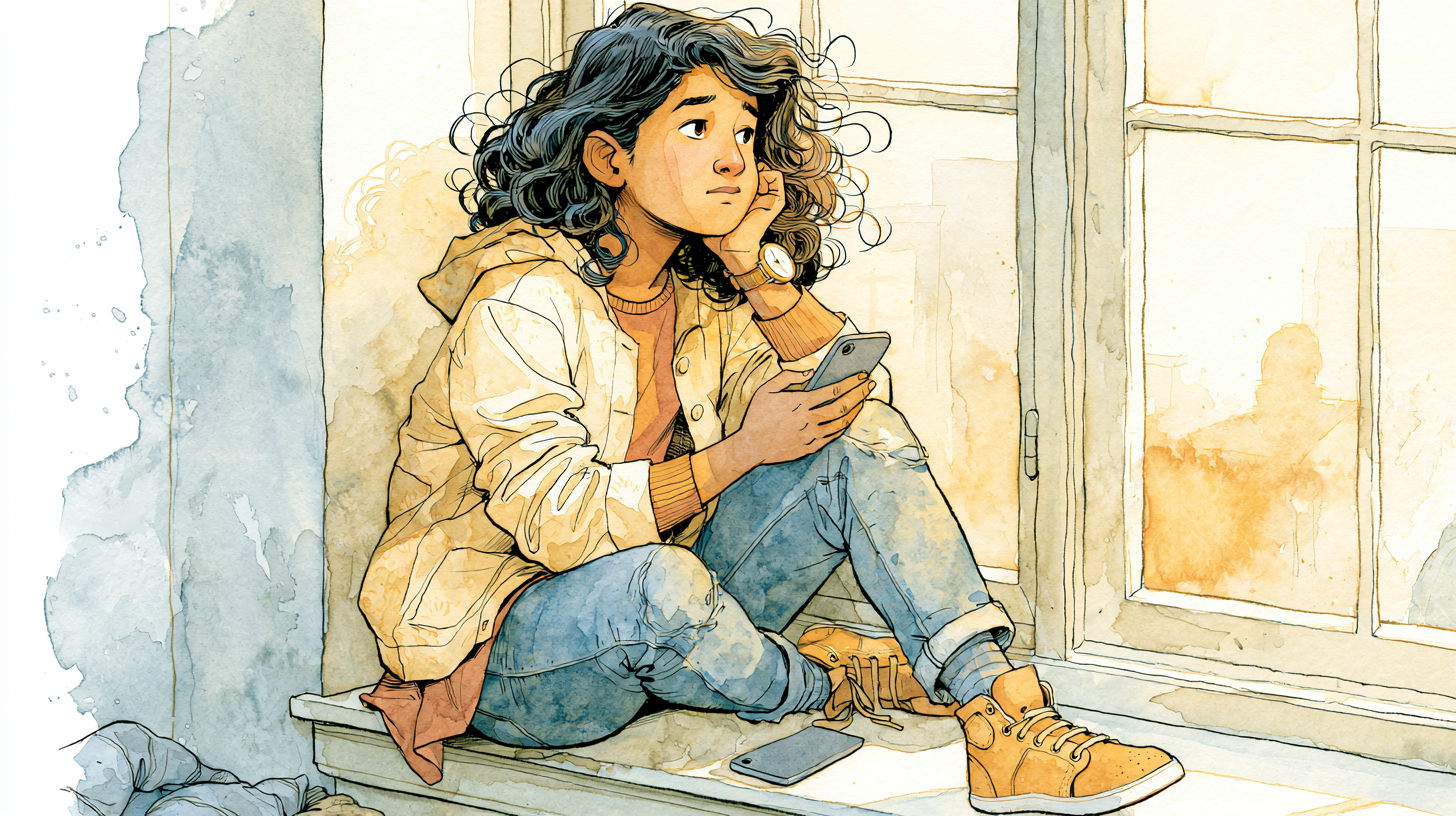
Your child talks about their friends. Misses them, mentions them, sometimes cries about being lonely. Then an actual invitation arrives, the exact friend, the exact thing they said they wanted, and: no. Excuses, stalling, stomachaches, refusal. The door to the thing they miss opens and they will not walk through it.
Parents watching this usually conclude one of two wrong things: they must not really miss the friends, or something bad must have happened. Usually it is neither. Usually it is this:
Missing is a feeling. Going is a task.
Missing their friends happens on the couch, in safety, at zero cost. Going requires clothes, transitions, unpredictability, energy, and above all, social performance: being on, keeping up, managing the moment-to-moment demands of another person for hours. For anxious kids, socially exhausted kids, and many neurodivergent kids, that cost is enormous even when the friend is beloved.
So both things are true at once. They genuinely miss the friend. And the price of seeing the friend is genuinely more than they can pay today. The couch is not evidence against the missing. It is evidence about the cost.
The anticipation problem
For many of these kids, the worst part of any social event is the twenty-four hours before it. The mind runs simulations: what if it''s awkward, what if I''m boring, what if I want to leave and can''t. By the time the doorbell would ring, they have already attended the playdate forty times and it went badly in most of them. Declining ends the simulations instantly. That relief is real and immediate, and it teaches the brain a terrible lesson: avoiding feels better. Every avoided invitation makes the next one heavier. This is how kids who want friends end up with calendars that say otherwise.
While you're here, take the guide
What's Underneath is free: the three body-state triggers under most meltdowns, what to say in the minute before it tips over, and how to reset afterward.

You'll get the guide instantly, plus five free articles in your inbox every week. Real challenges (meltdowns, school mornings, picky eating, big feelings) and how to actually handle them. Unsubscribe anytime.
What helps
Stop prosecuting the contradiction. "You SAID you missed him!" is true and useless. It teaches your child to stop telling you they miss people. Instead, name both truths: "You miss him AND going feels like a lot. Both can be real."
Shrink the dose. The gap between "couch" and "four-hour playdate" is too wide to jump. Build steps: a video call, a 30-minute meetup with a built-in end, your house instead of theirs, one friend instead of three. Short and successful beats long and never.
Pre-install the exit. Much refusal is really fear of being trapped. "We''ll stay for one hour, and if you give me the signal, we leave, no questions" removes the trap, and with it, half the resistance. Kids with a guaranteed exit often stay the whole time. It is the lock on the door that makes the room unbearable.
Get them past the threshold, gently. The hardest point is the transition, not the event. Most of these kids are fine ten minutes in. That does not license forcing, but it does mean your effort belongs at the doorway, warm, low-pressure, logistics-focused, rather than in debates the night before.
Protect recovery time. If socializing costs them a lot, the calendar has to price that in. A playdate followed by a birthday party followed by cousins is how you buy three refusals next week. One social thing, then a quiet stretch, keeps the account solvent.
Watch the trend. Occasional avoidance with steady friendships underneath is a temperament. A closing circle, months of every invitation refused, loneliness rising while tolerance falls, is a pattern that deserves support beyond scheduling, and worth raising with your pediatrician or a counselor who works with anxious kids.
The contradiction that maddens you is actually the most hopeful part: the missing is intact. The wanting is there. Your child does not need to be talked into caring about their friends. They need the cost of reaching them brought down until wanting can afford it.
Want to see what the cost is made of? LightMap can help you find it: log the invitations, what was refused versus survived, and what the day before looked like. The pattern usually points straight at the lever.
For your child: Lyra and the Constellation That Changed is about a small star watching her closest friend slowly drift away, and letting the ache be real.
Sources: Peer-reviewed research on anticipatory anxiety and social avoidance in children (Journal of Anxiety Disorders; PMC); research on social fatigue and post-event processing in socially anxious and autistic young people (PMC).
For education and reflection, not medical advice. Our terms
See what's underneath
Find the trigger instead of chasing the fear
LightMap reads your hard days together and gives you answers. Start with one moment today.
Start with 3 moments Not sure where to start? Ask me.Message Tara on WhatsApp. It really is me, I read everything and will personally respond.Click here to message Tara →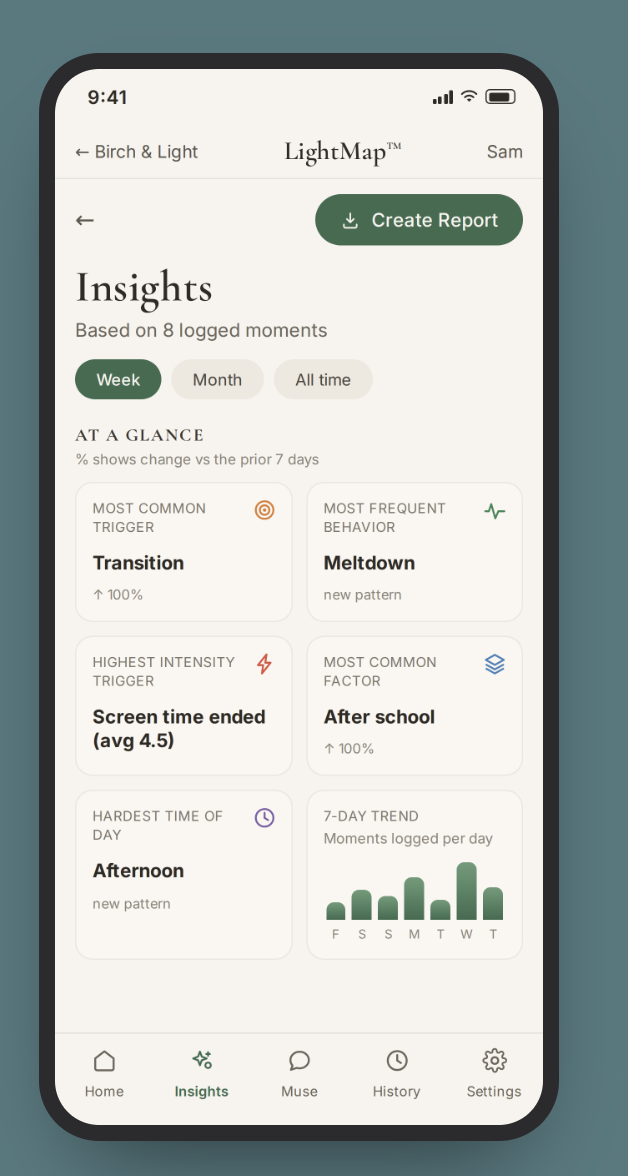

Part of the award-winning Birch & Light Method, honored with the Mom's Choice Gold Award for excellence in family resources.
A story to read together
Sometimes the easiest way in is a story you read side by side.
 Magnolia, Willow, and Pine
When the wind shifts in the clearing and Willow drifts toward Pine, Magnolia learns hurt feelings don’t have to mean closing forever.
Read the story HT the Hot Dog
A nervous hot dog learns that worrying about imagined disasters keeps stealing today’s joy.
Read the story
If today was one of those days
A few more from the library, free to read.
Researched and drafted with AI assistance, reviewed before publication. Editorial standards