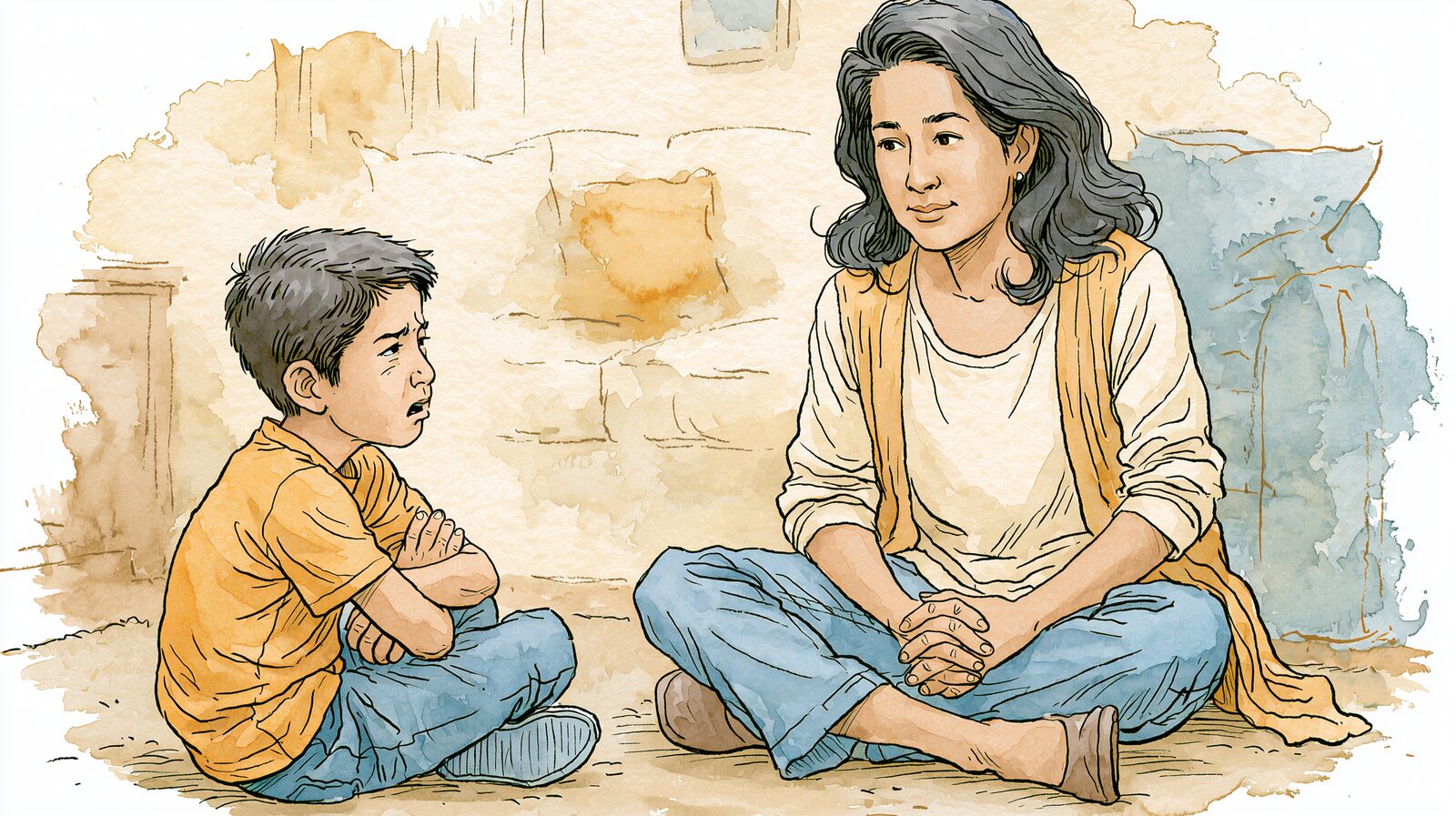
They come to you. That is the part that makes it so confusing. Your child seeks you out, upset about the friend, the grade, the game, the unfairness, clearly wanting something. So you help. You offer an idea.
"That won''t work."
Another idea. "I already tried that." A third. "You don''t get it." By the fifth suggestion they are angrier than when they arrived, you are exhausted, and some part of you is thinking: why did you come to me if you didn''t want help?
Because they did want help. Just not the kind you were giving.
They came for co-feeling, not consulting
Here is the mismatch, and it is nearly universal: a distressed child arrives seeking connection, someone to be in the feeling with them, and receives solutions, someone trying to end the feeling. To you, the ideas are love. To them, each suggestion carries an unintended message: stop feeling this, feel something more convenient instead. Rejecting the suggestion is how they say "you haven''t heard me yet."
The tell: notice that they get angrier as your ideas get better. If they wanted solutions, quality would help. It doesn''t, because the request was never solutions.
Why good ideas get rejected even when solutions ARE wanted
Sometimes they do want help, and still shoot everything down. Three reasons, all worth knowing:
Your idea requires capacity they don''t have. "Just talk to the teacher" is a great idea and an impossible task, if the child is anxious. Every rejected suggestion may simply mean "the first step of that is beyond me right now."
Accepting help costs autonomy. For some kids, especially the ones who bristle at any direction, adopting your solution means the fix was yours, not theirs. They would rather stay stuck and sovereign than rescued and directed. These kids often quietly implement your idea two days later, renamed as their own. Let them. That is the win.
Hopelessness is doing the talking. A child deep enough in a bad feeling believes nothing will work, so every suggestion is factually wrong to them. Arguing otherwise argues with the mood, and moods do not lose arguments.
While you're here, take the guide
What's Underneath is free: the three body-state triggers under most meltdowns, what to say in the minute before it tips over, and how to reset afterward.

You'll get the guide instantly, plus five free articles in your inbox every week. Real challenges (meltdowns, school mornings, picky eating, big feelings) and how to actually handle them. Unsubscribe anytime.
What actually works
Feel first. Fix later, if invited. The sequence matters more than the content. "That sounds really unfair. No wonder you''re furious." Full stop. No "but," no "have you tried." Most kids need minutes, some need a day, before the feeling is heard enough for the thinking to open.
Ask the sorting question. When you cannot tell what is wanted: "Do you want ideas, or do you want me to just listen?" It feels awkward the first time. It becomes the most valuable sentence in the house. Many kids answer honestly, and the answer changes everything about your next move.
Make them the consultant. Instead of dispensing solutions, ask: "What have you already thought of?" "What would you tell a friend stuck in this?" Ideas generated in their own voice have no autonomy tax and fit their actual capacity. Your job shifts from author to editor.
Shrink the step, not the goal. If a real solution is needed and everything is "too much," find the version with a smaller first move: not "talk to the teacher" but "want me to sit with you while you write her one sentence?"
Let some problems stay unsolved tonight. Ending the conversation without a fix feels like failure to a parent. It often is the fix. "This is a hard one. We don''t have to solve it right now. I''m in it with you." Kids sleep on that and wake up unstuck surprisingly often.
The pattern that looks like ingratitude is usually the opposite: they brought the worst feeling of their day to you, of everyone. The rejections are not the door closing. They are instructions for how to come in.
If the "yes but" cycles cluster, after school, around certain friendships, in certain moods, LightMap can help you spot what loads them: log the stuck conversations and their context, and the pattern will tell you whether you''re dealing with depletion, autonomy, or a mood that needs more support.
Sources: Peer-reviewed research on emotional validation and co-regulation in parent-child interaction (PMC); Gottman's research on emotion coaching; research on cognitive load and reduced problem-solving capacity during acute distress (PMC).
For education and reflection, not medical advice. Our terms
See what's underneath
Find the trigger instead of chasing the fear
LightMap reads your hard days together and gives you answers. Start with one moment today.
Start with 3 moments Not sure where to start? Ask me.Message Tara on WhatsApp. It really is me, I read everything and will personally respond.Click here to message Tara →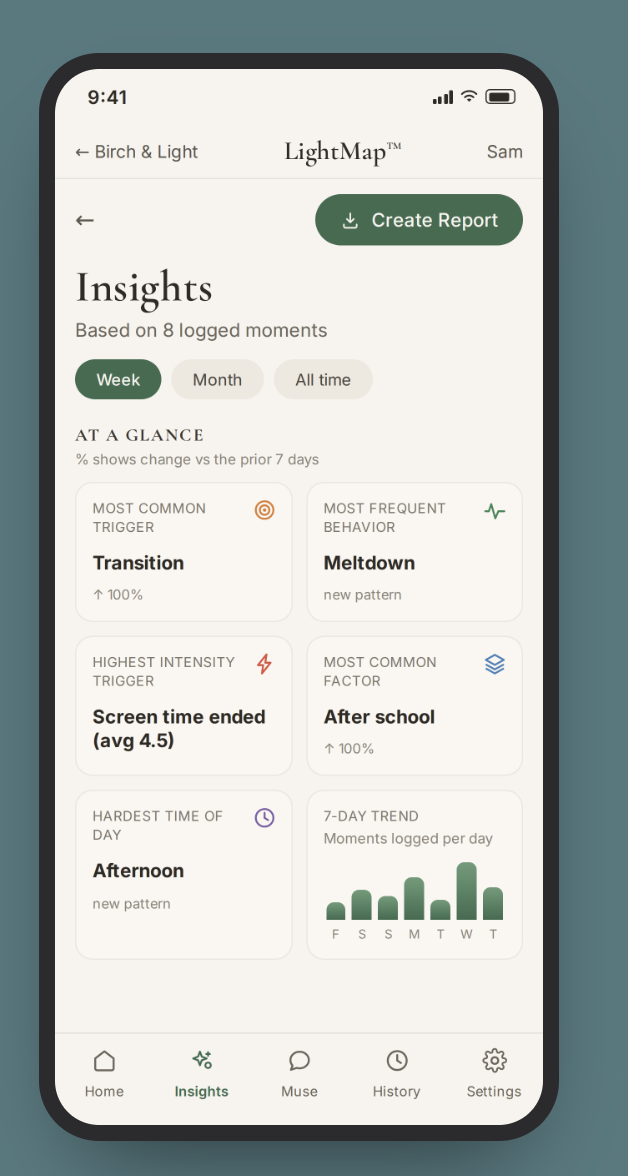

Part of the award-winning Birch & Light Method, honored with the Mom's Choice Gold Award for excellence in family resources.
A story to read together
Sometimes the easiest way in is a story you read side by side.
 HT the Hot Dog
A nervous hot dog learns that worrying about imagined disasters keeps stealing today’s joy.
Read the story Little Bird
Little Bird used to fly everywhere. Then the forest started to feel too big — and a wise voice helps her see that her wings remember more than her worries do.
Read the story
If today was one of those days
A few more from the library, free to read.
Researched and drafted with AI assistance, reviewed before publication. Editorial standards