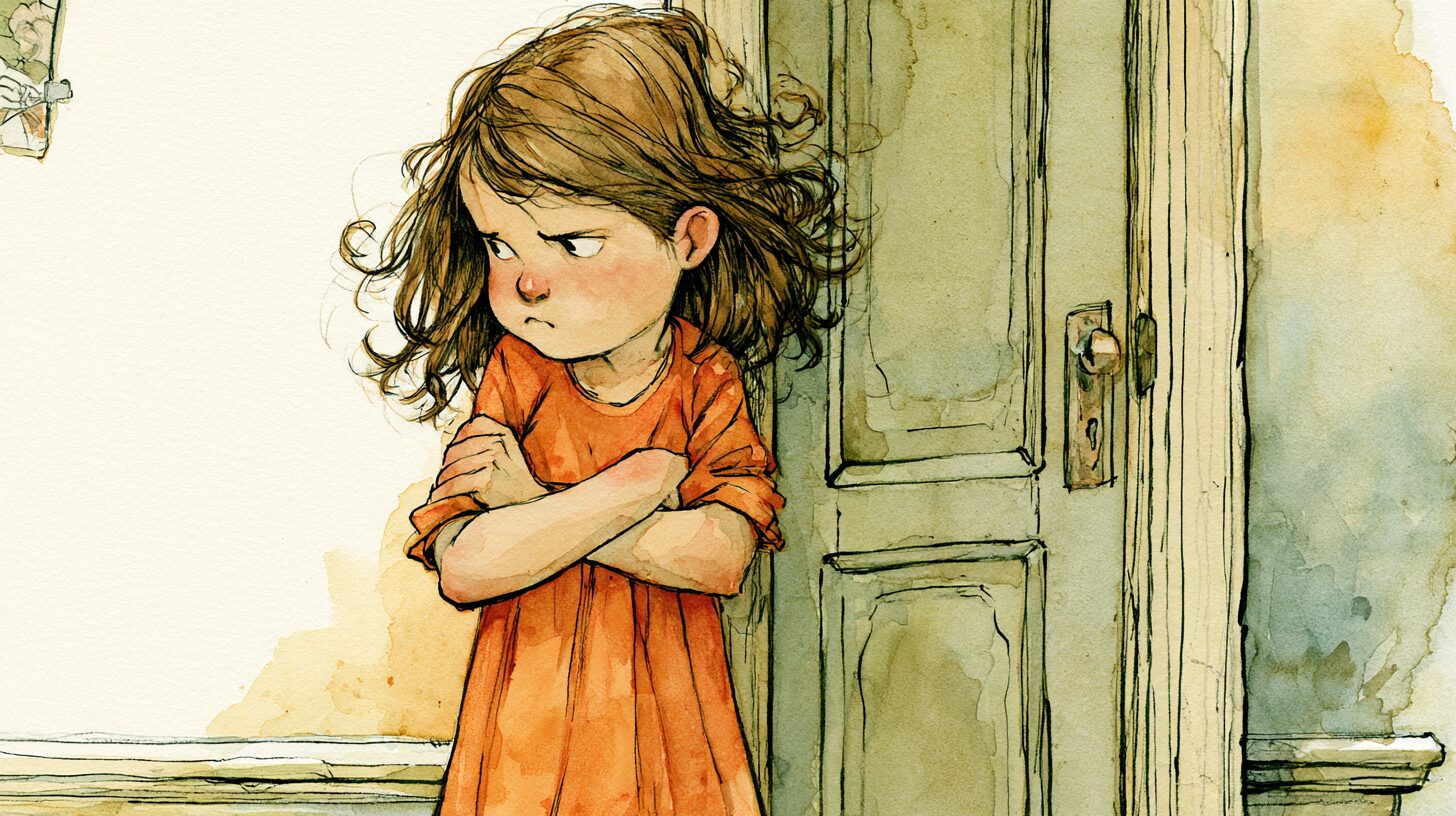
He loved gymnastics.
You have the photos to prove it. Six months ago he was begging to go. He talked about it in the car on the way there, practiced moves in the living room, asked when the next class was before the current one had even ended.
And now he won't go.
Not "is a little resistant." Won't go. Refuses. Says he hates it, says it's boring, says he doesn't want to do it anymore. You've tried reminding him how much he used to love it. You've tried incentives. You've tried giving it a week to see if the feeling passes.
It hasn't passed.
And you're standing in a place that feels genuinely confusing — because this isn't a new activity he never connected with. This is something he loved. And something changed.
The question worth asking is not "how do I get him back in the door." It's "what happened?"
Sudden Refusal Is Almost Always a Signal
When a child abruptly stops wanting to do something they genuinely enjoyed, it is rarely about the activity itself.
The activity hasn't changed. The gym is the same. The coach is the same. The skills are the same. What has changed is something in your child's relationship to the experience — and that change is almost always pointing to something specific.
A sudden refusal to engage with a previously loved activity is one of the clearest signals a child can send that something has shifted in their world. It deserves curiosity, not just a strategy for getting them back through the door.
What Might Be Happening Underneath
There are several things that commonly produce this pattern.
Something happened there. This is the first thing worth gently exploring. A moment of embarrassment in front of the group. A conflict with another child that hasn't been resolved. A correction from a coach that landed harder than intended. A moment where your child felt seen in a way that felt bad rather than good. Children often cannot name these moments directly, and they may not volunteer them. But something specific may have happened that changed the felt sense of that environment from safe to unsafe.
The level of demand has increased. Activities that feel manageable at one level of skill and expectation can start to feel threatening when the expectations rise. A child who loved gymnastics when it was playful and low-stakes may find it significantly harder when it becomes competitive, when skills are formally evaluated, when comparison to other children becomes more visible. The activity is the same. The demand on the nervous system is not.
Something outside the activity has changed. A child who is managing something hard in another area of life — a difficult social situation at school, stress at home, a friendship that has fractured — may find that the reserves they used to bring to gymnastics are no longer available. The activity didn't change. The child's capacity changed. And when capacity drops below what the activity requires, refusal can follow.
Anxiety has attached itself to the activity. Sometimes a single difficult experience — a fall, a moment of freezing, a performance that didn't go well — is enough for an anxious nervous system to begin associating the activity with threat. Once that association forms, the anticipatory dread can build each week until the activity itself becomes something the nervous system is actively trying to avoid. The child experiences this as not wanting to go. What is actually happening is that the nervous system is trying to protect them from something it has flagged as dangerous.
They have genuinely outgrown it. This one is worth including because it's real. Sometimes a child's interests shift. Sometimes an activity that fit them at one stage simply doesn't fit anymore. This is different from the patterns above — it tends to come with less distress, less resistance, and more of a quiet fading of interest rather than an abrupt refusal. But it belongs in the conversation.
While you're here, take the guide
What's Underneath is free: the three body-state triggers under most meltdowns, what to say in the minute before it tips over, and how to reset afterward.

You'll get the guide instantly, plus five free articles in your inbox every week. Real challenges (meltdowns, school mornings, picky eating, big feelings) and how to actually handle them. Unsubscribe anytime.
How to Tell the Difference
The most useful thing you can do in the face of sudden activity refusal is get curious before you get strategic.
Not "how do I get him back to gymnastics" but "what changed, and when did it change?"
Try to locate the shift. Was there a specific session after which things felt different? Did something happen at the gym, or did something happen outside the gym around the same time? Is the refusal accompanied by anxiety — dread in the days before, physical complaints on the day of — or is it more flat, more disinterested?
Ask questions that give him room to answer without having to name the thing directly. "Is there anything about gymnastics that feels different lately?" "Is there anything about going that feels hard?" "Is there anyone there that makes it feel less good?" Open questions, asked in calm moments, with genuine curiosity and no agenda — not in the car on the way there.
Notice what his body does when the activity comes up. Does he tense? Does he get a stomachache? Does he go quiet in a way that suggests dread rather than disinterest? The body often communicates what words can't reach yet.
What Doesn't Help
Reminding him how much he used to love it. This tends to produce shame rather than motivation — a child who now feels bad about the fact that something has changed.
Pushing him through the door and hoping it resolves once he's there. Sometimes this works. And sometimes it accelerates the association between the activity and threat, making the refusal more entrenched.
Treating the refusal as the problem to solve. The refusal is a signal. Solving the refusal without understanding what it's signaling leaves the underlying thing unaddressed.
What Sometimes Helps
Giving it a genuine pause. Not a permanent quit, but a deliberate step back. Taking two or three weeks off, explicitly and without drama, sometimes allows whatever has built up to decompress enough that the child can approach the activity again with less dread. This is not giving up. It is giving the nervous system room.
Having the conversation at a neutral time. Not when the activity is imminent, not when you're in the middle of a refusal, but in a calm moment — on a walk, at dinner, at bedtime — when there's no pressure attached. "I've noticed you seem to feel differently about gymnastics lately. I'm not trying to talk you into anything. I'm just wondering if anything happened."
Following his lead about whether to return. Sometimes children find their way back to activities they loved once the thing that disrupted their relationship with it has been understood and addressed. Sometimes they don't. Both are okay. The activity matters less than the child.
The Bigger Picture
A child who refuses an activity he used to love is telling you that something in his world has shifted.
That something is worth understanding — not because getting him back to gymnastics is the goal, but because understanding what changed gives you information about your child's nervous system, his experience of his environment, and what he might need right now that he isn't getting.
The refusal is not the story. It is the beginning of a conversation worth having.
Every behavior is a clue.
If sudden refusals are a pattern — activities that used to work suddenly don't, places that felt safe suddenly don't — LightMap can help you track what's shifting and when, so the pattern becomes easier to see. Explore LightMap at birchandlight.com/lightmap.
For your child: Little Bird is about a bird who used to fly everywhere and suddenly will not leave her mother's side, and who rediscovers her wings one branch at a time.
Sources: Peer-reviewed research on sudden behavioral change as a signal in child mental health (PMC); American Academy of Pediatrics guidance on abrupt changes in a child's behavior, mood, or participation; research on avoidance following a negative or overwhelming experience (PMC); PANS Research Consortium clinical guidelines on abrupt-onset symptom change.
For education and reflection, not medical advice. Our terms
See what's underneath
Find the trigger instead of chasing the fear
LightMap reads your hard days together and gives you answers. Start with one moment today.
Start with 3 moments Not sure where to start? Ask me.Message Tara on WhatsApp. It really is me, I read everything and will personally respond.Click here to message Tara →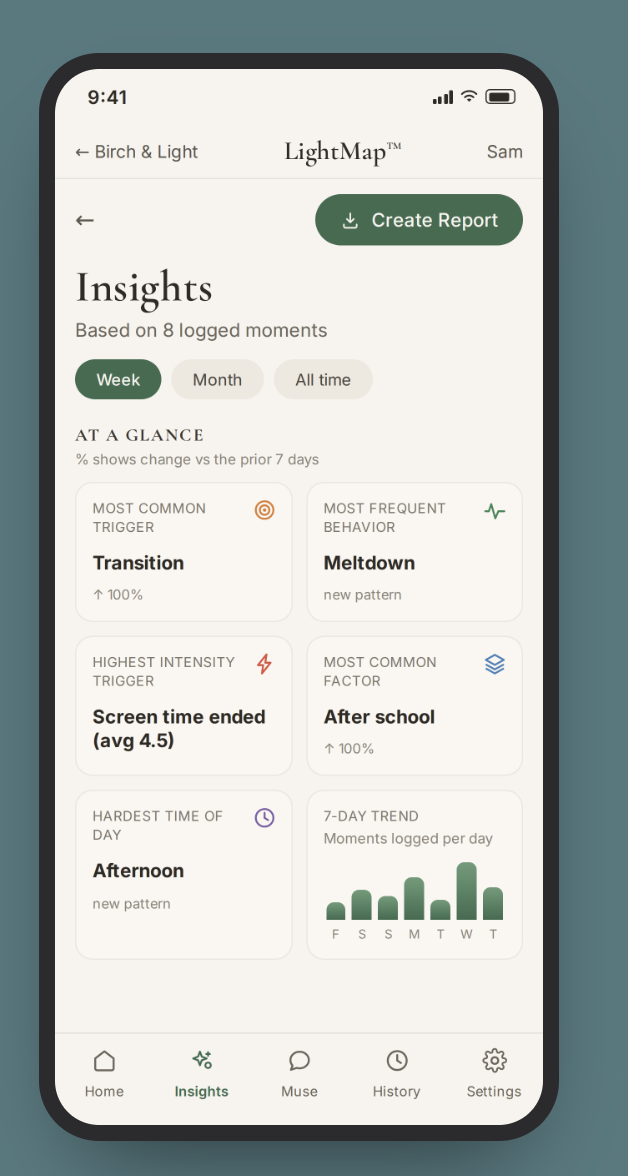

Part of the award-winning Birch & Light Method, honored with the Mom's Choice Gold Award for excellence in family resources.
A story to read together
Sometimes the easiest way in is a story you read side by side.
 HT the Hot Dog
A nervous hot dog learns that worrying about imagined disasters keeps stealing today’s joy.
Read the story The Mouse Who Heard Everything
Mina Mouse hears every creak the old house makes at night. The story gently shows that her brain isn’t broken — it’s working overtime to keep her safe — and what changes when someone sits beside her in the dark.
Read the story
If today was one of those days
A few more from the library, free to read.
Researched and drafted with AI assistance, reviewed before publication. Editorial standards