
Starting college with ADHD goes best when you register with the disability services office in your first weeks, build a visible system for deadlines before you need one, and tell a professor or advisor within two days when something slips. None of the three needs willpower, only a little setup in week one.
This one is written to you, not your parents. Someone probably handed it to you, which means someone in your corner is thinking ahead, but the next four years belong to you, so here is the straight version of what nobody puts in the orientation packet.
First: you got into college with ADHD, which means you got in playing on the hard difficulty setting, mostly without the tools. Remember that when the first bad week arrives, because it will arrive, and it will lie to you about what it means.
Why does college feel harder than high school did?
Here is the mechanical truth about why smart ADHD students who did fine in high school suddenly struggle in college, and it has nothing to do with intelligence. High school came with an invisible exoskeleton: bells that moved you, teachers who chased missing work, parents who noticed, a schedule someone else maintained. That exoskeleton was quietly doing your executive functioning for you. College removes it overnight and hands the whole job to the exact part of your brain ADHD affects most.
When things wobble, that is what is happening. Not laziness, not proof you do not belong there. A scaffolding problem, and scaffolding can be rebuilt on purpose.
The one move to make before classes start
Every college has a disability or accessibility services office, and your ADHD diagnosis qualifies you. Register in the first weeks, before anything goes wrong. Not because you are fragile, but because it is leverage: extended time on exams, quiet testing rooms, priority registration, and a completely different standing with the university if a semester ever goes sideways, because a registered student who hits trouble gets flexibility and an unregistered one gets a form letter.
Registering commits you to nothing. You can use every accommodation or none. Think of it as insurance you buy once, with an afternoon of paperwork, and here is the honest warning about that afternoon: the forms require focus, follow-through, and appointment-booking, the exact skills that are hardest, which is why half the students who mean to register never do.
Do it in week one while motivation is high, or ask someone to sit with you while it gets done. This is the single highest-value hour of your first semester.
The two-day rule
Memorize this one, because it will save you at least once: the moment something slips, a missed assignment, a skipped week, a class you stopped attending, tell someone official within two days. Email the professor, see the advisor, say it plainly. The same message that gets grace, extensions, and help in week two gets nothing in week ten, and ADHD students lose far more to silence and shame than to symptoms. You will want to hide the slip and fix it quietly. That instinct is the enemy. Report early, every time, and professors will surprise you.
While you're here, take the guide
What's Underneath is free: the three body-state triggers under most meltdowns, what to say in the minute before it tips over, and how to reset afterward.

You'll get the guide instantly, plus five free articles in your inbox every week. Real challenges (meltdowns, school mornings, picky eating, big feelings) and how to actually handle them. Unsubscribe anytime.
What works for an ADHD brain in college?
Your attention runs on interest, urgency, novelty, and other people, not on importance, so build those in instead of fighting it. One calendar with every deadline in it, visible daily, because a semester is invisible to an ADHD brain until it lands on you. Work next to other people, a library table, a study group, a friend on video, since accountability is fuel for this brain and body doubling is the cheapest tool there is. Learn your best hours and spend them on the hardest work.
Treat hyperfocus as a feature you schedule, not an accident: point it at the term paper on purpose and let it rip. Move your body when the fog rolls in. And if you take medication, sort out before you leave home how refills will work at school, because pharmacy transfers and prescriber rules across state lines are a genuinely annoying trap, and the week you run out mid-semester is the worst week to learn the process.
The part about who you are
College will hand you evidence for whatever story you feed it. Some weeks you will be brilliant, locked in, untouchable. Other weeks the same brain will not start a two-page paper, and the gap between those weeks will tempt you toward an old story: that the good weeks are the fluke and the bad ones are the truth.
Both are you. Inconsistency is the shape of this profile, not a character verdict, and the students who make it are not the ones who become consistent. They are the ones who stop treating every dip as a referendum, report it early, use the systems they set up in week one, and get back up without spending a month on shame first. You have been getting back up your whole life. That is the skill that got you in.
This article lives in a library written mostly for your parents, which is probably how it found you. The rest of it is for them. This one is yours. Go set up the accommodations meeting.
Sources: Section 504 of the Rehabilitation Act and the Americans with Disabilities Act Amendments Act; US Department of Education Office for Civil Rights guidance on documentation and accommodations in postsecondary settings; peer-reviewed research on ADHD, self-management, and the first year of college (Journal of Attention Disorders; PMC); DEA and state regulations on controlled substance prescribing across state lines.
Primary sources: 34 CFR 104.44, "Academic adjustments," Section 504 regulation (eCFR). US Department of Education, Office for Civil Rights, "Students with Disabilities Preparing for Postsecondary Education" (ed.gov), which states that to receive an academic adjustment a student must identify as having a disability and request the adjustment.
For education and reflection, not medical advice. Our terms
See what's underneath
Walk into the next appointment with answers
LightMap reads your hard days together and gives you answers. Start with one moment today.
Start with 3 moments Not sure where to start? Ask me.Message Tara on WhatsApp. It really is me, I read everything and will personally respond.Click here to message Tara →

Part of the award-winning Birch & Light Method, honored with the Mom's Choice Gold Award for excellence in family resources.
A story to read together
Sometimes the easiest way in is a story you read side by side.
 My Thoughts Don't Know How to Wait
Simon's thoughts arrive bright and fast — and feel like they will disappear if he doesn't say them right away. One quiet night beside fireflies, he discovers a small, surprising space between noticing a thought and chasing it.
Read the story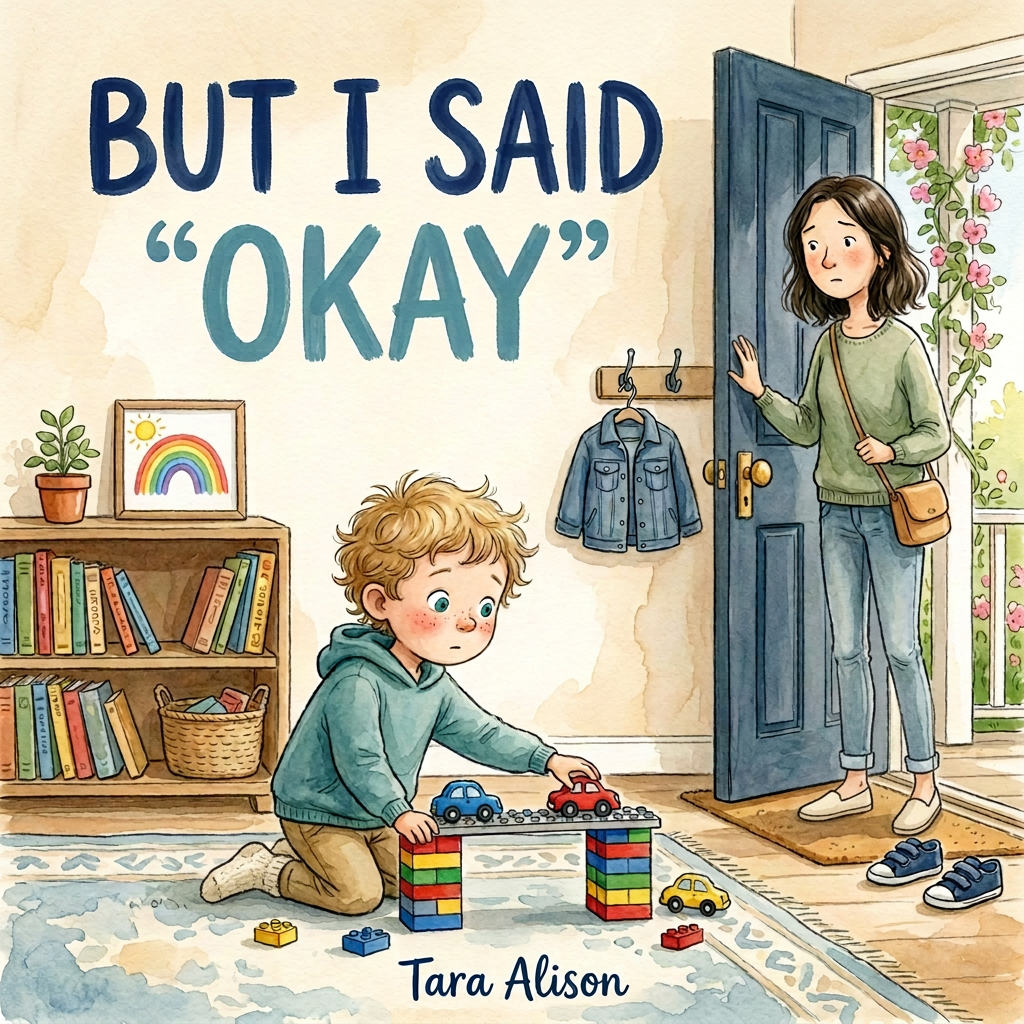 But I Said “Okay”
Owen always says okay. He means it every time. But his attention is still inside the bridge, the dragon, the cave, the music — until Mom realizes that helping him leave one thing matters more than asking him to start the next.
Read the story
If today was one of those days
A few more from the library, free to read.
Researched and drafted with AI assistance, reviewed before publication. Editorial standards