Running out of patience with a child who has ADHD is common, and it has a measurable cause: parenting a child with ADHD brings more stress than parenting a child without it. What brings patience back is changing the system, not trying harder: fewer repeated asks, a plan for your hardest two hours, and treatment for the ADHD.
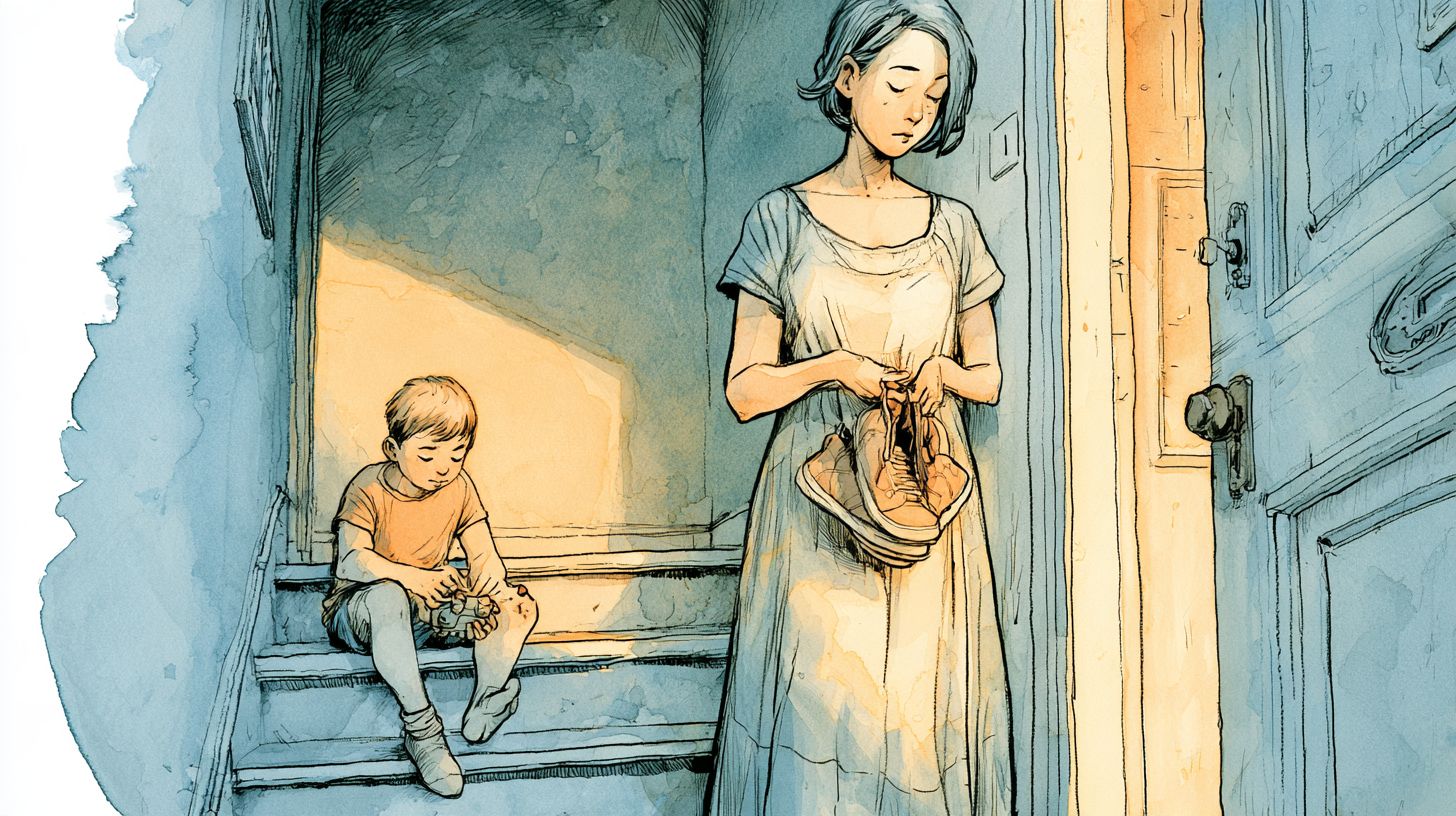
It's 7:40 in the morning. You've asked for shoes six times. The first ask was kind, the fourth had an edge, and the sixth came out as a yell you could hear yourself making. Now your child is crying, you're late, and the thought you would never say out loud is sitting right there: I have no patience left for this child.
If you typed that into a search bar, you are not a bad parent. You are a parent running on empty in a house where the demands never stop. That has a cause, and it has fixes that do not depend on you suddenly becoming a calmer person.
Why parenting a child with ADHD drains you faster
Researchers have measured this. A 2013 meta-analysis pooling 22 published studies found that parents of children with ADHD report more parenting stress than parents of children without it, and that stress rises with the severity of the child's symptoms. Two things pushed stress higher still: a child who also has conduct problems, and a parent who is dealing with depression.
Think about what an ordinary day asks of you. Every routine that runs on autopilot in other houses needs a human prompt in yours. Shoes, teeth, homework, screens off, bed. Each prompt is a small negotiation, and a child with ADHD may need ten of them where a sibling needs one. Patience is not a personality trait you either have or lack. It is a tank, and your day drains it faster than it refills.
Could I have ADHD too?
It is a real question to ask. ADHD runs strongly in families. A major review of 37 twin studies put its heritability at about 74 percent, higher than most psychiatric conditions. Many parents first recognize their own ADHD while watching their child get assessed.
If you notice your own fuse is shortest when the noise is loudest, or that you lose the thread of your own plans as often as your child does, bring that to your own doctor. Our article on getting diagnosed alongside your child covers what that looks like.
Seven changes that help when your patience is gone
1. Find the two hours that drain you most. For most families it is getting out the door and the stretch between school pickup and bed. Stop trying to have more patience everywhere. Spend your planning on those two windows.
2. Stop repeating yourself. Asking six times trains everyone to wait for the sixth ask, and it is the repeating that empties you. Say it once, then walk over, make eye contact, and do the first step together. Our article on why reminders don't work for children with ADHD explains why the brain behind the behavior does not respond to more words.
3. Move the prompts out of your mouth. A picture checklist by the door, a timer your child starts themselves, shoes that live in the car. Every reminder an object gives is one you don't have to.
4. Lower the bar on purpose. Pick the three things that must happen today and let the rest slide. A child who brushed their teeth and got to school is a good morning, even if the bed is unmade.
5. Plan your exit before you blow. Decide now what you will do when you feel the yell coming: step into the hallway, run water over your hands, say "I need one minute." A plan made in a calm moment works better than willpower in a hot one. Our guide to staying regulated when your child is melting down has more.
6. Repair, every time. You will still lose it sometimes. What your child remembers is whether you came back. "I yelled, and that wasn't okay. I was frustrated, and it's not your fault. Let's try again." Our article on what to do after you've yelled walks through it.
7. Get your child's ADHD treated. A 2018 meta-analysis of 43 studies found that treating a child's ADHD lowered parenting stress, and the improvement looked similar whether the treatment was medication or a behavioral approach. Your patience is not only a personal project. It improves when the load gets lighter.
While you're here, take the guide
What's Underneath is free: the three body-state triggers under most meltdowns, what to say in the minute before it tips over, and how to reset afterward.

You'll get the guide instantly, plus five free articles in your inbox every week. Real challenges (meltdowns, school mornings, picky eating, big feelings) and how to actually handle them. Unsubscribe anytime.

There's a story for this exact struggle
My Thoughts Don't Know How to Wait
Simon's thoughts arrive bright and fast — and feel like they will disappear if he doesn't say them right away. One quiet night beside fireflies, he discovers a small, surprising space between noticing a thought and chasing it.
Free to read. You'll also get five free articles a week. Unsubscribe anytime.
Is it normal to not like your child sometimes?
Yes. Loving your child and not liking how a Tuesday afternoon with them feels can sit side by side. Feeling it does not make you cruel. What helps is finding a few minutes a day where nobody is being corrected: a car ride with their music, five minutes of the game they love, a snack together on the porch. Those minutes refill both of you.
If the anger never lifts, or you are feeling hopeless most days, talk to your own doctor. Parent burnout is real, and it is treatable.
Track where the patience goes
Most parents can tell you their hardest moment of the day. Fewer can tell you what led up to it. When you write down what happened, what time, and what came right before, the pattern usually shows up fast: the hungry hour, the screen that had to go off, the transition with no warning. Our story Thoughts Don't Know How to Wait gives your child words for the part of ADHD that makes waiting so hard, so you are not the only one explaining it.
This is what LightMap was built for. Log the hard moments, even a little at a time, and LightMap uncovers what is driving them, coaches you on how to handle each one, and shows you which hours of your day need the plan. Start free at LightMap.
Running out of patience is not proof you are failing. It is proof you have been doing the work of three people with the energy of one. Change the system, and you get some of yourself back.
Start here
Find out what's really going on
The quiz points you toward what's driving it and what tends to help.
Take the quizOr get a free 15 minute LightMap Analysis with TaraFree. No card. 15 minutes.
 Not sure where to start? Ask me.Message Tara on WhatsApp. It really is me, I read everything and will personally respond.Click here to message Tara →

Part of the award-winning Birch & Light Method, honored with the Mom's Choice Gold Award for excellence in family resources.
Sources
Sources: Theule J, Wiener J, Tannock R, Jenkins JM. "Parenting Stress in Families of Children With ADHD: A Meta-Analysis." Journal of Emotional and Behavioral Disorders 2013;21(1):3-17. Theule J, Cheung K, Aberdeen K. "Children's ADHD Interventions and Parenting Stress: A Meta-Analysis." Journal of Child and Family Studies 2018;27(9). Faraone SV, Larsson H. "Genetics of attention deficit hyperactivity disorder." Molecular Psychiatry 2019;24(4):562-575.
For education and reflection, not medical advice. Our terms
A story to read together
Sometimes the easiest way in is a story you read side by side.
- My Thoughts Don't Know How to Wait
Simon's thoughts arrive bright and fast — and feel like they will disappear if he doesn't say them right away. One quiet night beside fireflies, he discovers a small, surprising space between noticing a thought and chasing it.
Read the story  Until I Don't
Rosie shines at dance, at school, with neighbors. At home, the smallest thing can tip her over. One quiet hallway moment helps her family finally find language for the part of her nobody else sees.
Read the story
Researched and drafted with AI assistance, reviewed before publication. Editorial standards