
Impulsivity in tweens and teens usually comes from a nervous system that has been overloaded for too long, not from a flaw in character. When the body runs hot on poor sleep and constant strain, the part of the brain that pauses to weigh options goes quiet and the body grabs for relief.
Impulsivity tends to be talked about as a personality trait — as if some kids just are "that way." But almost every parent of a tween or teen has watched a thoughtful kid do something that doesn't match the kid they know. That is rarely a character shift. It's almost always a body.
A nervous system that has been holding too much for too long stops weighing options carefully. It starts looking for relief. Once you can see that, a lot of impulsive behavior reads differently.
What does "dysregulated" mean for a teenager?
Regulation is the body's ability to stay inside a workable range — alert enough to engage, calm enough to think. Dysregulation isn't drama. It's the body landing outside that range, either too activated (impulsive, reactive, agitated) or too shut down (flat, withdrawn, numb).
Impulsivity is often what activated dysregulation looks like at twelve, fourteen, sixteen. The pause-and-consider machinery isn't broken. It's offline.
Why "just think before you act" rarely works
Telling a teen in a high-activation state to think first is asking the part of the brain that's currently the loudest to listen to the part of the brain that's currently the quietest. It's not a failure of effort. It's an order of operations problem.
What does help, slowly, is lowering the floor — so the system isn't running so hot most of the time. That work happens days and weeks before the impulsive moment, not during it.
What can lower the floor?
- Sleep. The single biggest lever. Even one chronically short week shifts impulsivity meaningfully.
- Predictable food. Blood-sugar swings amplify everything.
- Less chronic overwhelm. Schedule audit. What can be subtracted.
- Co-regulation. A calm adult body in proximity, not lecturing — just present.
- Movement. Walks, swims, anything that lets the body discharge what it's been carrying.
None of that is exciting. All of it changes the baseline the next impulsive moment is built on.
What to do in the actual moment
In the moment itself, the most useful adult job is usually to not add to the activation. That can look like fewer words, slower movement, lower voice, more space. It doesn't mean no boundaries — it means delivering them in a way the system can metabolize.
The conversation about what happened almost always lands better the next morning, in a quieter room, side by side rather than face to face.
What patterns tend to look like
Across families, impulsive periods often cluster around: sleep loss, transitions (new semester, new social configuration, changes at home), sensory overload, and seasons of heavy social masking. LightMap tends to surface those patterns within a few weeks of light logging, which makes it easier to see what the nervous system is responding to instead of guessing.
While you're here, take the guide
What's Underneath is free: the three body-state triggers under most meltdowns, what to say in the minute before it tips over, and how to reset afterward.

You'll get the guide instantly, plus five free articles in your inbox every week. Real challenges (meltdowns, school mornings, picky eating, big feelings) and how to actually handle them. Unsubscribe anytime.
Related
Frequently asked questions
Is impulsivity always a sign that something is wrong?
No. Some impulsivity is developmentally normal in tweens and teens — the prefrontal cortex is still building. What's worth paying attention to is the pattern: when impulsive moments cluster, what they tend to follow, and whether they're escalating in intensity over time.
How can I tell if my teen is genuinely impulsive in the moment or just choosing?
Genuinely impulsive moments often have a rushed, almost-disconnected quality afterwards — surprise, regret, a 'I don't know why I did that.' Choices made with more capacity tend to come with more articulated reasoning, even if the reasoning is one you disagree with.
What helps lower the floor of impulsivity over time?
Sleep, predictable food, less chronic overwhelm, and relationships where the teen doesn't have to perform. None of that is dramatic. All of it changes the baseline the nervous system is operating from.
Where does LightMap come in?
LightMap helps you notice when impulsive periods cluster and what tends to come before them — sleep changes, social stress, sensory overload. The point is awareness of the pattern, not surveillance of the teen.
Put it into practice
Reading about these skills is step one. Building them works best through doing, and through play. Money and My Fast Brain is a printable workbook that turns planning, waiting, and finishing into missions kids actually want to do, with a page by page science section for the grown-up. It is $9, instant download, print at home.
Get the workbook, or find both fast brain workbooks in the bundle.
For your child: My Thoughts Don't Know How to Wait is about a boy who interrupts because his thoughts feel like fireflies that blink out the moment he reaches for them.
Sources: Steinberg's dual systems model of adolescent risk-taking (PMC); peer-reviewed research on stress load and impaired impulse control (PMC); research on sleep deprivation and inhibitory control in adolescents (PMC). Primary sources: Steinberg L. A dual systems model of adolescent risk-taking. Developmental Psychobiology. 2010, 52(3), 216-224. doi 10.1002/dev.20445. Arnsten AFT. Stress signalling pathways that impair prefrontal cortex structure and function. Nature Reviews Neuroscience. 2009, 10(6), 410-422. doi 10.1038/nrn2648. Gruber R, Cassoff J, Frenette S, Wiebe S, Carrier J. Impact of sleep extension and restriction on children's emotional lability and impulsivity. Pediatrics. 2012, 130(5), e1155-e1161. doi 10.1542/peds.2012-0564. Paruthi S, et al. Recommended amount of sleep for pediatric populations: a consensus statement of the American Academy of Sleep Medicine. Journal of Clinical Sleep Medicine. 2016, 12(6), 785-786. doi 10.5664/jcsm.5866.
For education and reflection, not medical advice. Our terms
See what's underneath
Understand the why, not just the what
LightMap reads your hard days together and gives you answers. Start with one moment today.
Start with 3 moments Not sure where to start? Ask me.Message Tara on WhatsApp. It really is me, I read everything and will personally respond.Click here to message Tara →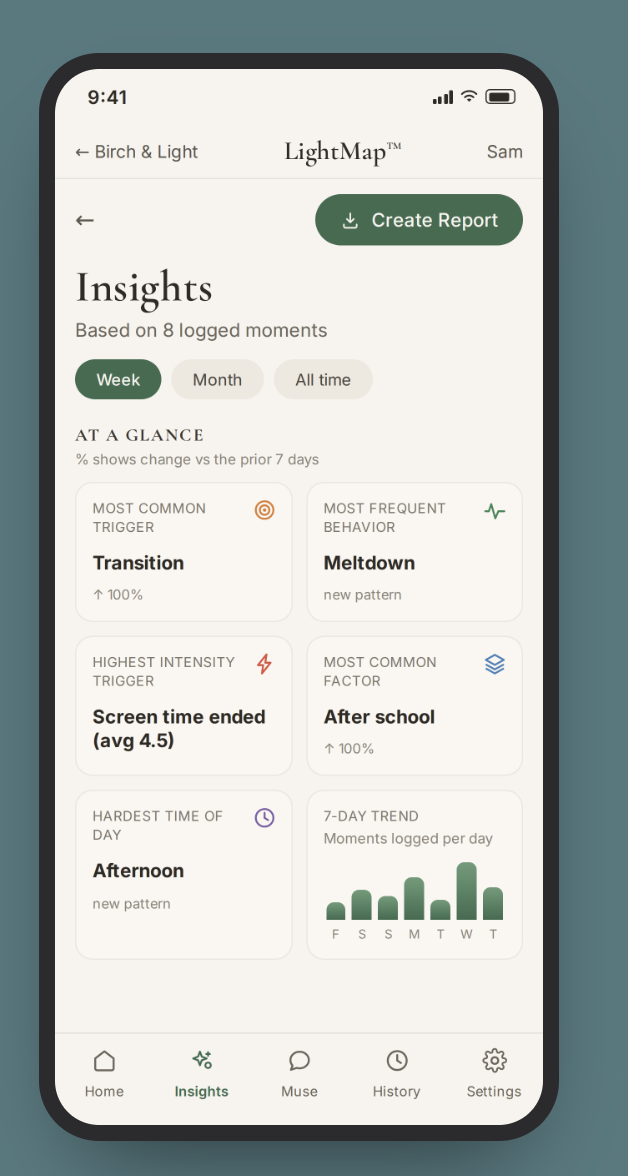

Part of the award-winning Birch & Light Method, honored with the Mom's Choice Gold Award for excellence in family resources.
A story to read together
Sometimes the easiest way in is a story you read side by side.
 But I Said “Okay”
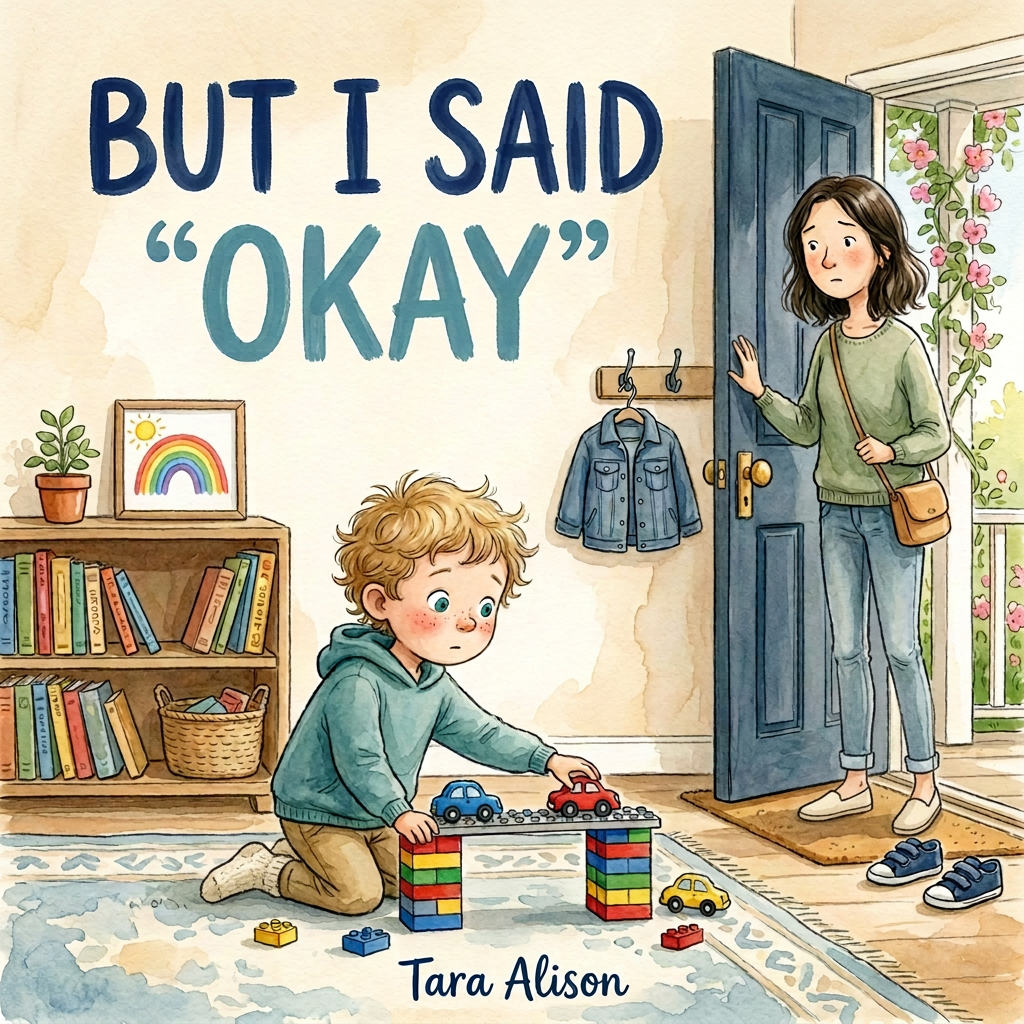
Owen always says okay. He means it every time. But his attention is still inside the bridge, the dragon, the cave, the music — until Mom realizes that helping him leave one thing matters more than asking him to start the next.
Read the story The Mosquito Who Thought He Was a Dragonfly
Raised by dragonflies after a summer storm, Miro learns one night that the world sometimes sees him differently than the family who loves him — and that being misunderstood isn’t the same as being bad.
Read the story
If today was one of those days
A few more from the library, free to read.
Researched and drafted with AI assistance, reviewed before publication. Editorial standards