
Ferritin testing tells you whether your child's iron stores are low, which can worsen focus, mood and sleep, but it cannot diagnose or cure ADHD. Children with ADHD do tend to have lower ferritin on average, yet most have normal levels. Test first, and supplement only if the number is low.
If you spend any time in parent groups, you have seen the iron posts. Someone shares that low iron looks like ADHD, that a blood test changed everything for their child, and that the right kind of supplement matters more than anyone tells you. The comments fill up fast, because the idea is hopeful: maybe the struggle has a simple, fixable cause.
Here is the honest version. There is a real finding underneath these posts, and there is also a layer of overclaim on top of it. Both parts matter, because the real finding is worth acting on and the overclaim can lead families somewhere unhelpful, or in the case of supplementing blind, somewhere genuinely unsafe.
The real finding
Iron plays a role in how the brain makes dopamine, the neurotransmitter most involved in attention, motivation, and reward. That gives researchers a plausible reason to look at iron in kids with ADHD, and when they have looked, several studies have found that children with ADHD tend to have lower ferritin on average than children without it. Ferritin is the storage form of iron, and it is the number that usually drops first, before anemia ever shows up on a standard blood count. Two meta-analyses that pooled the studies, one in 2017 and one in 2018, both found serum ferritin lower in children with ADHD, while serum iron itself did not differ. That is why ferritin, not a basic iron level, is the number to ask about.
Some studies have also found that lower ferritin tracks with more severe symptoms, and that kids with low iron stores are more likely to have restless, unrefreshing sleep, including the crawly-leg discomfort of restless legs syndrome. That last piece matters more than it sounds. A child who sleeps badly every night will look more inattentive, more irritable, and more dysregulated by afternoon, whatever else is going on.
What the research does not say
It does not say that ADHD is usually hidden iron deficiency. Most children with ADHD have normal iron levels, and most children with low iron do not have ADHD. The two overlap at the edges; they are not the same condition wearing different clothes.
It also does not say that correcting low iron cures ADHD. In the small trials that gave iron to children who had both ADHD and low ferritin, some kids improved meaningfully. That is a real and worthwhile outcome. It is improvement in a specific subgroup, though, not a cure, and the trials are small enough that researchers still describe the evidence as preliminary. The International Restless Legs Syndrome Study Group reached a similar place in its 2018 guideline on iron treatment: the studies in children were low-grade, and it found too little evidence to say how well oral or IV iron works for them.
If your child's levels come back low and correcting them helps, that is wonderful. If the levels come back normal, iron was not your answer, and no amount of dietary heroics will make it one.
While you're here, take the guide
What's Underneath is free: the three body-state triggers under most meltdowns, what to say in the minute before it tips over, and how to reset afterward.

You'll get the guide instantly, plus five free articles in your inbox every week. Real challenges (meltdowns, school mornings, picky eating, big feelings) and how to actually handle them. Unsubscribe anytime.
When should you ask for a ferritin test?
Asking your pediatrician to check ferritin is a reasonable request, and most will order it without pushback. It is an ordinary blood draw, often bundled with other routine labs. It makes particular sense if your child has restless or thrashing sleep, complains of uncomfortable legs at night, eats a very restricted diet, is a heavy-flow teen, or follows a vegetarian or mostly vegetarian diet. Those are the kids where low iron stores are genuinely more likely.
One useful thing to know for the appointment: ferritin rises when the body is fighting inflammation or illness, so a level drawn during or right after a sickness can read falsely normal. And doctors sometimes disagree about where the cutoff for low should sit for symptoms like restless sleep, so ask for the actual number rather than just a normal or abnormal verdict, and talk through what it means for your specific child.
Is it safe to supplement first and test later?
No, and this is the part that gets lost in the enthusiasm. Iron is not a shrug-and-try-it supplement. The body has no easy way to get rid of extra iron, excess is harmful, and iron poisoning remains one of the more dangerous accidental ingestions in young children. Chewable and gummy formats make that risk worse, not better. Supplementing a child whose levels were never checked can also quietly mask a different problem that deserved attention.
So the order of operations is fixed: test first, supplement only if the numbers say to, at the dose your doctor recommends, with a recheck to confirm the levels actually came up. If a child is deficient, the ordinary supplements your pharmacy carries are well studied and they work. Absorption is helped by vitamin C and hindered by milk and tea near the dose, and your pediatrician can walk you through the practical details. Food sources are a fine part of the picture too, but genuine deficiency usually needs more than diet alone to correct in a reasonable time.
The bigger pattern worth naming
Posts like these spread because they contain something parents rarely get: a concrete action with a hopeful ending. And the action itself, asking for a blood test, is legitimately good advice. The trouble starts when a real subgroup finding gets stretched into a universal promise, because then the parents whose kids test normal are left feeling like they missed something or did not try hard enough. You did not. Iron is one honest item on a longer checklist that also includes sleep, hearing and vision, anxiety, and learning differences, all of which can amplify or imitate attention symptoms.
Check the box, take the answer seriously in either direction, and keep going. Whatever the labs say, your child's struggles are real, your effort is real, and neither one is explained away by a single number.
If you do end up supplementing, treat it as an experiment: write down what you hope will shift in LightMap before you start, and eight weeks later you have an answer rather than a feeling.
Sources: Konofal E, Lecendreux M, Arnulf I, Mouren MC, "Iron deficiency in children with attention-deficit/hyperactivity disorder," Archives of Pediatrics & Adolescent Medicine, 2004;158(12):1113-1115, doi 10.1001/archpedi.158.12.1113; Wang Y, Huang L, Zhang L, Qu Y, Mu D, "Iron Status in Attention-Deficit/Hyperactivity Disorder: A Systematic Review and Meta-Analysis," PLoS One, 2017;12(1):e0169145, doi 10.1371/journal.pone.0169145; Tseng P-T, Cheng Y-S, Yen C-F, et al., "Peripheral iron levels in children with attention-deficit hyperactivity disorder: a systematic review and meta-analysis," Scientific Reports, 2018;8:788, doi 10.1038/s41598-017-19096-x; Allen RP, Picchietti DL, Auerbach M, et al., "Evidence-based and consensus clinical practice guidelines for the iron treatment of restless legs syndrome/Willis-Ekbom disease in adults and children: an IRLSSG task force report," Sleep Medicine, 2018;41:27-44, doi 10.1016/j.sleep.2017.11.1126; peer-reviewed research on iron deficiency, ADHD, and restless legs syndrome in children (PubMed, PMC).
For education and reflection, not medical advice. Our terms
See what's underneath
Walk into the next appointment with answers
LightMap reads your hard days together and gives you answers. Start with one moment today.
Start with 3 moments Not sure where to start? Ask me.Message Tara on WhatsApp. It really is me, I read everything and will personally respond.Click here to message Tara →

Part of the award-winning Birch & Light Method, honored with the Mom's Choice Gold Award for excellence in family resources.
A story to read together
Sometimes the easiest way in is a story you read side by side.
 My Thoughts Don't Know How to Wait
Simon's thoughts arrive bright and fast — and feel like they will disappear if he doesn't say them right away. One quiet night beside fireflies, he discovers a small, surprising space between noticing a thought and chasing it.
Read the story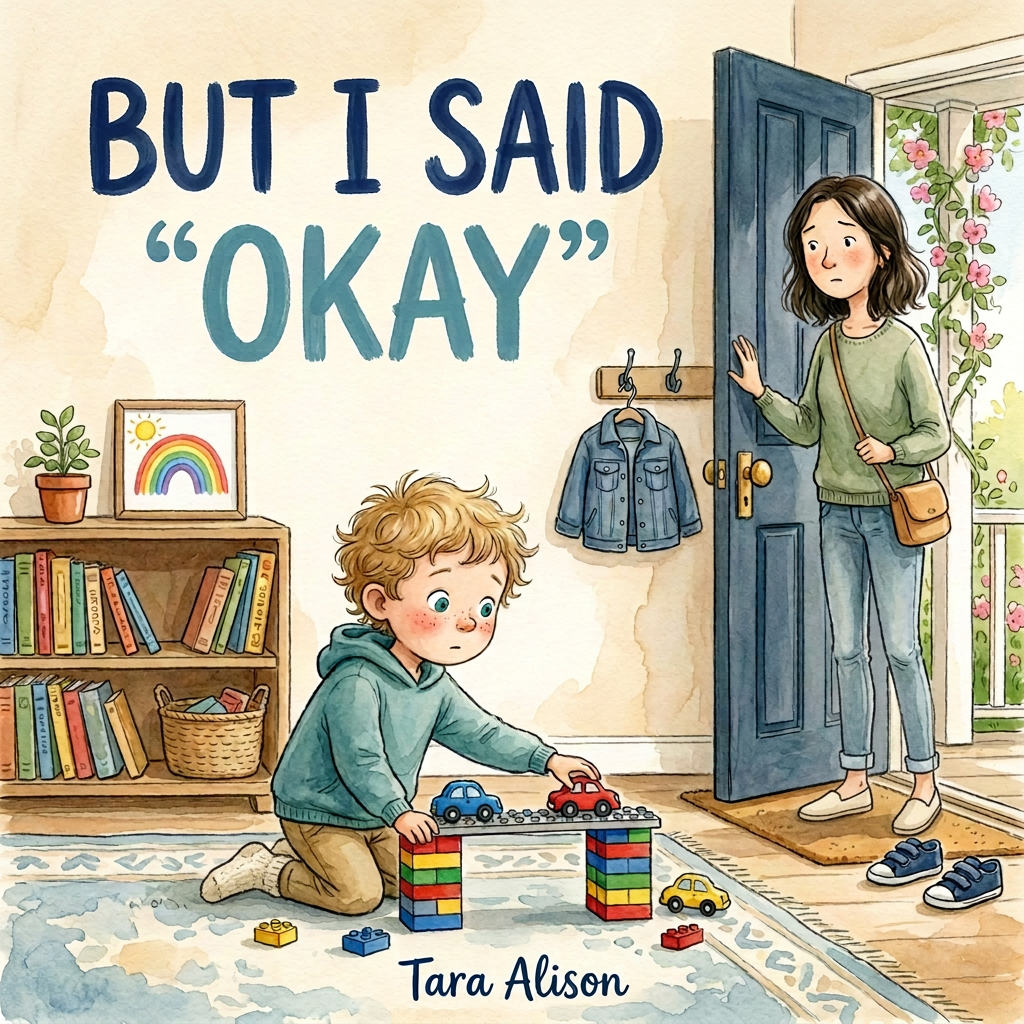 But I Said “Okay”
Owen always says okay. He means it every time. But his attention is still inside the bridge, the dragon, the cave, the music — until Mom realizes that helping him leave one thing matters more than asking him to start the next.
Read the story
If today was one of those days
A few more from the library, free to read.
Researched and drafted with AI assistance, reviewed before publication. Editorial standards