.jpg)
The referral is in. The school agrees something is going on. And then someone tells you the number: the local waiting list for a children's ADHD assessment runs two years, three, sometimes longer. Your child will be in a different school year, maybe a different school, before anyone official even looks at them.
Two things are true and most parents are told neither. There is a legal route in England that can shorten the wait dramatically. And almost everything that helps a child with ADHD-shaped struggles can start now, without the diagnosis.
Right to Choose, the short version for parents
Under the NHS Constitution, when a patient in England is referred for a first outpatient appointment, they have the legal right to choose the provider, as long as that provider holds an NHS contract for the service anywhere in the country. That right covers children's mental health referrals, which means your GP can refer your child to a national specialist provider instead of the local service with its multi-year list. The assessment is NHS-funded. You pay nothing.
Several national providers assess children under this route; Psicon and Clinical Partners are among the commonly used names, and the charity ADHD UK maintains an updated list of providers with their current waiting times and the ages they accept, so check there rather than guessing, since each provider's age range and capacity shifts. Families using this route have often been assessed in months rather than years, but by late 2026 that gap has narrowed sharply. NHS budget pressure has pushed roughly 15 Integrated Care Boards, covering about 19 million people, to ration ADHD and autism assessments, with minimum waits as long as two years in some areas and, in several ICBs, a pause on new Right to Choose referrals while funding is reviewed. Whether this route still gets your child seen faster than the local list depends entirely on your postcode and the provider's current capacity, so check the provider's own waiting-time page and ADHD UK's Right to Choose page before you count on any particular timeline.
The GP appointment, scripted
The referral has to come from the GP, and GPs vary wildly in how familiar they are with this. Go in prepared: say the words "I would like my child referred for an ADHD assessment under NHS Right to Choose, to [provider]." Bring the provider's GP referral pack printed out, they publish them on their websites precisely because GPs often haven't done one before. Bring a half-page summary of your child's difficulties with concrete examples, when they started, and a line from the school if you have one. If the GP hesitates or says it isn't possible, ask politely for that to be recorded in the notes, then speak to the practice manager, contact PALS, or try another GP at the practice. This is an entitlement, not a favour, and persistence works.
One honest note: the specialist assessing your child will want information from home and from school, questionnaires at minimum, so give the school a heads-up that forms will be coming. That is normal, not a sign of trouble.
While you're here, take the guide
What's Underneath is free: the three body-state triggers under most meltdowns, what to say in the minute before it tips over, and how to reset afterward.

You'll get the guide instantly, plus five free articles in your inbox every week. Real challenges (meltdowns, school mornings, picky eating, big feelings) and how to actually handle them. Unsubscribe anytime.
Medication cannot jump the queue, but school support can
To answer the question every waiting parent eventually asks: no, the GP cannot start ADHD medication while you wait. In the UK those medications are specialist-initiated, after diagnosis, and there is no over-the-counter substitute that does what they do. The supplement names that circulate in groups, magnesium, B6, omega-3, have weak or modest evidence at best, and nothing regular should be given to a child without the GP in the loop. Be gently sceptical of anything sold to waiting parents; the waiting list is a market, and the market knows it.
But here is what does not have to wait: school support is needs-based, not diagnosis-based. Ask for a meeting with the SENCO (the school's special educational needs coordinator) now, and ask what support can start on the basis of observed need, seating, movement breaks, instructions broken into steps, extra transition warnings. Schools can and do put this in place pre-diagnosis, and a paper trail of school support also strengthens the eventual assessment.
What actually helps at home while you wait
None of it is glamorous, all of it is load-bearing. Protect sleep like it's medicine, because for attention and mood, it is. Get real movement into the morning before school asks for stillness. Give instructions one step at a time, delivered close up, not shouted across the house, and let visible structure, charts, timers, same rhythm daily, do the remembering his brain can't yet. Catch him being good loudly and often, because a child in the waiting-list years is usually accumulating corrections at a rate that erodes something important, and the antidote is deliberate. And start reading about ADHD now, because the parents who arrive at the assessment already fluent leave the diagnosis appointment with a running start.
If your child is older and the wait stretches toward the teenage years, know that turning 18 mid-wait can mean starting over on an adult list; we've written separately about that cliff and the adult version of this route.
Geography note: Right to Choose is England-only. In Scotland, Wales, and Northern Ireland the path runs through local services with their own waits, and the UK ADHD charities cover all four nations' processes.
The wait is long and the assessment will ask what you have seen across it. Logging as you go in LightMap means the months on the list become evidence rather than lost time.
Pathway details and providers were last reviewed in October 2026. NHS processes change; confirm current details with ADHD UK and the providers directly.
Sources: NHS England guidance on patient choice of provider and the NHS Choice Framework; the National Health Service Act 2006 and associated patient choice regulations; NICE Guideline NG87, Attention deficit hyperactivity disorder: diagnosis and management; NHS England data on ADHD assessment waiting times.
For education and reflection, not medical advice. Our terms
See what's underneath
Walk into the next appointment with answers
LightMap reads your hard days together and gives you answers. Start with one moment today.
Start with 3 moments Not sure where to start? Ask me.Message Tara on WhatsApp. It really is me, I read everything and will personally respond.Click here to message Tara →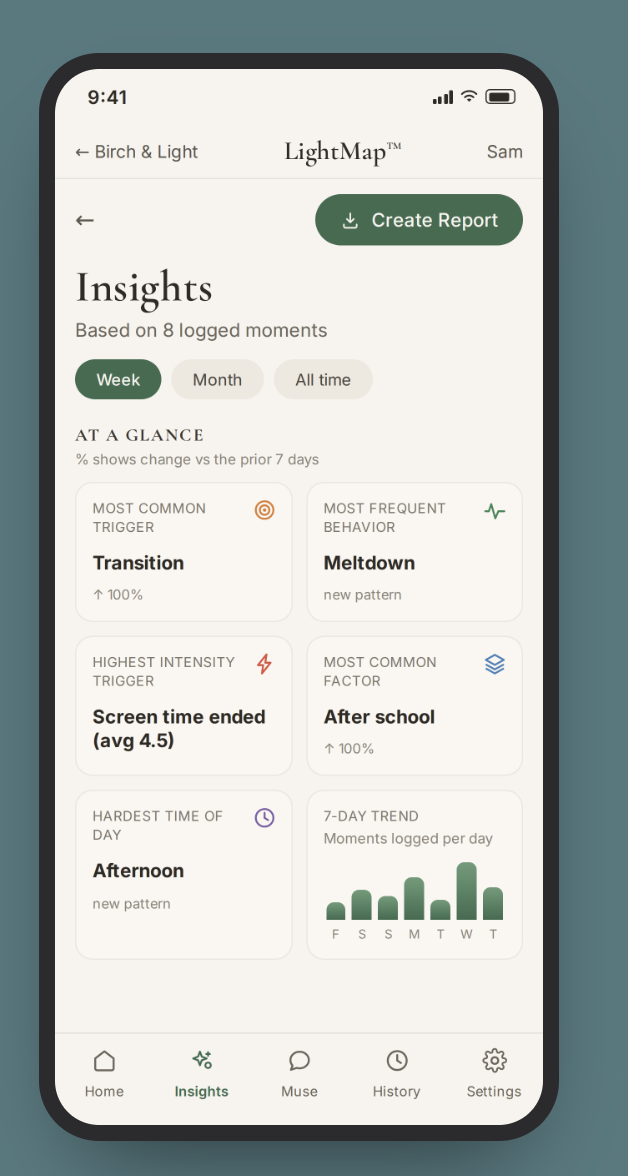

Part of the award-winning Birch & Light Method, honored with the Mom's Choice Gold Award for excellence in family resources.
A story to read together
Sometimes the easiest way in is a story you read side by side.
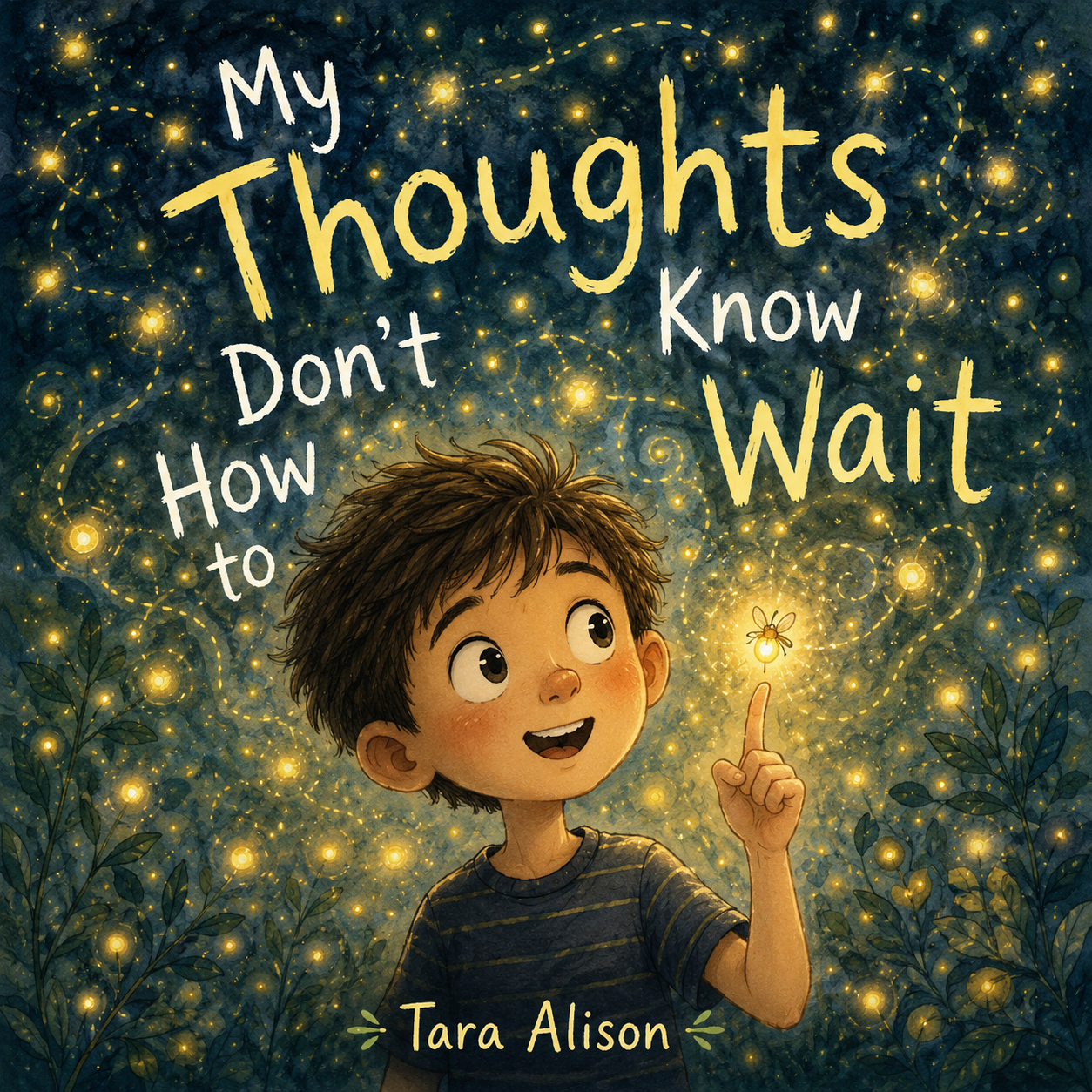 My Thoughts Don't Know How to Wait
Simon's thoughts arrive bright and fast — and feel like they will disappear if he doesn't say them right away. One quiet night beside fireflies, he discovers a small, surprising space between noticing a thought and chasing it.
Read the story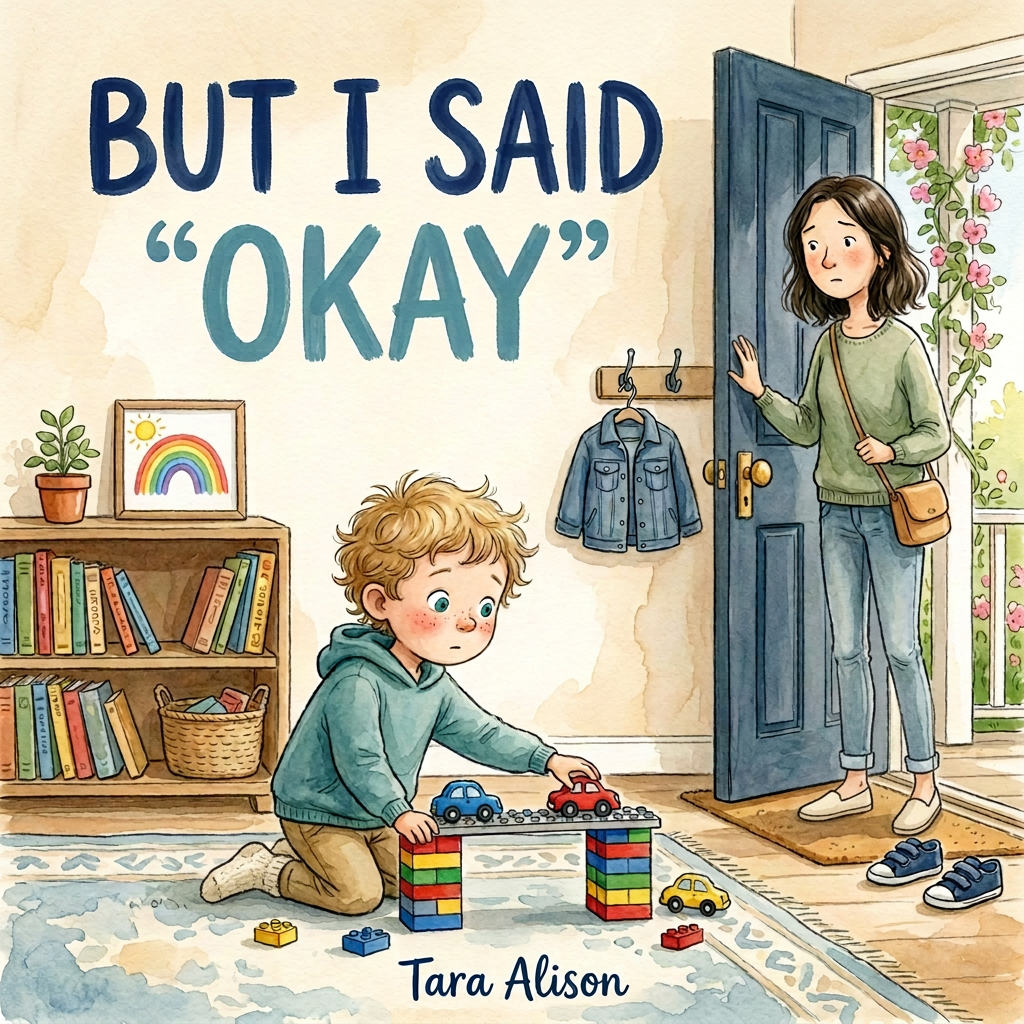 But I Said “Okay”
Owen always says okay. He means it every time. But his attention is still inside the bridge, the dragon, the cave, the music — until Mom realizes that helping him leave one thing matters more than asking him to start the next.
Read the story
If today was one of those days
A few more from the library, free to read.
Researched and drafted with AI assistance, reviewed before publication. Editorial standards