
There is a specific stuck place many parents reach: you are past wondering. You have watched your child long enough, read enough, compared enough. You are sure it is ADHD. And you have no idea what the next concrete step is, because "get her evaluated" turns out to be a door with six handles and no signage.
Here is the map. (Steps and titles vary by country, this walkthrough is US-shaped, with a note for elsewhere at the end, and none of it replaces guidance from your own clinicians.)
Start with the pediatrician, but arrive loaded
For most families the first step is the child's regular doctor. Pediatricians can screen for ADHD, and many can diagnose straightforward cases themselves using standardized rating scales filled out by parents and teachers. What determines whether this visit is useful is what you bring: a written list of specific behaviors with examples (not "she can't focus" but "homework that should take 20 minutes takes 2 hours across five restarts"), when they started, where they show up (home, school, both, because ADHD requires impairment in more than one setting), and anything teachers have said. Ask directly: "Can you evaluate her for ADHD, or refer us to someone who can?" A vague "let's watch it" is a fine answer to a vague concern and a poor answer to a documented one.
Know who can actually diagnose
Several kinds of professionals can make the call, and they differ in depth, cost, and wait:
Pediatricians, fastest and cheapest, good for clear-cut presentations. Child psychologists do fuller evaluations, including the deep neuropsychological testing that maps attention, learning, and everything else, most useful when the picture is complicated (possible learning disabilities, anxiety, autism questions alongside). Child psychiatrists diagnose and manage medication, the referral you want when treatment is likely to involve prescriptions or the case is complex. Developmental-behavioral pediatricians are the specialists for tangled pictures, and carry the longest waitlists. Therapists and counselors can recognize ADHD but often cannot formally diagnose; ask any provider "can you provide a formal diagnosis" before booking.
The free route people forget: the school
You can request, in writing, that your public school evaluate your child, at no cost, regardless of grades. Write to the principal or special-services team: "I am requesting a comprehensive evaluation of my child for a suspected disability affecting her education." Federal law sets no deadline for how fast the school must act on that letter, though your state may. Once you consent to the evaluation, a 60 calendar day federal clock starts, and some states set a shorter one. Putting the request in writing is still what makes the district's obligation enforceable. A school evaluation is not a medical diagnosis, but it produces real testing data, can qualify your child for classroom supports (a 504 plan or IEP) even before any doctor visit, and its results strengthen and sometimes speed the medical evaluation. Running the school route and the medical route in parallel is the move, not either-or.
While you're here, take the guide
What's Underneath is free: the three body-state triggers under most meltdowns, what to say in the minute before it tips over, and how to reset afterward.

You'll get the guide instantly, plus five free articles in your inbox every week. Real challenges (meltdowns, school mornings, picky eating, big feelings) and how to actually handle them. Unsubscribe anytime.
What the evaluation actually looks like
Less dramatic than parents fear. Typically: rating scales from you and from teachers, a detailed history (development, family, sleep, school), time with your child, and sometimes computerized attention tasks or broader testing. Good evaluators also rule out the look-alikes, anxiety, sleep problems, hearing and vision, learning disabilities, trauma, because several other things can wear an ADHD costume. If an evaluation consists of a five-minute look and a prescription pad, that is a flag to seek a second opinion; if it is thorough, expect it to take a few appointments.
Surviving the waitlist
Waits of months are common, and there are real moves while you are on one. Get on multiple lists and take cancellations. Ask the pediatrician to begin the rating scales now, so the specialist appointment starts at step three instead of step one. File the school evaluation letter, that clock runs regardless of the medical queue. Start a simple log of incidents and patterns; evaluators love arriving parents with data. And remember that support does not require the paper: books, parent training, structure and movement strategies, and teacher accommodations can all begin on suspicion alone. The diagnosis unlocks medication and formal protections; it is not the permission slip for helping your child.
Outside the US: the shape is similar, GP or family doctor first, referral to a specialist assessment, with public waitlists (NHS and similar systems) that can be long and private assessment as the faster paid alternative. School-based support systems exist in most countries under different names; ask the school what the process is called where you are.
One last reframe for the parent who is sure but exhausted by the maze: your certainty is data, not bias. Parents' structured observations are a core input to every legitimate ADHD evaluation, which means the thing you have been doing all along, watching your child closely and taking notes, was not waiting. It was step one.
Already have the diagnosis and wondering who actually manages it from here? We cover every provider type and how to build the right care team in What Kind of Doctor Treats ADHD?
The evaluator will ask what you have seen and for how long. Logging it in LightMap as it happens means you walk in with dates instead of impressions.
Watching together helps too: Your Amazing ADHD Brain is a short video that explains the ADHD brain to kids, in language a nine year old can hear without shame.
Sources: American Academy of Pediatrics Clinical Practice Guideline for the Diagnosis, Evaluation, and Treatment of ADHD in Children and Adolescents; DSM-5-TR diagnostic criteria for ADHD; CDC guidance on ADHD diagnosis in children; research on the use of standardized rating scales including the Vanderbilt and Conners instruments (PMC).
For education and reflection, not medical advice. Our terms
See what's underneath
Walk into the next appointment with answers
LightMap reads your hard days together and gives you answers. Start with one moment today.
Start with 3 moments Not sure where to start? Ask me.Message Tara on WhatsApp. It really is me, I read everything and will personally respond.Click here to message Tara →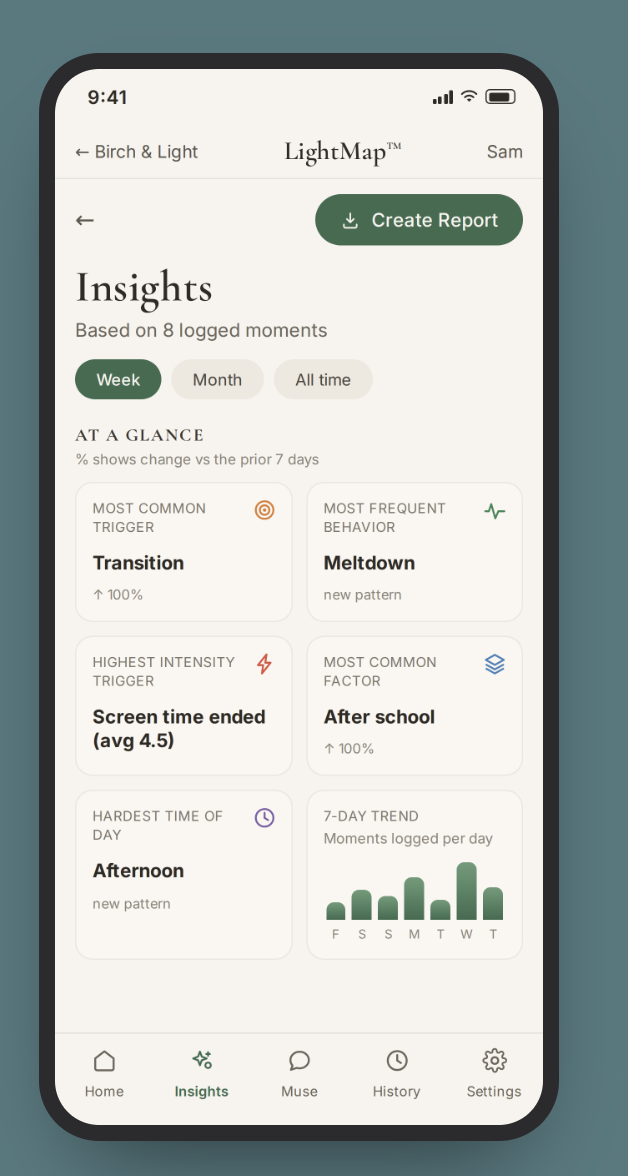

Part of the award-winning Birch & Light Method, honored with the Mom's Choice Gold Award for excellence in family resources.
A story to read together
Sometimes the easiest way in is a story you read side by side.
 My Thoughts Don't Know How to Wait
Simon's thoughts arrive bright and fast — and feel like they will disappear if he doesn't say them right away. One quiet night beside fireflies, he discovers a small, surprising space between noticing a thought and chasing it.
Read the story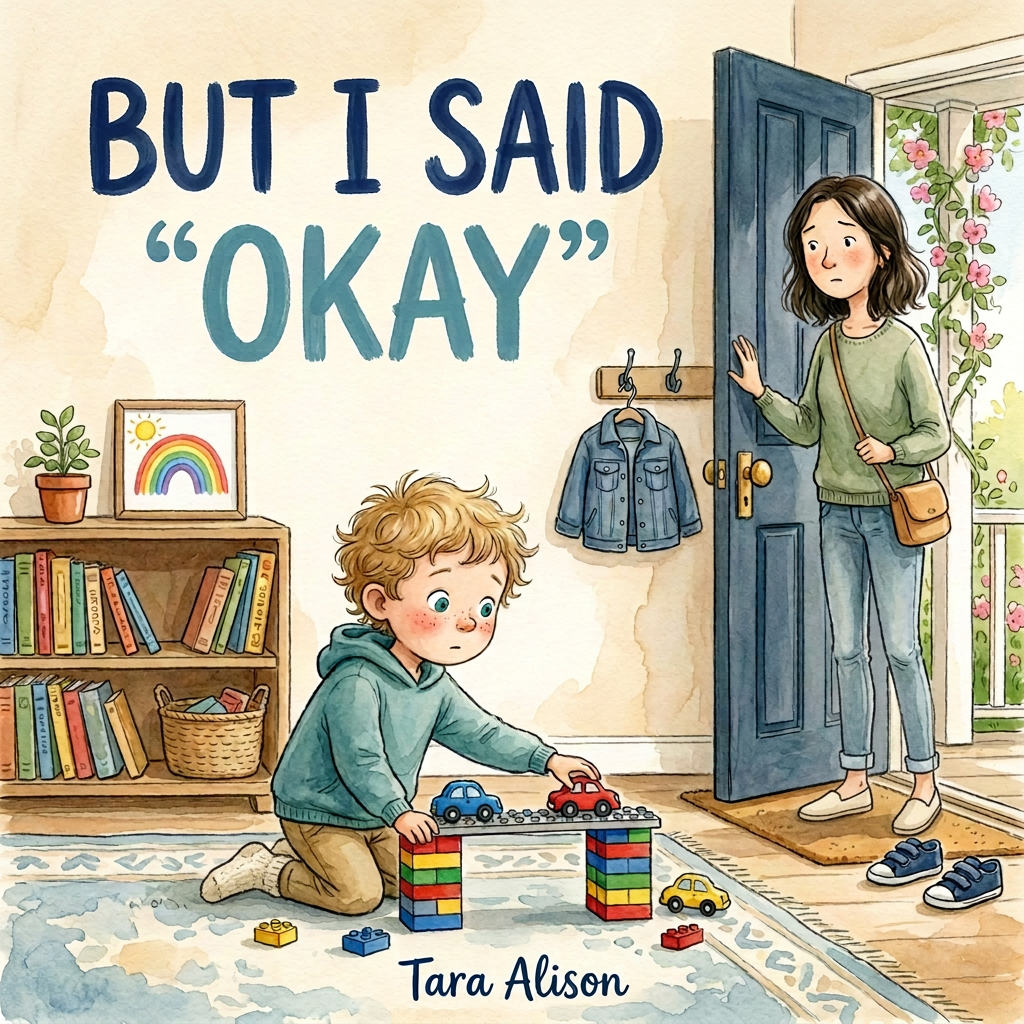 But I Said “Okay”
Owen always says okay. He means it every time. But his attention is still inside the bridge, the dragon, the cave, the music — until Mom realizes that helping him leave one thing matters more than asking him to start the next.
Read the story
If today was one of those days
A few more from the library, free to read.
Researched and drafted with AI assistance, reviewed before publication. Editorial standards