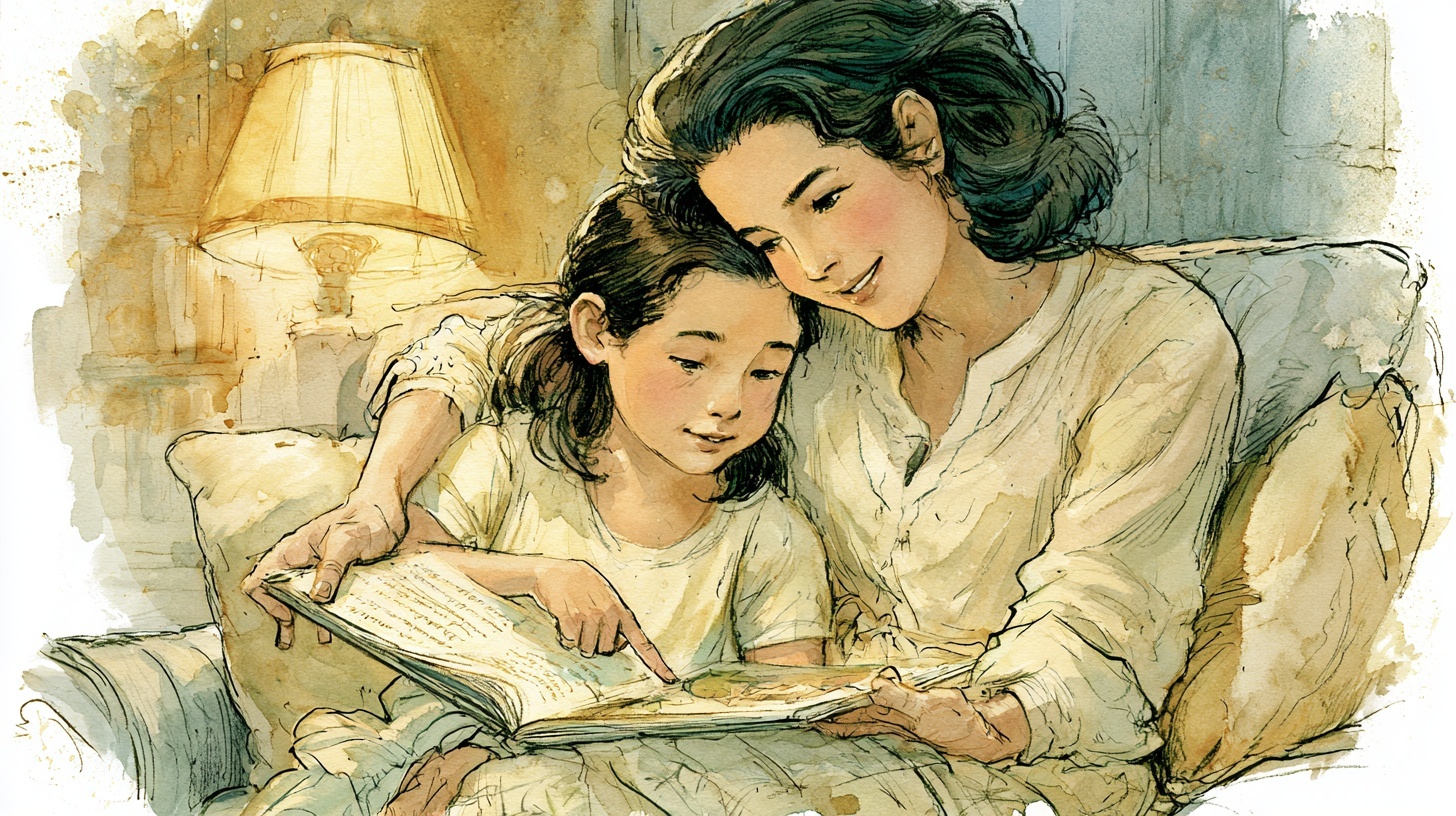
She can tell you the plot of every book you have ever read to her. She uses words in conversation that surprise you. She is, by any measure you can see, a bright child.
And in second grade she is still guessing at words from the pictures.
What it actually is
Dyslexia is a difficulty with phonological processing: hearing, holding, and manipulating the individual sounds inside words, and mapping those sounds reliably onto letters. It is not a visual problem, and it is not about intelligence.
The formal diagnostic term is Specific Learning Disorder with impairment in reading, which can specify word reading accuracy, reading rate or fluency, and reading comprehension. In American schools the eligibility category is Specific Learning Disability, covering basic reading skills, reading fluency, and reading comprehension.
It is common. Estimates range from about five to ten percent of children for a clear diagnosis, higher if you count the milder end of the continuum, which means most classrooms have several.
The myths that delay diagnosis
Reversing letters is not the defining sign. Reversing b and d is developmentally ordinary until around seven. Plenty of children with dyslexia never reverse anything, and plenty of children who reverse letters read fine. This myth is probably responsible for more missed and more mistaken referrals than anything else.
Children with dyslexia do not see words backwards or scrambled. The difficulty is in the sound system, not the eyes.
Colored overlays and tinted lenses do not have good evidence. Neither does vision therapy for dyslexia. Both are widely sold to worried parents.
It is not caused by not reading enough at home. Reading more is the recommendation families most often receive, and it is the least effective thing on the list when decoding itself has not been established.
What to look for, by stage
Preschool. Trouble with rhyming, difficulty learning letter names or sounds, family history of reading difficulty, late talking.
Early school years. Cannot sound out unfamiliar words, guesses from the first letter or the picture, cannot hold a new word from one page to the next, laborious spelling, avoids reading aloud.
Later. Reads accurately but painfully slowly, comprehension collapses because all the effort went into decoding, chronic spelling difficulty, exhaustion after reading, and a strong preference for having things read aloud.
The signature is the gap: a child whose spoken vocabulary and reasoning outrun her reading by a wide margin.
Getting it assessed
In the United States, request a special education evaluation from the district in writing, dated, and ask specifically for assessment of phonological awareness, phonological memory, rapid automatized naming, nonword decoding, and reading fluency. Those five are where dyslexia shows up. A broad reading comprehension score can look acceptable in a bright child who compensates through context and vocabulary, and an evaluation without decoding measures will miss her.
A private psychoeducational or neuropsychological evaluation is the faster route where you can afford it.
Ask for spoken language and attention to be looked at too. Dyslexia co-occurs frequently with developmental language disorder and with ADHD.
While you're here, take the guide
What's Underneath is free: the three body-state triggers under most meltdowns, what to say in the minute before it tips over, and how to reset afterward.
You'll get the guide instantly, plus five free articles in your inbox every week. Real challenges (meltdowns, school mornings, picky eating, big feelings) and how to actually handle them. Unsubscribe anytime.
What actually works
Structured literacy. Explicit, systematic, cumulative phonics instruction that teaches the sound-to-letter system directly rather than expecting a child to infer it from exposure. Orton-Gillingham based programs are the best known family of these approaches, and the evidence base for explicit systematic phonics is substantial.
The key features are that it is taught directly rather than discovered, in a planned sequence, with enough repetition, by someone trained in the method. More exposure to books, sight word memorization, and guessing strategies from context are not substitutes.
Intervention started early is meaningfully more effective than the same intervention started later, which is the argument for pushing on assessment rather than waiting to see whether she catches up.
Accommodations worth requesting
- Audiobooks and text-to-speech, so grade-level content stays available while decoding is being built
- Extra time on anything involving reading
- No cold reading aloud in front of the class
- Spelling not penalized in subjects that are not spelling
- Instructions given orally as well as in writing
- Reduced reading volume rather than the same volume with more time
Accommodations and intervention are not alternatives. She needs both: the intervention builds the skill, the accommodations keep her learning everything else in the meantime.
The part that is not about reading
Reading is the most public academic skill in a primary classroom. A child who cannot do it in front of everyone, while being told she is bright and needs to apply herself, works out fairly quickly that something is wrong with her.
Watch for the avoidance that protects that: clowning, refusing to start, losing the book, stomach aches on days with reading groups. Why your child only participates when they know they will succeed covers that pattern. If math is also affected, dyscalculia often travels alongside, and executive dysfunction isn't laziness covers the organizational load that sits on top.
Note what she can do and where it collapses: how long reading homework actually takes, what happens right before she refuses, which words she loses between pages. Logged in LightMap, that becomes evidence for an evaluation rather than an impression you are trying to recall.
She is not lazy, and she is not behind because you did not read to her enough. She is trying to build a sound system nobody has taught her directly.
Sources: DSM-5-TR criteria for Specific Learning Disorder with impairment in reading; International Dyslexia Association fact sheets and structured literacy guidance; Individuals with Disabilities Education Act provisions on Specific Learning Disability; peer-reviewed research on the phonological deficit account of dyslexia (Shaywitz; Snowling; PMC); National Reading Panel and What Works Clearinghouse findings on systematic phonics instruction; research on the absence of evidence for colored overlays and vision therapy in dyslexia (American Academy of Pediatrics joint technical report; PMC); research on early intervention timing and reading outcomes (PMC).
For education and reflection, not medical advice. Our terms
See what's underneath
Understand the why, not just the what
LightMap reads your hard days together and gives you answers. Start with one moment today.
Start with 3 moments Not sure where to start? Ask me.Message Tara on WhatsApp. It really is me, I read everything and will personally respond.Click here to message Tara →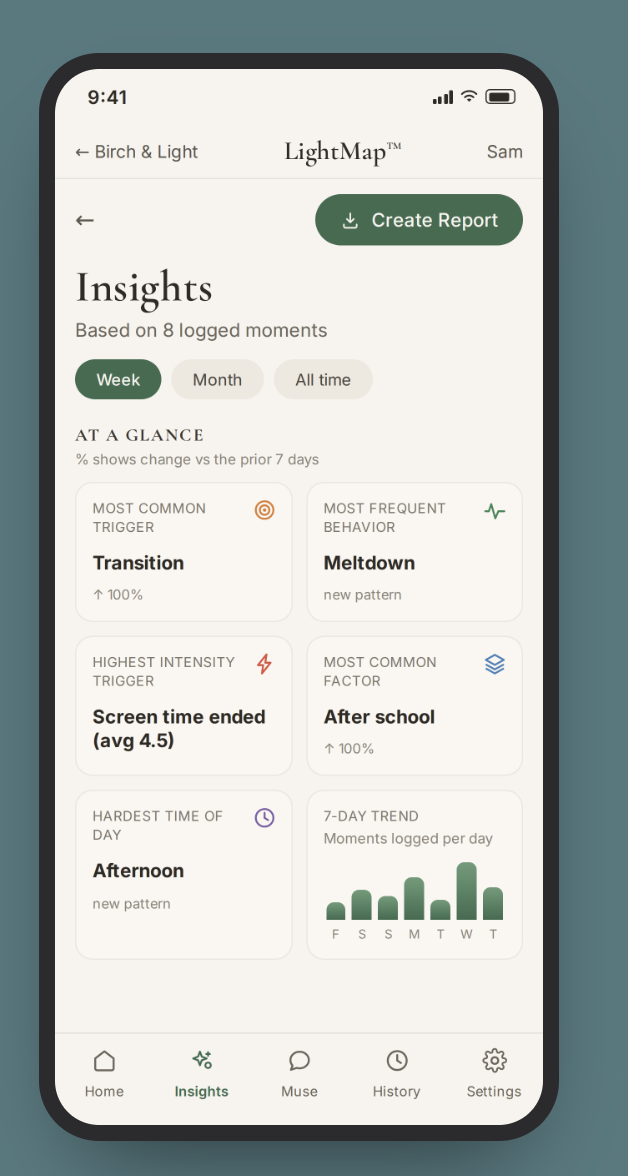
Part of the award-winning Birch & Light Method, honored with the Mom's Choice Gold Award for excellence in family resources.
A story to read together
Sometimes the easiest way in is a story you read side by side.
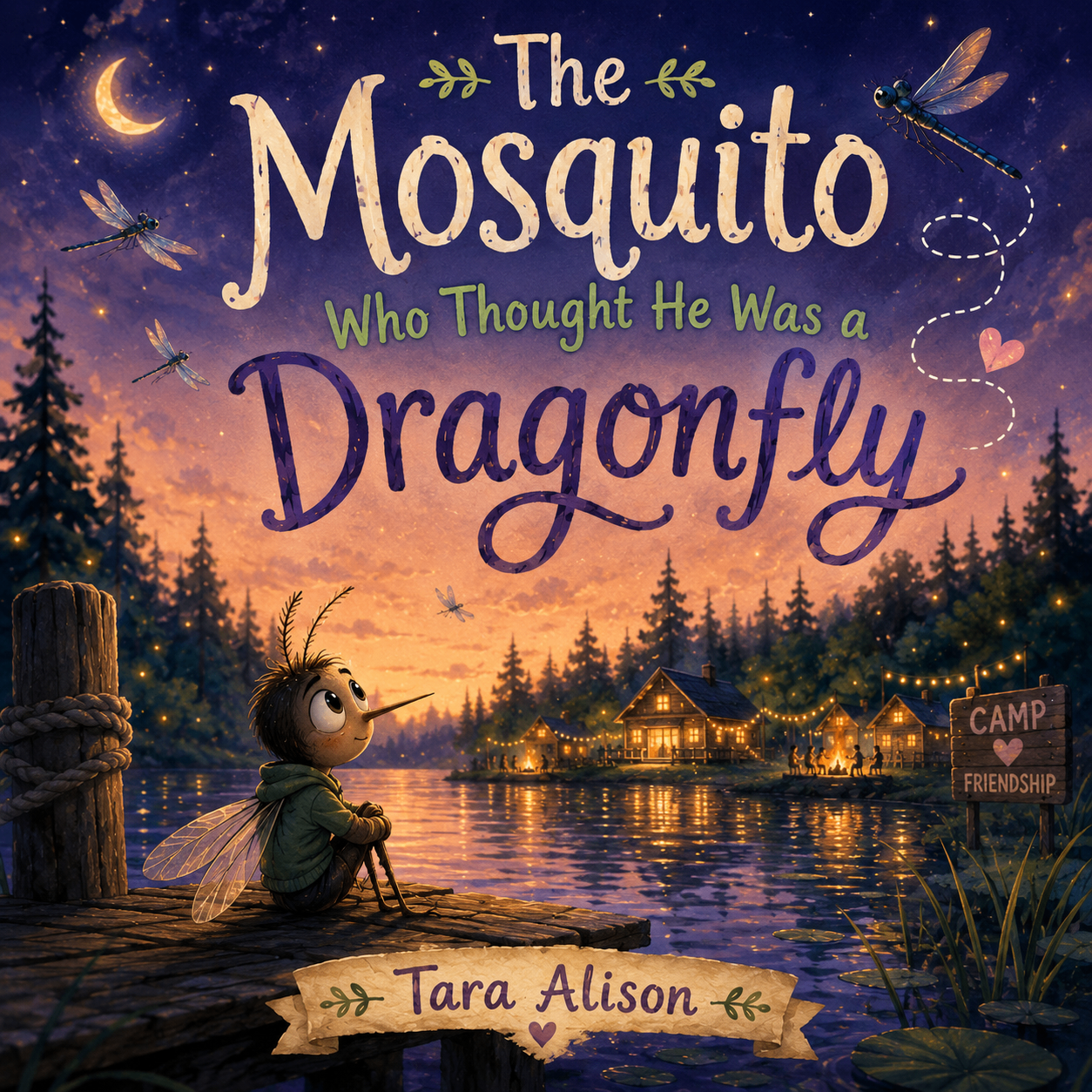 The Mosquito Who Thought He Was a Dragonfly
Raised by dragonflies after a summer storm, Miro learns one night that the world sometimes sees him differently than the family who loves him — and that being misunderstood isn’t the same as being bad.
Read the story Otto Filled Everything
Otto can't stop filling things with water. His family doesn't understand — until Grandma Willow helps them listen to what his body is actually asking for.
Read the story
If today was one of those days
A few more from the library, free to read.
Researched and drafted with AI assistance, reviewed before publication. Editorial standards