

It is nine at night, the number is lower than you would like, and you are standing in the kitchen doing the same calculation you did last night. Something that will hold, but not so much that you spend the small hours watching a line climb.
Most families land on some version of this by trial and error. Here is what is actually going on underneath it, and the question worth asking before you settle into feeding a snack every single night.
Why nights are different
Several things stack up after dark.
Insulin given earlier in the evening is often still working. Activity from the day keeps pulling glucose into muscle for hours after it ends, sometimes well past midnight, which is why the night after a soccer game behaves nothing like an ordinary Tuesday. And a child who is asleep is not eating, moving, or telling you they feel strange, so a slow drift downward has nothing interrupting it.
Put together, that means the same bedtime number can go three different directions depending on what the day held.
Why fast sugar alone does not hold
This is the part that surprises people. Juice or glucose tabs raise a number quickly, and then it comes back down almost as fast, because there is nothing behind the sugar to keep it going.
What holds a number through the night is a mix. Some carbohydrate to move things now, and some protein and fat alongside it to slow everything down. Fat and protein delay how quickly the stomach empties, which stretches the glucose release out over hours instead of delivering it in one wave.
That is the whole logic of a bedtime snack. Not more food, but food that arrives slowly.
Why milk works so well for so many families
Milk turns up constantly in these conversations, and there is a reason for it.
It happens to contain all three parts at once. The lactose is a carbohydrate that acts reasonably quickly, and the protein and fat that come with it slow the whole thing down. So a single familiar thing does the job that people usually assemble from two or three separate items.
It also has practical advantages at nine at night. No preparation, no crumbs, no negotiation, and most children will take it without a fuss even when they are half asleep and not remotely interested in eating. Whole milk holds longer than skim, for the same reason: the fat slows it down.
Other combinations do the same job. Cheese with crackers, peanut butter on toast, yogurt. The principle matters more than the specific food, and the best one is whichever your child will reliably accept.
The distinction that matters most
Preventing a low and treating a low are two different jobs, and the same snack is right for one and wrong for the other.
If your child is actually low right now, fat and protein work against you, because the thing that makes a mixed snack last is the same thing that makes it slow. An active low needs fast carbohydrate on its own, handled the way your care team has told you to handle it.
The mixed snack is for the situation where the number is fine or slightly soft and you are trying to stop it falling later. Different job, different food.

There's a story for this exact struggle
June on the Blacktop
On a sunny gym day, June’s body sends a small alarm — and she learns that pausing for what she needs is not the same as quitting.
Free to read. You'll also get five free articles a week. Unsubscribe anytime.
Before you go, grab the free guide
The 3 body-state triggers under most meltdowns, a script for the 30 seconds before it tips over, and a reset for after. Free.

You'll get the guide instantly, plus five free articles in your inbox every week. Real challenges (meltdowns, school mornings, picky eating, big feelings) and how to actually handle them. Unsubscribe anytime.
The question worth asking
Here is the part that often goes unsaid in parent groups.
It is worth knowing that the evidence on bedtime snacks is more mixed than the common wisdom suggests. A 2025 randomized trial in young children found that snacking did not significantly reduce overnight lows and increased the odds of running high overnight instead, so a nightly snack is not a guaranteed fix and is worth treating as one tool to evaluate rather than an automatic default. If you are giving a bedtime snack most nights to stop your child going low, that is worth raising with the diabetes team, because a repeated pattern of overnight lows is usually telling you something about insulin rather than about food. Basal rates, evening ratios, and how activity is accounted for are all adjustable, and the snack may be quietly compensating for a setting that needs changing.
There is nothing wrong with a bedtime snack as part of a plan. It is worth checking that it is part of a plan rather than a workaround that has become permanent.
What helps that conversation is bringing the pattern rather than the impression. A couple of weeks of overnight readings, what the day held, particularly activity, and what you gave at bedtime, tells the team far more than a description does.
Days that need extra thought
Sport, swimming, a long day outdoors, or anything unusually physical changes the whole night, and often the night after as well. Illness changes it in the other direction. Growth spurts move everything. A snack that has worked all month can stop working in a week for reasons that have nothing to do with the snack.
If your child uses a continuous glucose monitor, this is where overnight alerts earn their place, and it is worth asking the team whether your alert settings are where they should be rather than accepting the defaults.
The thing nobody tells you
You will not get this right every night, and getting it wrong is not a failure of attention. You are estimating the behavior of a system with a dozen inputs, several of which you cannot see, using information from six hours ago.
Most families settle into a few reliable options and stop reinventing it nightly, which is worth more for your sleep than optimizing every evening. And your child will grow, and it will all change, and you will work out the next version too.
If the diagnosis is recent and all of this still feels impossible, the first weeks with a Type 1 diagnosis covers what the year ahead actually looks like. And why diabetes makes every emotion feel bigger is worth reading if the hard evenings are landing on everyone.
Bedtime number, what the day held, what you gave, and where the night went: four things, logged for two weeks, and the pattern is there for your team to work from. LightMap is a place to keep them.
This is general information for parents, not medical advice. All decisions about insulin, dosing, treating lows, and bedtime routines belong with your child's diabetes team.
For your child: June on the Blacktop is about a girl whose body signals a need mid game, and who has to speak up and step out instead of staying in the fun.
Sources: Diabetes Care (American Diabetes Association) on exercise and nocturnal hypoglycemia; Nutrition & Diabetes (2025) randomized crossover trial on bedtime snacking in young children with T1D.
For education and reflection, not medical advice. Our terms
See what's underneath
See the pattern behind the hard days
LightMap turns scattered hard days into a pattern you can see. Start by logging one moment tonight.
Log today's hard moment, no account needed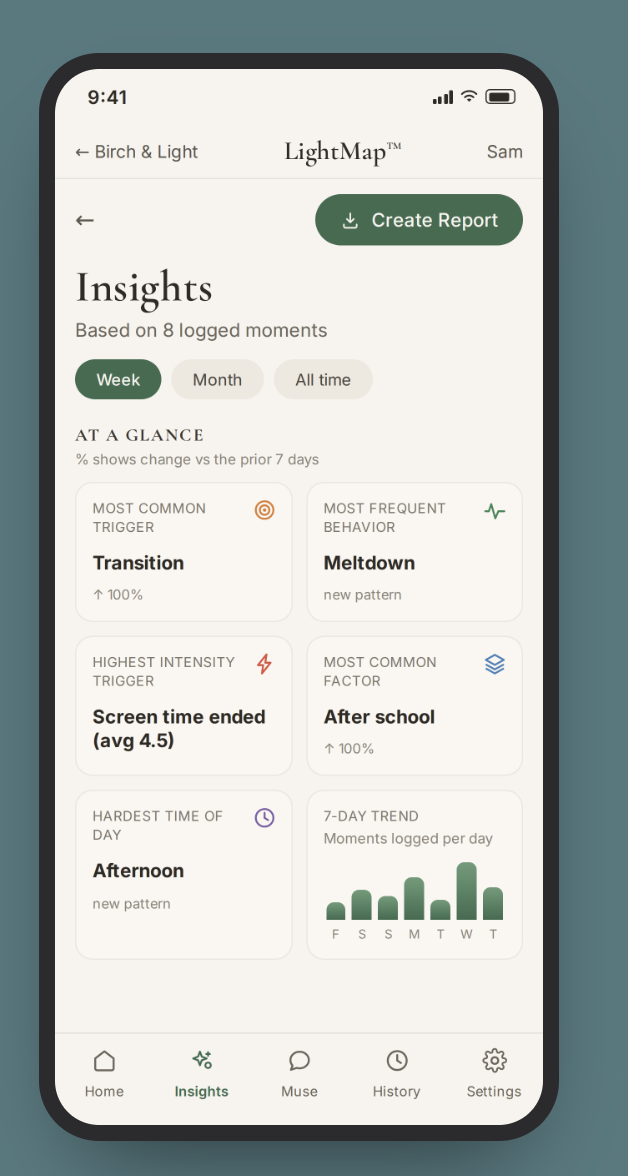

Part of the award-winning Birch & Light Method, honored with the Mom's Choice Gold Award for excellence in family resources.
A story to read together
Sometimes the easiest way in is a story you read side by side.
- June on the Blacktop
On a sunny gym day, June’s body sends a small alarm — and she learns that pausing for what she needs is not the same as quitting.
Read the story 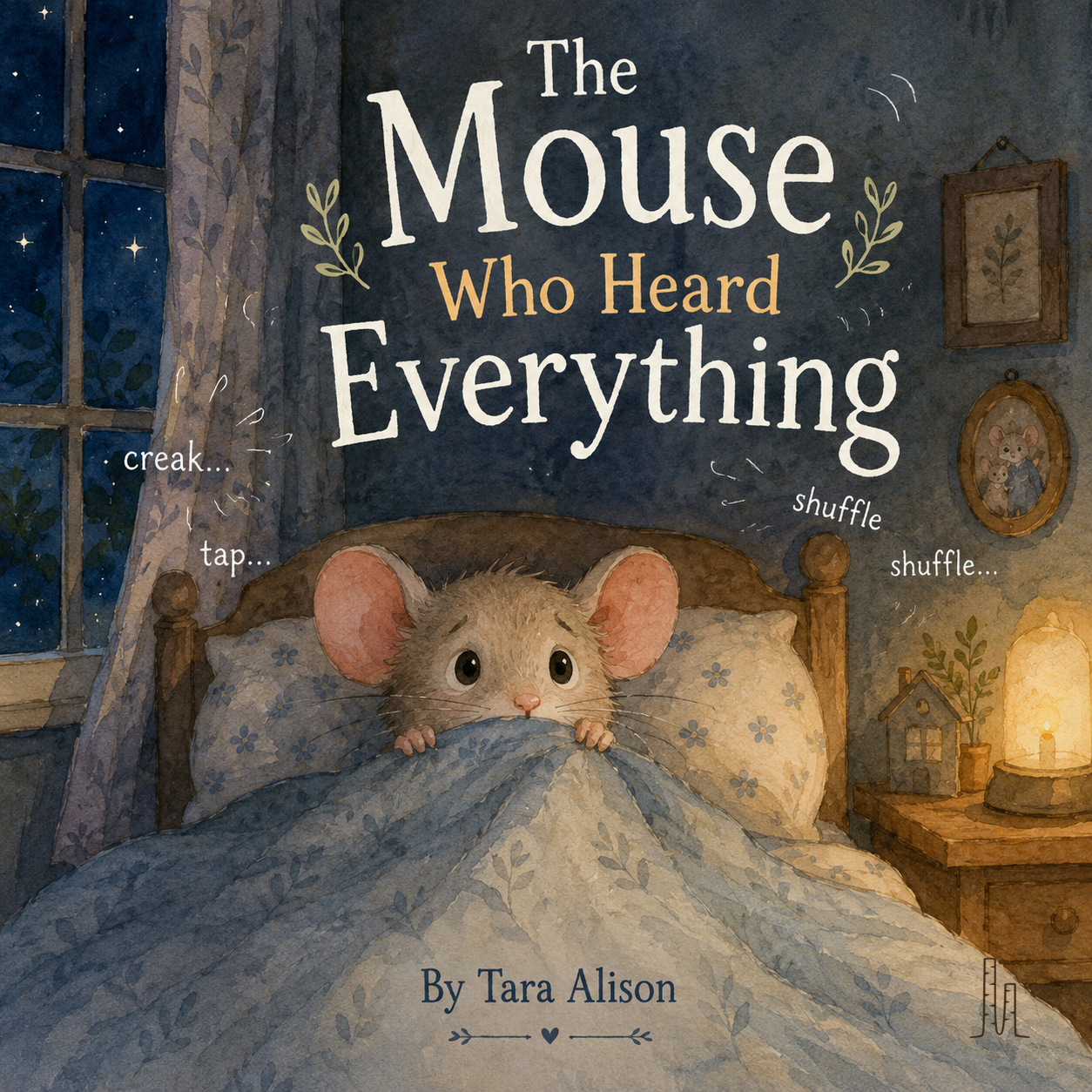 The Mouse Who Heard Everything
Mina Mouse hears every creak the old house makes at night. The story gently shows that her brain isn’t broken — it’s working overtime to keep her safe — and what changes when someone sits beside her in the dark.
Read the story
Researched and drafted with AI assistance, reviewed before publication. Editorial standards