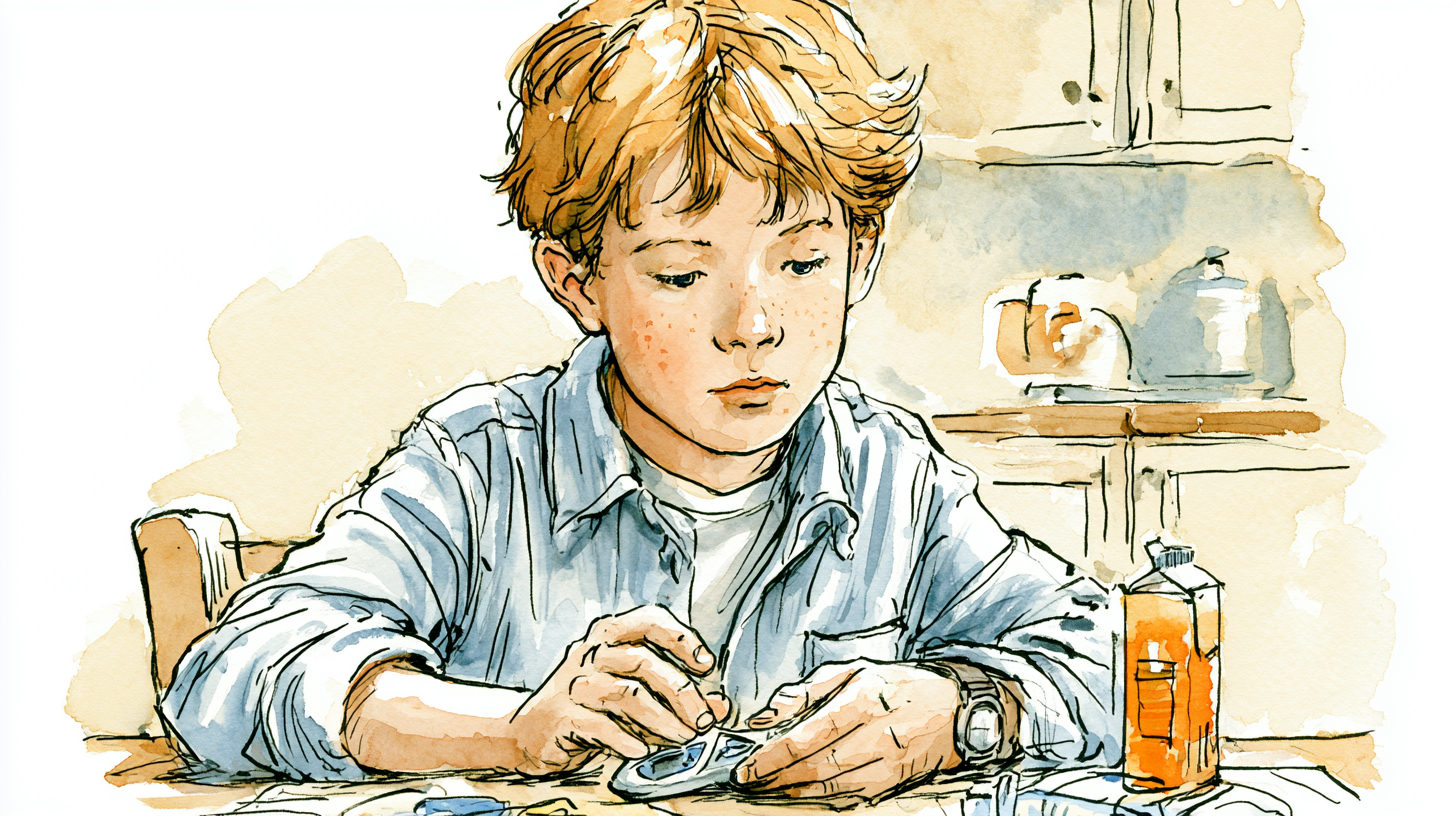
Parents of kids with type 1 diabetes learn it early, usually the hard way: the meltdown that came out of nowhere and turned out to be a low of 58. The rage over homework that dissolved twenty minutes after a correction. The anxiety spiral on a day the graph looked like a mountain range. At some point every T1D parent asks the same question: is it the diabetes, is it the emotions, or is my child just going through something?
The honest answer is yes, and understanding why diabetes and emotions are so tangled changes how you respond to almost every hard moment.
The brain runs on the thing that keeps misbehaving
Glucose is the brain''s fuel, and the systems that manage emotion, impulse control, patience, and perspective are the most expensive systems the brain runs. When blood sugar drops, those are the first lights to flicker. A low doesn''t just make a child shaky and hungry; it chemically removes the equipment they would use to be reasonable. Irritability, tearfulness, sudden rage, and panic are not side effects of lows, they are lows, experienced from inside.
Highs are subtler but real: many kids describe feeling foggy, heavy, irritable, or "wrong" when running high, and a body marinating in the stress of elevated glucose has less tolerance for everything else. Then add the swings, because it is often the rate of change that feels worst, and you get a child whose emotional floor is being moved by chemistry several times a day, invisibly.
And on top of the chemistry sits the stress system: lows trigger adrenaline, the same hormone as fear. A child rebounding from a low has just had the physiological experience of danger, whether or not anyone said the word. Some of what looks like "anxiety about nothing" is a body that has been through several small emergencies since breakfast.
The part that isn''t chemistry
Now put yourself inside it. This child does math at every meal, wears their medical condition on their body, gets interrupted mid-game by beeping, feels different at every birthday party, and carries, at whatever level their age allows, the knowledge that this is forever and that the stakes are real. That is a genuine, reasonable emotional load, and it does not take turns with the chemistry, it stacks on top of it. A frustrating school day plus a stubborn high plus one more "did you bolus?" is three loads on one nervous system. The explosion over the wrong cup was never about the cup.
This is also why diabetes burnout is real in children, not just teens: the load is chronic, and chronic loads leak out as behavior long before kids have words for them.
While you're here, take the guide
What's Underneath is free: the three body-state triggers under most meltdowns, what to say in the minute before it tips over, and how to reset afterward.

You'll get the guide instantly, plus five free articles in your inbox every week. Real challenges (meltdowns, school mornings, picky eating, big feelings) and how to actually handle them. Unsubscribe anytime.
What helps
Make "check first" the family reflex. Before responding to any sudden emotional spike as behavior, glance at the CGM or check. Not accusingly, quietly, as habit. Correcting a low beats every parenting technique ever invented, and arguing with a child at 60 is arguing with glucose. This one reflex prevents a stunning share of family conflict.
But never use it as a dismissal. Here is the tightrope: "are you low?" said wrong becomes "your feelings aren''t real, they''re just numbers," and kids with T1D grow deeply resentful of having every emotion audited against their glucose. The move is both/and: treat the number if it needs treating, and take the feeling seriously on its own terms. "Let''s fix the low, and then I still want to hear about what happened with Maya." The feeling was real even when the chemistry turned the volume up.
Teach them the connection as self-knowledge, not excuse. Kids who learn "when I''m dropping, everything feels like an emergency, that''s my body, not the truth" gain something priceless: the ability to distrust the volume without distrusting themselves. That skill, feelings are real, but glucose can inflate them, is emotional regulation and diabetes management in one lesson, and it serves them for life.
Lower other demands on hard-graph days. A day of swings is a day of depleted capacity, plan like it. The rollercoaster day is not the day for the dentist, the homework battle, or the difficult conversation. This is the same capacity math every complex kid runs; T1D just gives you the rare gift of literally seeing part of the graph.
Watch the emotional trend line, not just the medical one. Persistent flatness, dread around diabetes tasks, "I hate my life" language, rising resistance to care, those are signals that the load needs more support, and diabetes teams have resources for exactly this (many clinics have psychologists who specialize in it). Emotional care is diabetes care; the burnout literature is unambiguous that they rise and fall together.
The bigger feelings are not a flaw in your child. They are the honest output of a nervous system running a harder program than most, with fuel that fluctuates. Seen that way, the job stops being "why is my child so emotional?" and becomes "how do we account for the load?", which is a question with actual answers.
The is-it-glucose-or-is-it-life question gets much easier with data: logging the hard moments alongside what the day held, in LightMap, lets you see whether the storms track the graph, the schedule, or something else entirely, and each answer points somewhere different.
For your child: June on the Blacktop is about a girl whose body signals a need mid game, and who has to speak up and step out instead of staying in the fun.
Sources: Stanford Medicine Children's Health, peer-reviewed research on fear of hypoglycemia and counter-regulatory hormone response in pediatric type 1 diabetes (PMC), Frontiers in Endocrinology on diabetes distress in youth.
For education and reflection, not medical advice. Our terms
See what's underneath
See what is behind the hard days
LightMap reads your hard days together and gives you answers. Start with one moment today.
Start with 3 moments Not sure where to start? Ask me.Message Tara on WhatsApp. It really is me, I read everything and will personally respond.Click here to message Tara →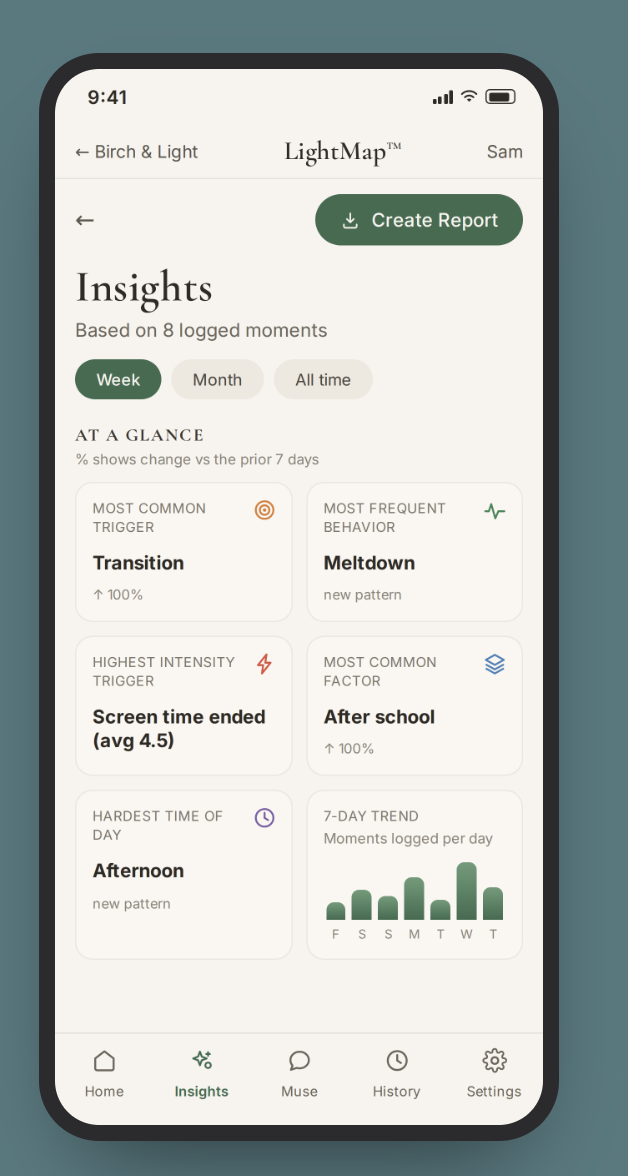

Part of the award-winning Birch & Light Method, honored with the Mom's Choice Gold Award for excellence in family resources.
A story to read together
Sometimes the easiest way in is a story you read side by side.
 June on the Blacktop
On a sunny gym day, June’s body sends a small alarm — and she learns that pausing for what she needs is not the same as quitting.
Read the story June and the Window That Took Time
When June receives special Valentine’s Day window clings from Grandma, she learns that some things take time, help, and persistence.
Read the story
If today was one of those days
A few more from the library, free to read.
Researched and drafted with AI assistance, reviewed before publication. Editorial standards