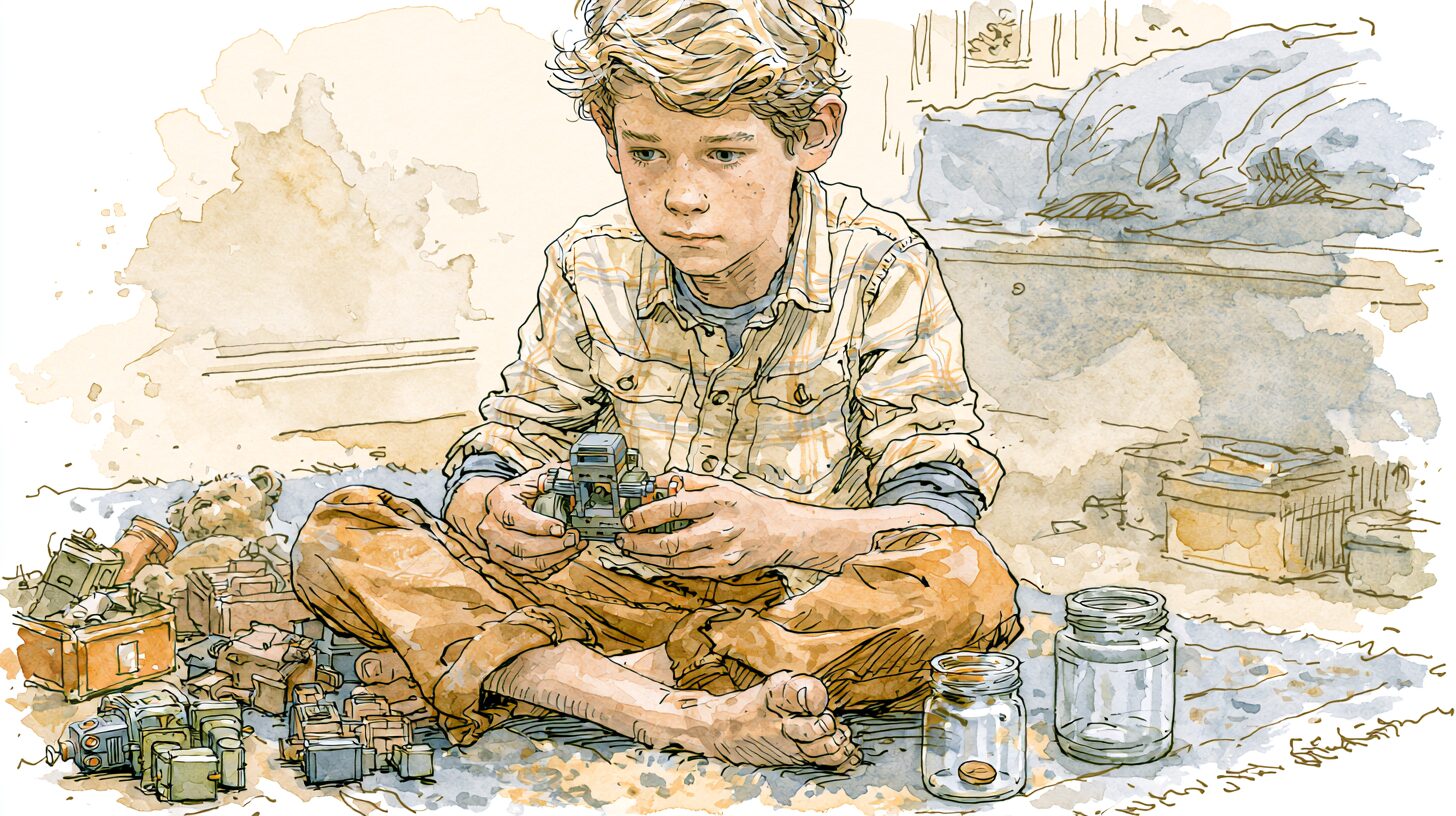
It arrives on a loop: I'm bored. Bored in a house full of toys, bored twenty minutes after the activity he begged for, bored on vacation, bored with a full toy box visible from where he is standing. You suggest things and every suggestion is rejected with escalating disgust, until you are somehow in an argument about fun. Nothing you say makes a difference, and it starts to feel like ingratitude, or laziness, or a character audit of your parenting.
It is none of those. In an ADHD nervous system, boredom is a different animal than it is for other people, and once you see what it actually is, the whole daily fight changes shape.
What "I'm bored" means in this brain
ADHD attention runs on interest, novelty, urgency, and challenge rather than importance, and it comes with a baseline that is genuinely under-stimulated: a brain idling below the level where it feels comfortable. For most people boredom is a mild gray state. For an ADHD child it is closer to a physical discomfort, an itch in the engine, and "I'm bored" is often the closest words a child has for "my brain is uncomfortable and I do not know how to fix it." That is why the complaint keeps coming in a house full of options. The problem was never a shortage of activities. It is the distance between how stimulating things feel and how stimulating his nervous system needs things to feel, plus one more hidden snag: getting started. Choosing and initiating an activity is executive work, and it is precisely the work this brain finds hardest, so he can stand in front of forty options, feel the itch, and be unable to begin any of them.
Why your suggestions keep failing
When a parent becomes the boredom vending machine, two bad things happen at once. Every suggestion arrives as a small demand, and gets the reflexive no that demands earn from an irritated kid. And each rejection ratchets both of you up, until the argument itself becomes, in a bleak way, the most stimulating thing in the room. The exit is not better suggestions. It is getting out of the suggestion business entirely.
What actually helps
Build the menu together, once, in a calm moment. Sit down with him and make the list of things he actually likes doing, his words, his choices, ten or fifteen items, and post it where he can see it. Authorship matters enormously: kids consult a menu they wrote and reject one you wrote. From then on, "I'm bored" gets one calm, identical response: the menu is on the fridge. You are no longer the fix, which deflates the whole ritual.
Scaffold the start, not the choice. When the menu alone does not move him, the stuck point is usually initiation, so help him begin rather than helping him decide: five minutes of doing the thing alongside him, setting up the first step, opening the box. ADHD kids can often continue what they cannot start, and a parent who launches and then drifts away gets a different afternoon than one who suggests from the couch.
Put the body first. Movement raises the brain's baseline arousal directly, which is why the bored-and-buzzing child who gets thrown outside, sent to the pool, or taken on a bike ride comes back finding ordinary things more interesting. When the itch is loud, physical beats clever every time.
Watch the screen see-saw. This one is unpopular and true: fast, rich screen stimulation raises the bar for what feels interesting, so the hour after a game or a video binge is reliably the whiniest, most nothing-is-fun stretch of the day. The answer is not necessarily banning anything; it is noticing the pattern, expecting the post-screen boredom spike instead of being blindsided by it, and keeping the strongest stimulation from being the day's default rather than its dessert.
Let some boredom stand. Here is the counterintuitive piece: tolerating boredom is a skill, and a child rescued from every twinge never builds it. Once the menu exists and the start-help is available, an ordinary "I'm bored" is allowed to be his to solve, and the untidy stretch between complaint and self-started activity is not a parenting failure. It is the practice.
While you're here, take the guide
What's Underneath is free: the three body-state triggers under most meltdowns, what to say in the minute before it tips over, and how to reset afterward.

You'll get the guide instantly, plus five free articles in your inbox every week. Real challenges (meltdowns, school mornings, picky eating, big feelings) and how to actually handle them. Unsubscribe anytime.
When "bored" is code for something else
Two honest footnotes. If the boredom talk clusters around school, take it seriously as data rather than attitude, because in a classroom "bored" very often means the work is pitched wrong for him, too easy, too hard, or too passive, and that is a conversation with the teacher worth having. And if the under-stimulated misery is constant and heavy everywhere, it is worth mentioning at his next appointment in plain words, because how well a child's baseline is managed is part of the overall treatment picture, and doctors can only tune what they hear about.
The loop feels like a complaint about your house, your effort, your ideas. It never was. It is a nervous system asking for a level of stimulation the world does not hand out automatically, and the job is not to become the entertainment. It is to hand him, piece by piece, the tools to feed his own engine.
Patterns help here too: when the boredom spikes, what preceded it, what actually pulled him out of it. LightMap turns those observations into a picture you can act on, and share with anyone helping him.
For your child: June and the Window That Took Time is about a girl who wants to do something and finds it far harder and slower than she expected.
Sources: Zentall's optimal stimulation theory of ADHD; Sonuga-Barke's delay aversion model; peer-reviewed research on reward processing, novelty seeking, and understimulation in ADHD (PMC; Journal of Attention Disorders); Barkley on interest-driven rather than importance-driven attention.
For education and reflection, not medical advice. Our terms
See what's underneath
Walk into the next appointment with answers
LightMap reads your hard days together and gives you answers. Start with one moment today.
Start with 3 moments Not sure where to start? Ask me.Message Tara on WhatsApp. It really is me, I read everything and will personally respond.Click here to message Tara →

Part of the award-winning Birch & Light Method, honored with the Mom's Choice Gold Award for excellence in family resources.
A story to read together
Sometimes the easiest way in is a story you read side by side.
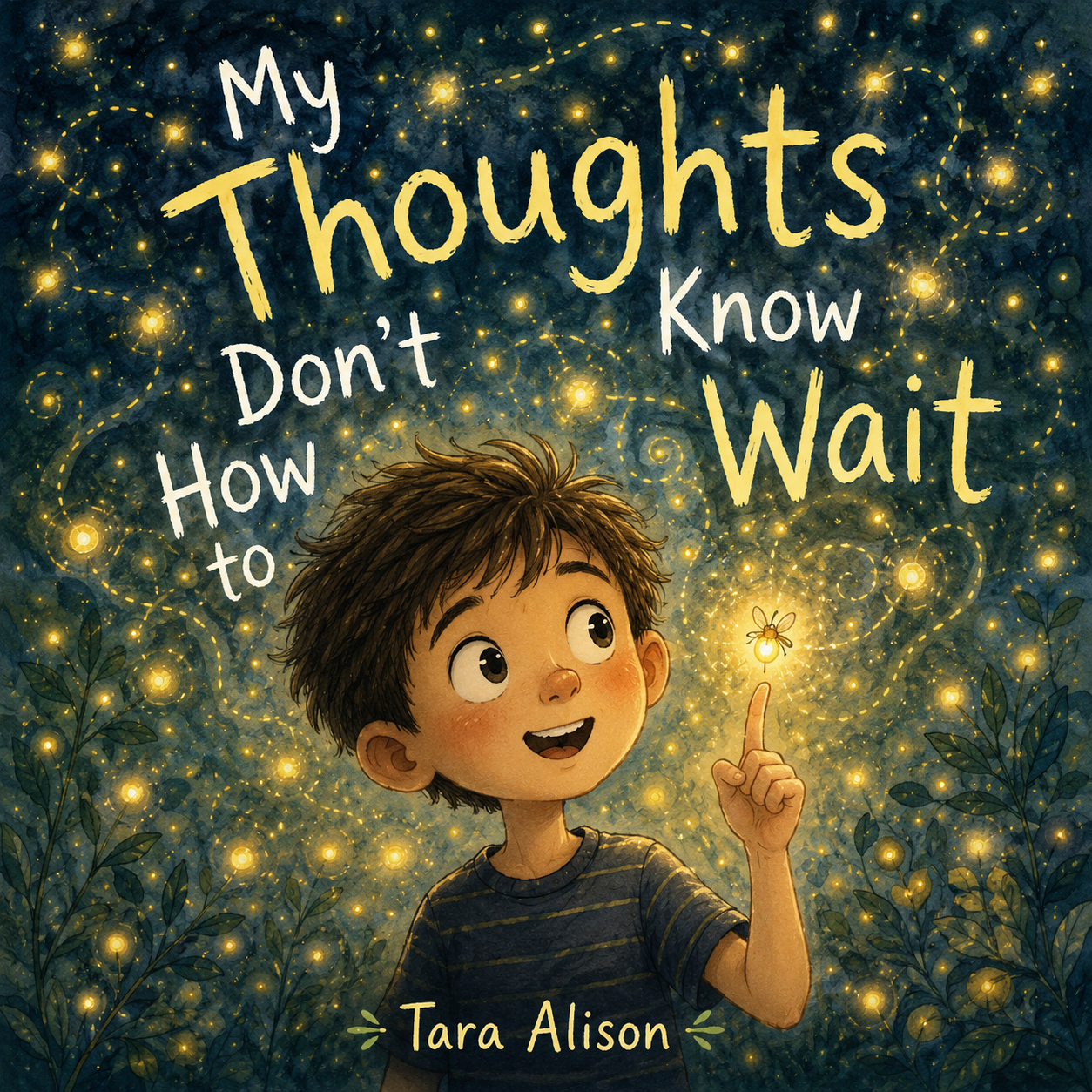 My Thoughts Don't Know How to Wait
Simon's thoughts arrive bright and fast — and feel like they will disappear if he doesn't say them right away. One quiet night beside fireflies, he discovers a small, surprising space between noticing a thought and chasing it.
Read the story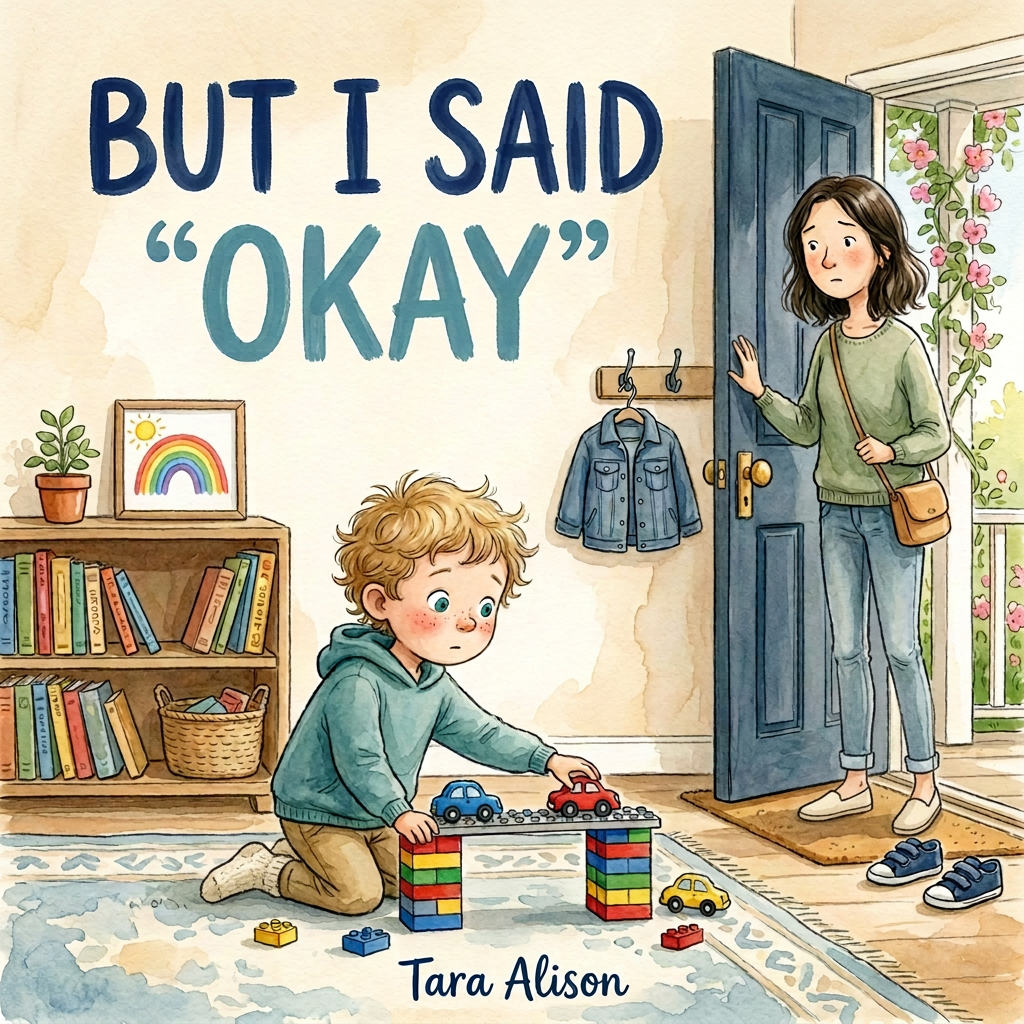 But I Said “Okay”
Owen always says okay. He means it every time. But his attention is still inside the bridge, the dragon, the cave, the music — until Mom realizes that helping him leave one thing matters more than asking him to start the next.
Read the story
If today was one of those days
A few more from the library, free to read.
Researched and drafted with AI assistance, reviewed before publication. Editorial standards