.jpg)
Yes, PANS can still be looked at years later, though no blood test settles it. A clinician works from the history: how fast it started, what came before, and how treatment went. Old charts, report cards, photos, and calendars can rebuild the timeline. If your grown child refuses help, start with a small, reversible step.
There is a particular kind of memory some parents carry. A child who was themselves on a Tuesday and someone else by Friday. Not a slow slide into anxiety, not a rough season that deepened, but a switch. Obsessions and rituals arriving fully formed. Eating that suddenly narrowed or stopped. A personality that seemed to be replaced overnight.
At the time, nobody around you had a name for it, so the system gave it the name it had: OCD, or anxiety, or an eating disorder. And then years passed, therapy came and went, and the thing that started in a weekend never really left.
If you are reading about PANS or PANDAS now, a decade or more later, and feeling a cold recognition, this piece is for you. It is also for the honest, complicated question underneath: does it even matter anymore?
Why the overnight part was always significant
Here is what most families in this position were never told: abrupt, dramatic onset is not a strange detail of your story. It is the core of the diagnostic criteria. PANS is defined by the sudden, severe appearance of obsessive-compulsive symptoms or restricted eating, accompanied by a cluster of other changes such as anxiety, mood swings, regression, or trouble with school skills. Clinicians who work in this area routinely ask one question first: how fast did it start? A gradual build over months points one direction. Parents who can name the week, sometimes the day, are describing the PANS signature.
The American Academy of Pediatrics clinical report on PANS calls the dramatic and abrupt onset of obsessive-compulsive disorder or severely restricted food intake the most distinctive characteristic of PANS and PANDAS.
The second flag, painfully, is the treatment history. Standard OCD treatment, especially exposure and response prevention, is genuinely effective for classic OCD. When someone completes multiple competent rounds and moves very little, that does not prove anything by itself, but combined with an overnight onset it is exactly the profile that makes informed clinicians look again at the original story.
The honest part: looking back is hard
There is no blood test that settles this, at any age. Diagnosis leans on history, and after many years the trail is cold in specific ways. Infection markers drawn now say almost nothing about an illness at thirteen. What actually helps a clinician assess an old onset is the paper record: pediatric charts from that period, any labs that were run, school reports from before and after, even dated photographs and family calendars. Parents are often surprised how much timeline they can reconstruct, and a reconstructed timeline is the single most useful thing you can bring into a consultation. Some families also discover something they had filed away as unrelated: an illness, a strep throat, a bad flu in the weeks before the change.
Be prepared for a range of professional reactions. Awareness of PANS varies enormously between clinicians and between countries, and an adult presentation sits at the thin edge of an already thin literature. Most research involves children and adolescents. Work on adults exists but is limited, and any clinician who is honest will say the evidence for immune-based treatment in adults is early. You are not looking for someone who promises answers. You are looking for someone willing to take the history seriously.
While you're here, take the guide
What's Underneath is free: the three body-state triggers under most meltdowns, what to say in the minute before it tips over, and how to reset afterward.
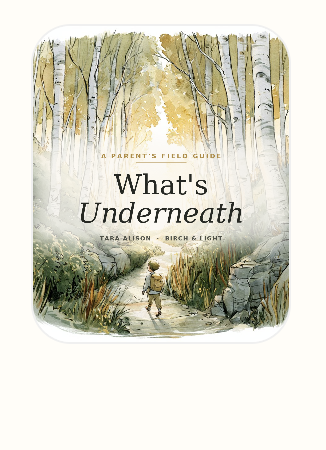
You'll get the guide instantly, plus five free articles in your inbox every week. Real challenges (meltdowns, school mornings, picky eating, big feelings) and how to actually handle them. Unsubscribe anytime.
Does it matter now? Three reasons it can
First, evaluation is still possible. University hospitals with immunopsychiatry programs, and clinicians connected to the international PANS research community, do see adults with this history. For children, the AAP clinical report advises starting with a thorough patient and family history and a physical and psychiatric exam, and reserving laboratory and imaging workups for suspected conditions such as autoimmune encephalitis. A reconstructed timeline fits that history-first approach. The PANS Consensus Conference recommendations on clinical evaluation, published in 2015, give clinicians a shared framework for assessing these youth. Even when the answer is uncertain, some families describe the consultation itself as the first time the whole story was heard in order.
Second, the reframe can change everything about the treatment relationship, and this matters most when the person refusing help is now an adult. Someone who has spent years failing therapy after therapy often carries a quiet identity: I am the treatment-resistant one. Notice what that framing costs. Refusing an SSRI can be, underneath, a refusal of one more round of the story that has never worked.
A medical question is a different story. It says: perhaps the tools kept missing because the target was mislabeled. Some adults who will not touch a psychiatric prescription will agree to a records review or an immune workup, not because it is easier, but because it is not a rerun.
Third, patterns are still observable now. One of the recognizable features of this condition is the sawtooth: symptoms that flare with infections and settle between them. If that pattern exists in an adult, it can be noticed and documented today, and it is evidence of a kind no old chart can provide.
What if my grown child says no?
At twenty-six, or twenty-two, or thirty, the decision belongs to them. That sentence is both legally true and one of the hardest facts of parenting an adult who is suffering. Pressure has almost certainly been tried and has almost certainly hardened the no. What tends to work better is slower and less satisfying: staying in relationship rather than in campaign mode, offering information once and then leaving it on the table, and shrinking the ask. Not "will you try treatment" but "would you be willing to sit in one appointment where someone reviews the old records, with no commitment to anything after." Autonomy is usually the active ingredient. Adults move when the next step is small, reversible, and unmistakably their own choice.
And hold one more possibility gently: you can pursue a good deal of understanding on your own, though it is worth knowing where the limits actually sit. Once your child turned eighteen, they became the only person who can authorize release of their medical records, and that applies backward as well, including the pediatric charts from the year everything changed. Requesting those from a provider now requires their signature, so it is not a step you can quietly take without them.
What you can do without anyone's permission is reconstruct the timeline from what is already yours: your own memory, family calendars and photographs, anything you kept, letters and report cards in your own files, copies of records you were given at the time and never returned. That is often enough to establish the shape of it, when the change happened, what illness preceded it, what came apart in what order. You can also consult a clinician about whether that pattern is consistent with PANS in general terms, understanding that no one can diagnose someone who is not their patient. Parents who do this work often say the understanding alone lifted a weight they had carried for years, whatever their child decides.
The grief in the question
Wondering about this years later almost always comes wrapped in a specific pain: if this is what it was, it was missable, and it was missed. Be careful with that knife.
Nobody around you had the name. The name barely existed. You did what parents do, which is take the child to the professionals and trust the map they were handed. Asking the question now is not an accusation against your past self. It is the same instinct that made you a good parent then, still running.
If you are earlier in this story, watching a child whose behavior changed suddenly and recently, write the timeline down now while it is fresh. LightMap holds dates, illnesses, and behavior changes side by side, and builds exactly the record that families a decade out wish they had.
Sources: Pediatric Acute-Onset Neuropsychiatric Syndrome (PANS) Clinical Report, American Academy of Pediatrics (2025); Child Mind Institute on exposure and response prevention for OCD. American Academy of Pediatrics, "Guidance for the Clinician in Rendering Pediatric Care: Pediatric Acute-Onset Neuropsychiatric Syndrome (PANS)," clinical report, Pediatrics. Chang K, Frankovich J, Cooperstock M, Cunningham MW, Latimer ME, Murphy TK, Pasternack M, Thienemann M, Williams K, Walter J, Swedo SE, "Clinical Evaluation of Youth with Pediatric Acute-Onset Neuropsychiatric Syndrome (PANS): Recommendations from the 2013 PANS Consensus Conference," Journal of Child and Adolescent Psychopharmacology, 2015, volume 25, issue 1.
For education and reflection, not medical advice. Our terms
Before the next flare
Bring your doctor a timeline, not a memory
LightMap reads your hard days together and gives you answers. Start with one moment today.
Start with 3 moments Not sure where to start? Ask me.Message Tara on WhatsApp. It really is me, I read everything and will personally respond.Click here to message Tara →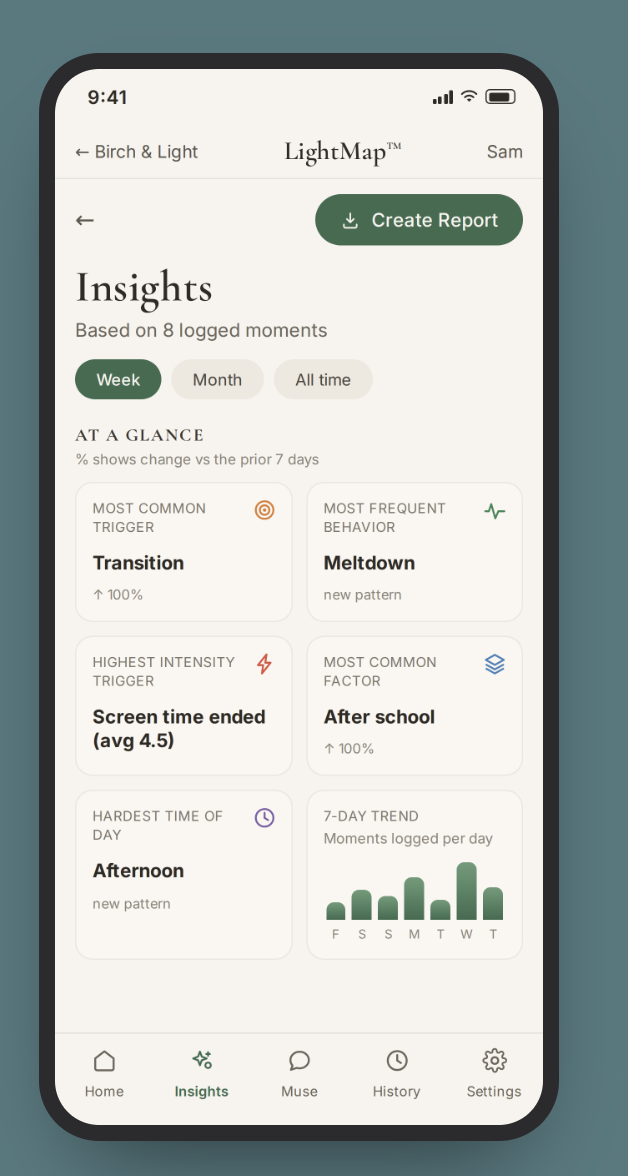

Part of the award-winning Birch & Light Method, honored with the Mom's Choice Gold Award for excellence in family resources.
A story to read together
Sometimes the easiest way in is a story you read side by side.
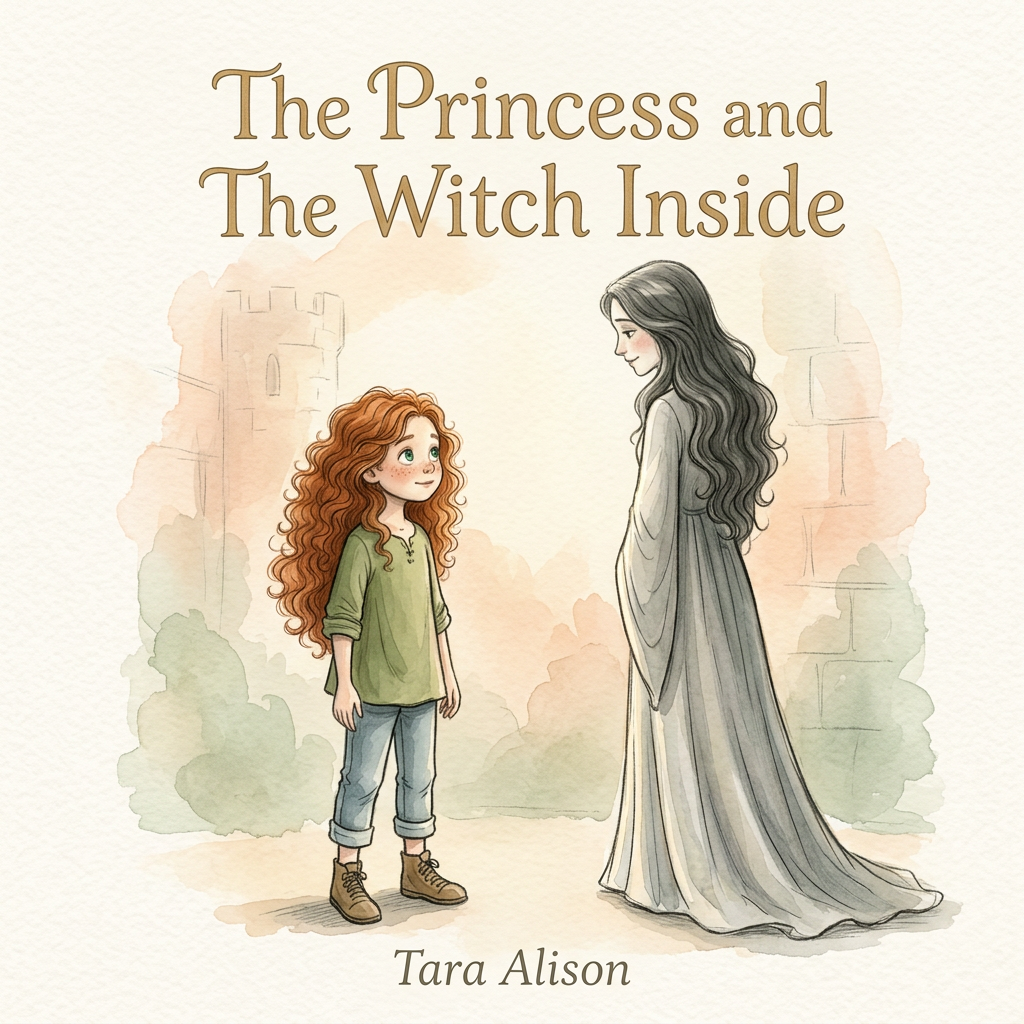 The Princess and the Witch Inside
Esme is loved, but a fast protective part keeps rushing in before she gets a turn. A quiet visitor helps her meet the witch inside — not as an enemy, but as a worried protector — and find her way back to the people she wanted to be with all along.
Read the story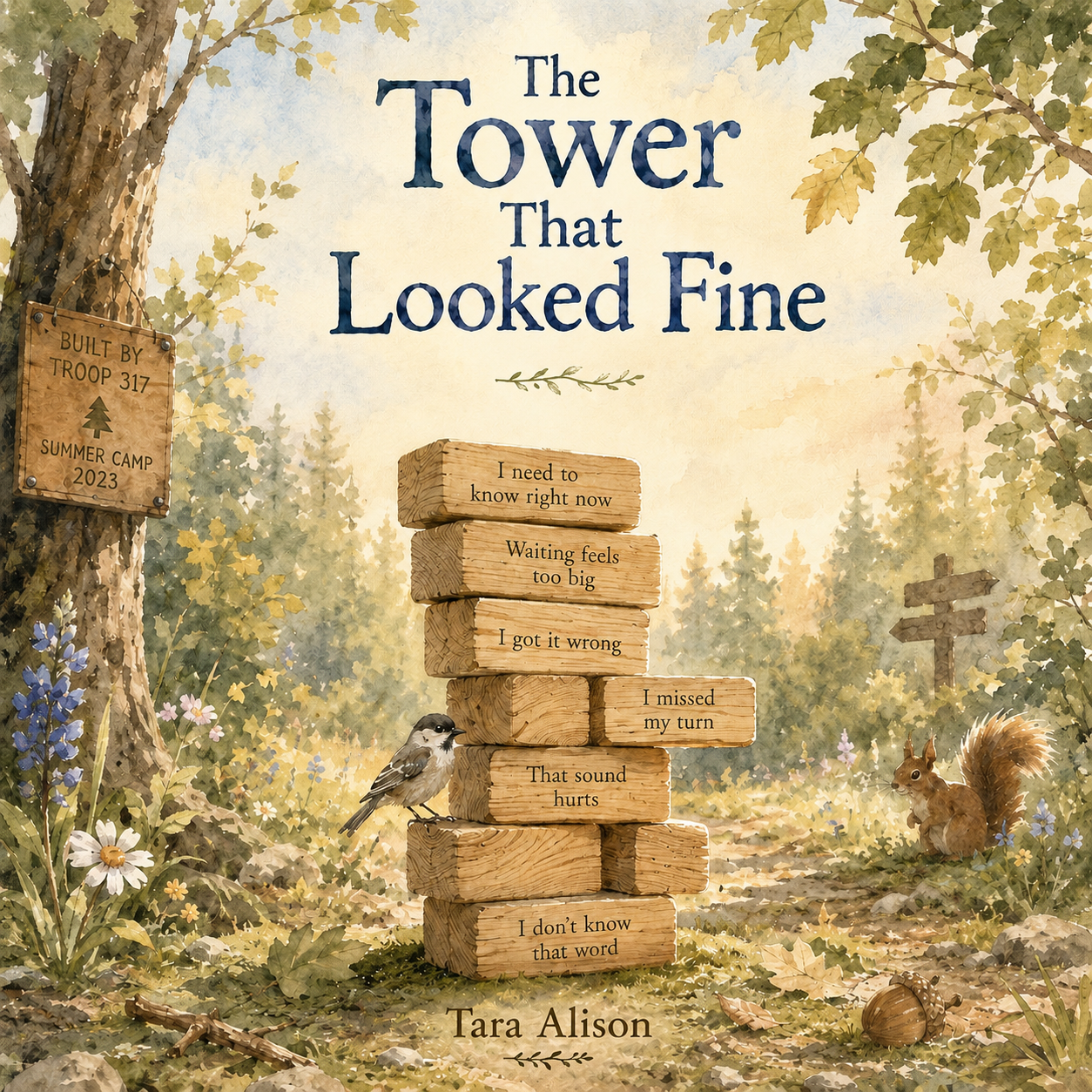 The Tower That Looked Fine
A tower in a quiet clearing tries to stay steady through every small thing nobody else seems to notice — until one tiny breath of wind causes her to fall, and a gentle hand begins to gather the blocks back.
Read the story
If today was one of those days
A few more from the library, free to read.
Researched and drafted with AI assistance, reviewed before publication. Editorial standards