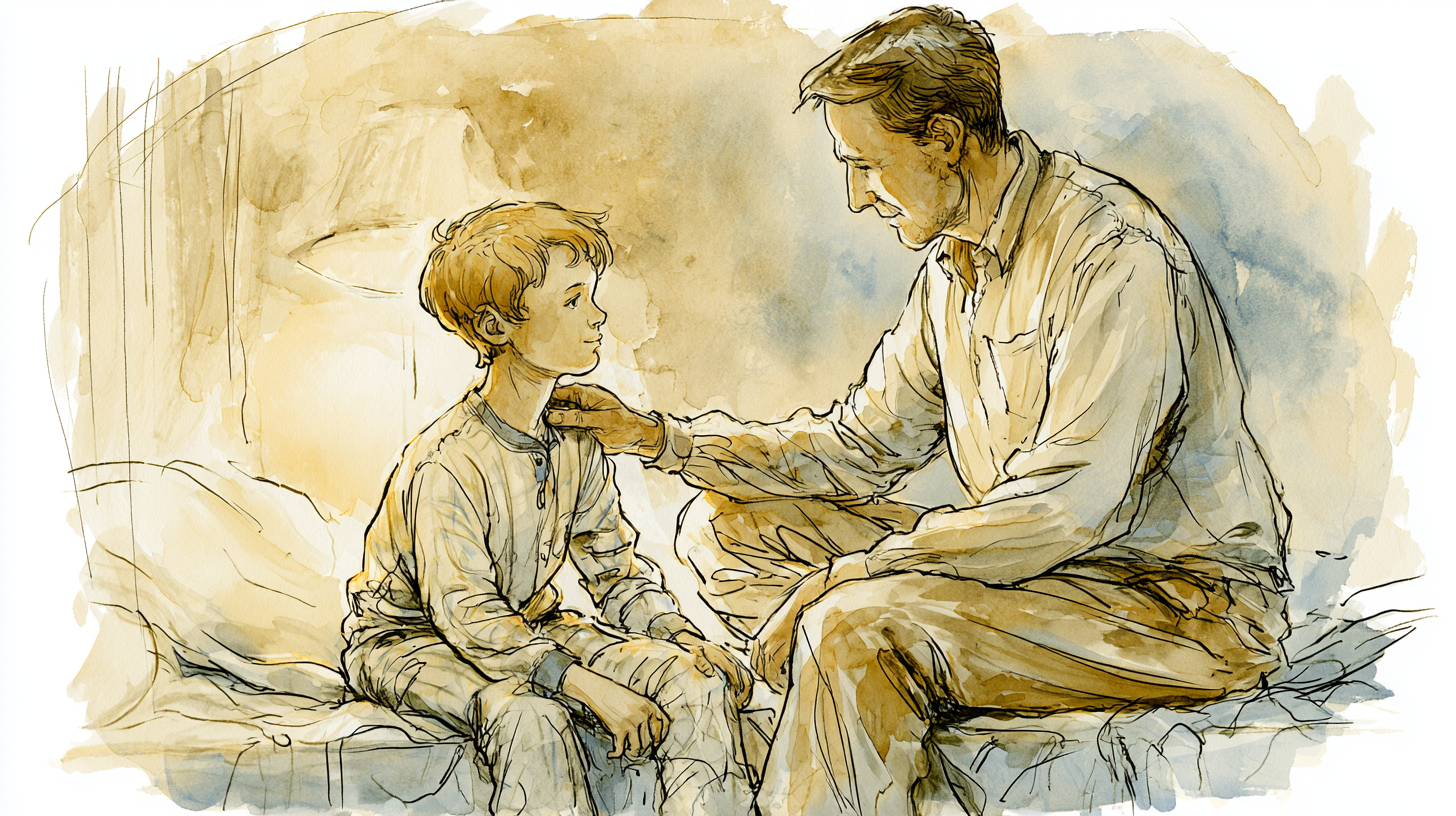
There is a particular heartbreak that PANS and PANDAS parents rarely say out loud. Your child, in a clear moment, looks at you and apologizes. For the flare. For the appointments. For the tired look on your face. Some children go further and ask the question that stops a parent cold: why do you even keep trying with me?
And then comes the second layer. You start blaming yourself for being visible. If I had hidden my stress better, you think, he would never have connected my exhaustion to himself. Now there are two people in one house each quietly carrying blame for an illness neither of them caused.
This article is about putting the blame back where it belongs, which is on the illness, and about why your child seeing your stress is not the damage you fear it is.
Why children with PANS absorb blame so easily
Self-blame in a PANS or PANDAS child is not just a sad byproduct of a hard situation. It is often woven into the illness itself. These conditions frequently bring intrusive guilt, scrupulosity, and obsessive confessing. A brain under neuroimmune attack does not just produce tics or restriction or rage. It also produces thoughts like I am bad, I ruin things, and everyone would be better off without me to worry about.
So when your child watches you rub your eyes at the kitchen table, his brain does what inflamed brains do. It takes a neutral piece of data, mom is tired, and welds it to the guilty story already running: mom is tired because of me.
This matters for one practical reason. You cannot out-hide a symptom. Even parents who become Oscar-level performers at home find their child still apologizing, still confessing, still asking whether they are too much. The self-blame was never caused by your visible stress. Your visible stress is just the nearest hook the illness hangs it on.
The impossible standard of the hidden parent
Be honest about what full concealment would require. You would need to absorb the appointments, the insurance denials, the 2am research spirals, the grief of watching your child change after an infection, and show none of it, ever, in your own home, for years. No human being can do that. And a child as perceptive as yours, and PANS kids are almost universally perceptive, would sense the gap between your face and the truth anyway.
Children do not actually need parents who feel nothing. They need parents whose feelings are explained. An unexplained sigh is a blank space, and an anxious child fills every blank space with self-blame. An explained sigh is just a sigh.
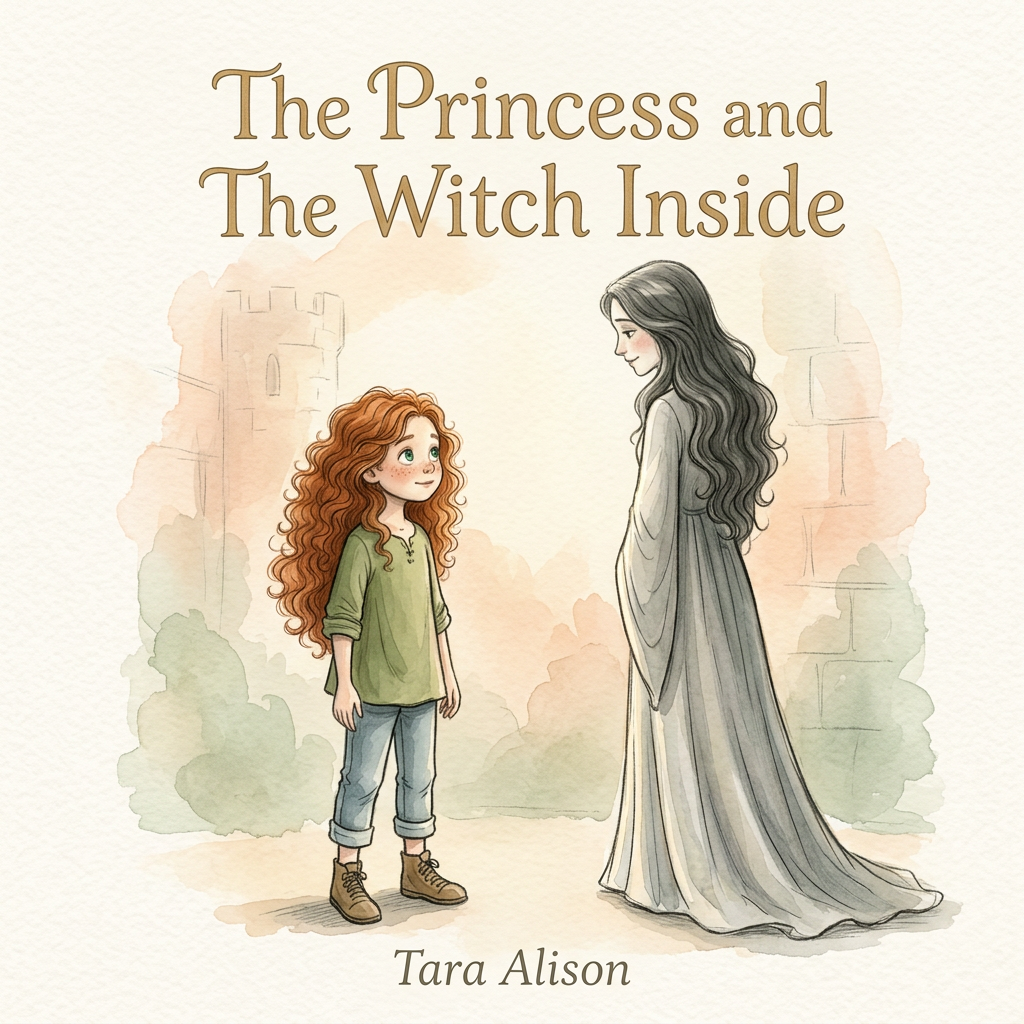
There's a story for this exact struggle
The Princess and the Witch Inside
Esme is loved, but a fast protective part keeps rushing in before she gets a turn. A quiet visitor helps her meet the witch inside — not as an enemy, but as a worried protector — and find her way back to the people she wanted to be with all along.
Free to read. You'll also get five free articles a week. Unsubscribe anytime.
Relocating the blame out loud
The most powerful thing you can do is name a third party in the room: the illness. Not him, not you. It.
Some language that works, adjusted to your own voice:
- "You saw me upset earlier. I want you to know what that was about. I am angry at this illness. I have never once been angry at you. You and I are on the same team against it."
- "Being sick is not something you do to me. It is something that happened to you. Helping you is not a burden I carry. It is just what love looks like at our house."
- When he asks why you keep going: "Because you are worth every bit of it. That is not a decision I make over and over. It was decided the day you were born."
Expect to repeat these more times than feels reasonable. Intrusive guilt does not resolve after one good conversation. Your job is not to say it once perfectly. Your job is to be the steady broadcast the illness cannot talk over.
Letting him help, in a size he can carry
A child who says he wants to help you but cannot is describing real pain. Powerlessness hurts. You can shrink that feeling without pretending he can fix anything. Give him one small true job: picking the show for your rest night, being in charge of the dog's dinner, choosing the takeout on infusion days. Then narrate it. "You helped me today." Not because he owes you help, but because contribution is an antidote to feeling like a burden.
Before you go, grab the free guide
The 3 body-state triggers under most meltdowns, a script for the 30 seconds before it tips over, and a reset for after. Free.
You'll get the guide instantly, plus five free articles in your inbox every week. Real challenges (meltdowns, school mornings, picky eating, big feelings) and how to actually handle them. Unsubscribe anytime.
About your guilt
You did not fail by being seen. Children raised by parents who occasionally struggle openly, explain it, and repair afterward tend to trust their parents more, not less, because the family's words match the family's reality. What harms kids is not a parent's visible stress. It is stress with no explanation, or blame aimed at the child. You are doing neither. The proof is in his question. A child who asks whether you will give up is a child who is checking the rope that holds him. Every time you answer, the rope holds. That is not a family failing. That is a family surviving something hard while staying attached.
When self-blame needs to go on the treatment list
One more thing. If your child's self-blame includes statements about being better off gone, deserving punishment, or ruining everyone's life, treat that as a symptom to report, the same way you would report a new tic or a food restriction. Intrusive guilt and hopeless thoughts can flare and remit with the illness, and your child's treatment team should know they are present. You are not overreacting by mentioning it. You are giving them a fuller picture of the flare.
This is general information for parents, not medical or mental health advice. Concerns about your child's mood or safety belong with your child's clinician.
Many PANS families find that the guilt spiral quiets once the pattern becomes visible: which weeks the self-blame spikes, what illness or stressor came first, what helped. That is what LightMap was built for. A minute of logging in the hard moments, and the story behind them starts to show itself.
Sources: International OCD Foundation (scrupulosity and intrusive guilt as a recognized OCD theme), PANS Research Consortium clinical guidelines.
For education and reflection, not medical advice. Our terms
Before the next flare
Bring your doctor a timeline, not a memory
LightMap turns scattered hard days into a pattern you can see. Start by logging one moment tonight.
Log today's hard moment, no account needed Not sure where to start? Ask me.Message Tara on WhatsApp. It really is me, I read everything and will personally respond.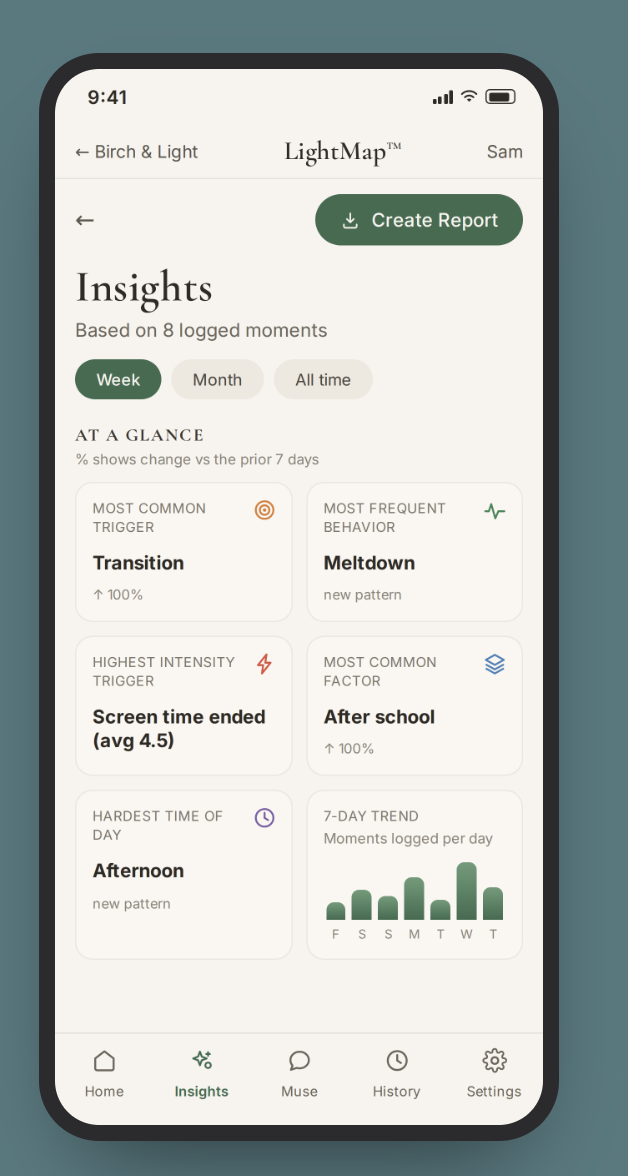

Part of the award-winning Birch & Light Method, honored with the Mom's Choice Gold Award for excellence in family resources.
A story to read together
Sometimes the easiest way in is a story you read side by side.
- The Princess and the Witch Inside
Esme is loved, but a fast protective part keeps rushing in before she gets a turn. A quiet visitor helps her meet the witch inside — not as an enemy, but as a worried protector — and find her way back to the people she wanted to be with all along.
Read the story 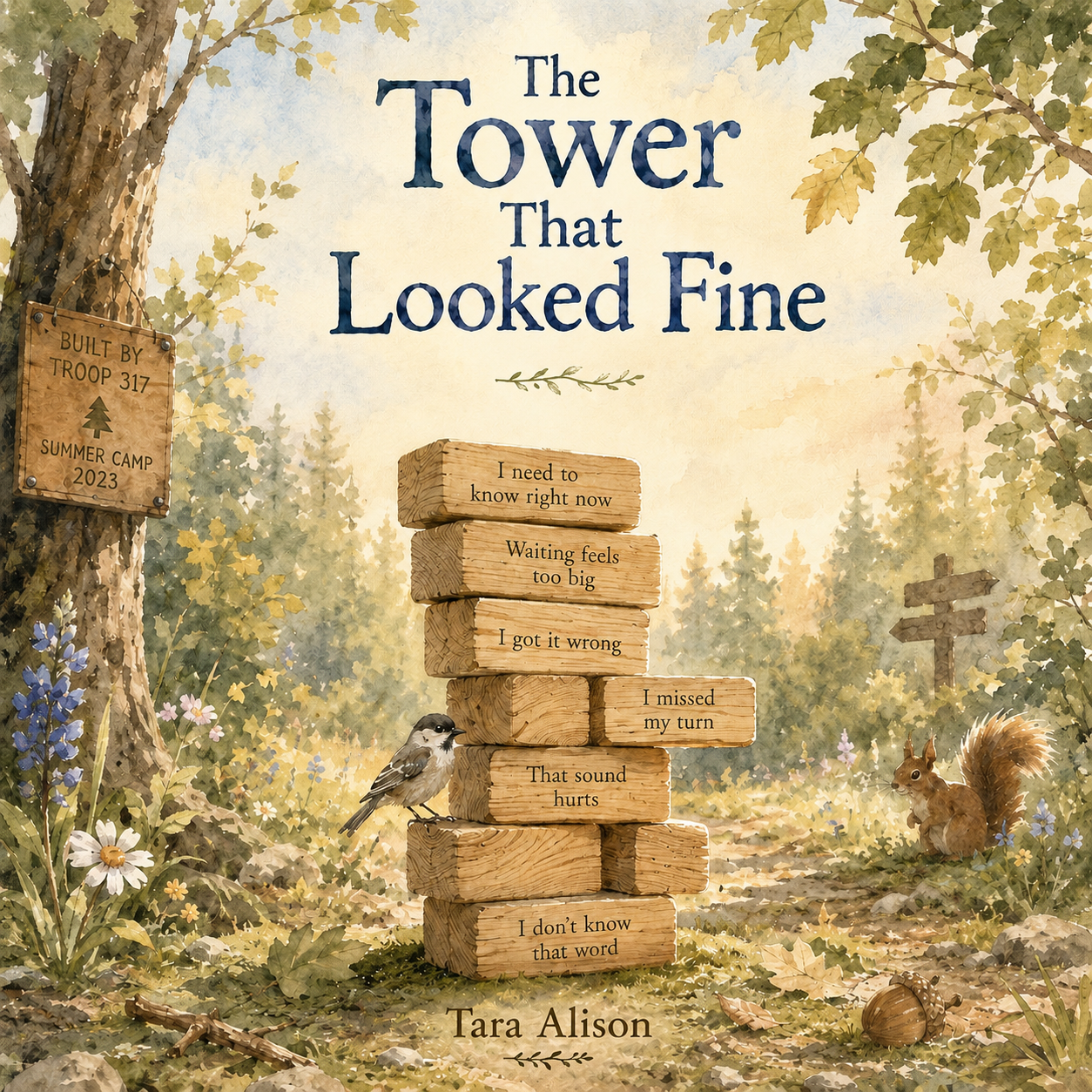 The Tower That Looked Fine
A tower in a quiet clearing tries to stay steady through every small thing nobody else seems to notice — until one tiny breath of wind causes her to fall, and a gentle hand begins to gather the blocks back.
Read the story
Researched and drafted with AI assistance, reviewed before publication. Editorial standards