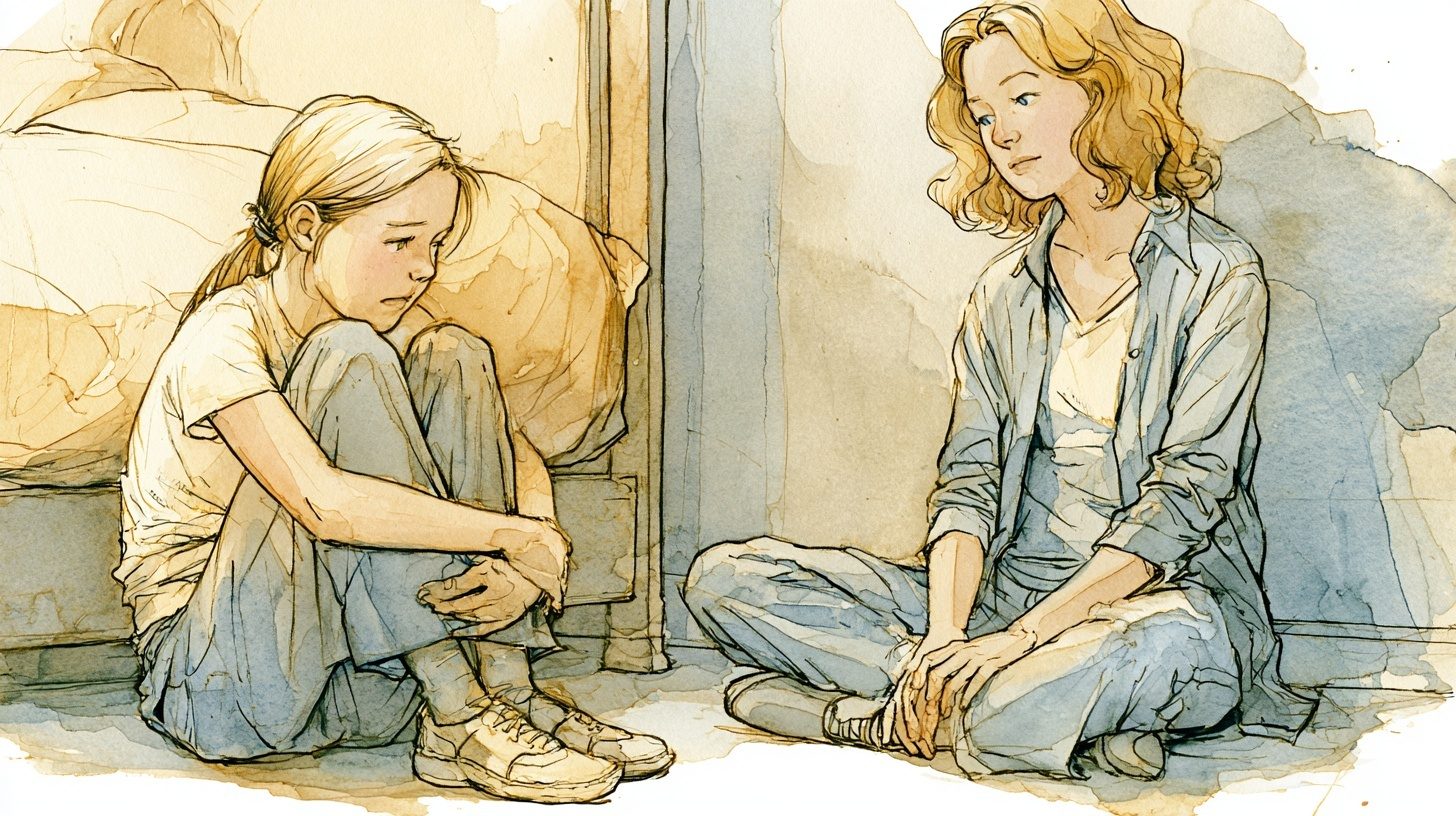
You did not answer fast enough, because you were mid-sentence with someone else, and it cost you a screaming match that came out of nowhere. You swallowed, or rubbed your own eye, or rested a hand on your own stomach, and it cost you being screamed at like you had done it on purpose. She asked for help with something small, and by the time you got there a few seconds later than she wanted, you were something worse than useless to her. None of it looks like fear from where you are standing. It looks like cruelty, aimed at you, on purpose, by a kid who is supposed to love you.
It is not what it looks like, and knowing that does not make it hurt less. This is one of the most misunderstood profiles in kids with anxiety, OCD, and chronic dysregulation, and it deserves to be named clearly, because the rudeness is almost never the actual problem. It is the visible tip of something underneath.
What is actually happening underneath the rudeness
Rage and irritability are a real, documented, and common feature of pediatric anxiety and OCD, not a character flaw layered on top of them. Research following kids with anxiety disorders has found that explosive rage shows up specifically when a compulsion gets disrupted, when a safety behavior is interfered with, or when anxious arousal spikes around something the child cannot control, and that this pattern is associated with more severe anxiety, not less. Often the surface trigger is not the real one. The delayed answer, the outfit that did not feel right, the request that came at the wrong moment, these tend to be the visible edge of something else: a demand, an interruption, a moment when control slipped or she felt exposed, unheard, or dismissed. The rudeness is what a nervous system in that state produces when it has no better tool available yet.
One important exception is worth naming, because collapsing it into the control explanation does real damage. Sensory triggers are their own mechanism. In misophonia, specific sounds another person makes, chewing, swallowing, breathing, sniffing, provoke an immediate and involuntary rage or panic response, and the sound genuinely is the trigger, not a stand-in for a control issue. Notably, the same sound made by the child herself typically does not trigger it at all, which is one of the clearest signatures of the condition.
Two features of this surprise parents constantly. First, triggers are usually person-specific rather than ambient. Misophonia typically starts with a small number of people and most often those in the immediate family, with a parent, very frequently the mother, at the top of the list. The identical sound from a stranger in a restaurant can be entirely tolerable while the same sound from you is unbearable. That is not her singling you out or being crueler to the person who does the most for her, though it is almost impossible not to experience it that way. It is a documented pattern in how this condition develops.
Second, the triggers are not always sounds. Visual triggers have their own name, misokinesia, and produce the same involuntary rage response. Small repetitive or ordinary movements do it: rubbing an eye, blinking, fidgeting, jiggling a leg, resting a hand somewhere. Misokinesia is far less widely known than misophonia, including within misophonia communities, so it frequently goes unnamed even by families who are otherwise well informed about sound triggers.
Treating any of this as though it were really about autonomy or feeling unheard will not help, because the intervention it calls for is different: reducing exposure where you reasonably can, giving her a way to leave the room or use headphones without a negotiation, and not requiring her to explain or justify a reaction that fires faster than explanation. What it does not mean is that you have to stop swallowing, blinking, or existing in your own home. A child can have both this and the control-driven pattern running at once, and telling them apart matters.
The waiting problem
One mechanism sits underneath more of these moments than parents realize, and it is worth naming on its own because it looks so much like entitlement. Researchers call it frustrative non-reward: the response to a goal being blocked or delayed. Low tolerance for waiting is one of the most consistently studied features of pediatric irritability, which is why so much of the research on it uses tasks that make children wait or withhold an expected reward.
In practice it means she asks you something and cannot wait for the answer. You are mid-conversation with someone else, or across the room, or genuinely did not hear her, and the delay itself is what detonates. What comes back is not proportionate to a two-second wait, because it is not really about the two seconds. A nervous system in this state treats being made to wait as a threat, and it does not stop to weigh whether you delayed on purpose, were busy, or simply could not hear.
This is the part that is hardest not to take personally, because from the outside it reads as being treated like staff. It helps a little to know that the reaction fires before any assessment of your intent happens, and that a child in that state genuinely cannot access the reasoning that would let her wait, rather than choosing not to use it.
Why this specific profile is so exhausting for parents
The same research that documented this rage pattern also found it is associated with significantly higher family accommodation and caregiver strain than anxiety without the rage component. That is not a coincidence and it is not you being unusually sensitive to it. Being on the receiving end of real cruelty from your own child, while knowing intellectually that it is fear wearing a disguise, is a specific and brutal kind of exhaustion, because your body reacts to the attack even when your brain understands the mechanism. Thoughts like wanting a higher level of care, or feeling like you cannot do this anymore, are not evidence that you have failed or stopped loving her. They are what sustained exposure to this pattern does to an exhausted, still-showing-up parent.
What tends to make it worse without meaning to
- Matching the escalation. Two dysregulated nervous systems in the same room amplify each other. This is one of the hardest and most human things to avoid, and also one of the most important.
- Treating it purely as a discipline problem. Consequences aimed at rudeness as if it were a choice tend to add shame on top of a nervous system that is already flooded, without addressing what actually triggered it.
- Accommodating the anxiety itself. This is the counterintuitive one. Constantly reorganizing the household to avoid triggering her, letting her avoid the things that scare her, tends to reinforce the anxiety underneath even while it reduces blowups in the short term.
What actually helps: therapy approaches worth asking about
- ERP, exposure and response prevention, for OCD specifically. The recommended first-line treatment, with response rates around 70% and remission around half, and long-term follow-up studies showing gains that hold steady or continue improving a full year after treatment ends.
- CBT for the anxiety underneath. Broader cognitive behavioral therapy for anxiety shows similarly strong remission rates compared to no treatment, and comorbid ADHD does not appear to blunt how well it works.
- SPACE, Supportive Parenting for Anxious Childhood Emotions. A parent-only model that works by systematically reducing family accommodation rather than requiring the child to participate, which matters enormously for a kid who refuses services outright, since this approach does not need her buy-in to start.
- DBT skills, particularly for older kids and teens. Distress tolerance and emotion regulation skills give a concrete alternative to sharp words once the nervous system starts to recognize the buildup earlier.
While you're here, take the guide
What's Underneath is free: the three body-state triggers under most meltdowns, what to say in the minute before it tips over, and how to reset afterward.

You'll get the guide instantly, plus five free articles in your inbox every week. Real challenges (meltdowns, school mornings, picky eating, big feelings) and how to actually handle them. Unsubscribe anytime.
What actually helps: medication, in general terms
SSRIs remain first-line pharmacological treatment for the anxiety and OCD driving this pattern, though a slow, low-dose approach is often warranted for kids who run sensitive to medication, particularly those with an inflammatory or PANS component. For irritability and aggression severe enough that first-line treatment alone is not enough, atypical antipsychotics like risperidone and aripiprazole carry FDA approval specifically for irritability associated with autism, and are sometimes used off-label under close psychiatric supervision for severe irritability in other contexts when other approaches have not been sufficient. None of this is a decision to make from a support group thread, medication changes in this territory need a prescriber who knows the full picture, and a taper or discontinuation that looks scary on paper, the way any medication change can, is often a normal and necessary part of finding the right combination rather than a sign that something has gone wrong.
Does maturity help? The honest answer
Partially, and not on its own. The brain regions most responsible for impulse control and emotional regulation continue developing into the mid-twenties, so some of this genuinely does get easier with time as that wiring comes online. But a 20-year study following irritable adolescents into adulthood found that youth irritability was a real predictor of adult depression, generalized anxiety, and dysthymia decades later, even after accounting for other symptoms present at the start, though notably not of bipolar disorder. That study did not separate treated from untreated kids, so it is not proof that treatment fails to change this trajectory, only that irritability itself carries real long-term signal and deserves to be taken seriously rather than waited out. Separately, research specifically on CBT and ERP treatment outcomes shows durable, and sometimes still-improving, results a year or more after treatment ends. The honest picture is not "she will grow out of it," it is "this responds well to the right treatment, and the earlier it gets that treatment, the better the odds."
Where LightMap helps
The pattern underneath this kind of rage is genuinely hard to see in the moment, because the surface trigger is different every time, a sound, a delay in being answered, a demand, an ordinary request, while the underlying thread, felt unheard, felt exposed, felt out of control, repeats constantly. Logging both the surface trigger and what was actually happening underneath it turns a blur of bad days into a pattern you and her treatment team can actually work with.
Every behavior is a clue.
When the pattern is logged instead of carried alone, the surface trigger stops being the whole story. Explore LightMap at birchandlight.com/lightmap.
Frequently asked questions
Is this ODD, or is it anxiety that looks like ODD?
Oppositional behavior driven primarily by anxiety and oppositional behavior that meets full criteria for ODD can look nearly identical day to day, and the two are not mutually exclusive. What matters clinically is whether a treatment plan addresses the anxiety underneath rather than only the behavior on the surface, since treating the surface alone in an anxiety-driven case tends to underperform.
How do I stop matching her anger with my own?
This is one of the hardest skills in this entire situation, and it is a skill, not a fixed trait, meaning it can be built with practice and often with your own support, whether that is your own therapy, a parent coaching program, or simply naming it out loud in the moment, "I am getting activated too, I need a second." No parent does this perfectly, and the goal is a better ratio over time, not zero reactions ever.
Should I still enforce consequences, or does that make it worse?
Consequences aimed at willful defiance tend to backfire when the underlying driver is anxiety, since they add shame without addressing the trigger. That does not mean no boundaries at all, it means the boundary setting works better paired with treatment that addresses what is underneath, ideally guided by a therapist who can help you calibrate where the line sits for your specific kid.
When does this warrant a higher level of care?
Danger to herself or others and self-injurious behavior are the clearest signals, but they are not the only ones, and this is where a lot of families count themselves out unnecessarily. Nobody has to be getting hurt for a family to be past what it can absorb.
The standard tool clinicians use to determine level of care for children, the CASII, scores six dimensions. One of them, Recovery Environment, splits into two subscales that look past the child at the household itself: environmental stress and environmental support. Family involvement is scored too, inside a different dimension, Acceptance and Engagement. In other words, how depleted the household is and how much support it has are formal inputs into what level of care a child qualifies for, not a complaint to apologize for raising. Siblings being ground down by daily life at home counts. Parents who cannot recover between episodes counts. A family functioning on empty is itself a clinical risk factor for the child, because the caregiving system is the main thing holding her steady.
It also is not a binary choice between coping alone and sending her away. Between those sit respite care, in-home behavioral support, wraparound services, intensive outpatient programs, and partial hospitalization, and several of those exist specifically to take load off the family rather than to treat the child somewhere else.
Knowing who to ask matters here, because these run through two different systems and asking the wrong one produces a dead end. Her psychiatric team handles the clinical levels of care, intensive outpatient, partial hospitalization, and residential, and can refer to them. They usually cannot authorize respite, in-home support, or wraparound. Those are funded through your state's children's system of care or Medicaid, accessed through a single point of entry that is a separate entity from anyone providing her treatment. Parents often ask a psychiatrist about respite, get a shrug, and conclude it does not exist, when the answer was simply behind a different door. Have both conversations, and have them before you are in crisis, since availability varies enormously by state, insurance, and waitlist. If the respite side is where you have been hitting walls, how to actually find respite care covers why the direct search fails and where the door usually is.
Raise it in plain terms with her psychiatric team: this is what daily life looks like, this is what it is doing to her siblings, this is what we have left, what are the options between here and residential. Asking does not commit you to anything, and knowing the thresholds in advance is better than discovering them at the worst possible moment. If you are further along than that and weighing out-of-home treatment seriously, when your child needs more than home can give covers that decision in full.
Sources: peer-reviewed research on rage and family accommodation in pediatric anxiety disorders (PMC); Stringaris A, Cohen P, Pine DS, Leibenluft E, "Adult Outcomes of Youth Irritability: A 20-Year Prospective Community-Based Study," American Journal of Psychiatry, 2009;166(9):1048-1054; long-term outcomes research on CBT and ERP for pediatric OCD and anxiety (npj Digital Medicine; PMC); FDA prescribing information for risperidone and aripiprazole; PANS Research Consortium clinical guidelines on SSRI sensitivity.
For education and reflection, not medical advice. Our terms
See what's underneath
Next time, you will know what set it off
LightMap reads your hard days together and gives you answers. Start with one moment today.
Start with 3 moments Not sure where to start? Ask me.Message Tara on WhatsApp. It really is me, I read everything and will personally respond.Click here to message Tara →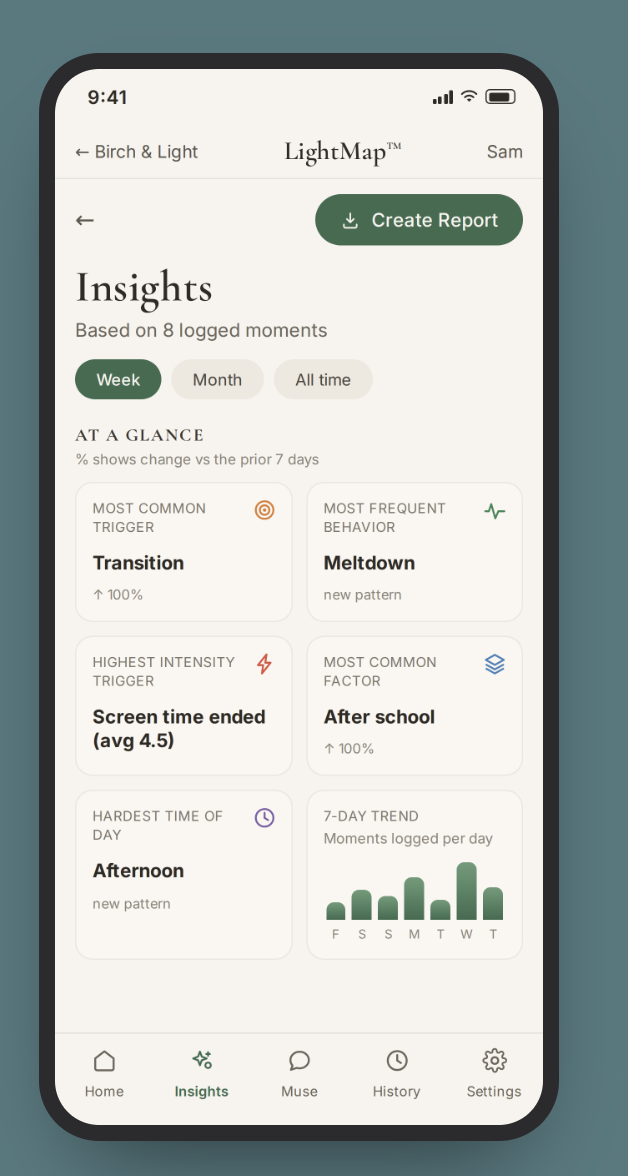

Part of the award-winning Birch & Light Method, honored with the Mom's Choice Gold Award for excellence in family resources.
A story to read together
Sometimes the easiest way in is a story you read side by side.
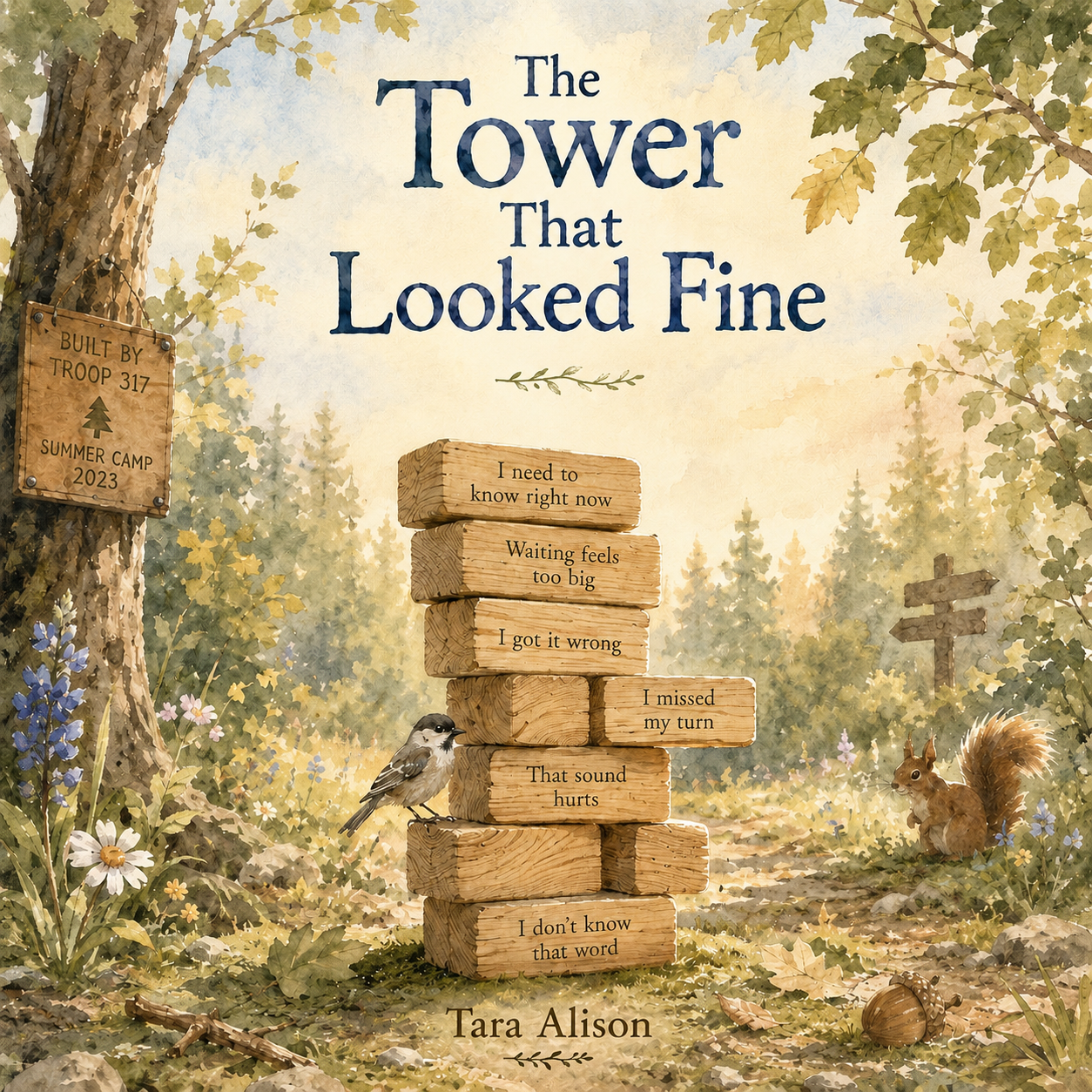 The Tower That Looked Fine
A tower in a quiet clearing tries to stay steady through every small thing nobody else seems to notice — until one tiny breath of wind causes her to fall, and a gentle hand begins to gather the blocks back.
Read the story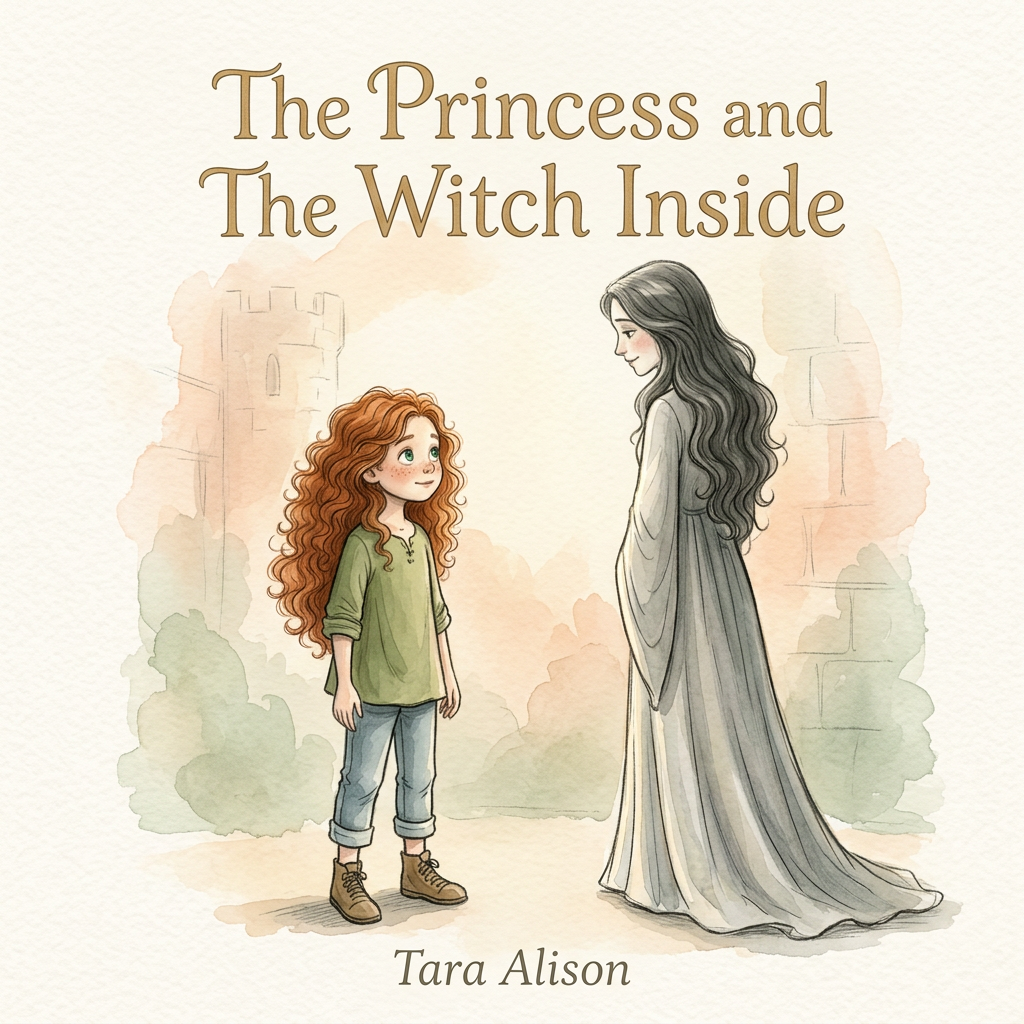 The Princess and the Witch Inside
Esme is loved, but a fast protective part keeps rushing in before she gets a turn. A quiet visitor helps her meet the witch inside — not as an enemy, but as a worried protector — and find her way back to the people she wanted to be with all along.
Read the story
If today was one of those days
A few more from the library, free to read.
Researched and drafted with AI assistance, reviewed before publication. Editorial standards