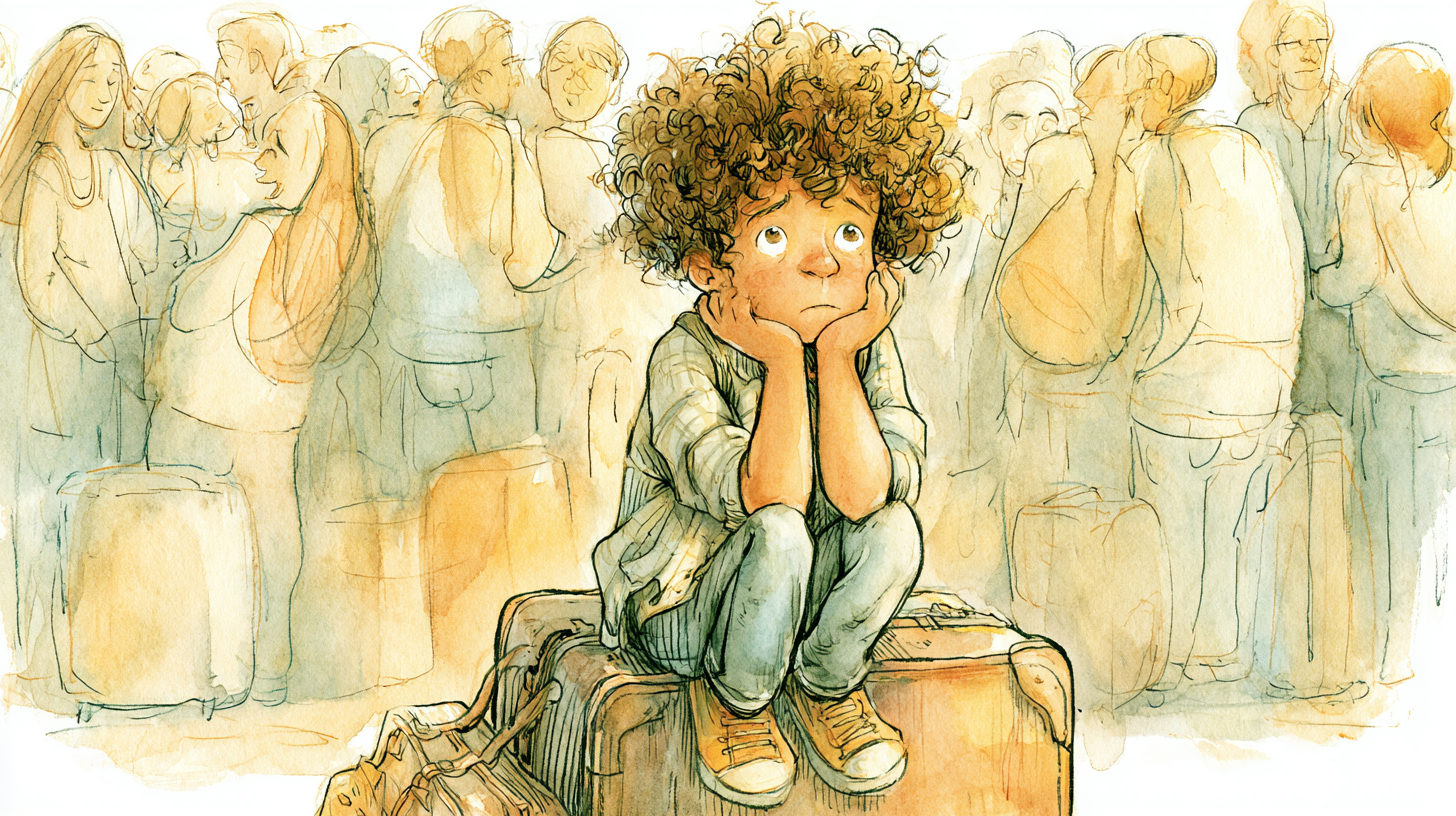
A vacation overwhelms some children because it removes routine, familiar surroundings, predictable sensory input, and steady sleep all at once, the supports their nervous system uses to stay regulated. The strain builds across the trip, so carry anchors from home, protect sleep, and plan quiet time before the meltdown.
You planned it for months. The flights, the hotel, the things you'd do together — a real break, the kind of trip that's supposed to make memories. And somewhere around day two, your child fell apart, and kept falling apart, and you found yourself sitting on the edge of a hotel bed wondering why the vacation you worked so hard to give them seems to be the worst thing that's ever happened to them.
It's a particular kind of heartbreak, and a particular kind of confusion. Vacation is supposed to be the reward. So why does it so often produce a more dysregulated, more difficult, more melted-down child than ordinary life at home?
The answer is that for a child who relies on the familiar to stay regulated, a vacation removes nearly everything that holds them steady — all at once. The very things that make a trip a trip are the things their nervous system was using to cope.
Why Is the Trip Itself the Problem?
It's worth seeing clearly: it's not that your child is ungrateful or impossible to please. It's that a vacation is, from a nervous-system standpoint, a near-total removal of the supports they depend on — and several of those losses stack at once.
Every routine is gone. The predictable shape of home — the known sequence of the day, the familiar meals, the regular rhythm — vanishes on a trip. For a child who leans heavily on routine to feel safe, that predictability was doing enormous quiet work, and the trip removes all of it simultaneously.
The environment is entirely unfamiliar. New place, new bed, new sounds, new smells, new everything. A child who is sensitive to their environment is now navigating a world with no familiar anchors, and the constant novelty that delights some children reads, to their nervous system, as a constant stream of unknowns to process.
Sensory input is relentless. Travel is loud, crowded, bright, hot, busy. Airports, restaurants, attractions, unfamiliar crowds — the sensory load of a vacation is often far higher than ordinary life, and it rarely lets up. For a child who overloads easily, a trip can be one long sensory gauntlet with no quiet home to retreat to.
Sleep is disrupted. Different bed, different room, different schedule, often less sleep and at irregular times. The nightly rebuild of capacity that a sensitive child depends on is exactly what travel tends to wreck — so they're facing higher demands with a thinner reserve.
A vacation removes routine, familiar surroundings, sensory predictability, and good sleep — the four things a sensitive child leans on most — all at the same time.
Why It Builds Across the Trip
The meltdowns often aren't worst on day one — they escalate as the trip goes on, and that pattern has a cause. Each day of removed routine, novel environment, sensory overload, and disrupted sleep draws down the reserve a little further, with no familiar home base to refill it. The depletion accumulates. By the middle of the trip, a child who was merely stretched on day one is running on empty, and a child running on empty melts down over small things, frequently.
This is the cruel irony of the family vacation: the longer it goes, the more the supports stay removed, and the harder it gets — which is the opposite of the relaxing-into-it arc parents expect.
While you're here, take the guide
What's Underneath is free: the three body-state triggers under most meltdowns, what to say in the minute before it tips over, and how to reset afterward.

You'll get the guide instantly, plus five free articles in your inbox every week. Real challenges (meltdowns, school mornings, picky eating, big feelings) and how to actually handle them. Unsubscribe anytime.
What Tends to Help
Carry pieces of home with you. You can't recreate the whole environment, but you can bring anchors — the familiar bedtime routine, a beloved object, a few known foods, the same wind-down sequence. Each piece of portable predictability gives the nervous system something familiar to hold in an unfamiliar place.
Protect sleep as the priority. Of everything a trip disrupts, sleep is the one most worth defending, because so much else rests on it. Holding bedtime roughly steady, darkening the unfamiliar room, and resisting the urge to pack every evening full pays off across the whole trip.
Build in downtime, deliberately. The instinct to maximize a trip — to see and do everything while you're there — is exactly what overloads a sensitive child. Planning genuine quiet stretches, returning to the room to decompress, doing less than you technically could, prevents the accumulation that leads to collapse. Less really is more here.
Lower your expectations of the days. A child managing a depleted nervous system in an overwhelming environment is not going to be at their best, and holding them to their at-home standard adds pressure to an already-full system. Expecting the trip to be harder, and meeting the harder moments with calm rather than disappointment, helps more than wishing they'd just enjoy it.
Watch for the buildup and intervene early. Because the overload accumulates, the time to add a quiet afternoon is before the meltdown, when you notice the reserve thinning — not after the collapse. Catching the curve early keeps the trip from tipping over.
The Shift Worth Making
When the vacation overwhelms your child, it's not a verdict on your child or a sign you did something wrong. It's that a trip, by its nature, strips away the routine, familiarity, sensory predictability, and sleep that a sensitive nervous system uses to stay steady — and asks the child to cope without them, in a more demanding environment, for days on end.
Seen that way, the goal shifts from "why won't they just have fun" to "how do I give back some of what the trip took away." Carry the anchors, protect the sleep, build in the quiet, and expect less of the days. You can't make a vacation feel like home — but you can bring enough of home along that your child has something to stand on while they're away from it.
Every behavior is a clue.
If trips reliably overwhelm your child, LightMap can help you track what builds across the days and what helps it settle — so the pattern beneath the vacation meltdowns becomes easier to see. Explore LightMap at birchandlight.com/lightmap.
For your child: When Axel's Engine Stayed On is about a boy who comes home from a huge day too tired to settle, with his engine still running.
Sources: Gruber R, Cassoff J, Frenette S, Wiebe S, Carrier J. Impact of sleep extension and restriction on children's emotional lability and impulsivity. Pediatrics. 2012, 130(5), e1155-e1161. doi 10.1542/peds.2012-0564. Paruthi S, et al. Recommended amount of sleep for pediatric populations: a consensus statement of the American Academy of Sleep Medicine. Journal of Clinical Sleep Medicine. 2016, 12(6), 785-786. doi 10.5664/jcsm.5866.
For education and reflection, not medical advice. Our terms
See what's underneath
Next time, you will know what set it off
LightMap reads your hard days together and gives you answers. Start with one moment today.
Start with 3 moments Not sure where to start? Ask me.Message Tara on WhatsApp. It really is me, I read everything and will personally respond.Click here to message Tara →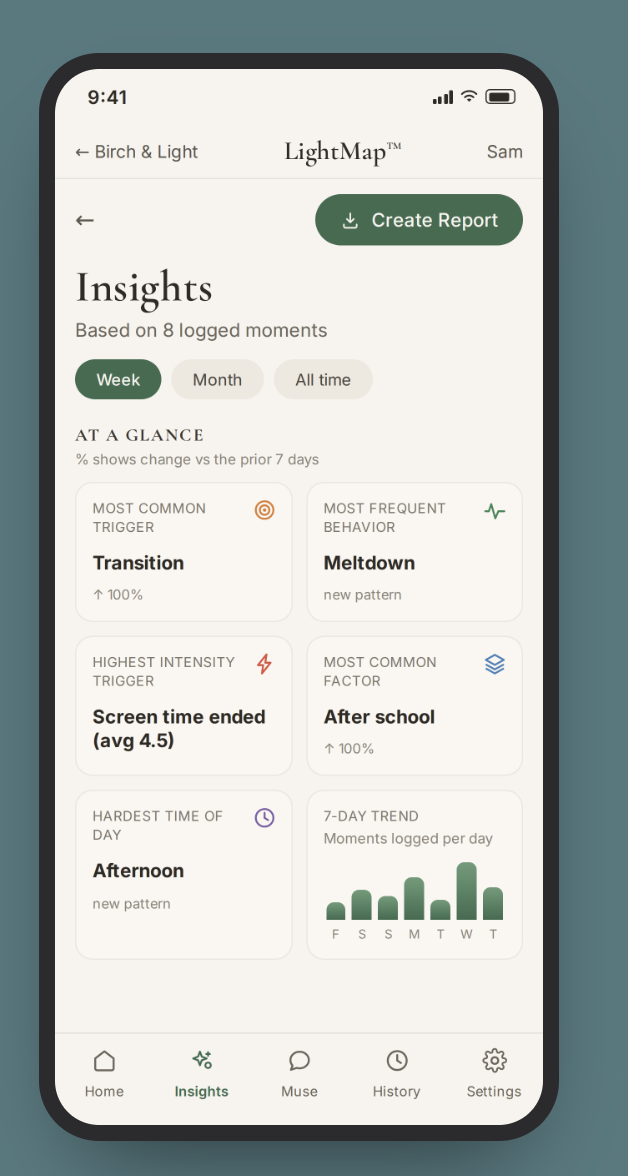

Part of the award-winning Birch & Light Method, honored with the Mom's Choice Gold Award for excellence in family resources.
A story to read together
Sometimes the easiest way in is a story you read side by side.
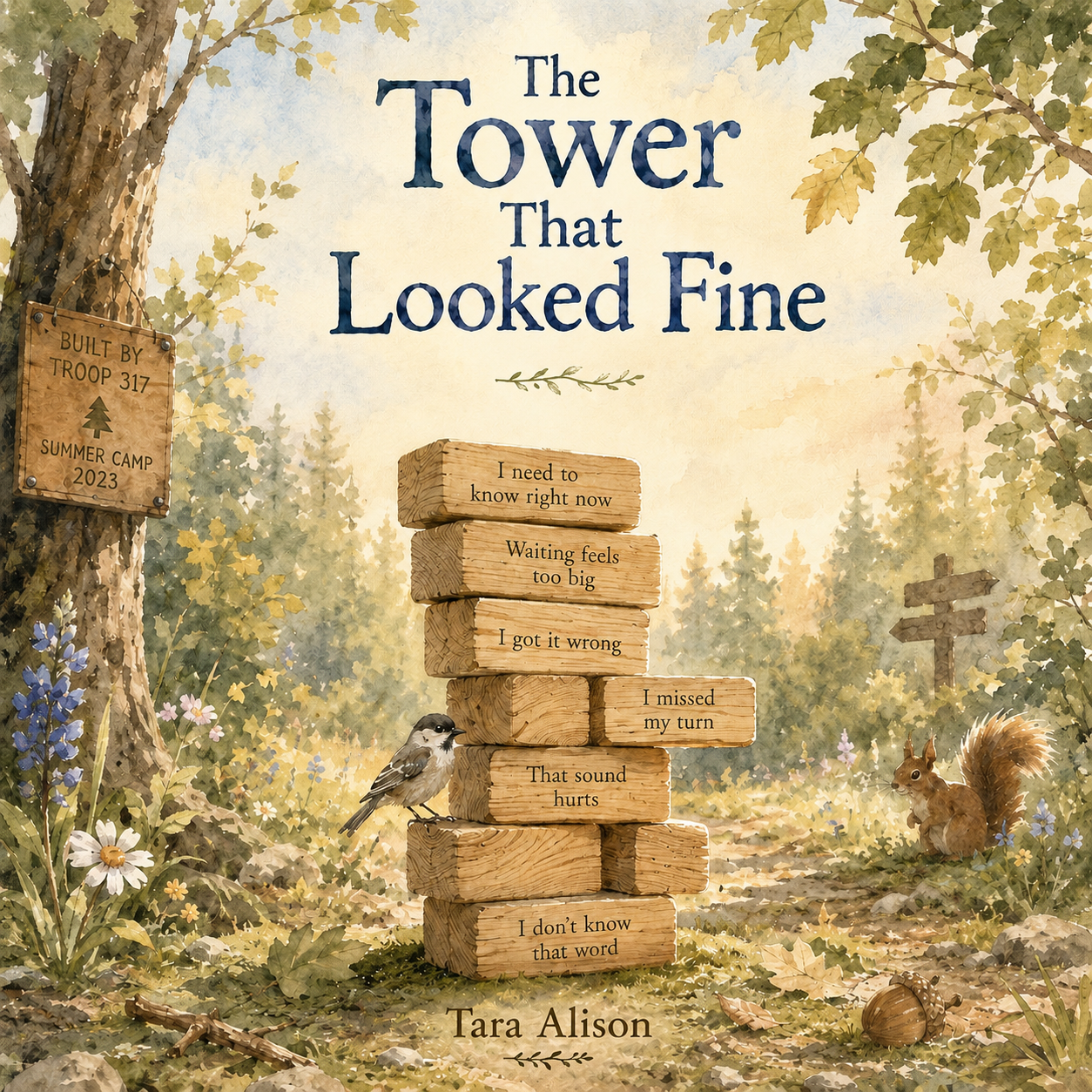 The Tower That Looked Fine
A tower in a quiet clearing tries to stay steady through every small thing nobody else seems to notice — until one tiny breath of wind causes her to fall, and a gentle hand begins to gather the blocks back.
Read the story The Princess and the Witch Inside
Esme is loved, but a fast protective part keeps rushing in before she gets a turn. A quiet visitor helps her meet the witch inside — not as an enemy, but as a worried protector — and find her way back to the people she wanted to be with all along.
Read the story
If today was one of those days
A few more from the library, free to read.
Researched and drafted with AI assistance, reviewed before publication. Editorial standards