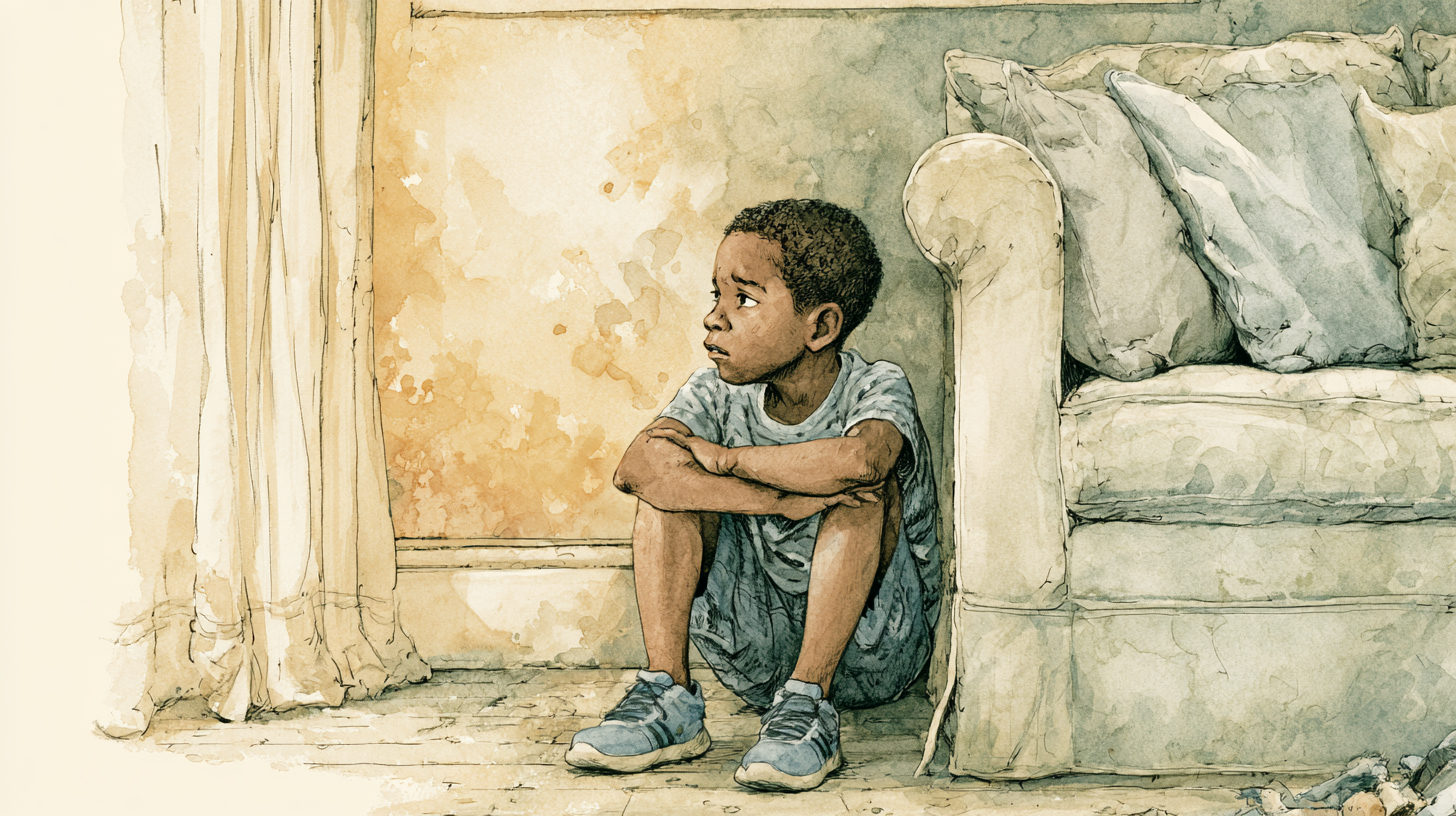
"Go play." It's one of the most ordinary things a parent can say, and for most children it's an invitation. An open afternoon, nothing scheduled, freedom to do whatever they want — the stuff of a good childhood summer.
And then there's your child, for whom "go play" seems to produce the opposite of play. Restlessness. Whining. Following you from room to room. A rising irritability that builds across the empty afternoon until it erupts over something tiny — and you're left wondering how a day with no demands in it became the day they fell apart.
It's a real pattern, and a confusing one, because everything in our culture says free time is what kids need more of. But for some children, an empty stretch of unstructured time isn't freedom. It's a demand in disguise — and one of the harder ones their nervous system faces.
Why Empty Time Is a Demand
We tend to think of an unstructured afternoon as the absence of demand. No tasks, no schedule, nothing required. But that's only true if a child can comfortably generate their own structure. For a child who can't yet, the empty afternoon is full of an invisible, relentless demand: figure out what to do, and keep figuring it out, over and over, all day.
Every open moment asks a question. What now? And then what? Is this a good choice? What about now? For a child whose executive function — the brain's planning-and-initiating system — is still developing or works differently, that stream of open questions is genuinely taxing. The freedom everyone else experiences as relief, they experience as a constant low-grade pressure to self-direct that they don't yet have the tools to meet.
An empty afternoon isn't the absence of demand for every child. For some, it's a demand to generate structure they can't yet make on their own.
What's Actually Driving the Meltdown
The eruption at the end of an unstructured day usually isn't about whatever triggered it. It's the accumulation of several things the open time quietly produced.
Decision fatigue. Hours of unguided choices drain the same mental resource over and over. By late afternoon the tank is empty, and an empty tank shows up as a short fuse.
Under-stimulation tipping into dysregulation. We talk a lot about overstimulation, but the opposite destabilizes some children just as much. A nervous system with too little to organize around can drift into restlessness, then agitation, then overflow.
The discomfort of boredom itself. For some children, boredom isn't a mild, productive state — it's genuinely uncomfortable, even distressing. And a child who can't tolerate it and can't resolve it on their own gets stuck in it, which builds toward a blow-up.
No rhythm to lean on. Without the day's natural pacing — the alternation of activity and rest that structure provides — some children swing erratically between doing nothing and frantic over-doing, never settling into the steady middle.
While you're here, take the guide
What's Underneath is free: the three body-state triggers under most meltdowns, what to say in the minute before it tips over, and how to reset afterward.

You'll get the guide instantly, plus five free articles in your inbox every week. Real challenges (meltdowns, school mornings, picky eating, big feelings) and how to actually handle them. Unsubscribe anytime.
Why "Just Let Them Be Bored" Isn't Always the Answer
There's real wisdom in letting children be bored. Boredom can be the doorway to creativity and self-direction, and a childhood scheduled to the minute has its own costs. For many kids, learning to sit in an empty afternoon and make something of it is a genuinely valuable skill.
But for the child who is dysregulated by open time, "just let them be bored" can be advice that doesn't fit. The capacity to turn boredom into play is a skill, and some children haven't built it yet. Telling a child who can't yet self-structure to simply tolerate the unstructured time is a bit like telling a child who can't yet swim to relax in the deep end. The goal is real; they just need to get there by steps. You build the skill by scaffolding it, not by leaving them in it and hoping.
What Tends to Help
Offer a loose shape, not a rigid schedule. The fix isn't to fill every minute — that swings them into overload and never builds the skill. It's a gentle skeleton: a rough sense of morning, afternoon, evening, with a few anchor points to organize around. The structure does the regulating while leaving room to breathe.
Narrow the choices. "Go play" is an overwhelming open field. "Do you want to build with blocks or do the water table?" is a manageable doorway. Reducing infinite options to two or three removes most of the decision-demand while still leaving real choice.
Help them start, then step back. Often the hard part is only the launch. Getting an activity going with them for a few minutes — then quietly withdrawing once they're absorbed — bridges the initiation gap that empty time exposes.
Build boredom tolerance in small doses. Like any skill, the capacity to sit in open time grows with practice at the right size. Short stretches of unstructured time, gradually lengthened as they cope, build the muscle without flooding it.
Watch when it tips. Notice how long your child can hold an open stretch before the restlessness turns to agitation. That threshold tells you where to add a little structure — before the meltdown, not after.
The Shift Worth Making
If your child melts down on the empty days, it's not because they're spoiled or incapable of entertaining themselves. It's that self-structuring is a skill they're still building, and open time asks for that skill faster than they can supply it. The meltdown is the gap showing.
Seen that way, you stop reading the open-day collapse as a character flaw and start treating it as a skill to scaffold. A little structure inside the freedom isn't the opposite of a good summer — for this child, it's what makes the freedom usable at all.
Every behavior is a clue.
If unstructured days reliably end in meltdowns, LightMap can help you track how long the open stretches last before they tip, and what helps — so the pattern beneath them becomes easier to see. Explore LightMap at birchandlight.com/lightmap.
For your child: When Wildflower Day Ended for Gus is about a young bee who cannot bear the day being over, and the mother who sits in the ache with him instead of hurrying him out of it.
For education and reflection, not medical advice. Our terms
See what's underneath
Next time, you will know what set it off
LightMap reads your hard days together and gives you answers. Start with one moment today.
Start with 3 moments Not sure where to start? Ask me.Message Tara on WhatsApp. It really is me, I read everything and will personally respond.Click here to message Tara →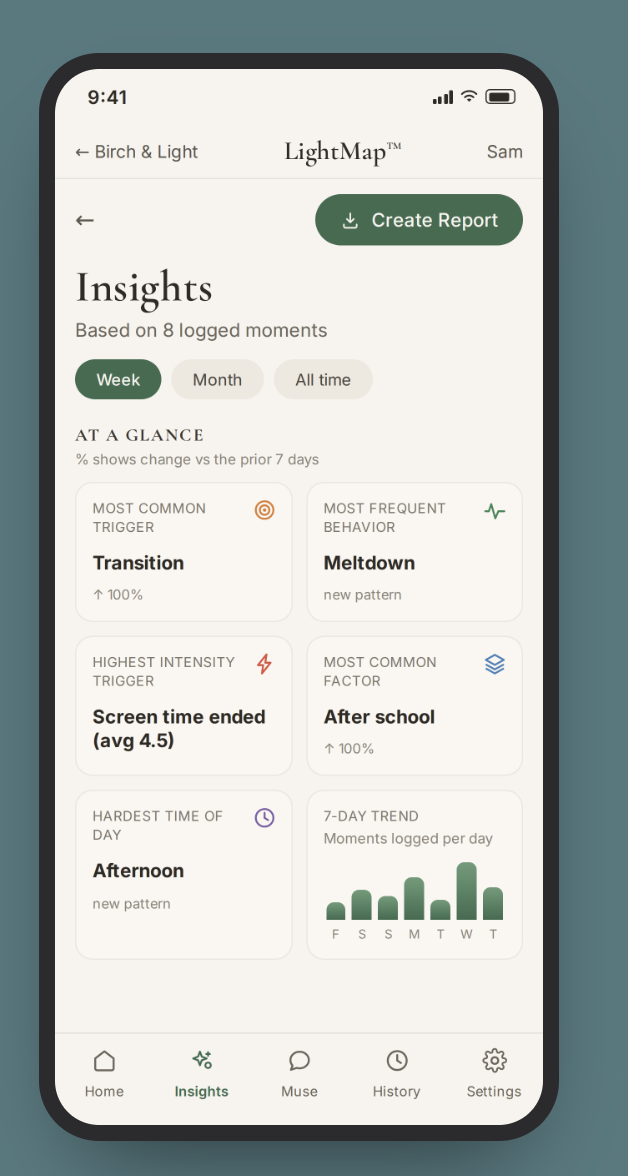

Part of the award-winning Birch & Light Method, honored with the Mom's Choice Gold Award for excellence in family resources.
A story to read together
Sometimes the easiest way in is a story you read side by side.
 The Tower That Looked Fine
A tower in a quiet clearing tries to stay steady through every small thing nobody else seems to notice — until one tiny breath of wind causes her to fall, and a gentle hand begins to gather the blocks back.
Read the story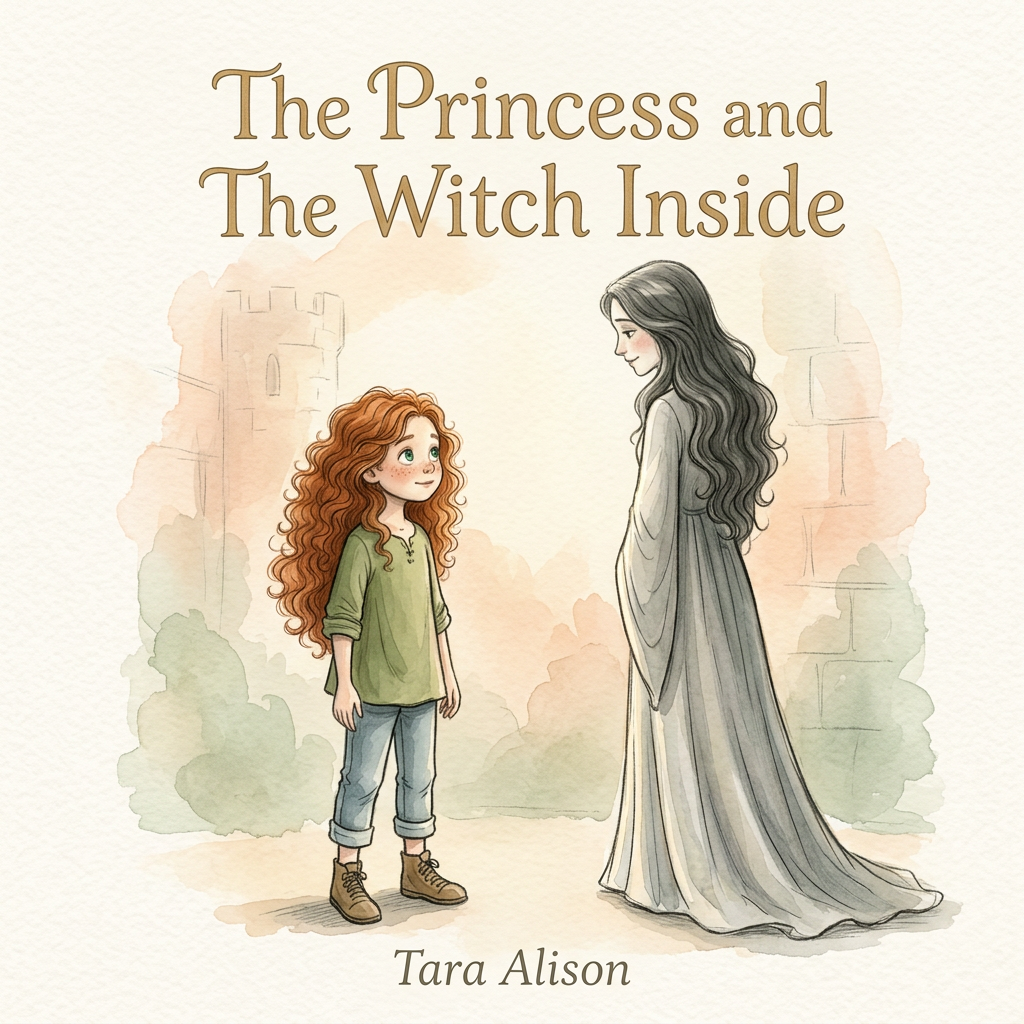 The Princess and the Witch Inside
Esme is loved, but a fast protective part keeps rushing in before she gets a turn. A quiet visitor helps her meet the witch inside — not as an enemy, but as a worried protector — and find her way back to the people she wanted to be with all along.
Read the story
If today was one of those days
A few more from the library, free to read.
Researched and drafted with AI assistance, reviewed before publication. Editorial standards