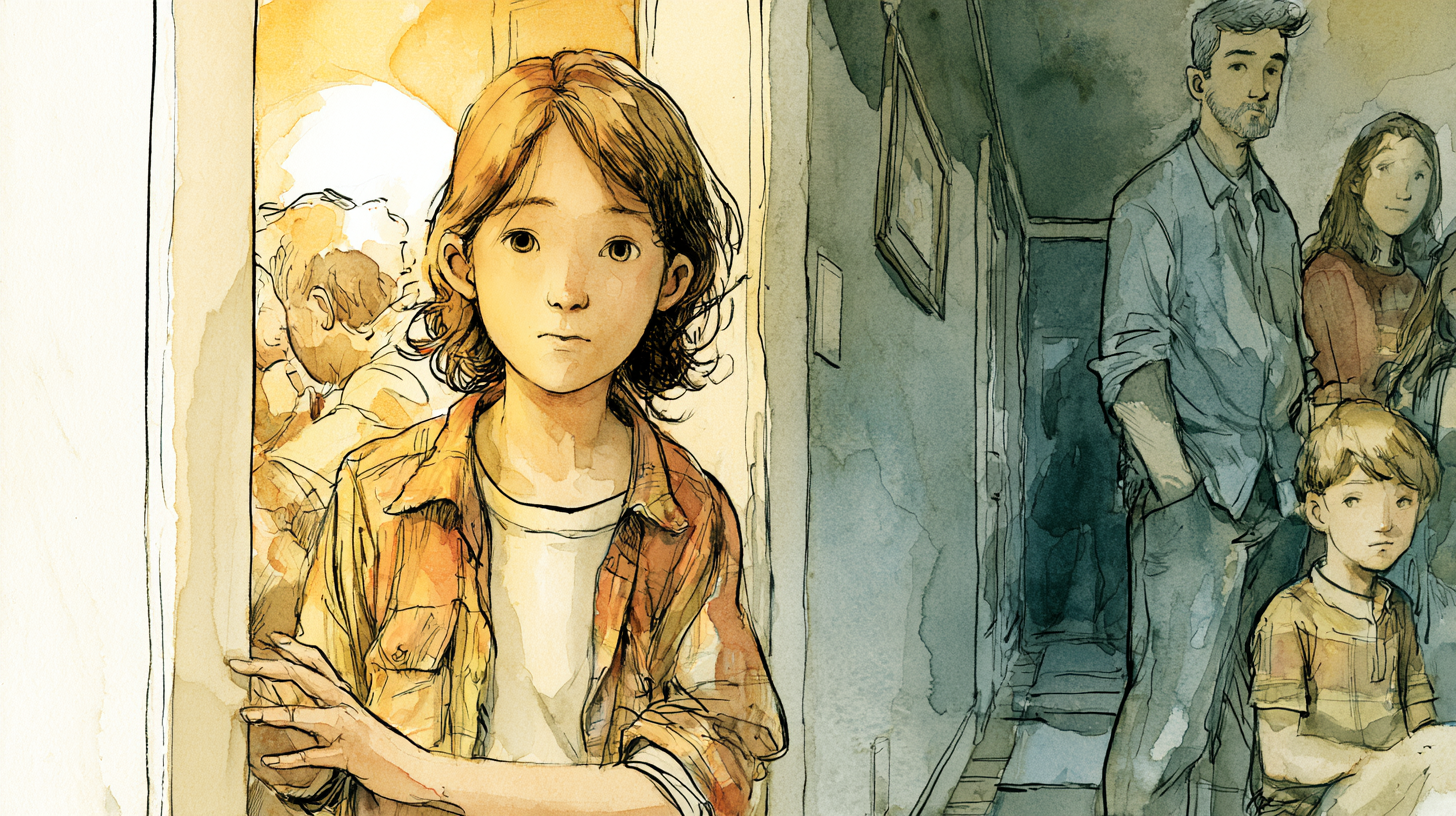
The behaviors look different. Vaping. Doom scrolling. Gaming until 3 a.m. Disappearing into a phone. Risky impulsivity. Sensation-seeking. Disappearing emotionally.
They are not the same behavior. But they are often doing the same job — getting a nervous system out of a room it doesn't know how to be in.
The room behind the door
Most escape behaviors are not, at the level of the body, about the substance or the activity itself. They are about what they relieve. The vape gives a beat of regulation. The scroll gives a break from internal weather. The game gives somewhere to be that isn't the hallway, the cafeteria, or the inside of the head.
The behavior is the strategy. The room is the actual problem. Strategies tend not to change much until the room does.
Some of the rooms teens are commonly trying to leave
- Sustained social pressure. Performing a version of themselves all day for peers and adults.
- Sensory overload. Schools, hallways, lunchrooms, group chats — environments that don't switch off.
- Internal criticism. A relentless inner voice that doesn't quiet on its own.
- Loneliness inside connection. Surrounded but not actually known.
- Unspecified dread. A hum of overwhelm with no obvious source.
- The cost of masking. Holding a self together that doesn't match the inside.
Why "just take the phone away" tends to disappoint
Removing a strategy without addressing the room often reroutes the behavior. The vape becomes the screen. The screen becomes shutdown. Shutdown becomes risky impulsivity. The teen's nervous system is doing a job; if you take one tool, it will look for another.
That is not an argument against limits. It's an argument for pairing limits with genuine attention to what the strategy was solving for.
While you're here, take the guide
What's Underneath is free: the three body-state triggers under most meltdowns, what to say in the minute before it tips over, and how to reset afterward.

You'll get the guide instantly, plus five free articles in your inbox every week. Real challenges (meltdowns, school mornings, picky eating, big feelings) and how to actually handle them. Unsubscribe anytime.
What helps the room itself feel less unbearable
- Shorter, more frequent moments of low-stakes connection — not big talks.
- Less performance pressure at home, especially after school.
- Sleep that's actually protected, not just in theory.
- Permission to be unimpressive sometimes — to fail a thing, to be in a mood, to not perform okay.
- An adult who can hear something hard without escalating it.
How patterns make this visible
The trouble with reading escape behaviors in real time is that they look like a hundred other things. LightMap helps surface the shape over time — when the urges cluster, what tends to come before them, what days the room feels worst. With the pattern visible, the conversation becomes less about the door and more about the room.
Related
Frequently asked questions
Doesn't framing behaviors as 'escape' minimize how serious they can be?
It's the opposite. Treating these behaviors as random or willful tends to leave the underlying pressure in place. Naming them as escape lets you stay alert to safety while also addressing what's being escaped from — which is usually where actual change comes from.
What if my teen genuinely seems to enjoy the behavior?
Enjoyment and escape can live in the same place. Many escape behaviors are pleasurable in the short term — that's part of how they work. Pleasure isn't proof there's nothing else underneath.
How do I bring this up without it feeling like a lecture?
Less of a single conversation, more of a slow change in atmosphere. Less surveillance, more curiosity. Sideways comments without an agenda. Most teens won't open up to a planned talk; they'll open up while doing something else.
What does LightMap track in this area?
It tracks patterns over time — when shutdown clusters, what tends to come before impulsive periods, how sleep and overwhelm interact. The point is understanding the room the teen is trying to get out of, not policing the door they're using.
Sources: Khantzian's self-medication hypothesis; peer-reviewed research on experiential avoidance and escape-maintained behavior (PMC); functional analysis literature on escape as a behavioral function (Journal of Applied Behavior Analysis; PMC); research on adolescent screen use and affect regulation (PMC).
For education and reflection, not medical advice. Our terms
See what's underneath
Understand the why, not just the what
LightMap reads your hard days together and gives you answers. Start with one moment today.
Start with 3 moments Not sure where to start? Ask me.Message Tara on WhatsApp. It really is me, I read everything and will personally respond.Click here to message Tara →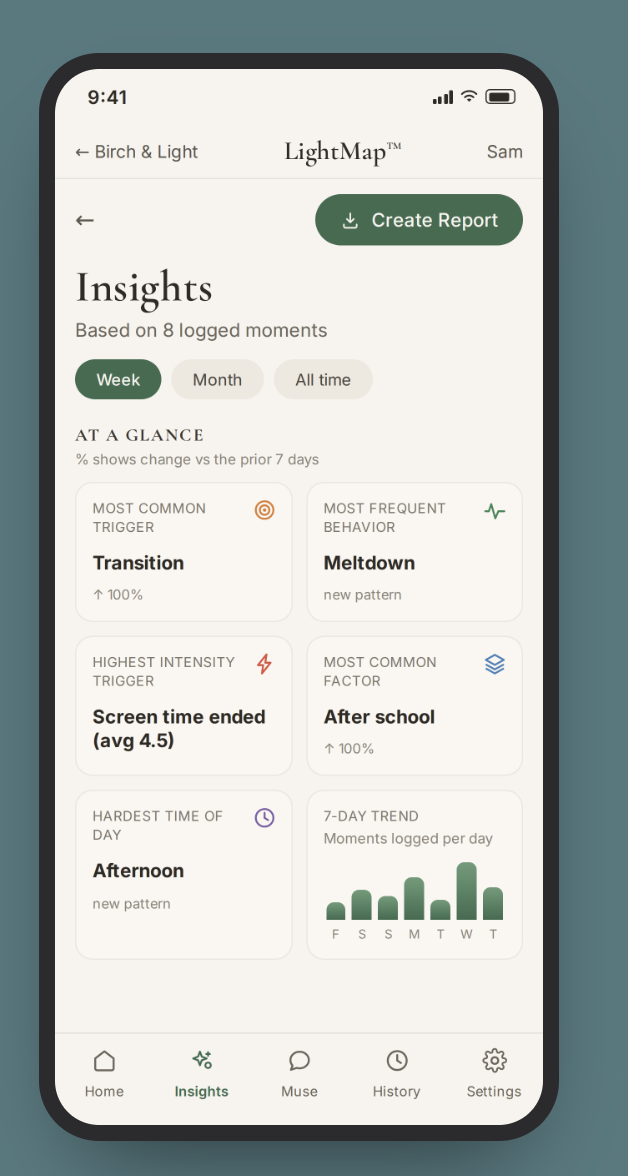

Part of the award-winning Birch & Light Method, honored with the Mom's Choice Gold Award for excellence in family resources.
A story to read together
Sometimes the easiest way in is a story you read side by side.
 The Mosquito Who Thought He Was a Dragonfly
Raised by dragonflies after a summer storm, Miro learns one night that the world sometimes sees him differently than the family who loves him — and that being misunderstood isn’t the same as being bad.
Read the story Otto Filled Everything
Otto can't stop filling things with water. His family doesn't understand — until Grandma Willow helps them listen to what his body is actually asking for.
Read the story
If today was one of those days
A few more from the library, free to read.
Researched and drafted with AI assistance, reviewed before publication. Editorial standards