.jpg)
Kids ask endless deep questions because their minds notice how strange and unexplained the world is, and they keep pushing at it. The distress when there is no clean answer usually comes from a low tolerance for uncertainty, which is closer to anxiety than curiosity. Naming the feeling helps more than answering.
There are a lot of questions, and then there is this. Not the cheerful why-is-the-sky-blue kind that has a tidy answer waiting at the end. These are the ones that stop you cold. Why does yesterday still exist if we can't go back to it. Where was I before I was born. If I'm me because of my brain, which part is the me.
You give the most reasonable answer you have, and your child looks at you like you have missed the point entirely, because from where they sit, you have. And you find yourself, several times a day, standing in your kitchen with genuinely no idea what to say.
If this is your kid, a few things are worth understanding, both about why the questions come and about the part that catches most parents off guard: the distress underneath them.
This is a particular kind of mind, not a phase to outlast
Some children are wired to notice the seams in reality that the rest of us have stopped seeing. Most people, somewhere in childhood, quietly accept that some things just are the way they are and stop poking at them. These kids never signed that agreement. They look at the ordinary world and see it as strange, arbitrary, and demanding of explanation, and their minds run at the deep structure of things, existence, identity, why anything is the way it is, with a persistence that is genuinely unusual.
This intensity of curiosity shows up often in kids who are gifted, intense, or neurodivergent, and it is not something to extinguish. It is, honestly, a kind of brilliance, even when it is exhausting to be on the receiving end of at 7am before coffee. The child asking where a finished thought goes is doing real philosophy. They just do not have the adult framing that would tell them this is a question humans have argued about for centuries.
Why doesn't my good answer land?
Here is the piece that trips parents up. When your child asks where yesterday went and you say it's just in the past now, that is a correct and reasonable answer, and it does not satisfy them at all. Not because it is wrong, but because they are not actually asking the question you are answering.
What sounds like a factual question is often really a philosophical or emotional one wearing a factual costume. Underneath where does yesterday go might be something more like: reality has rules I didn't agree to and can't see, and that unsettles me. The child cannot articulate that yet, so it comes out as the yesterday question. When you answer the surface question, the real one is still standing there unanswered, which is why they look dissatisfied and ask again from a slightly different angle.
The distress is the part that actually matters
Plenty of kids ask big questions and happily move on. The thing you are describing, where it genuinely bothers her, where the lack of an answer is upsetting, is worth paying attention to, because that is not really a knowledge problem. It is closer to anxiety.
For some intense kids, an unanswered question is not a fun mystery, it is a small open loop that feels threatening, a reminder that the world contains things that cannot be pinned down and controlled. The need for an answer is really a need for the ground to feel solid. That is why "I don't know, isn't that interesting" can land badly: to a child seeking certainty, "I don't know" can sound like "the floor is not stable," which is the opposite of what their nervous system is hunting for.
Researchers have a name for this pull. Intolerance of uncertainty is a tendency to find not-knowing hard to bear, and in children it is linked to anxiety, worry and reassurance-seeking, the repeat asking that looks so much like curiosity (Comer et al., 2009). In a study of 98 children ages 6 to 11, intolerance of uncertainty was higher in children with generalized anxiety disorder than in children with no diagnosis, and highest in those with another diagnosis alongside it (Cowie et al., 2018). None of this means your child has an anxiety disorder. It means the distress deserves to be read as a feeling and not as stubbornness. If it shows up daily, lasts long after the question has passed, or starts to affect sleep or school, bring it to your pediatrician.
Recognizing this changes the job. You are not failing to be a good enough encyclopedia. The task is not always to answer the question. Sometimes it is to help the child become okay with the question not having an answer, which is a much more useful lifelong skill than any single fact.
While you're here, take the guide
What's Underneath is free: the three body-state triggers under most meltdowns, what to say in the minute before it tips over, and how to reset afterward.

You'll get the guide instantly, plus five free articles in your inbox every week. Real challenges (meltdowns, school mornings, picky eating, big feelings) and how to actually handle them. Unsubscribe anytime.
What do I say when the questions start?
Get curious with them instead of answering for them. Turn the question back into a shared adventure: "Whoa, that's a big one. Where do you think it goes?" This does two things. It relieves you of being the oracle, and it tells the child their strange, wonderful mind is a place worth exploring rather than a problem to be solved.
Name the question as a real one. "You know, people have wondered about that for a really long time. There are whole books of grown-ups arguing about questions like yours." For a child who feels like a weirdo for asking, learning they are in the company of philosophers and scientists is enormously steadying.
When the distress shows up, treat the feeling, not the question. If she is getting upset, the moment has stopped being about the question itself. Try: "It kind of bugs you when there isn't a clear answer, huh?" Naming the feeling underneath does more than any answer to the surface question could. You are teaching her that not-knowing is uncomfortable and survivable, both at once.
Make "some questions don't have answers yet" a warm idea, not a dead end. Frame the biggest mysteries as exciting and open rather than as failures to know. "That's one of the great mysteries, nobody has figured it out, which is kind of amazing." For a certainty-seeking kid this is medicine, repeated over time: unanswered can be wonderful instead of threatening.
Give yourself permission not to know. You are allowed to say "I have absolutely no idea, and that's okay." Modeling comfort with your own not-knowing is one of the most valuable things you can show a child who panics in the face of it. Your calm in the unknown becomes, slowly, hers.
The reframe to hold
A child who asks the questions no one can answer is not too much, and is not broken. They are running a mind that sees more of the strangeness of the world than most people let themselves see, and feeling, sometimes, the vertigo that comes with it. Your job is not to have all the answers, which is a relief, because you never will. It is to be a steady, curious companion in the not-knowing, so that the questions stay a source of wonder rather than fear. If the underlying certainty-seeking shows up in other corners too, the need for the plan to stay predictable often comes from the same place.
The questions tend to cluster when something else is unsettled, which is easier to see across weeks than in the moment. LightMap is a place to log them.
Sources: Peer-reviewed research on existential questioning and asynchronous development in intellectually advanced children (Roeper Review; PMC); Piaget on cognitive development; research on existential anxiety in childhood (PMC). Jonathan Comer, Amy Krain Roy, Jami Furr, Kristin Gotimer, Rinad Beidas, Michael Dugas, Philip Kendall, "The Intolerance of Uncertainty Scale for Children: A Psychometric Evaluation," Psychological Assessment, 2009, 21(3), 402-411. Jennifer Cowie, Michelle A. Clementi, Candice A. Alfano, "Examination of the Intolerance of Uncertainty Construct in Youth with Generalized Anxiety Disorder," Journal of Clinical Child and Adolescent Psychology, 2018, 47(6), 1014-1022.
For education and reflection, not medical advice. Our terms
See what's underneath
Understand the why, not just the what
LightMap reads your hard days together and gives you answers. Start with one moment today.
Start with 3 moments Not sure where to start? Ask me.Message Tara on WhatsApp. It really is me, I read everything and will personally respond.Click here to message Tara →

Part of the award-winning Birch & Light Method, honored with the Mom's Choice Gold Award for excellence in family resources.
A story to read together
Sometimes the easiest way in is a story you read side by side.
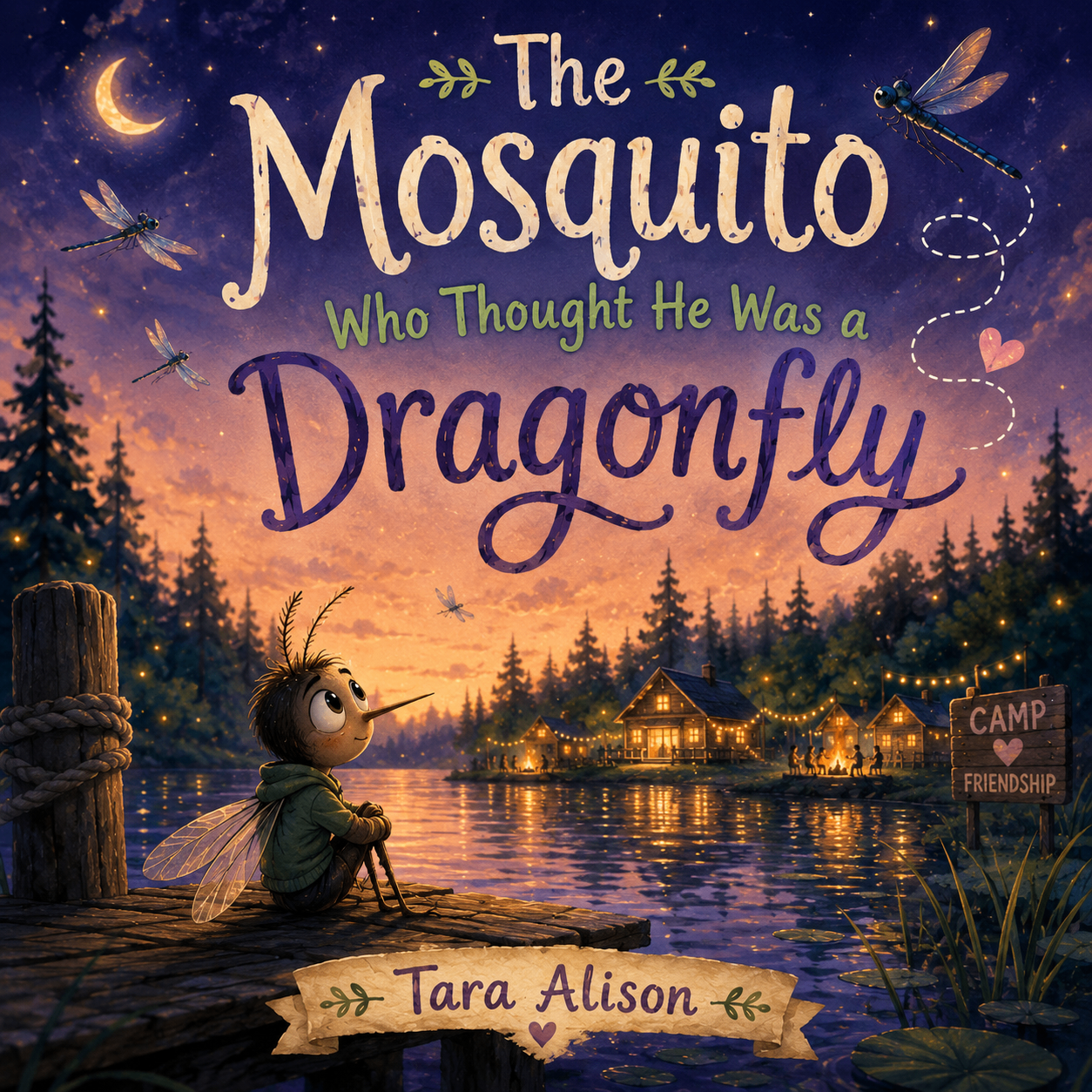 The Mosquito Who Thought He Was a Dragonfly
Raised by dragonflies after a summer storm, Miro learns one night that the world sometimes sees him differently than the family who loves him — and that being misunderstood isn’t the same as being bad.
Read the story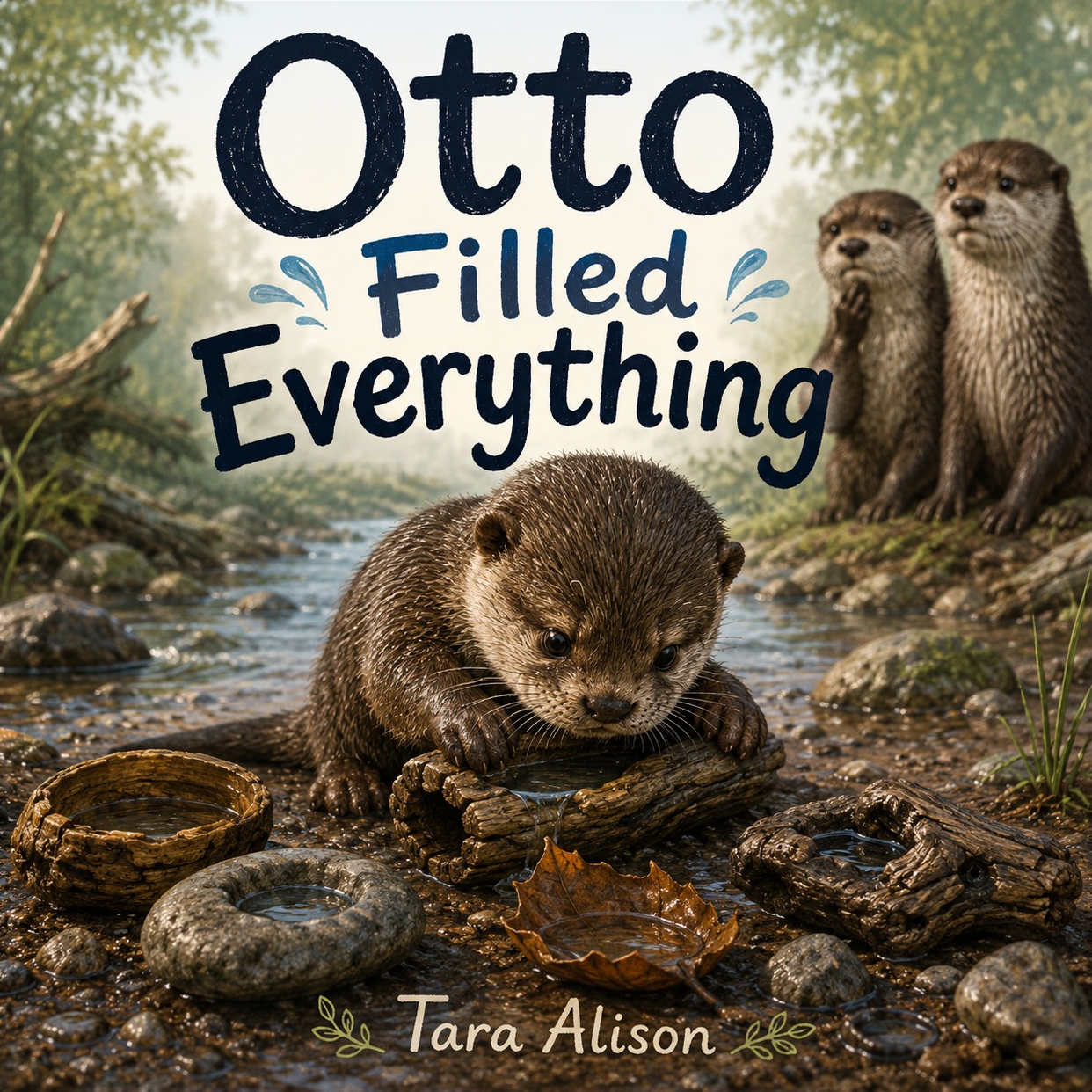 Otto Filled Everything
Otto can't stop filling things with water. His family doesn't understand — until Grandma Willow helps them listen to what his body is actually asking for.
Read the story
If today was one of those days
A few more from the library, free to read.
Researched and drafted with AI assistance, reviewed before publication. Editorial standards