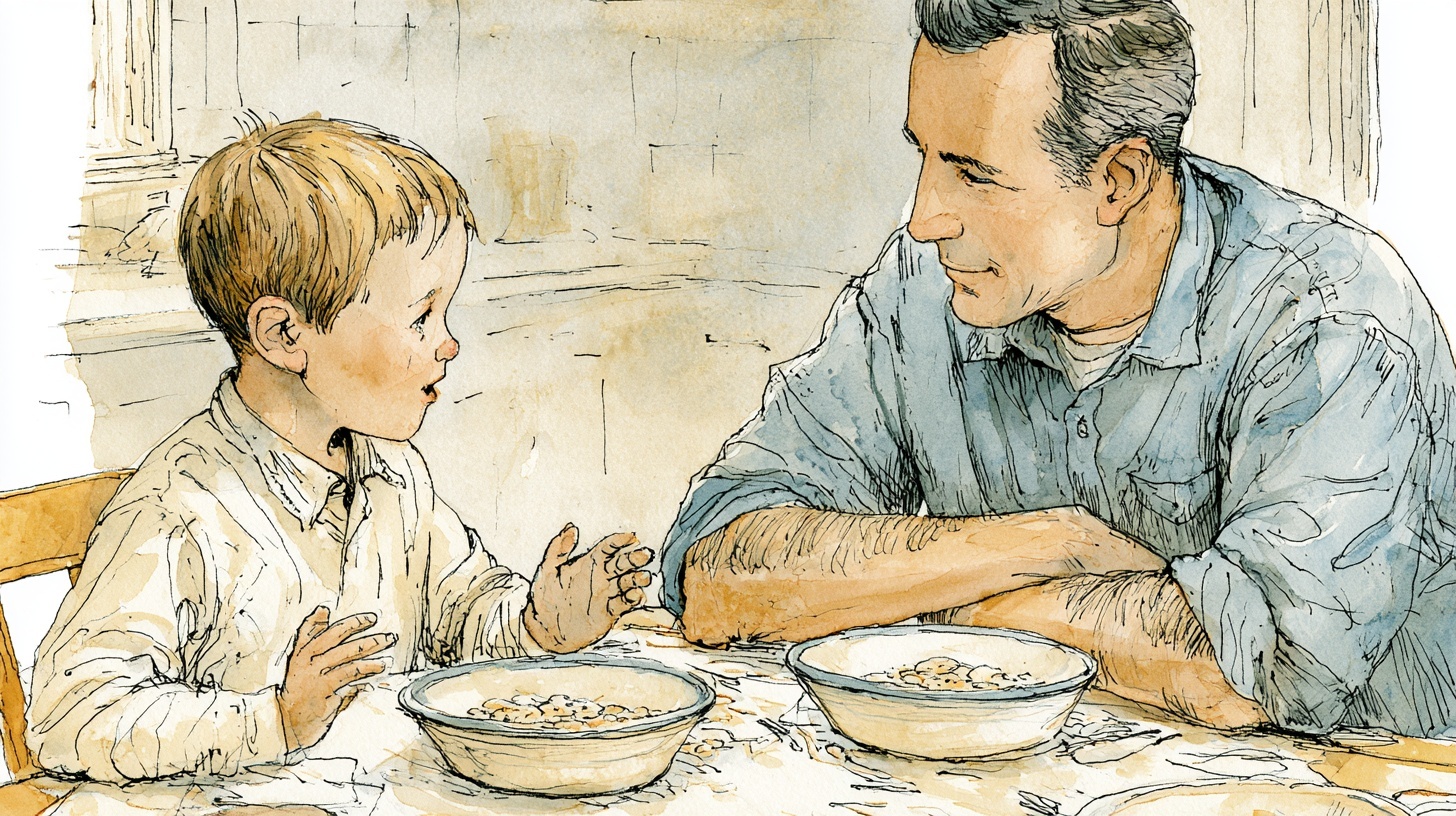
He knows what he wants to say. You can see it on his face. The word is there and it will not come out, and the longer everyone waits the harder the block gets.
What stuttering is
Stuttering, called stammering in the UK, is a disruption in the flow of speech. The formal diagnosis is childhood-onset fluency disorder.
It takes three forms, often together. Repetitions of sounds, syllables, or words. Prolongations, where a sound is stretched. And blocks, where the sound will not start at all, which is usually the most distressing for the child and the least visible to everyone else.
Secondary behaviors often develop alongside: eye blinking, facial tension, head movement, tapping, and word substitution, where a child swaps a hard word for an easier one and gradually narrows what they will say.
Onset is typically between two and five. Around five percent of children stutter at some point, and roughly one percent continue into adulthood.
What causes it, and what does not
Stuttering is neurological and strongly influenced by genetics. Differences in how the brain organizes speech production have been demonstrated repeatedly.
It is not caused by nerves, by anxiety, by parenting, by being rushed, or by trauma. It is not the result of a child not thinking before speaking. Anxiety very often develops as a consequence of stuttering, and that reversal of cause and effect is one of the most persistent myths in this area.
Why waiting to see is outdated
Many families are told the child will grow out of it. Many do. The problem is that the advice is usually given without any attempt to work out which group a particular child is in.
Factors associated with persistence include a family history of stuttering that continued, stuttering that has already lasted more than about a year, being male, and co-occurring speech or language difficulties. Current guidance favors early referral rather than passive monitoring, particularly where any of these apply, or where the child is showing awareness or distress.
Early intervention in the preschool years has better outcomes than the same intervention started later, so a referral costs little and delay can cost a lot.
What not to do
The standard advice, and all of it makes things worse:
- "Slow down"
- "Take a deep breath"
- "Think about what you want to say first"
- "Start again"
- Finishing his sentence for him
- Telling him to relax
These add pressure to a moment already under pressure, and they teach him that how he speaks matters more to you than what he is saying.
While you're here, take the guide
What's Underneath is free: the three body-state triggers under most meltdowns, what to say in the minute before it tips over, and how to reset afterward.

You'll get the guide instantly, plus five free articles in your inbox every week. Real challenges (meltdowns, school mornings, picky eating, big feelings) and how to actually handle them. Unsubscribe anytime.
What to do instead
Wait. Keep your face relaxed and keep normal eye contact. The pause feels much longer to you than it does to him.
Respond to the content. Answer what he said. Do not comment on how it came out, including praise for fluent days, which quietly confirms that you are monitoring.
Slow your own speech. Not his. Slowing your rate and leaving a beat before you reply reduces time pressure in the whole conversation, and it is one of the more effective things a family can change.
Reduce demand questions. Rapid questioning is hard. Comments invite response without requiring it.
Protect a few unhurried minutes a day where he has your full attention and nobody is competing to speak.
Treatment and school
See a speech and language therapist or pathologist with fluency experience. For preschool children, structured programs such as Lidcombe and parent-focused interaction approaches have the strongest evidence. Older children and teenagers usually work on a combination of speech technique and the avoidance and anxiety that has grown around it.
At school, ask for: no unprepared reading aloud, advance notice if he will be asked to speak, alternatives for oral presentations, extra time in any spoken assessment, permission to finish without interruption, and an explicit plan for teasing, because stuttering attracts it and the school needs to be ahead of that rather than responding to it.
If he has started saying less rather than stuttering less, that is avoidance rather than improvement, and it is worth naming. Why your child only participates when they know they will succeed covers that pattern.
Stuttering fluctuates enormously, and a single clinic appointment on a good day gives a misleading picture. Log the good weeks and bad weeks alongside what else was happening, plus any words or situations he has started avoiding, in LightMap. The avoidance list is often the most important thing you will bring.
He is not nervous, and he does not need to calm down. He needs the room to finish.
Sources: DSM-5-TR criteria for childhood-onset fluency disorder; American Speech-Language-Hearing Association practice portal on childhood fluency disorders; Yairi and Ambrose on the epidemiology, natural history, and predictors of persistence and recovery in early childhood stuttering (Journal of Fluency Disorders; PMC); trial evidence for the Lidcombe Program and parent-focused early intervention (PMC; BMJ); research on neurological and genetic bases of stuttering (PMC); Stuttering Foundation and STAMMA guidance for families and schools.
For education and reflection, not medical advice. Our terms
See what's underneath
Understand the why, not just the what
LightMap reads your hard days together and gives you answers. Start with one moment today.
Start with 3 moments Not sure where to start? Ask me.Message Tara on WhatsApp. It really is me, I read everything and will personally respond.Click here to message Tara →

Part of the award-winning Birch & Light Method, honored with the Mom's Choice Gold Award for excellence in family resources.
A story to read together
Sometimes the easiest way in is a story you read side by side.
 The Mosquito Who Thought He Was a Dragonfly
Raised by dragonflies after a summer storm, Miro learns one night that the world sometimes sees him differently than the family who loves him — and that being misunderstood isn’t the same as being bad.
Read the story Otto Filled Everything
Otto can't stop filling things with water. His family doesn't understand — until Grandma Willow helps them listen to what his body is actually asking for.
Read the story
If today was one of those days
A few more from the library, free to read.
Researched and drafted with AI assistance, reviewed before publication. Editorial standards