
To interrupt a meltdown, work through the body instead of words. Hold something cold, follow a moving finger with the eyes, or breathe together with a long, slow exhale. Each sends your child's alarm system a physical signal that the danger has passed, and it can land in seconds, before any language could.
Most meltdown advice aims at the mind: name the feeling, offer the choice, hold the boundary. All useful, and all of it hits a wall at the same place, the moment a child is fully flooded, because a brain in that state cannot process language or reason. The thinking part has gone offline and the alarm part is running the show. In that window, the fastest way back is not through the mind at all. It is through the body.
What follows is a set of techniques that work from the body up rather than the mind down, along with the actual science of why they do. These are not replacements for co-regulation, connection, or getting to the root of what sets your child off. They are tools for the acute moment, the ninety seconds when nothing verbal can land and you need a door back to calm.
A note before the list: introduce these when your child is calm, never spring them mid-storm, and let your child choose which ones become theirs. A technique done with a child who opted in works. The same technique done to a resistant child becomes one more demand.
Why does the body work when words do not?
The short version of the neuroscience: a meltdown is the brain's alarm center, the amygdala, hijacking the system and shoving the reasoning centers offline. You cannot talk a hijacked brain down, because the part that listens to talking is exactly the part that is offline. But the alarm center is deeply wired to the body, and that wiring runs both directions. Certain physical inputs send a bottom-up signal that the danger has passed, and that signal reaches the alarm before any word could. Each technique below is a different way of sending it.
1. Eye movements: following a finger side to side
Ask your child to track your finger with their eyes as you move it slowly left to right, back and forth, a set number of times. Many parents notice their child is visibly calmer by the end of a couple dozen passes.
This one has genuinely interesting science behind it, though it is worth being precise about what the research shows. Neuroscientists studying the eye movements used in EMDR therapy found that goal-directed, side-to-side eye movements transiently deactivate the amygdala, the brain's fear center, and engage a prefrontal pathway involved in regulating emotion. The leading explanation is that tracking movement loads working memory and directed attention, and the brain networks that handle that task compete for resources with the ones running the alarm. Give the attention system a job and the alarm quiets, not metaphorically but measurably on brain imaging. In one 2018 study of healthy adults, a demanding working-memory task quieted the amygdala in much the same way the eye movements did, which suggests the benefit comes from giving attention a job rather than from the eye movements alone.
Honest caveat: this research was conducted on adults in the context of processing fear memories, not on children mid-meltdown. So the mechanism is real and the extension to what you are seeing is plausible, but it is reasonable inference rather than proven fact. What matters at home is that it is completely safe, and if it reliably helps your child, the fact that it also has a credible neural mechanism is a bonus, not a requirement.
2. Cold: an ice pack, a cold cloth, something chilled to hold
A child asks for the ice pack, presses it to their hand or their cheek, and the storm loses its grip. This is one of the most robust techniques in the whole category, and it is borrowed directly from a well-established clinical toolkit.
Cold exposure is the "T" in DBT's TIPP skills (Temperature, Intense exercise, Paced breathing, Paired muscle relaxation), a set of distress-tolerance tools developed for exactly these moments of overwhelming emotion. The mechanism is the mammalian dive reflex: cold on the skin, especially the face, stimulates the vagus nerve, which flips the nervous system toward its "rest and calm" branch, slowing the heart and dialing down arousal within seconds. It is one of the fastest physiological brakes the body has, and it requires zero cognitive effort from a child who has none to spare.
One real safety note. The strongest version of this reflex is triggered by cold on the face, and that face-cold response deliberately slows the heart, so it is not recommended for children with certain heart conditions or other specific medical issues without a doctor's okay. Cold held on a hand or arm, which is what many kids naturally gravitate to, is much gentler and still helps. If your child likes cold on the face, clear it with your pediatrician first.
While you're here, take the guide
What's Underneath is free: the three body-state triggers under most meltdowns, what to say in the minute before it tips over, and how to reset afterward.

You'll get the guide instantly, plus five free articles in your inbox every week. Real challenges (meltdowns, school mornings, picky eating, big feelings) and how to actually handle them. Unsubscribe anytime.
3. Paced breathing, especially a long exhale
Breathing together, slowly, with the out-breath stretched longer than the in-breath, is the most researched rapid-calming tool there is, and counting can give a dysregulated child something concrete to hold onto. Counting backward tends to work better than forward, because it demands a sliver more attention, quietly recruiting the same focus-the-mind effect that makes the eye-tracking work.
The mechanism overlaps with the ice pack: a long exhale directly stimulates the vagus nerve and shifts the body toward its calm branch, lowering heart rate breath by breath. A 2018 systematic review found that breathing slower than ten breaths a minute raised heart rate variability, a marker of vagal activity, and went along with less anxiety, anger and arousal. Its authors describe the evidence as limited, drawn from 15 studies of varied design. The "breathe together" part matters as much as the breathing, because a child in a storm often cannot initiate the slow rhythm alone but can borrow yours, matching your pace until their body follows. That borrowing is co-regulation in its most literal form. If a specific breathing pattern was ever suggested by a doctor for your child, use that one, since it is already tuned to them.
What else works from the body up?
The same bottom-up principle powers a range of tools worth having in the kit:
- Deep pressure: a firm hug offered not forced, a weighted blanket, being squeezed between cushions. Proprioceptive input is organizing and calming for many kids.
- The 5-4-3-2-1 senses scan: naming five things you see, four you hear, and so on. Like the eye tracking, it works by occupying attention and pulling the brain toward the present and out of the alarm.
- Strong flavors and textures: something very sour or very cold to eat, crunchy or chewy foods. Intense safe sensory input redirects the nervous system.
- Big heavy movement: pushing against a wall, carrying something weighty, animal walks. This is the child version of the "intense exercise" in TIPP, burning through stress chemistry.
- Humming, singing, or a long slow blow: blowing out imaginary candles or through a straw. Another sneaky path to a long exhale and vagus stimulation for a child who resists being told to breathe.
How do you actually use these?
Build the menu in calm moments, letting your child sample each and discover which ones feel good, because ownership is what makes a tool available under stress. Some families make a small physical kit: an ice pack in the freezer, a card with the eye-tracking game, a straw, a favorite sour candy. When you notice the early build rather than the peak, that is the moment to reach for one, since every technique here works better on a rising storm than a cresting one. And if a tool your child normally loves gets swatted away mid-meltdown, that is not failure, it is information that this storm is past the point for tools, and the job quietly shifts back to safety and your calm presence until it passes.
What all of these share is a refusal to argue with a flooded brain. They speak the only language that brain can still hear in the moment, the body's own, and they say the one thing that helps: you are safe now. For the mindset behind staying steady enough to offer them, co-regulation is the foundation the whole toolkit rests on.
Put it into practice
Understanding the volcano is step one. Giving your child their own tools for it is where things shift. My Big Feelings and My Fast Brain is a printable workbook that turns feeling-size, early warning signs, and calm-down tools into pages kids want to do, with a science section for the grown-up. It is $9, instant download, print at home.
Get the workbook, or find both fast brain workbooks in the bundle.
Which technique helps depends on the child and on how far into the meltdown you are. Log what you tried and where it landed in LightMap and you stop reaching for the wrong one at the wrong moment.
Sources: Lycia D. de Voogd, Jonathan W. Kanen, David A. Neville, Karin Roelofs, Guillén Fernández, Erno J. Hermans, "Eye-Movement Intervention Enhances Extinction via Amygdala Deactivation," The Journal of Neuroscience, 2018, 38(40), 8694-8706. Andrea Zaccaro, Andrea Piarulli, Marco Laurino, Erika Garbella, Danilo Menicucci, Bruno Neri, Angelo Gemignani, "How Breath-Control Can Change Your Life: A Systematic Review on Psycho-Physiological Correlates of Slow Breathing," Frontiers in Human Neuroscience, 2018, 12, 353.
For education and reflection, not medical advice. Our terms
See what's underneath
Next time, you will know what set it off
LightMap reads your hard days together and gives you answers. Start with one moment today.
Start with 3 moments Not sure where to start? Ask me.Message Tara on WhatsApp. It really is me, I read everything and will personally respond.Click here to message Tara →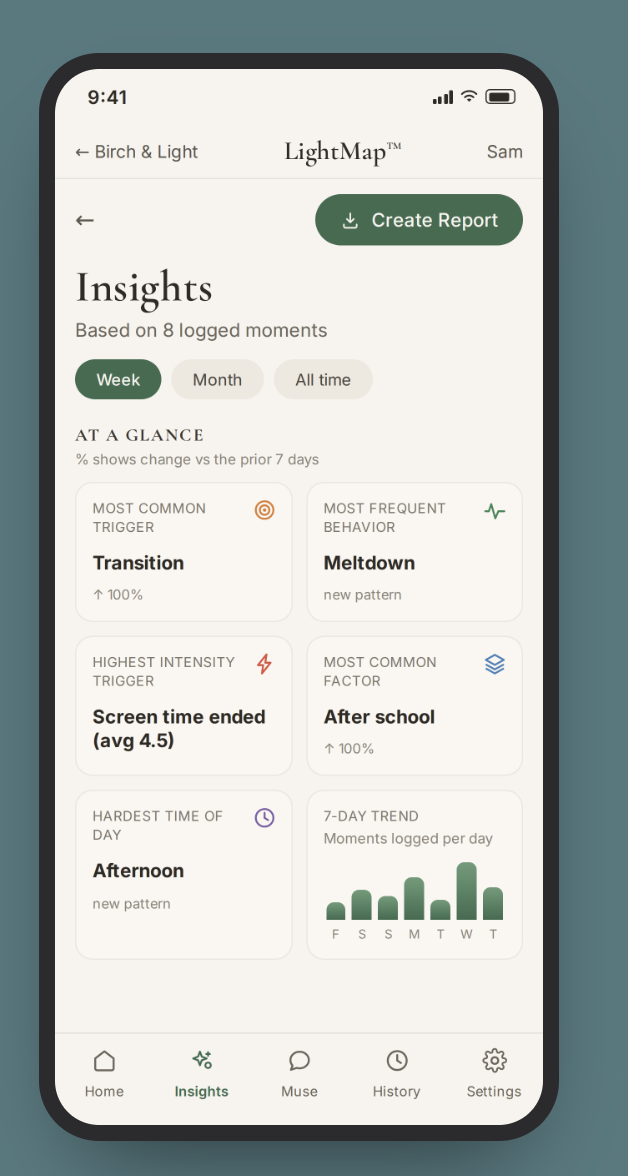

Part of the award-winning Birch & Light Method, honored with the Mom's Choice Gold Award for excellence in family resources.
A story to read together
Sometimes the easiest way in is a story you read side by side.
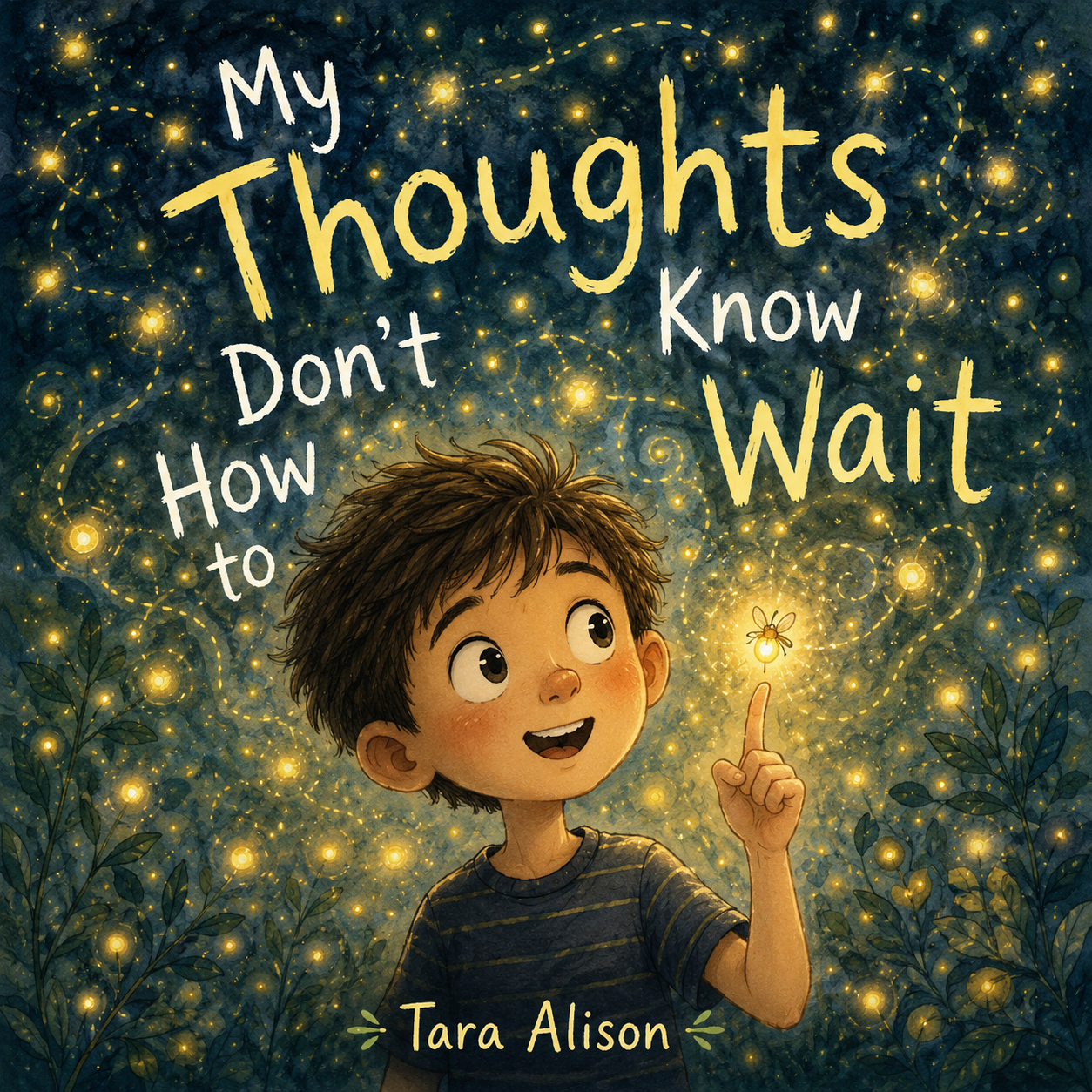 My Thoughts Don't Know How to Wait
Simon's thoughts arrive bright and fast — and feel like they will disappear if he doesn't say them right away. One quiet night beside fireflies, he discovers a small, surprising space between noticing a thought and chasing it.
Read the story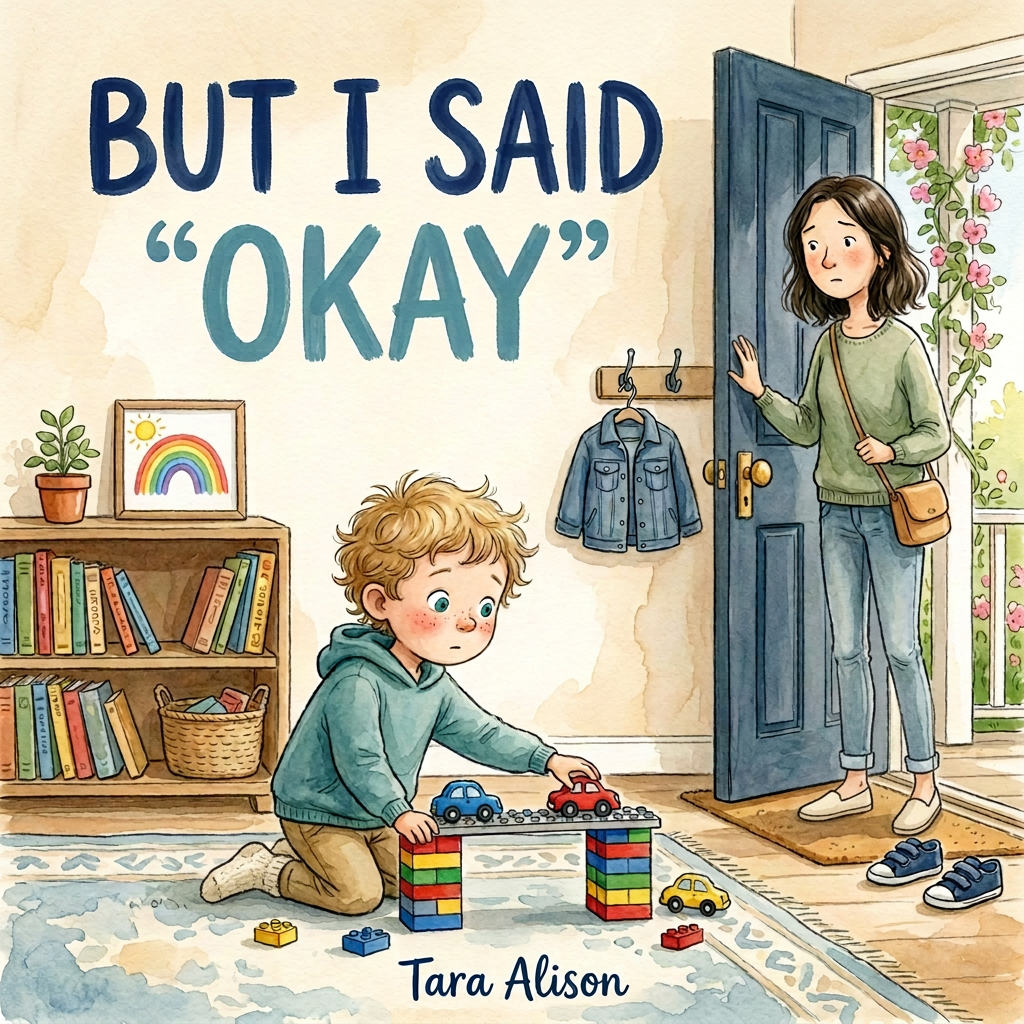 But I Said “Okay”
Owen always says okay. He means it every time. But his attention is still inside the bridge, the dragon, the cave, the music — until Mom realizes that helping him leave one thing matters more than asking him to start the next.
Read the story
If today was one of those days
A few more from the library, free to read.
Researched and drafted with AI assistance, reviewed before publication. Editorial standards