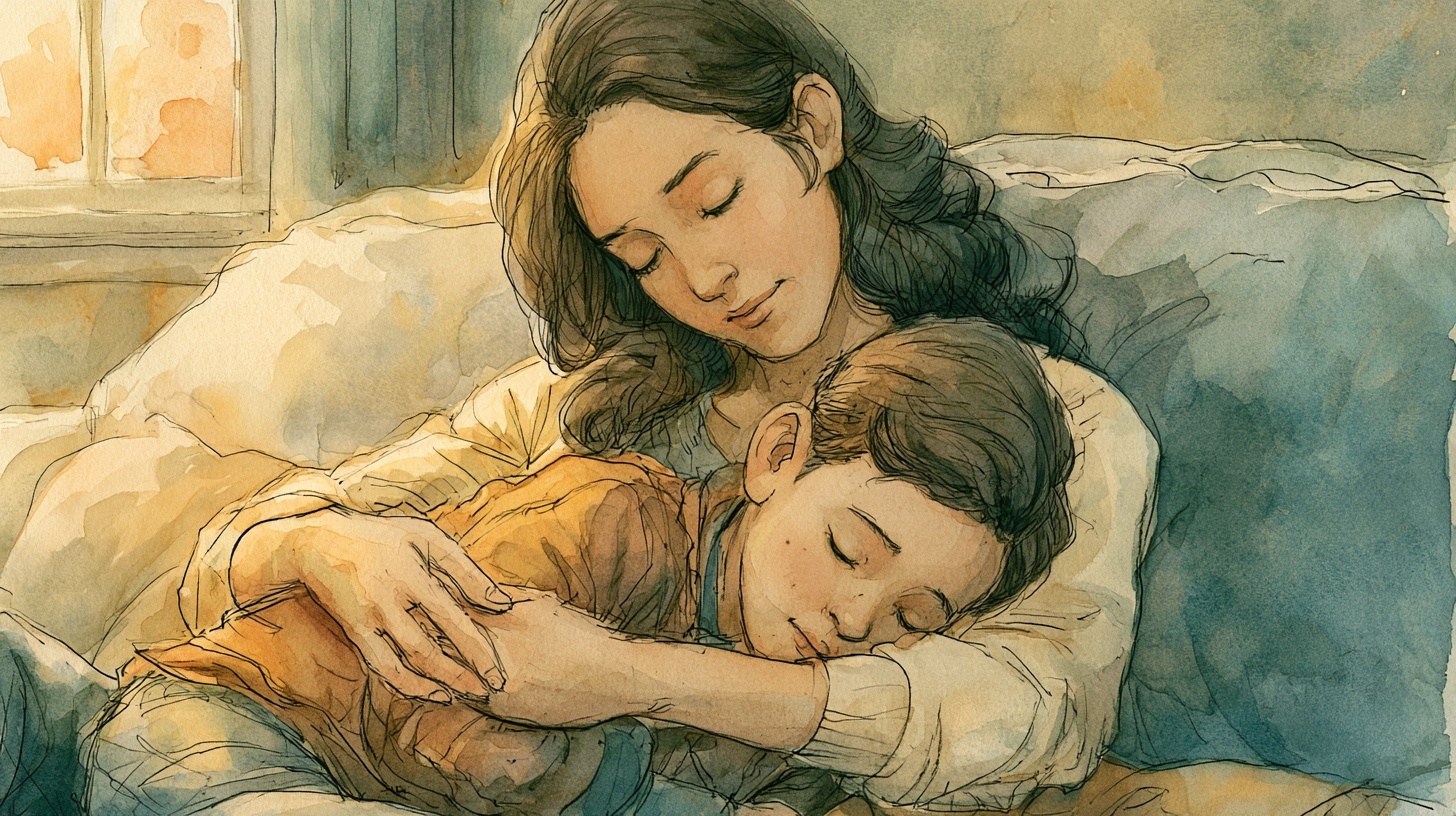
Someone has written DMDD on a form and handed it to you, and you have come home to find out what it means.
What it is
Disruptive mood dysregulation disorder was added to the DSM in 2013. Its purpose was specific: children with severe chronic irritability and explosive outbursts were being diagnosed with pediatric bipolar disorder in large numbers, and long-term follow-up did not support that. DMDD was created to describe those children more accurately.
The criteria require severe recurrent temper outbursts, verbal or physical, grossly out of proportion to the trigger, occurring on average three or more times a week. They must be inconsistent with developmental level. The pattern must have lasted at least twelve months without a symptom-free stretch of three months or more, be present in at least two settings, with onset before age ten, and the diagnosis is not made before six or after eighteen.
The part that distinguishes it
Between the outbursts, the mood is persistently irritable or angry, most of the day, nearly every day, and observable by others.
That is where it parts company with oppositional defiant disorder, though not as cleanly as it is often described. ODD has an angry and irritable mood cluster of its own, alongside argumentative behavior and vindictiveness, and needs four symptoms across those clusters over six months. The DMDD bar is higher on every axis: the outbursts have to be severe and roughly three times a week, the irritability between them has to run most of the day nearly every day, and the whole pattern has to hold for twelve months. A child who explodes and then returns to a reasonably level mood is a different picture from a child who is simmering all the time.
It is worth knowing that under the current criteria, DMDD and ODD are not both diagnosed. If the criteria for DMDD are met, that is the diagnosis given.
What the label does not do
This is the most useful thing I can tell you: DMDD describes a pattern. It does not explain a cause.
It is also a contested diagnosis. It was added with a thin evidence base, and clinicians continue to argue about whether it identifies a distinct condition or simply names a severity level that lots of different things can produce.
Which means the diagnosis should be a starting point rather than an endpoint, and a good clinician will have considered what else produces months of chronic irritability with explosive outbursts in a child:
- ADHD, where emotional dysregulation is a core feature and irritability is common. This is the big one: studies have found up to 85 percent of children with DMDD also meet criteria for ADHD
- Anxiety, where chronic threat produces a permanently short fuse
- Autism, where meltdowns are driven by overload and demand rather than mood
- Sleep disorders, including apnea, which produce irritability reliably
- Trauma
- Medication effects, including stimulant rebound in the late afternoon
- Depression, which in children frequently presents as irritability rather than sadness
- Abrupt-onset medical causes, where the change arrived over days rather than developing over years
If none of these were assessed before the label was applied, that is a reasonable thing to raise.
What helps
There is no specific treatment for DMDD. What is used is drawn from the surrounding conditions: parent-focused behavioral approaches, cognitive behavioral therapy for the child, and treatment of any co-occurring ADHD or anxiety, which frequently reduces the irritability substantially on its own.
Medication in DMDD is off-label and the evidence is limited, which is worth knowing before starting a conversation about it.
While you're here, take the guide
What's Underneath is free: the three body-state triggers under most meltdowns, what to say in the minute before it tips over, and how to reset afterward.

You'll get the guide instantly, plus five free articles in your inbox every week. Real challenges (meltdowns, school mornings, picky eating, big feelings) and how to actually handle them. Unsubscribe anytime.
The Matthews Protocol
If you spend any time in DMDD parent communities, you will encounter the Matthews Protocol, and it belongs in any honest overview of this diagnosis. It is named for Dan Matthews, MD, a researcher at Neurobehavioral Systems in Austin, Texas, who has worked with children with behavioral disorders for more than twenty years. He developed the regimen while running an inpatient unit for children with aggression problems at Duke University, after noticing that many of his patients could not recall their own outbursts afterward, which struck him as seizure-like. His argument was that brain imaging in these children suggested heightened amygdala activity linked to low dopamine, producing hypervigilance and poor impulse control, and that the standard medication approach was therefore working against the biology: these children appear to need more dopamine access, while the antipsychotics commonly prescribed reduce it.
The protocol that grew from this uses a phased combination of two older, generally better-tolerated medications, introduced one at a time: amantadine, which supports dopamine regulation, followed by oxcarbazepine (Trileptal), an anti-seizure medication used here to quiet the over-firing circuits rather than sedate the child. Families are often drawn to it because the side-effect burden is typically lighter than antipsychotic regimens, and because the underlying frame, calming an over-excitable brain rather than suppressing behavior, matches what many parents feel they are seeing. Matthews also reported following some children into adolescence and finding normalized amygdala activity alongside improved symptoms in roughly half, with some able to reduce or stop the combination. A network of familiar prescribers and parent organizations, including DMDD.org and Revolutionize DMDD, carries the approach forward.
The honest evidence picture is thinner than the community presentation suggests, and the detail matters. The primary evidence is a conference poster, not a peer-reviewed paper: 91 children aged 6 to 17 with DMDD, all discharged after inpatient treatment for severe aggression, of whom 8 percent required rehospitalization over the following year compared with 26 percent of those who came off the protocol. Read that comparison carefully. It is adherent families against non-adherent families, not treatment against placebo, and families who stay on a medication regimen for a year differ from families who stop in many ways that have nothing to do with the drugs. That is a real signal and it was presented at a psychiatric conference and covered by the American Psychiatric Association's own news publication. It is also a single retrospective study by the protocol's originator, with no randomized trial behind it. The 75 to 90 percent success rates circulating in parent communities come from clinics and advocacy organizations rather than from published research. And in 2022 a state psychotropic medication advisory committee formally reviewed the protocol and, citing the limited evidence base, recommended no further action, which is a fair indication of where mainstream bodies currently sit. Both medications are used off-label for DMDD. Neither is risk-free despite the gentler reputation: oxcarbazepine requires sodium monitoring and carries a small risk of serious rash, which is why genetic testing for the HLA-B*1502 variant is advised before starting it in children of Asian ancestry, and amantadine can disturb sleep and mood and occasionally produces hallucinations. It is also fair to say that the antipsychotics families are moving away from do have randomized trial evidence behind them, and risperidone and aripiprazole carry FDA approval for irritability in autism, which is the closest approved indication to this picture, which is precisely what this protocol does not yet have. That does not make the approach wrong, much of pediatric psychiatry runs ahead of its trial base, but it does mean the right way to pursue it is with a prescriber who knows the protocol, baseline labs, and close monitoring, and the right question for a prescriber who has never heard of it is whether they are open to reviewing it with you. If your child is already on antipsychotics with poor results, this is a legitimate second-opinion conversation to seek out.
Approaches built around collaborative problem solving, which treat explosive behavior as a skills deficit rather than a motivation deficit, tend to fit these children better than reward and consequence systems, which have usually already failed by the time a family reaches this point.
Practically, when consequences make behavior worse covers why the standard approach backfires here, and why a child is fine one minute and explosive the next covers the fuse itself.
The pattern is the diagnostic question. Log the outbursts with the time and what preceded them, and separately note the baseline mood each day, in LightMap. Whether the irritability sits flat across the whole day or clusters at predictable times is what tells a clinician whether this is mood, medication timing, demand load, or sleep.
The label tells you how hard this is. It does not yet tell you why, and that question is still worth asking.
Sources: American Psychiatric Association, DSM-5-TR, diagnostic criteria for disruptive mood dysregulation disorder and for oppositional defiant disorder; Leibenluft E, Severe mood dysregulation, irritability, and the diagnostic boundaries of bipolar disorder in youth (American Journal of Psychiatry, 2011, 168:129-142); Matthews D, Matthews G, Disruptive mood dysregulation disorder: a unique pediatric neuropsychopharmacological approach, poster 101 presented at Psych Congress 2017, September 16-19 2017, New Orleans, reported in Psych Congress Network, September 19 2017; Levy N, Experts search for meds to help youth with DMDD (Psychiatric News, American Psychiatric Association, April 6 2018, doi 10.1176/appi.pn.2018.pp4a3), source for the amygdala and dopamine account, the adolescent follow-up, and the finding that up to 85 percent of children with DMDD also have ADHD; Connecticut Department of Children and Families, Psychotropic Medication Advisory Committee minutes, September 9 2022, recording that the committee reviewed the Matthews Protocol and, given the limited evidence base, recommended no further action; Greene RW, Collaborative and Proactive Solutions; FDA prescribing information for oxcarbazepine (Trileptal), including hyponatremia monitoring and HLA-B*1502 screening in patients of Asian ancestry, and for amantadine.
For education and reflection, not medical advice. Our terms
See what's underneath
Next time, you will know what set it off
LightMap reads your hard days together and gives you answers. Start with one moment today.
Start with 3 moments Not sure where to start? Ask me.Message Tara on WhatsApp. It really is me, I read everything and will personally respond.Click here to message Tara →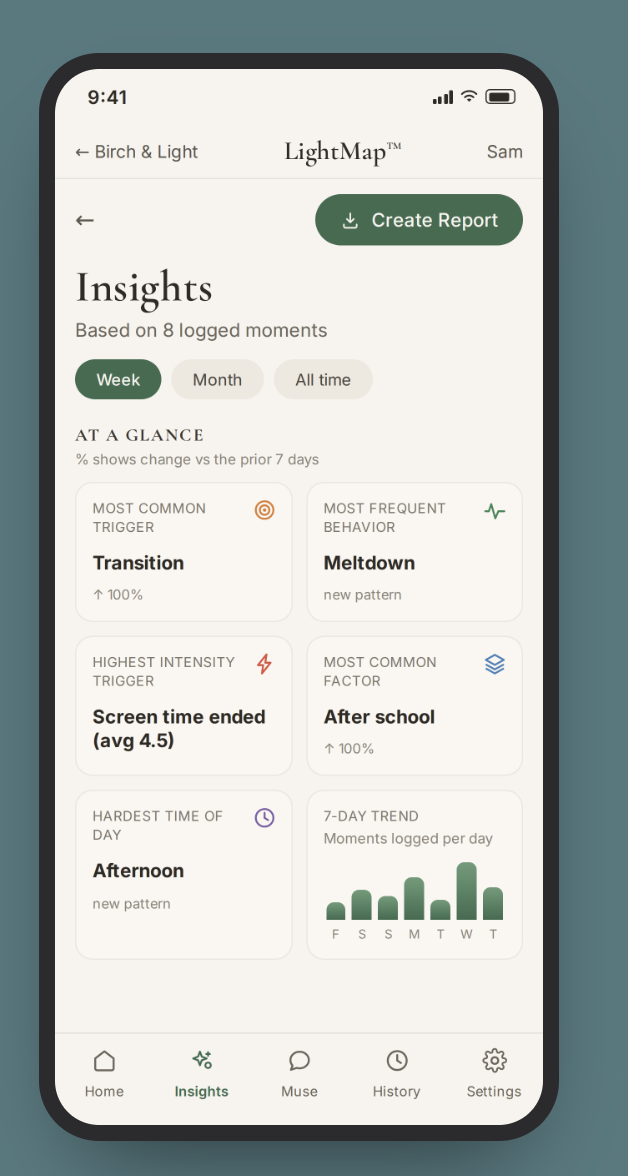

Part of the award-winning Birch & Light Method, honored with the Mom's Choice Gold Award for excellence in family resources.
A story to read together
Sometimes the easiest way in is a story you read side by side.
 The Tower That Looked Fine
A tower in a quiet clearing tries to stay steady through every small thing nobody else seems to notice — until one tiny breath of wind causes her to fall, and a gentle hand begins to gather the blocks back.
Read the story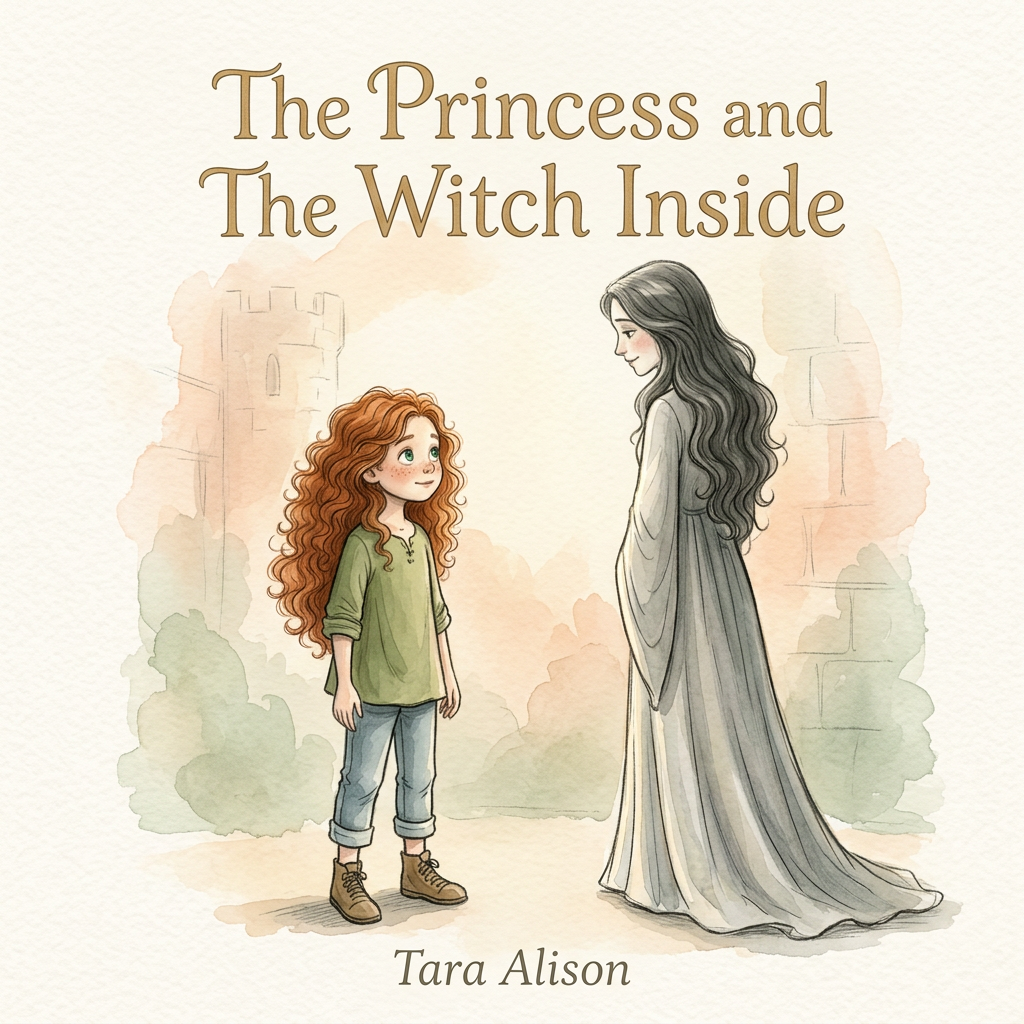 The Princess and the Witch Inside
Esme is loved, but a fast protective part keeps rushing in before she gets a turn. A quiet visitor helps her meet the witch inside — not as an enemy, but as a worried protector — and find her way back to the people she wanted to be with all along.
Read the story
If today was one of those days
A few more from the library, free to read.
Researched and drafted with AI assistance, reviewed before publication. Editorial standards