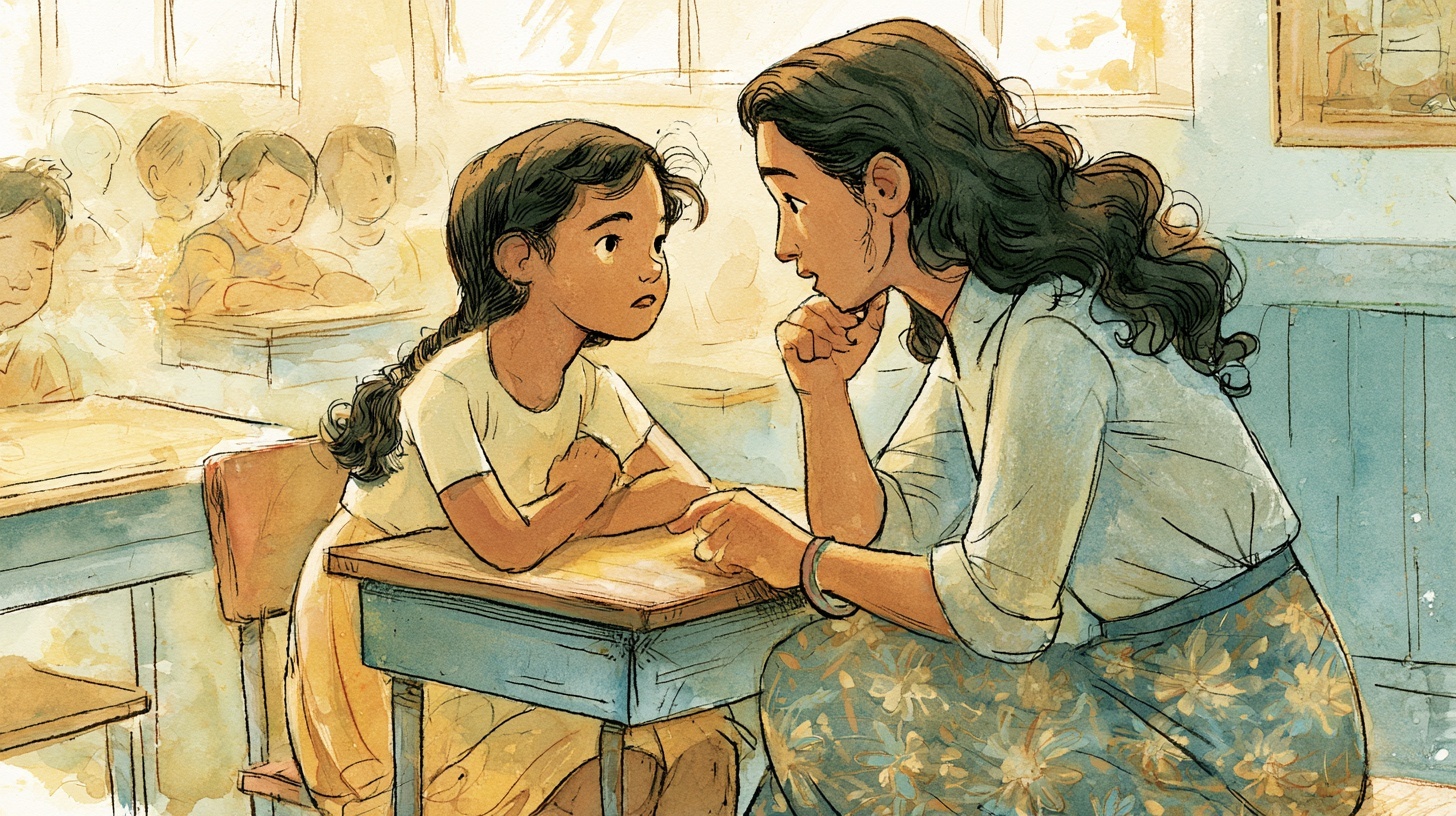
The hearing test was normal. You had it done because the teacher said she does not listen, and because at home you say her name three times before anything happens.
Normal hearing and difficulty understanding are not a contradiction. They are two different systems.
What it is
Auditory processing disorder describes difficulty with what the brain does with sound after the ears have done their part: separating speech from background noise, telling similar sounds apart, holding a spoken sequence in order, and locating where a sound came from.
The ears deliver the signal accurately. The processing of that signal is inefficient, so in easy listening conditions a child may be fine, and in a classroom with thirty other children they are not.
What it looks like
- Frequent "what?" and "huh?", especially in noise
- Mishearing similar words, and answers that are slightly off the question
- A delay before responding, as though the sentence is being decoded
- Much better one to one and in a quiet room
- Difficulty following multi-step spoken instructions
- Trouble with phonics and spelling, since both rest on distinguishing sounds
- Exhaustion and shutdown after a school day of continuous listening
- Being described as not listening, dreamy, or deliberately ignoring people
The honest complication
This is a contested diagnosis, and you deserve to know that before you spend money on it.
The difficulty is that the observable signs of APD overlap almost completely with ADHD, with developmental language disorder, and with working memory limitations. A child who cannot follow instructions in a noisy room may have an auditory processing problem, an attention problem, a language problem, or a memory problem, and the behavior looks identical from the outside.
Some audiologists diagnose it confidently. Others argue that the tests do not reliably separate it from those other conditions, and that treating it as a standalone auditory issue can mean the actual driver goes unaddressed. Both positions are held by serious clinicians.
What follows practically: pursue the assessment if it helps, but insist that language, attention, and memory are evaluated too. An APD label obtained without those is the one that most often leads families down an expensive path that does not help.
It also cannot be tested reliably in young children. Most protocols require around age seven or older, because the test battery depends on maturity and sustained attention.
While you're here, take the guide
What's Underneath is free: the three body-state triggers under most meltdowns, what to say in the minute before it tips over, and how to reset afterward.

You'll get the guide instantly, plus five free articles in your inbox every week. Real challenges (meltdowns, school mornings, picky eating, big feelings) and how to actually handle them. Unsubscribe anytime.
Getting it assessed
Start with a full audiological evaluation to confirm hearing itself, including middle ear function, since fluctuating hearing from repeated ear infections in early childhood is a genuine and treatable contributor.
Then an audiologist with specific auditory processing expertise for the test battery. Alongside that, a speech and language assessment covering receptive language, and an attention evaluation. Three professionals, one question: which of these is actually driving it.
What helps, regardless of the label
This is the good news. The accommodations are the same whether the driver turns out to be auditory, language, or attention, so you can start now.
- Get her attention before speaking, and be face to face
- One instruction at a time, in short sentences, with a pause
- Repeat with the same words before rephrasing
- Check by asking her to say the plan back
- Write it down or draw it, so the instruction stays available
- Seating away from doors, fans, projectors, and windows
- Reduce background noise at home during anything that matters, including the television nobody is watching
- Ask school about a remote microphone system, where the teacher wears a mic that transmits to the child. These have reasonable support and help across several of the possible drivers
- Expect and plan for the post-school crash
If instruction-following is the main issue, developmental language disorder is the diagnosis most often missed underneath it, and understanding masking in school explains the after-school collapse that follows a day of effortful listening.
Note where it fails and where it does not: quiet room versus noisy, one instruction versus three, morning versus late afternoon, face to face versus called from another room. In LightMap, that contrast is the single most useful thing you can hand any of the three professionals you will be seeing.
She is not tuning you out. Somewhere between the sound arriving and the meaning landing, some of it is getting lost.
Sources: American Speech-Language-Hearing Association practice portal on central auditory processing disorder; American Academy of Audiology clinical practice guidelines on the diagnosis and treatment of central auditory processing disorder in children; peer-reviewed research and commentary on the diagnostic validity of APD and its overlap with attention, language, and memory difficulties (Moore; Dillon; PMC; International Journal of Audiology); research on remote microphone and FM system outcomes in classrooms (PMC); research on otitis media with effusion and later auditory and language outcomes (PMC).
For education and reflection, not medical advice. Our terms
See what's underneath
Understand the why, not just the what
LightMap reads your hard days together and gives you answers. Start with one moment today.
Start with 3 moments Not sure where to start? Ask me.Message Tara on WhatsApp. It really is me, I read everything and will personally respond.Click here to message Tara →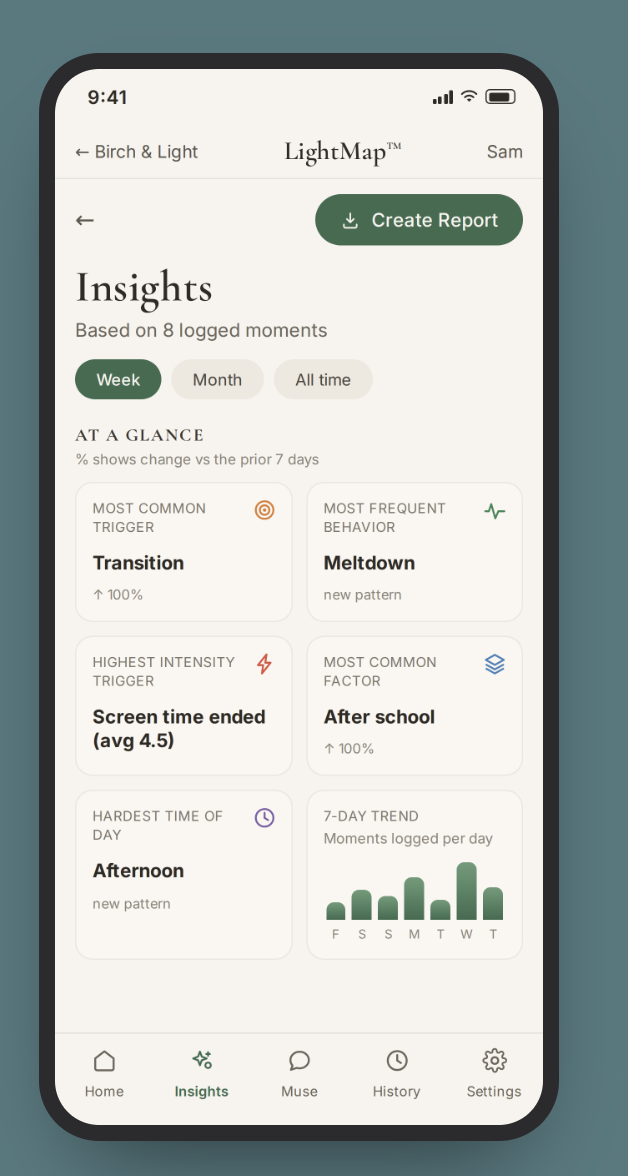

Part of the award-winning Birch & Light Method, honored with the Mom's Choice Gold Award for excellence in family resources.
A story to read together
Sometimes the easiest way in is a story you read side by side.
 The Mosquito Who Thought He Was a Dragonfly
Raised by dragonflies after a summer storm, Miro learns one night that the world sometimes sees him differently than the family who loves him — and that being misunderstood isn’t the same as being bad.
Read the story Otto Filled Everything
Otto can't stop filling things with water. His family doesn't understand — until Grandma Willow helps them listen to what his body is actually asking for.
Read the story
If today was one of those days
A few more from the library, free to read.
Researched and drafted with AI assistance, reviewed before publication. Editorial standards