
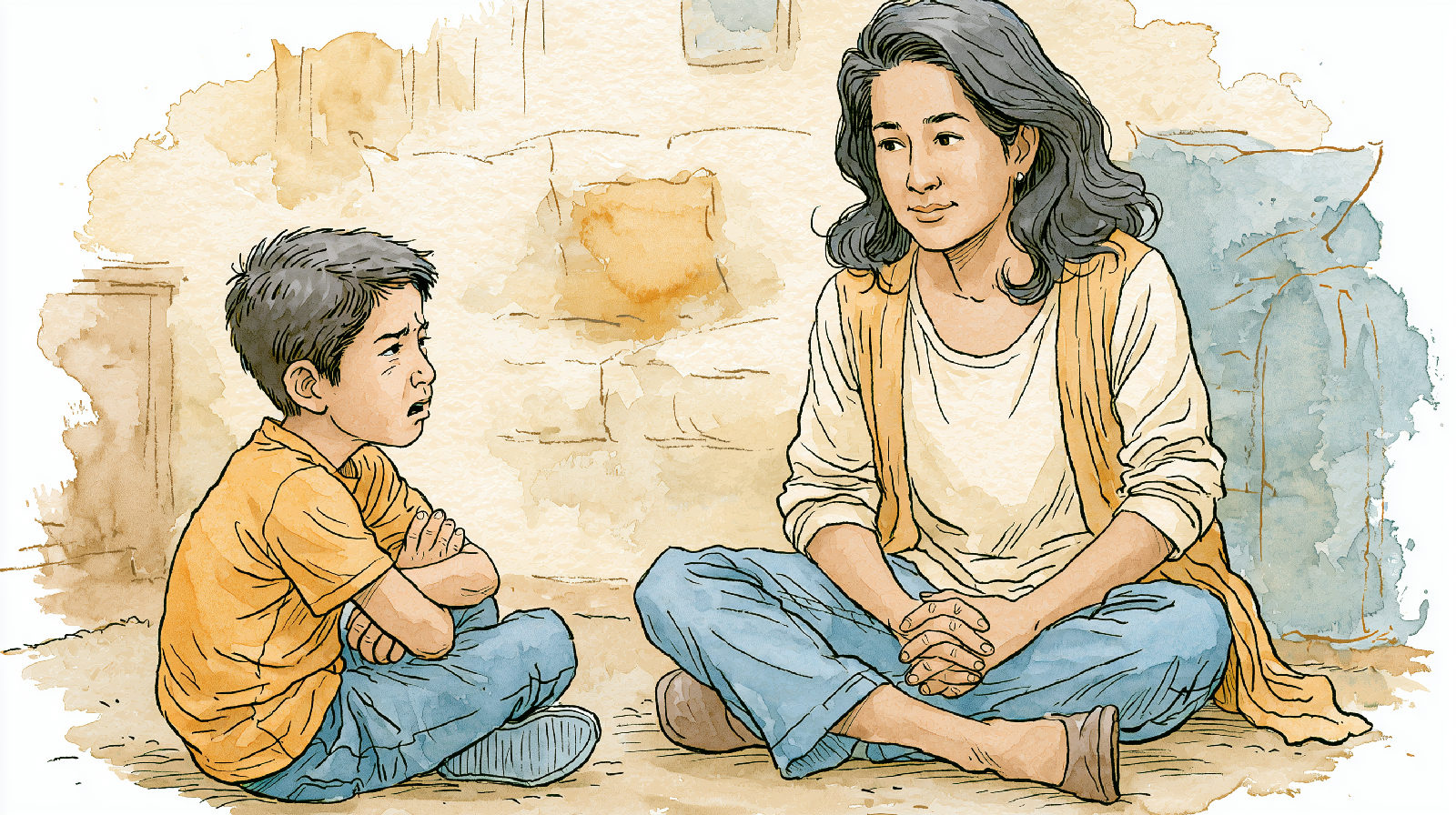
You set a boundary, or you say no, or you tell them it's time to stop, and what comes back is a wall of it. The tone. The cursing. The name-calling. The stuff that would have gotten you grounded for a month at their age. And it seems to come most when they don't get their way, which makes it feel calculated, like they've decided the way to handle disappointment is to aim their worst at you.
If you're parenting a child with ADHD and drowning in the disrespect, I want to start with the piece almost no one leads with: this is very often an impulse-control problem wearing the costume of a character problem. That distinction changes everything about what actually works, so let me walk through it.
Tired of guessing what set your child off? Log tonight's moment in LightMap.
The words are out before the brake engages
ADHD is, at its core, a difference in the brain's self-regulation system, the part that's supposed to pause between a feeling and an action. In a neurotypical kid, being told no produces a flash of anger, and then a half-second later the brake comes on: don't say that, she's your mom, that's not okay. In an ADHD brain, the feeling arrives at full volume and the brake arrives late, or not at all in that moment. So the curse word, the insult, the venom is already in the air before the part of them that knows better has even come online.
This is why it clusters exactly where you see it: at no, at boundaries, at disappointment. Those are the moments of biggest emotional spike, and a big spike is precisely when a delayed brake fails. It isn't that your child has decided to be disrespectful when thwarted. It's that thwarting produces the exact conditions under which their impulse control is weakest.
That does not make the words okay. It makes them a skills problem rather than a defiance problem, and skills problems and defiance problems are solved in completely different ways.
Why the usual discipline backfires
The instinct, when a child says something ugly, is to correct it right then. To address the tone, issue the consequence, make them apologize, deliver the lesson in the heat of the moment. With an ADHD kid mid-spike, this almost always makes it worse, and here's the mechanism: a flooded brain cannot take in a lesson. The thinking, learning, perspective-taking part is offline precisely because the emotional part has taken over. Pushing a consequence into that moment doesn't teach. it adds fuel, and the escalation climbs.
You end up in a loop where the disrespect triggers your correction, your correction triggers more dysregulation, and a boundary about screen time becomes a forty-minute war. Nobody learned anything. Everybody's wrecked.
There's a story for this exact struggle
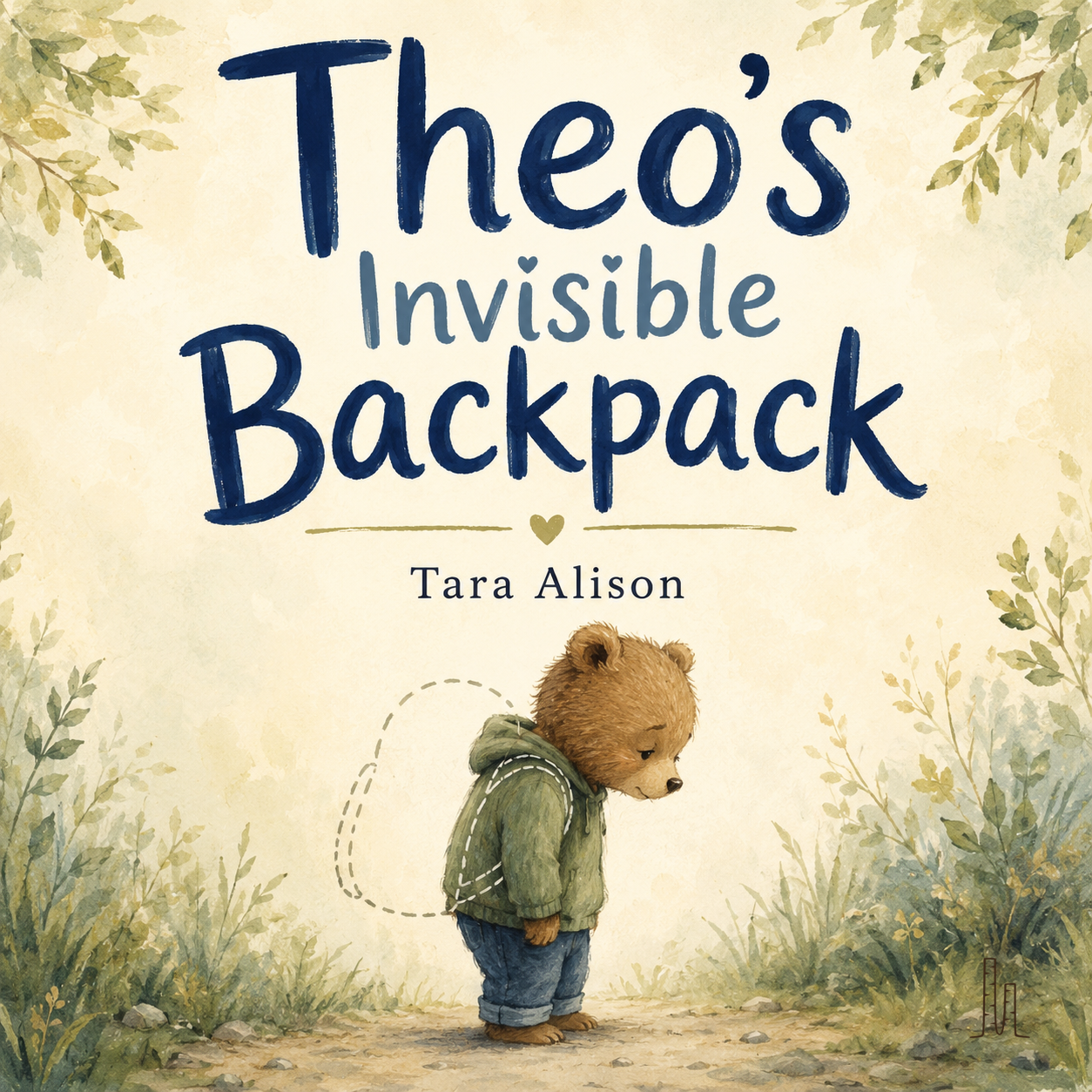
Theo's Invisible Backpack
Theo carries every hurtful word as a stone in an invisible backpack — until the day his mama really sees how heavy it has become, and they begin sorting the stones together.
Free to read. You'll also get five free articles a week. Unsubscribe anytime.
What actually helps in the moment
The goal in the hot moment is not to teach. It's to keep the fire from spreading and get everyone back to a state where teaching is even possible.
- Stay flatter than you want to. Your calm is contagious, and so is your heat. When you match their intensity, their nervous system reads danger and climbs higher. A steady, almost boring tone ("I'm not going to talk about it while we're yelling, I'll be right here when you're ready") does more than any comeback.
- Hold the boundary without relitigating it. You don't have to win the argument or extract respect to keep the limit. The screen still goes off. You just stop feeding the verbal fight around it. The boundary and the disrespect are two separate issues, and trying to resolve both at once resolves neither.
- Don't demand the apology now. An apology squeezed out of a flooded kid is worthless and usually reignites things. It comes later, genuinely, once they're regulated.
- Name it lightly if at all. "That's the frustration talking" can land, or it can inflame. Read your kid. Sometimes the most powerful move is saying almost nothing and simply not leaving.
Where the actual teaching happens
The lesson isn't skipped, it's relocated. Once everyone is calm, often an hour later, sometimes the next day, that's when you circle back. And the conversation is not a lecture, it's skill-building: what were you feeling right before it came out, what could we do next time you feel that coming, here's what those words do to me even when you don't mean them.
This is also where the repair happens. A regulated child can genuinely own that they were cruel and mean it. That's the apology worth having, and it's the one that actually builds the muscle you want, the pause between feeling and action that ADHD makes hard but not impossible to grow.
Over time, you're teaching the brake to fire a little sooner. That's slow work, measured in months, not moments, and it happens through hundreds of calm after-the-fact conversations, not through consequences delivered mid-explosion.
When it might be more than ADHD
One honest note. If the disrespect is part of a bigger picture, aggression that frightens the household, rage wildly out of proportion, a child who seems to be in distress far beyond ordinary frustration, it's worth widening the lens beyond ADHD. Impulsivity explains words that fly out too fast. It doesn't always explain everything, and sometimes anxiety, sensory overload, or an unmet need is underneath, showing up as anger. If your gut says this is bigger than a self-control lag, that instinct is worth taking to someone who can look closely with you.
What to hold onto
The disrespect is real and it hurts, and you're allowed to find it genuinely hard to be spoken to that way by someone you're pouring yourself into. Naming it as impulse rather than character isn't excusing it. it's aiming your effort where it'll actually work.
Your kid is not choosing, in some cold and deliberate way, to save their worst for you. Their brake is slow, their spikes are big, and the people they feel safest with are the ones who get the unfiltered version. That last part is a backhanded kind of compliment you'd never ask for. The way through isn't harder consequences in the heat. It's staying steady in the moment and teaching the skill in the calm, over and over, until the pause starts to hold.
The words come out under the same conditions almost every time, and those conditions are far easier to see written down than remembered. Log the blowups in LightMap and the pattern underneath usually surfaces within a couple of weeks.
Sources: Barkley's model of ADHD as a disorder of behavioral inhibition and self-regulation; Shaw et al. on emotion dysregulation in ADHD (American Journal of Psychiatry); Ross Greene, Collaborative and Proactive Solutions, on lagging skills versus willful misbehavior; peer-reviewed research on response inhibition in children with ADHD (PMC).
For education and reflection, not medical advice. Our terms
See what's underneath
Walk into the next appointment with a pattern
LightMap turns scattered hard days into a pattern you can see. Start by logging one moment tonight.
Find out why it keeps happening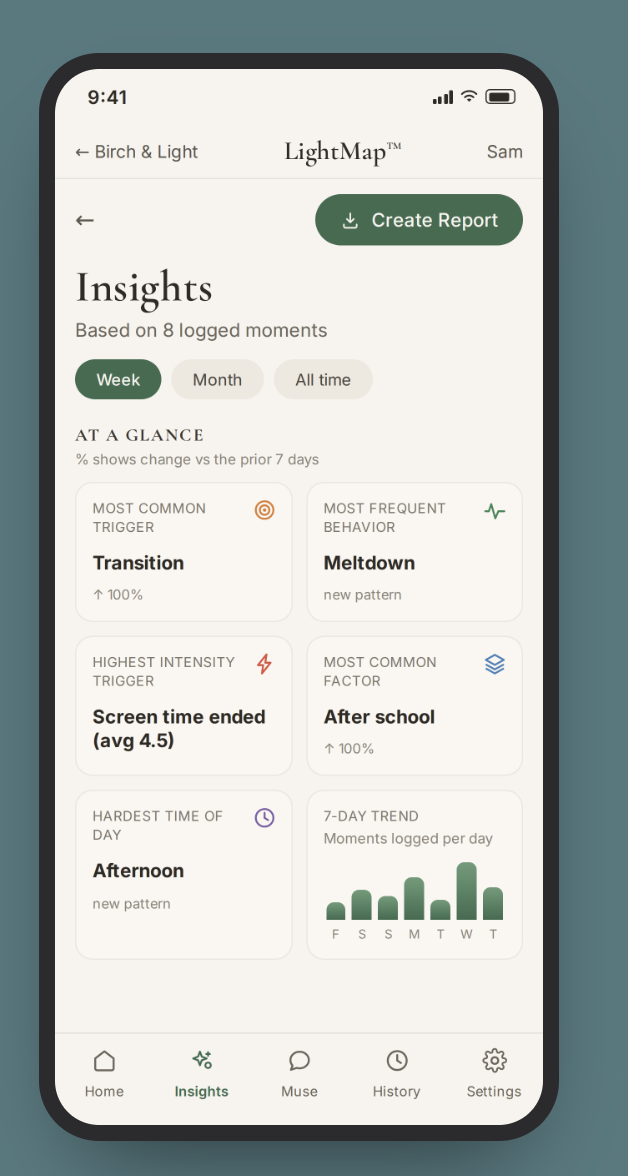

Part of the award-winning Birch & Light Method, honored with the Mom's Choice Gold Award for excellence in family resources.
Before you go, grab the free guide
The 3 body-state triggers under most meltdowns, a script for the 30 seconds before it tips over, and a reset for after. Free.

You'll get the guide instantly, plus five free articles in your inbox every week. Real challenges (meltdowns, school mornings, picky eating, big feelings) and how to actually handle them. Unsubscribe anytime.
A story to read together
Sometimes the easiest way in is a story you read side by side.
- Theo's Invisible Backpack
Theo carries every hurtful word as a stone in an invisible backpack — until the day his mama really sees how heavy it has become, and they begin sorting the stones together.
Read the story 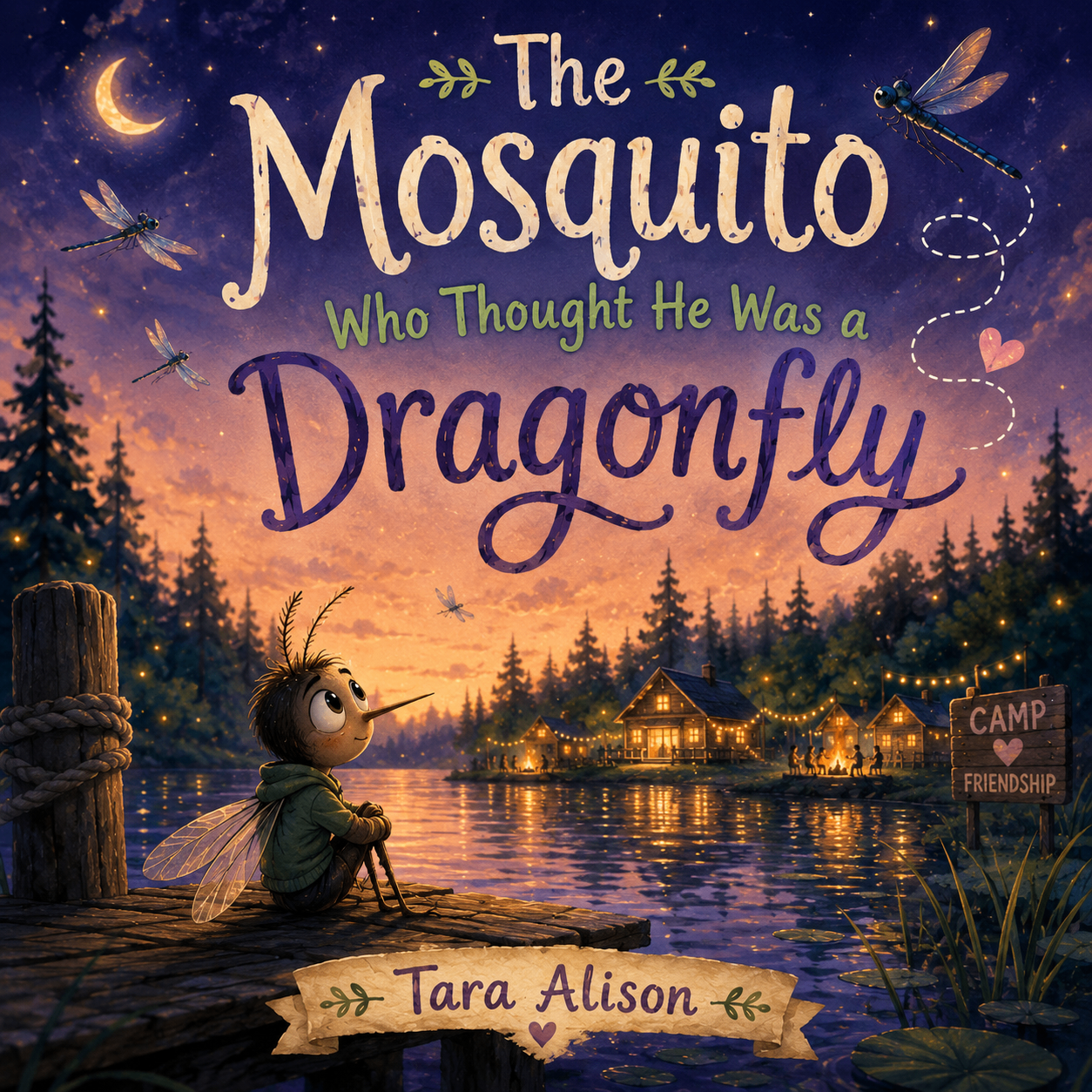 The Mosquito Who Thought He Was a Dragonfly
Raised by dragonflies after a summer storm, Miro learns one night that the world sometimes sees him differently than the family who loves him — and that being misunderstood isn’t the same as being bad.
Read the story
Researched and drafted with AI assistance, reviewed before publication. Editorial standards