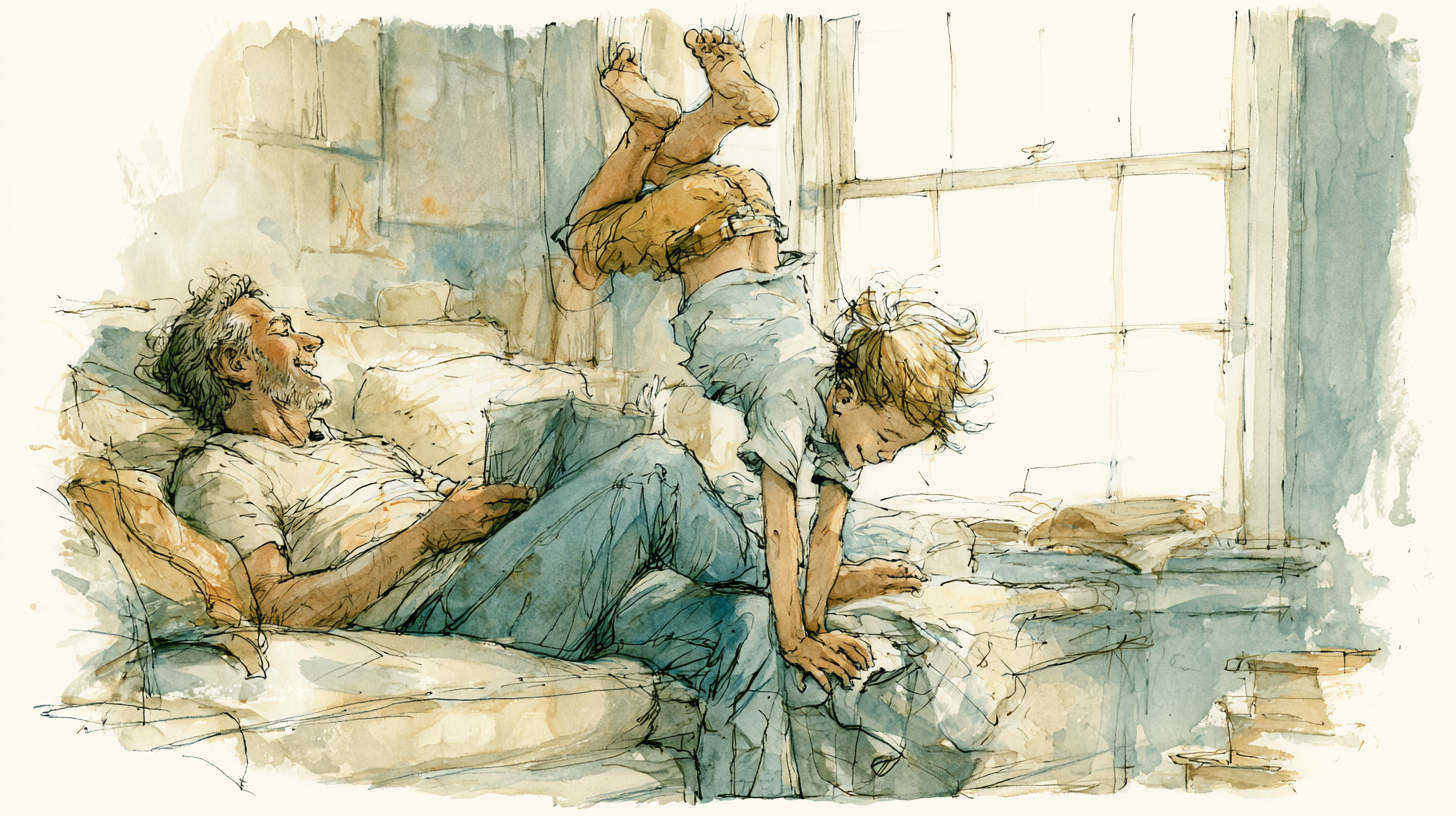
They spin until they're dizzy. They crash into the couch cushions on purpose. They climb everything, hang upside down, jump off the stairs, and seem physically unable to sit still for more than a moment. At dinner they're falling off the chair; at school they're fidgeting and out of their seat. And you find yourself constantly saying 'sit still,' 'stop crashing,' 'calm your body' — usually with little effect.
It's easy to read all this movement as hyperactivity, misbehavior, or a child who just won't settle. But for many children, the constant motion isn't a failure to settle. It's a need being met. Their bodies are seeking specific kinds of input — and the seeking is purposeful, even when it looks like chaos.
The Sense You Didn't Know You Had
Most of us learn about five senses and stop there. But there are two more that matter enormously for understanding a movement-seeking child. The vestibular sense, centered in the inner ear, tells us about balance and movement — spinning, swinging, tipping, accelerating. And the proprioceptive sense, located in the muscles and joints, tells us where our body is in space and how much force it's using — the input you get from pushing, pulling, lifting, crashing, and deep pressure.
These two senses need input to feel calibrated and organized, just like the others. And some children need a great deal more of that input than others to feel regulated. A movement-seeking child is, in most cases, a child whose vestibular and proprioceptive systems are hungry — under-stimulated in a way that drives them to seek the input out.
The spinning, crashing, climbing, and jumping aren't random. They're a child instinctively feeding two senses that need feeding, in order to feel settled in their own body.
The crashing and spinning aren't a child failing to settle. They're a child feeding senses that are hungry — seeking the input their body needs to feel organized.
Why the Movement Actually Regulates Them
Here's the part that surprises many parents: for a sensory-seeking child, movement isn't the opposite of calm. It's often the path to it. The vestibular and proprioceptive input they're chasing has a genuinely organizing, regulating effect on their nervous system. Deep pressure, heavy work, big movement — these calm and settle a child who needs them.
So when you ask a movement-seeker to 'sit still and calm down,' you may be asking for two contradictory things. For this child, the movement is how they calm down. Taking it away doesn't produce a calm, still child; it produces a dysregulated one who's lost access to the very input that organizes them. The fidgeting and seeking often increase under pressure to stop, because the need underneath only grows.
Why It Gets Misread
Movement-seeking gets labeled as hyperactivity or misbehavior because, from the outside, it looks like a child who won't follow the rules about sitting and stillness. In a world built around staying seated — classrooms, dinner tables, waiting rooms — a child whose body needs to move is constantly in tension with the expectations around them.
But the child isn't trying to break rules or cause trouble. They're trying to meet a real physical need in an environment that doesn't make room for it. The 'misbehavior' is a mismatch between what their body requires and what the setting allows.
While you're here, take the guide
What's Underneath is free: the three body-state triggers under most meltdowns, what to say in the minute before it tips over, and how to reset afterward.

You'll get the guide instantly, plus five free articles in your inbox every week. Real challenges (meltdowns, school mornings, picky eating, big feelings) and how to actually handle them. Unsubscribe anytime.
What Tends to Help
Give the input on purpose. Rather than only suppressing the seeking, build in regular, intentional movement and heavy-work activities — climbing, jumping, pushing, carrying, swinging. A child whose sensory needs are met proactively seeks less disruptively, because the hunger is already being fed.
Use 'heavy work' to regulate. Activities that engage the muscles and joints — carrying groceries, pushing a loaded cart, animal walks, climbing — deliver organizing proprioceptive input and can genuinely settle a dysregulated child. Reach for these when you'd otherwise reach for 'calm down.'
Build movement into the hard moments. Before situations that demand stillness, a burst of movement can help. And during them, small accommodations — a wiggle cushion, a fidget, permission to stand — let the body get some of what it needs without derailing everything.
Reframe it at school. A movement-seeking child in a classroom isn't being defiant. Sharing this understanding with teachers, and advocating for movement breaks and flexible seating, helps the child get support rather than correction.
Stop fighting the need. Constantly suppressing a real sensory need is exhausting for everyone and doesn't make the need go away. Working with it — making room for movement rather than only forbidding it — is far more effective than the endless 'sit still.'
The Shift Worth Making
A child who can't sit still, who crashes and spins and climbs, usually isn't hyperactive in the sense of being out of control for no reason. They're a child whose body needs more movement and deep-pressure input than most, seeking out the very input that helps them feel organized and calm.
When you can see the movement as a need being met rather than a rule being broken, your response changes from suppression to provision — giving your child the input their body is asking for, so the seeking can be satisfied instead of constantly, fruitlessly fought.
Every behavior is a clue.
If your child is in constant motion, LightMap can help you track when the seeking spikes and what kind of input actually settles them — so the pattern beneath it becomes easier to see. Explore LightMap at birchandlight.com/lightmap.
For your child: The Current Helped is about a starfish pulled off his familiar rock, and the father who lets the current carry them both instead of dragging him back.
Sources: Ayres' sensory integration theory and subsequent evidence reviews; peer-reviewed research on vestibular and proprioceptive seeking behavior in children (American Journal of Occupational Therapy; PMC); research on movement breaks, heavy work, and classroom attention outcomes (Journal of School Health; PMC); American Occupational Therapy Association guidance on sensory strategies in school settings.
For education and reflection, not medical advice. Our terms
See what's underneath
Find the input before it becomes a meltdown
LightMap reads your hard days together and gives you answers. Start with one moment today.
Start with 3 moments Not sure where to start? Ask me.Message Tara on WhatsApp. It really is me, I read everything and will personally respond.Click here to message Tara →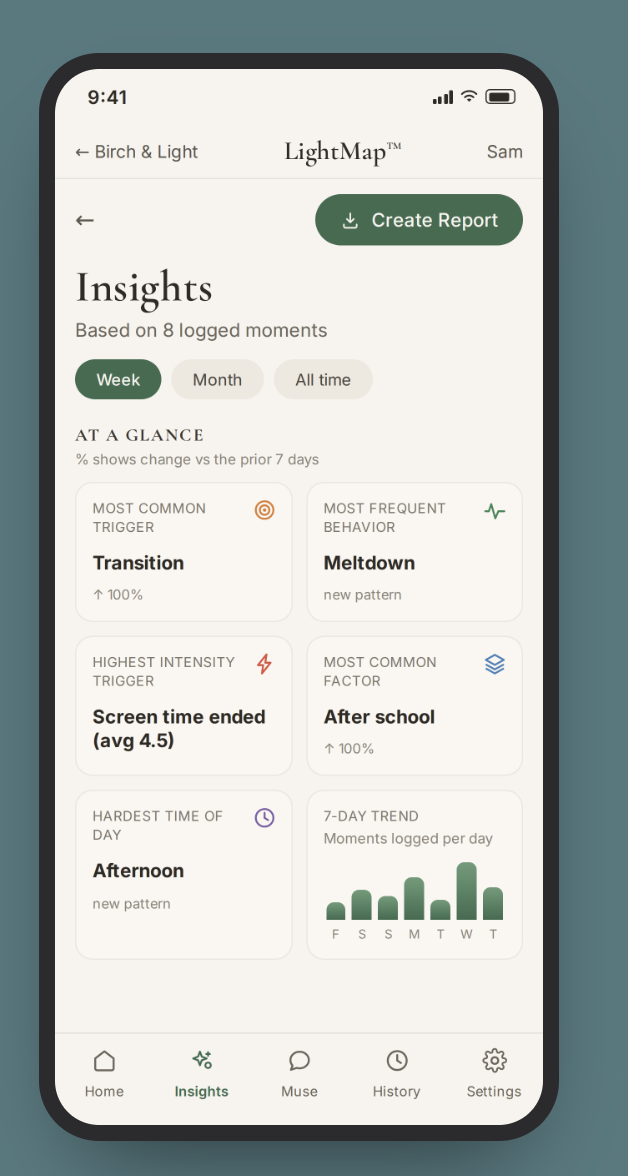

Part of the award-winning Birch & Light Method, honored with the Mom's Choice Gold Award for excellence in family resources.
A story to read together
Sometimes the easiest way in is a story you read side by side.
 Otto Filled Everything
Otto can't stop filling things with water. His family doesn't understand — until Grandma Willow helps them listen to what his body is actually asking for.
Read the story Taste Bud 17
Taste Bud 17 feels everything more — and learns that big sensory feelings deserve the same care as everyone else’s.
Read the story
If today was one of those days
A few more from the library, free to read.
Researched and drafted with AI assistance, reviewed before publication. Editorial standards