
Some kids hate being validated because naming their feelings for them can land as obvious, controlling, or intrusive, especially for children who are demand-avoidant, highly private, or sensitive to being analyzed. Validating the experience without announcing the feeling usually works better, because it leaves the child in charge of their own inner world.
You did the thing the books told you to do. You got down on their level, softened your voice, and named it: “You’re feeling really frustrated right now.” And instead of softening, your child got worse — sharper, angrier, more shut down. Like you’d poured fuel on it.
If naming your child’s emotions sometimes seems to escalate things rather than calm them, you are not imagining it, and you are not doing it wrong. The trouble usually isn’t you, and it isn’t validation. It’s that two different things often get taught as if they’re the same — and children don’t all respond to them the same way.
Most parenting resources encourage validation, and that advice is well founded. But validation often gets taught as something narrower: naming a child’s emotions out loud. Parents are coached to say “you’re angry,” “you’re frustrated,” “you’re disappointed” — and to expect that to settle things. For many children it does. For some, it doesn’t. Understanding why starts with separating two ideas that usually get blurred together.
First, the part that’s true: naming feelings often helps
It’s worth being fair to the advice before complicating it. Putting words to emotion is one of the better-supported ideas in emotion science. In studies of what researchers call affect labeling, simply naming a feeling tends to lower its intensity — work from Matthew Lieberman’s lab at UCLA found that putting feelings into words was associated with reduced activity in the brain’s threat response. It’s the kernel of truth behind the popular phrase “name it to tame it,” coined by psychiatrist Daniel Siegel.
So if you’ve been told that naming emotions helps children regulate, you weren’t told something false. For a great many kids, in a great many moments, it genuinely works. The problem isn’t the tool. It’s that “often helps” quietly hardened into “always helps, for everyone” — and that’s where some families fall through the gap.
Validation and emotional labeling aren’t the same thing
Here’s the distinction that gets lost. Validation is about acknowledging a child’s experience: your reaction makes sense, what happened to you is real, I can understand why this is hard. Emotional labeling is about naming the child’s internal state for them: you’re angry, you’re frustrated, you’re overwhelmed.
They overlap, and the line isn’t perfectly clean — “that sounds disappointing” gestures at a feeling too. But the center of gravity is different. Validation can be offered without ever announcing what a child feels:
- “I can see why that felt unfair.”
- “Given what happened, it makes sense you’re upset.”
- “That looked really hard.”
Each of these acknowledges the child’s experience while leaving them in charge of their own inner world. That last part turns out to matter a great deal for some children.
While you're here, take the guide
What's Underneath is free: the three body-state triggers under most meltdowns, what to say in the minute before it tips over, and how to reset afterward.
You'll get the guide instantly, plus five free articles in your inbox every week. Real challenges (meltdowns, school mornings, picky eating, big feelings) and how to actually handle them. Unsubscribe anytime.
Why does naming a feeling land badly for some kids?
If your child bristles when you name what they feel, it helps to imagine it from the inside. This is reported most often by parents of children who are highly sensitive, demand-avoidant, or intensely private — and it lines up with what we understand about demand avoidance, where anything experienced as an external demand, even a gentle one, can trigger automatic resistance. For these kids, “you’re angry right now” can register as:
- Obvious. They already know. Being told can feel like being talked down to — no kidding I’m angry.
- An overreach. It can feel like someone is claiming authority over their internal experience — something that belongs to them, not you.
- Controlling. “You’re telling me what I feel” lands very differently from “you’re trying to understand me,” and for a demand-sensitive child the first one can read as pressure.
- Performative. Some kids — older ones and teens especially — tense up the moment an adult slips into what sounds like a therapy script.
- Premature. Naming the feeling can feel like being pushed to process an emotion out loud before they’re anywhere near ready.
The parent intends: I’m connecting. The child experiences: I’m being analyzed. Same loving moment, two very different things happening inside it. And notice — none of this means the child is rejecting connection. They’re responding to one particular delivery of it.
The goal was never the label
This is the reframe that matters most. Parents often run on a quiet equation: validation → calm child. But the real sequence you’re after is connection → understanding → working through it. Naming a feeling is one possible on-ramp to that. It’s a good one for many children — and the wrong one for some.
When you stop treating “name the feeling” as the goal and start seeing it as one tool among several, you’re free to reach for connection a different way on the days the labeling keeps misfiring.
What can you try when labeling isn’t working?
None of this means stop validating, and it certainly doesn’t mean withhold warmth. It means widen the toolkit so you’re not stuck repeating the one move that keeps backfiring. When naming the feeling isn’t landing, you might try:
- “That looked hard.”
- “Something about that really got to you.”
- “Want to tell me what happened?”
- “I’m here when you’re ready.”
- Quiet presence — sitting near, saying nothing.
- Practical help, or simply lowering the pressure in the room.
Each of these stays close or acknowledges the experience without reaching in and naming what’s theirs to name. For some children, less interpretation leaves more room for connection.
The Birch & Light view
We’re not here to argue that validation is wrong, or that naming feelings is wrong — the research and millions of bedtimes both say otherwise. The honest position is narrower and, we think, more useful: children differ, and the same supportive move can land differently depending on the child in front of you. A phrase that steadies one child can feel intrusive to another. That difference isn’t a failure of technique, and it isn’t something to correct. It’s information.
It’s the idea we keep returning to at Birch & Light: every behavior is a clue. When a child pushes back, again and again, against having their feelings named, that resistance is telling you something real about how this particular nervous system takes in closeness. The aim was never to run the script correctly. It’s to read the child you actually have.
A more useful question
A lot of parenting disagreements — including the ones in the comment sections — come from people using the same words to mean slightly different things. Validation, empathy, connection, labeling: they overlap, but they aren’t identical, and treating them as interchangeable is how well-meaning advice ends up backfiring at the kitchen table.
So the most useful question probably isn’t “Am I validating correctly?” It’s “Does my child feel understood?” Because feeling understood, and being told how you feel, are not always the same thing — and the space between them is exactly where some children live.
Which responses land and which ones make it worse is specific to your child. Logging what you tried and what happened in LightMap is how you find her particular version of it.
Sources: Peer-reviewed research on affect labeling and the conditions under which it fails (PMC); research on alexithymia and interoceptive difficulty in autistic people (PMC); Linehan on validation in dialectical behavior therapy; research on autonomy threat and reactance in adolescence (PMC). Primary sources: Lieberman MD, Eisenberger NI, Crockett MJ, Tom SM, Pfeifer JH, Way BM. Putting feelings into words: affect labeling disrupts amygdala activity in response to affective stimuli. Psychological Science. 2007, 18(5), 421-428. doi 10.1111/j.1467-9280.2007.01916.x. O'Nions E, et al. Autism. 2014, 18(5), 538-544, on the behavioural profile of pathological demand avoidance.
For education and reflection, not medical advice. Our terms
See what's underneath
Know which response actually works for your child
LightMap reads your hard days together and gives you answers. Start with one moment today.
Start with 3 moments Not sure where to start? Ask me.Message Tara on WhatsApp. It really is me, I read everything and will personally respond.Click here to message Tara →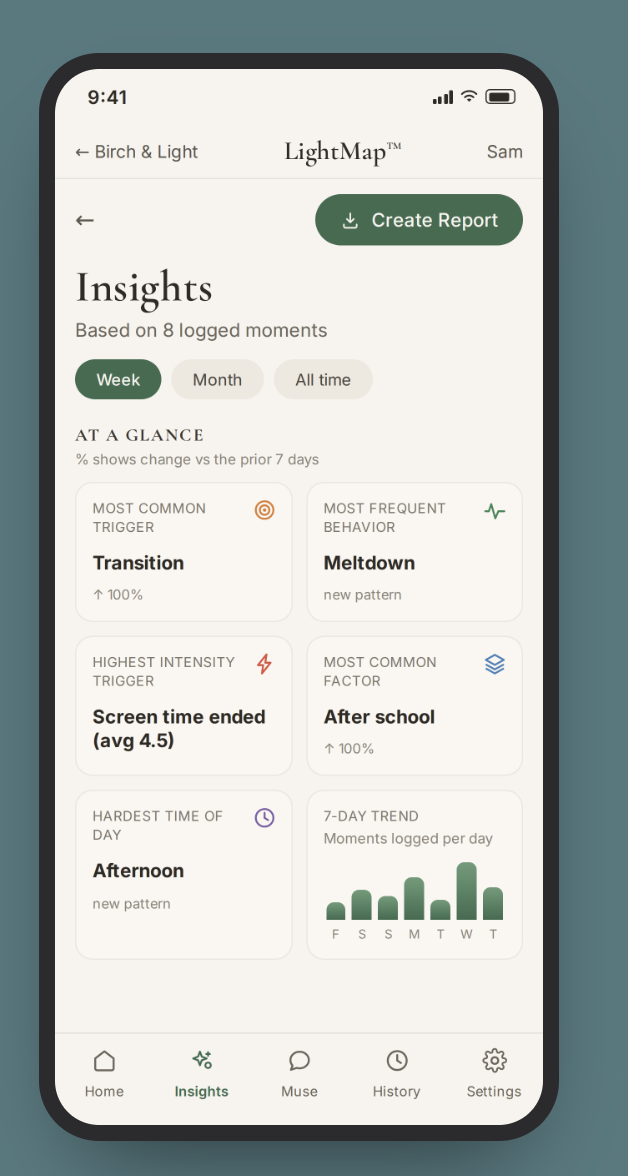

Part of the award-winning Birch & Light Method, honored with the Mom's Choice Gold Award for excellence in family resources.
A story to read together
Sometimes the easiest way in is a story you read side by side.
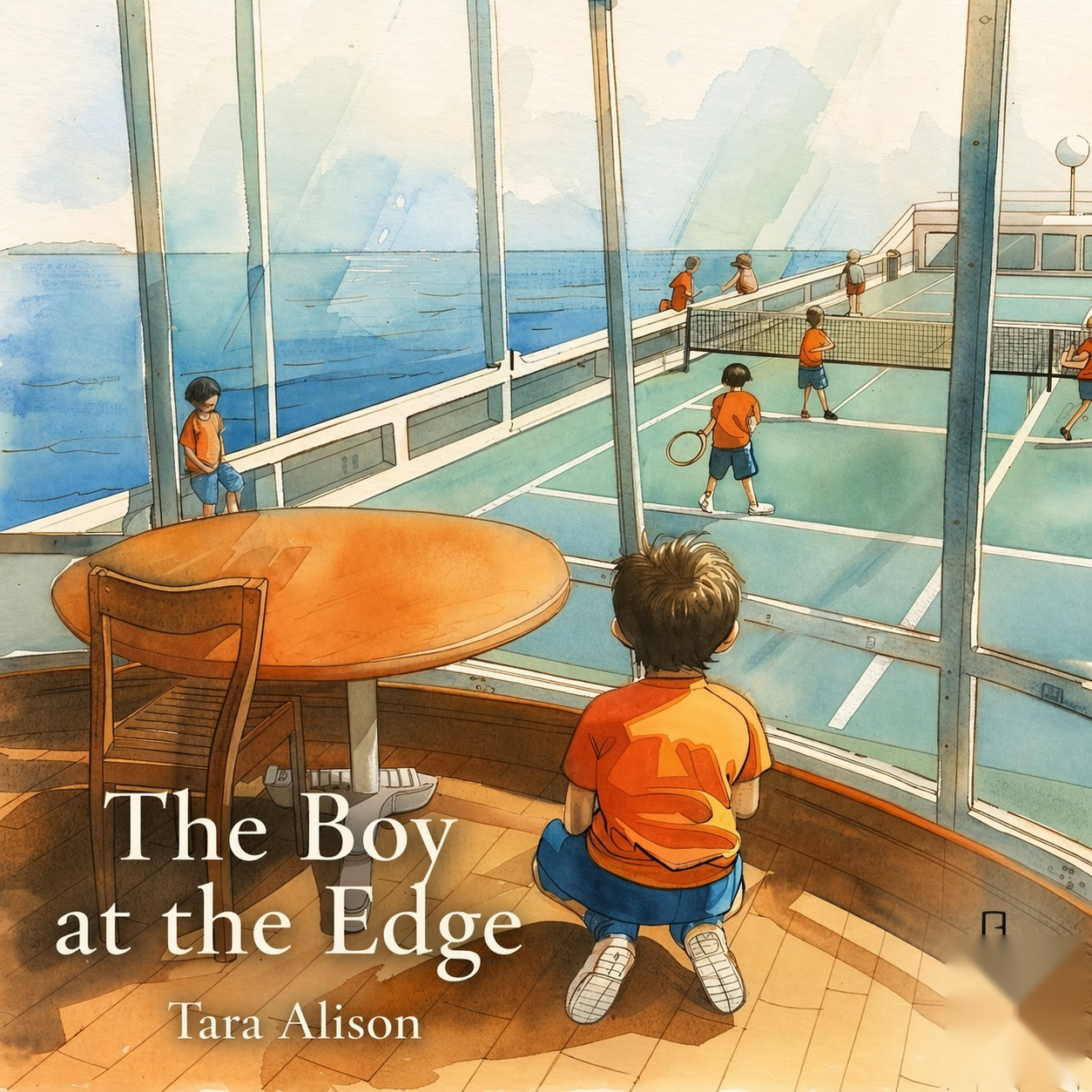 The Boy at the Edge
A boy finds calm by watching the world move from a window. When his stillness is mistaken for defiance, the moment escalates — and he learns that being calm doesn’t always protect you from being told no.
Read the story Little Bird
Little Bird used to fly everywhere. Then the forest started to feel too big — and a wise voice helps her see that her wings remember more than her worries do.
Read the story
If today was one of those days
A few more from the library, free to read.
Researched and drafted with AI assistance, reviewed before publication. Editorial standards