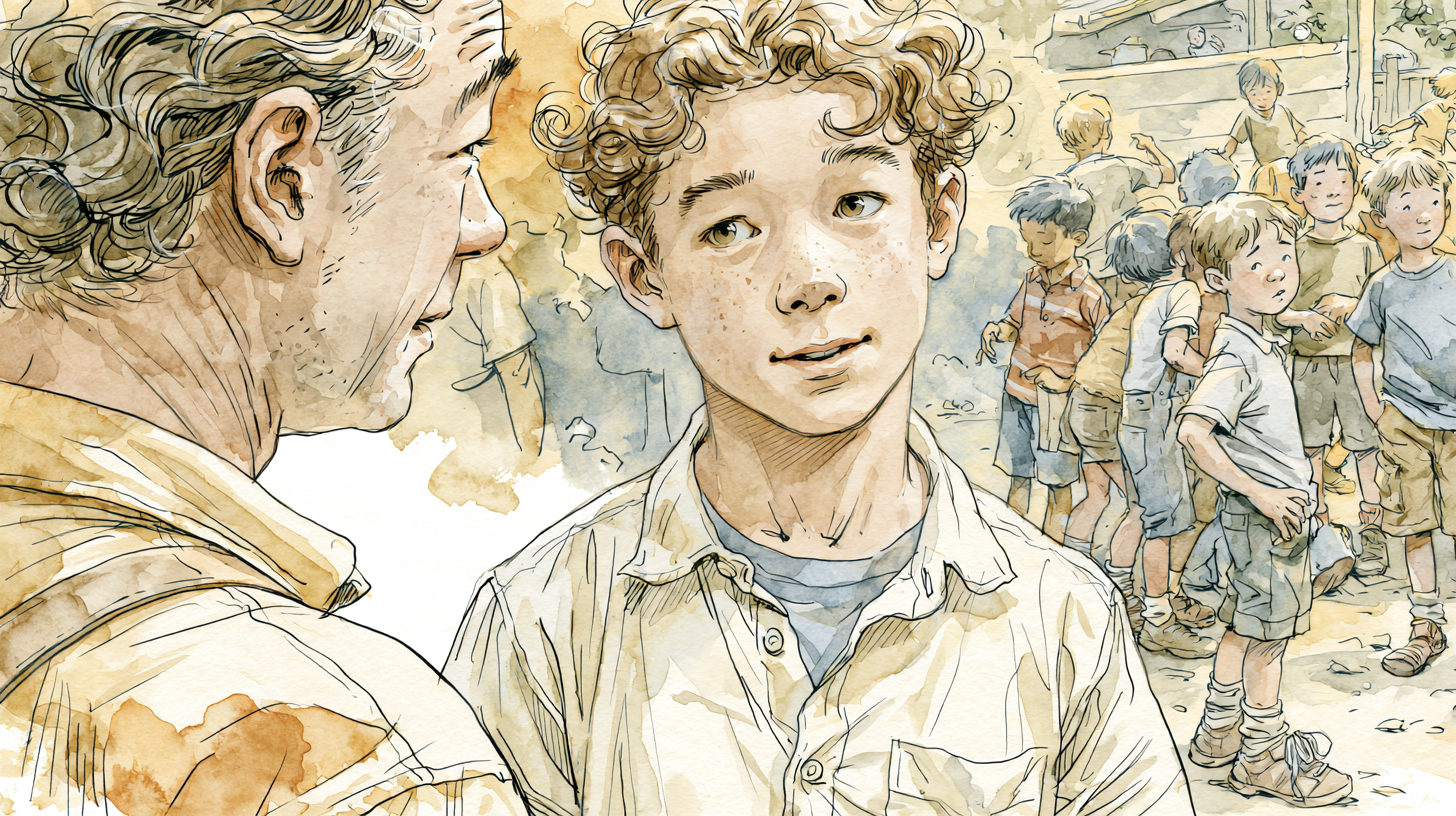
Teachers love them. Waiters are charmed. Your friends say "she''s eleven going on forty." Your child can hold a genuine conversation with any adult in the room, and then walks onto the playground and it all falls apart: hovering at the edge, misreading the game, coming home saying nobody likes them.
The gap seems backwards. Adults are supposed to be the intimidating ones. But look closer at what each kind of interaction actually demands, and the gap starts making perfect sense.
Adults are easy mode
Conversation with a grown-up is a structured interview with a generous host. Adults ask questions, wait for answers, follow the child''s interests, forgive odd pacing, carry the thread when it drops, and never suddenly declare that the rules of the conversation changed and you''re out. An adult does most of the regulating for both people.
Peer interaction is improv with no referee. It is fast, layered, and ruthless: shifting alliances, jokes that depend on last week''s jokes, games whose rules mutate mid-game, status moves, sarcasm, glances. Nobody slows down for you. Nobody carries your thread. The skills involved, rapid social reading, flexible joining, tolerating chaos, recovering from micro-rejections in real time, are completely different skills from conversation, and they are the hardest ones there are.
So "fine with adults, struggling with kids" is not a contradiction. It is a precise diagnostic: your child''s verbal and relational abilities are strong, and their real-time peer-processing is overloaded. Common in bright kids, anxious kids, and very common in neurodivergent kids, who often prefer adults precisely because adults are predictable.
What it is not
It is not arrogance ("he thinks kids are beneath him" is almost never the engine; kids retreat to adults because adults are safe, not inferior). It is not something they will simply outgrow by exposure alone; being repeatedly thrown into the deep end teaches many of these kids only that the pool is dangerous. And it is not a verdict on future friendship. Plenty of adults-at-eleven become adults with deep friendships, often a few close ones rather than crowds, which was the right shape for them all along.
While you're here, take the guide
What's Underneath is free: the three body-state triggers under most meltdowns, what to say in the minute before it tips over, and how to reset afterward.
You'll get the guide instantly, plus five free articles in your inbox every week. Real challenges (meltdowns, school mornings, picky eating, big feelings) and how to actually handle them. Unsubscribe anytime.
How to actually help
Shrink the group. The chaos scales with headcount. Most of these kids are dramatically better one-on-one, where peer interaction starts resembling the adult conversations they''re good at. Engineer duos: one friend, your house, defined activity. Let mastery build there before groups.
Give the interaction a skeleton. Unstructured hangs ("go play") are the hardest format on earth. Structured ones, board games, building projects, baking, a specific sport, provide the rules and turn-taking that peer chaos lacks. Shared attention on a thing beats face-to-face improv.
Find kids on the same wavelength. The goal is not teaching your child to survive the loudest kids in class. It is finding the chess kids, the Minecraft kids, the library kids, peers whose interaction style matches. Special-interest clubs are friendship matchmaking disguised as activities.
Debrief like a coach, not a judge. After hard peer moments, skip "you should have just joined in." Try curiosity: "What was happening when it went sideways?" Then, on calm days, narrate the invisible stuff: how kids signal joining, what teasing versus meanness looks like. These are learnable mechanics, and nobody is born knowing them.
Do not pathologize the preference. Some of adult-preference is temperament, and some kids will always find one good friend and a good book superior to a birthday party. The target is capacity and options, not personality replacement.
When to look deeper
If the peer gap is wide and persistent, if your child misreads social cues consistently across settings, or if the loneliness is starting to speak ("everyone hates me," refusing school), it is worth a conversation with your pediatrician or school counselor about an evaluation. Not because something is wrong with your child, but because understanding how they process the social world unlocks help that guessing never will.
Where exactly does it break down: groups over three? Unstructured time? Specific kids? After long school days? LightMap can help you find the shape of it. Log the social moments that go well and badly, tag the setting, and the gap will show you its edges.
For your child: The Refrigerator Club is about a fridge full of friends who overhear one person say they do not like cheese and conclude that nobody likes any of them.
Sources: Peer-reviewed research on adult scaffolding in child conversation and its absence in peer interaction (PMC); research on peer interaction demands, reciprocity, and conversational pace (PMC); research on social pragmatic difficulty in autistic and ADHD children (PMC).
For education and reflection, not medical advice. Our terms
See what's underneath
See which situations cost the most
LightMap reads your hard days together and gives you answers. Start with one moment today.
Start with 3 moments Not sure where to start? Ask me.Message Tara on WhatsApp. It really is me, I read everything and will personally respond.Click here to message Tara →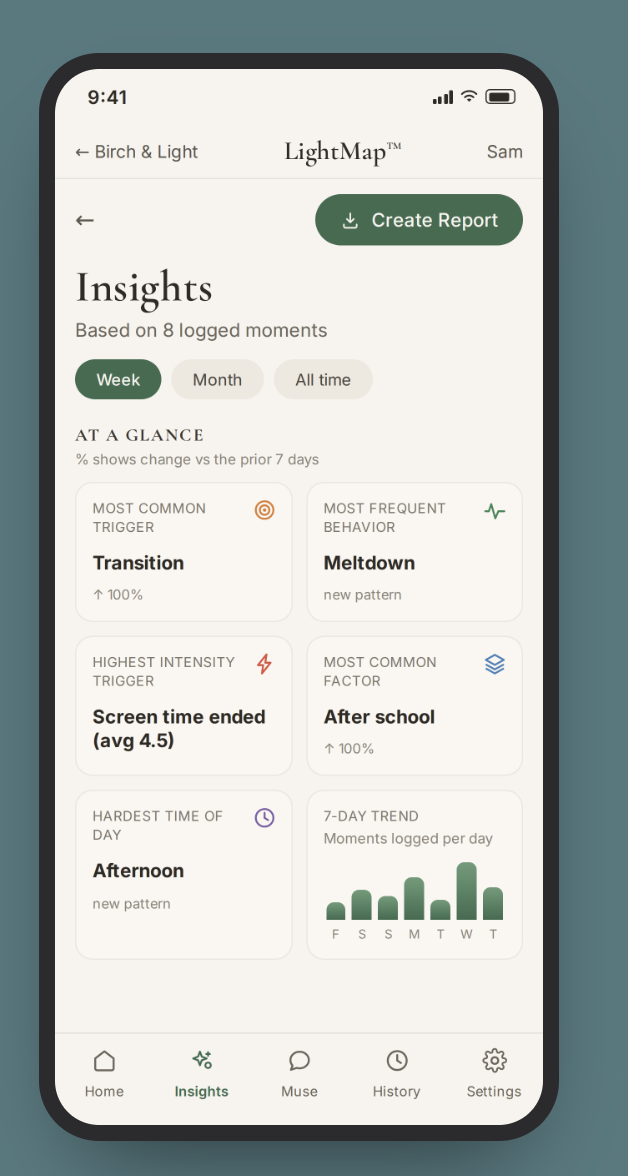

Part of the award-winning Birch & Light Method, honored with the Mom's Choice Gold Award for excellence in family resources.
A story to read together
Sometimes the easiest way in is a story you read side by side.
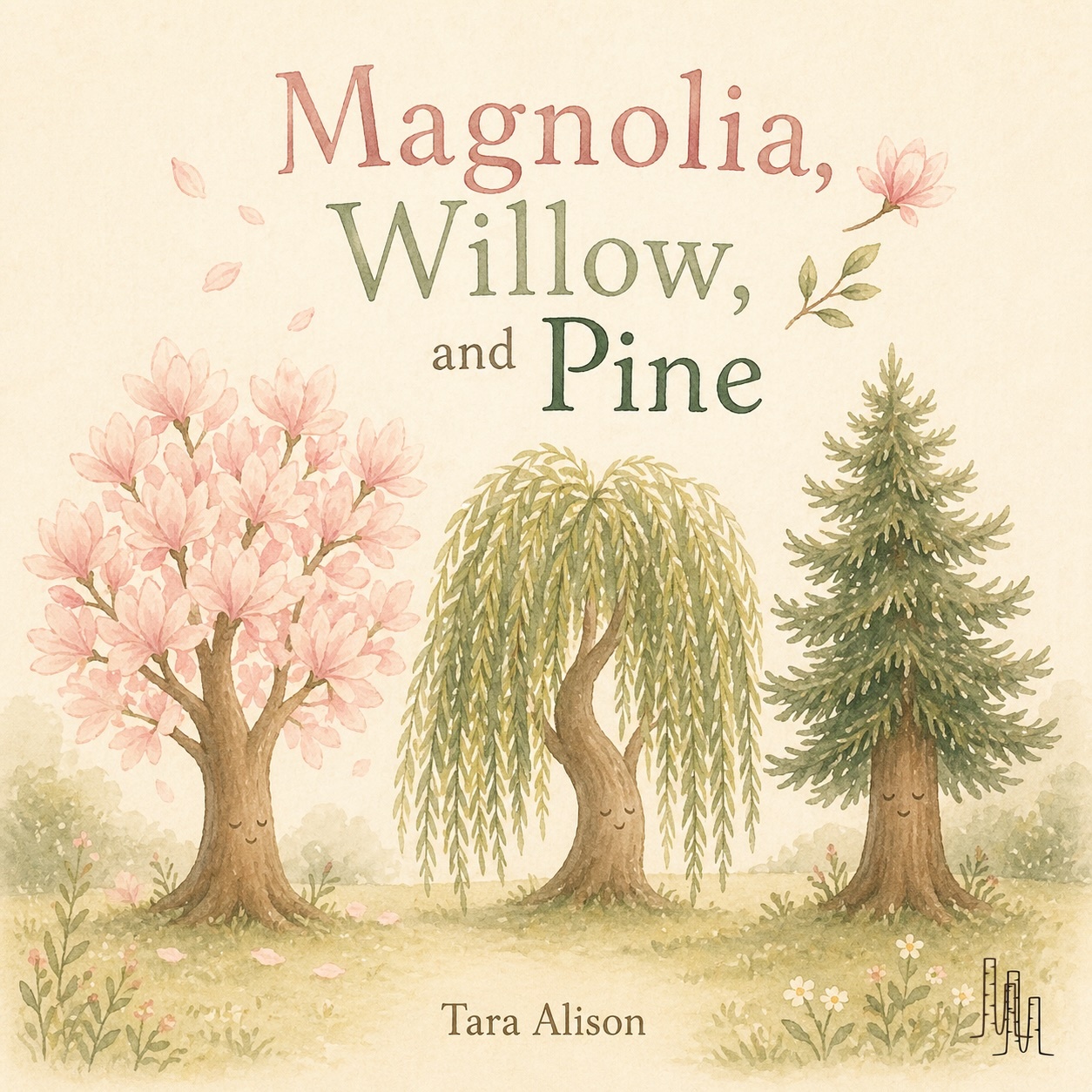 Magnolia, Willow, and Pine
When the wind shifts in the clearing and Willow drifts toward Pine, Magnolia learns hurt feelings don’t have to mean closing forever.
Read the story Lyra and the Constellation That Changed
A small star watches her closest friend slowly drift away — and learns that her light was never measured by who stayed beside her.
Read the story
If today was one of those days
A few more from the library, free to read.
Researched and drafted with AI assistance, reviewed before publication. Editorial standards