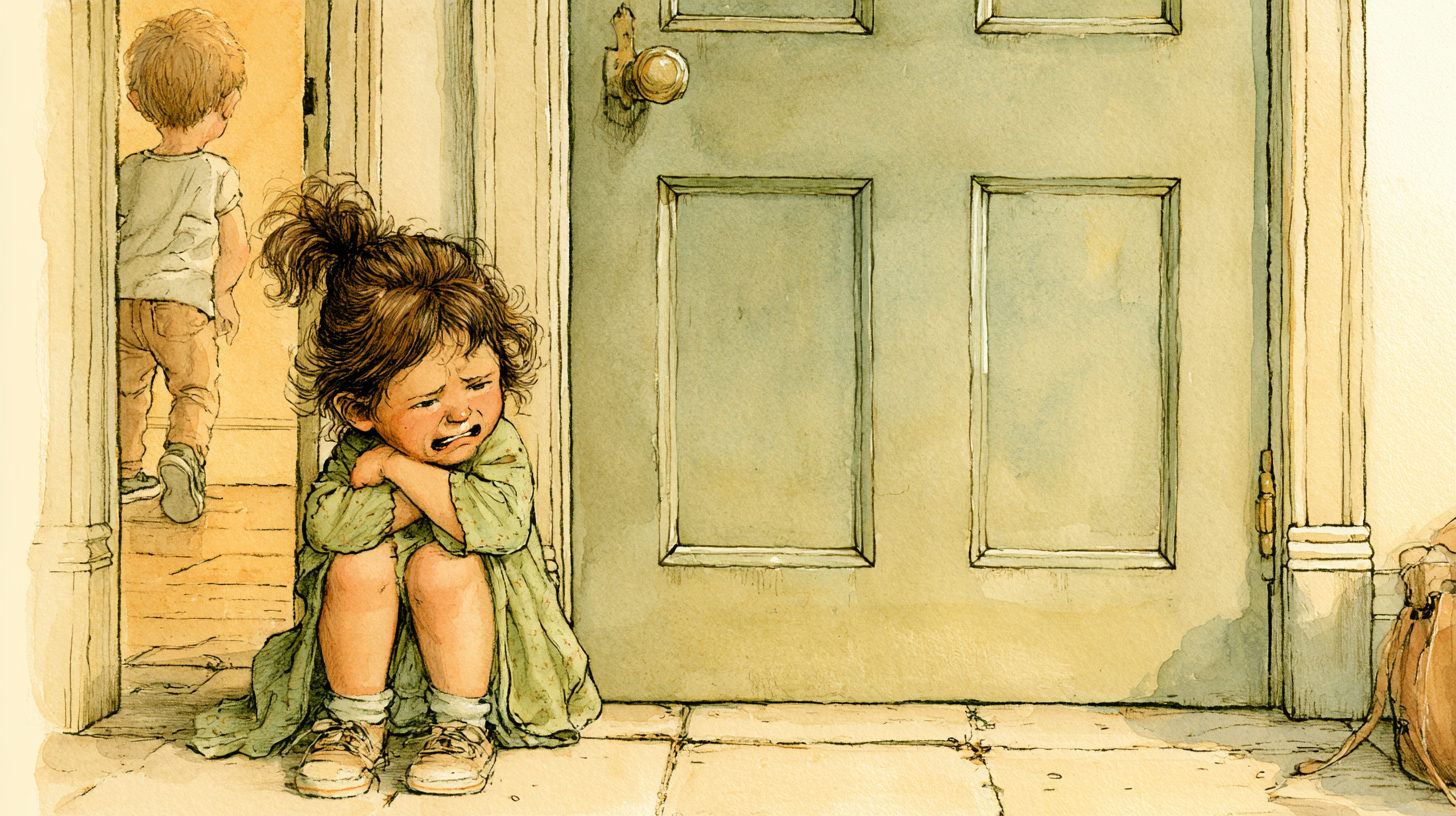
The playdate was a success. They shared, they laughed, they played for two hours without a single problem. The other parent even said how easy they were. And then the friend left — and within minutes your child was on the floor, screaming over something that made no sense, falling apart as if the lovely afternoon had never happened.
It is one of the most confusing patterns in early childhood: the better the social time goes, the harder the landing afterward. And it leaves parents wondering whether they imagined the good part, or whether something about their child is broken that only shows up at home.
Nothing is broken. The after-playdate meltdown is one of the most understandable things a child can do — once you see what the playdate actually cost them.
The Hidden Cost of a Good Playdate
From the outside, a successful playdate looks effortless. From the inside, for many children, it is sustained, demanding work. Playing well with another child asks a lot of a developing nervous system, and it helps to name exactly what.
It requires constant social processing — reading the other child's cues, taking turns, managing disagreements, adjusting plans on the fly, suppressing impulses, sharing things they'd rather keep. It requires holding it together, performing the regulated, agreeable version of themselves for a sustained stretch. And it often comes with a layer of stimulation — noise, movement, excitement — running the whole time underneath.
Your child did all of that, and did it well. But doing it well doesn't mean it was free. It means they spent a great deal of effort holding everything together — and that effort draws down a reserve that is not infinite.
Why the Collapse Comes After, Not During
Here is the part that confuses parents most. If the playdate was so taxing, why didn't they fall apart during it?
Because during the playdate, the social context itself was holding them up. The presence of the friend, the desire to keep playing, the natural momentum of the activity — all of it provided a kind of external scaffolding that kept them regulated. Children can often hold it together remarkably well as long as the situation is actively supporting them.
Then the friend goes home. The scaffolding drops away all at once. And what's left is a child who has been running hard on a now-empty reserve, suddenly in the safest place they know, with the person they trust most. The held-together version is no longer needed — so it dissolves, and everything that was being held comes out.
The meltdown isn't evidence the playdate went badly. It's the bill for how hard your child worked to make it go well.
Why It Happens at Home, With You
This can feel personal: your child falls apart with you, after the friend leaves, precisely because you are safe. They held it together for the playdate because falling apart there felt too risky. They fall apart at home because home is where falling apart is allowed — where they will still be loved on the other side of it.
The trigger that sets it off — the wrong snack, the wrong cup, a sibling glance — is almost never the real cause. It is simply the small thing that the depleted, undefended nervous system finally couldn't absorb. The real cause is everything that came before it.
While you're here, take the guide
What's Underneath is free: the three body-state triggers under most meltdowns, what to say in the minute before it tips over, and how to reset afterward.

You'll get the guide instantly, plus five free articles in your inbox every week. Real challenges (meltdowns, school mornings, picky eating, big feelings) and how to actually handle them. Unsubscribe anytime.
What Tends to Help
Expect the drop and protect the landing. If you know your child tends to crash after social time, don't schedule the playdate to end right before another demand — dinner, a sibling's event, homework. Build in a quiet buffer afterward, a low-demand stretch where the nervous system can come down without anything else being asked of it.
Lower the demands right after. The post-playdate window is not the time for instructions, questions about how it went, or transitions. A snack, some quiet, permission to decompress. Save everything else for later.
Don't take the trigger at face value. When the meltdown comes over something tiny, resist the urge to address the tiny thing. Your child isn't really upset about the cup. Staying calm and present — co-regulating rather than correcting — is what actually reaches them.
Consider the playdate's size and length. If the crashes are severe every time, the playdate may simply be asking more than your child's current capacity can sustain. Shorter playdates, one friend instead of several, or more familiar settings can lower the cost enough that the landing gets softer.
Name the pattern, gently. Over time, helping your child understand their own rhythm — 'big fun with friends takes a lot out of you, and afterward your body needs to rest' — reduces the shame of the collapse and builds self-understanding they'll carry forward.
The Shift Worth Making
The after-playdate meltdown is not a sign that the playdate failed, that your child can't handle friends, or that you're doing something wrong in the hour after. It's a sign that your child worked hard to make something go well, and needs somewhere safe to put down the effort when it's over.
Seen that way, the collapse stops being baffling and becomes almost touching: they held it together for the world, and they fall apart for you because you're the person they trust to catch them. The work isn't preventing the social time — it's softening the landing afterward.
Every behavior is a clue.
If meltdowns reliably follow social time, LightMap can help you track what builds across the playdate and what helps the recovery — so the pattern beneath them becomes easier to see. Explore LightMap at birchandlight.com/lightmap.
For your child: When Axel's Engine Stayed On is about a boy who comes home from a huge day too tired to settle, with his engine still running.
Sources: Peer-reviewed research on effortful control depletion following sustained social demand (PMC); Hull and Lai on camouflaging (Autism; PMC); research on sensory load in group play environments (American Journal of Occupational Therapy; PMC).
For education and reflection, not medical advice. Our terms
See what's underneath
See which situations cost the most
LightMap reads your hard days together and gives you answers. Start with one moment today.
Start with 3 moments Not sure where to start? Ask me.Message Tara on WhatsApp. It really is me, I read everything and will personally respond.Click here to message Tara →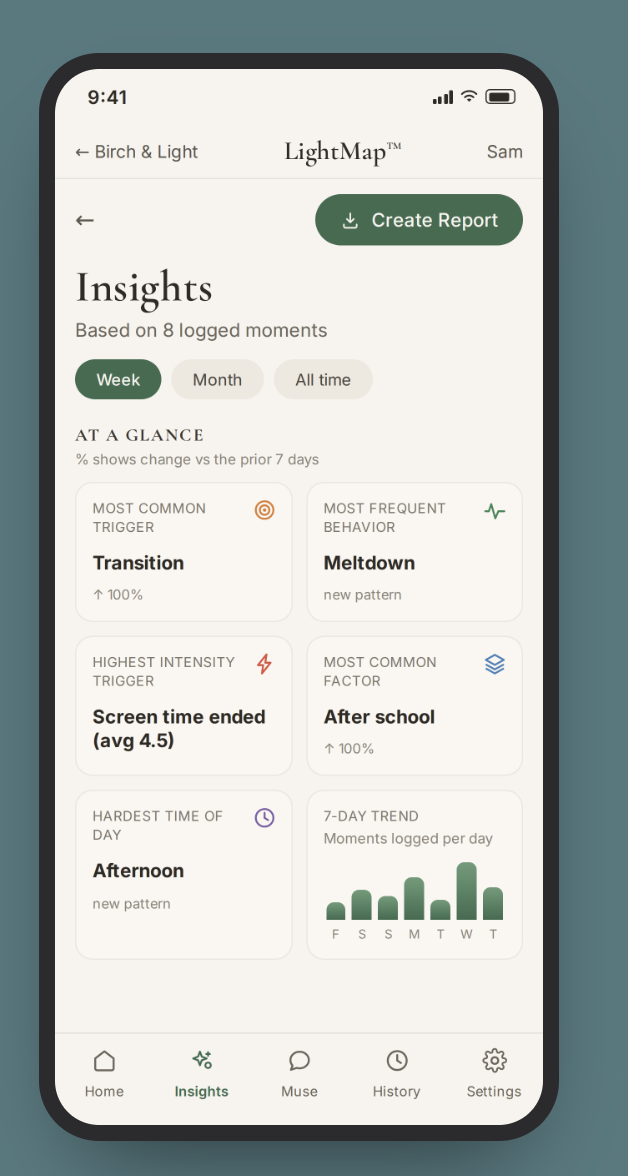

Part of the award-winning Birch & Light Method, honored with the Mom's Choice Gold Award for excellence in family resources.
A story to read together
Sometimes the easiest way in is a story you read side by side.
 Magnolia, Willow, and Pine
When the wind shifts in the clearing and Willow drifts toward Pine, Magnolia learns hurt feelings don’t have to mean closing forever.
Read the story Lyra and the Constellation That Changed
A small star watches her closest friend slowly drift away — and learns that her light was never measured by who stayed beside her.
Read the story
If today was one of those days
A few more from the library, free to read.
Researched and drafted with AI assistance, reviewed before publication. Editorial standards