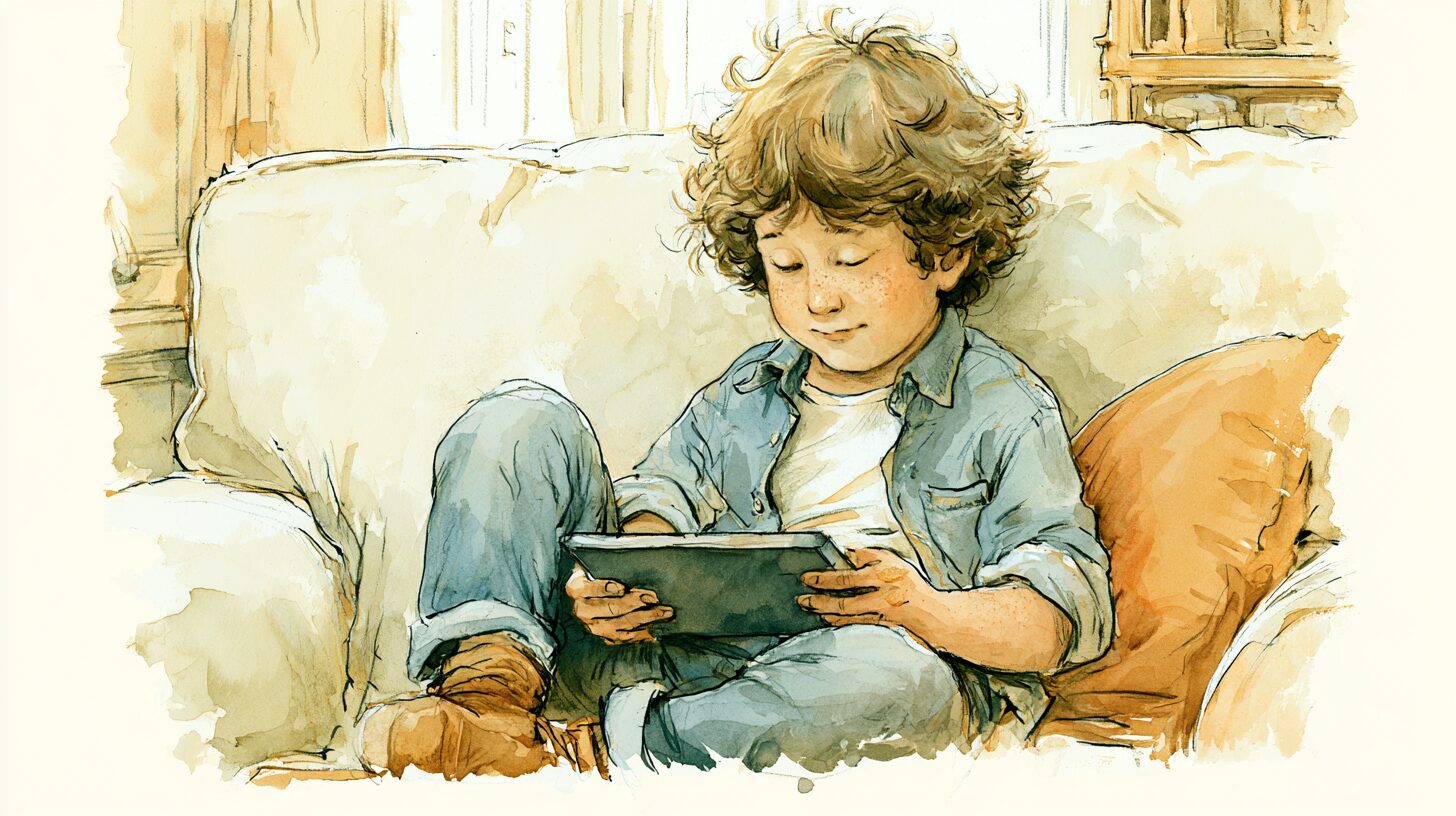
If it were up to your child, the answer to "what do you want to do?" would be the same every time: Roblox. Not the park, not the new toy, not the thing they begged for last month. Roblox. And the single-mindedness of it can start to feel unsettling, as though the rest of the world has quietly lost its color, and the only place your child fully lights up is inside a screen.
It is easy, from there, to slide into worry. Is this an addiction? Have I let it go too far? Is something wrong? Those questions are understandable, and we will get to them. But there is a more useful question to ask first, one that tends to open the door to actually helping, rather than just restricting. Not "why won't they do anything else?" but "what is this giving them that nothing else does?"
Because a child does not return to the same thing over and over for no reason. The pull is information. And when you understand what the pull is made of, both the worry and the path forward look different.
What the Pull Is Actually Made Of
Roblox is not one thing. It is a whole environment that happens to meet several deep needs at once, which is precisely why it can outcompete almost everything else in your child's life. It helps to name those needs specifically, because each one points somewhere.
Predictability. Inside the game, the rules are clear and they stay the same. Actions produce reliable results. Nothing ambushes them. For a child who spends the day navigating confusing social cues, shifting expectations, and sensory input they can't control, a world with knowable rules is not just fun. It is a genuine relief. It is one of the only places where they always know what is going to happen next.
Control. Your child decides what to build, where to go, who to be, what happens next. For a kid who feels managed, corrected, and directed for most of their waking hours, told when to wake, what to wear, what to eat, when to stop, that degree of autonomy is rare and precious. The game hands them a kind of authorship they may get almost nowhere else.
Mastery. They are good at it, and they can feel themselves getting better. Competence is a powerful human need, and it is in short supply for a child who feels behind at school, awkward socially, or generally not-as-good-as the other kids. Inside the game, effort visibly pays off. They are not the struggling one. They are skilled.
Connection on manageable terms. Playing with friends online strips out the hardest parts of in-person friendship: the eye contact, the split-second timing of conversation, the unpredictability of another body in the room, while keeping the part that matters: being with people they like, doing something together. For a child who finds face-to-face connection effortful or overwhelming, this can be the version of friendship that actually works for them.
Why It Can Crowd Out Everything Else
Once you lay those four needs side by side, the "only Roblox" pattern stops looking strange. When a single activity reliably delivers calm, control, success, and connection, all at once, on demand, it is not surprising that a child reaches for it again and again. It is, quite simply, the most efficient way they have found to feel okay.
Look at what the alternatives ask by comparison. The playground asks them to navigate unpredictable social dynamics. The sport asks them to risk failing in front of others. The family outing asks them to manage transitions and sensory input and other people's agendas. These things ask for more and, from the child's point of view, often return less. Against that, the game is not just preferable. It is the path of least resistance to a regulated, competent, connected state.
The question isn't only "is this too much screen time?" It's also "what is my child getting here that they may not be getting anywhere else?"
While you're here, take the guide
What's Underneath is free: the three body-state triggers under most meltdowns, what to say in the minute before it tips over, and how to reset afterward.
You'll get the guide instantly, plus five free articles in your inbox every week. Real challenges (meltdowns, school mornings, picky eating, big feelings) and how to actually handle them. Unsubscribe anytime.
What This Doesn't Mean
Understanding the pull does not mean unlimited screens, no boundaries, and a shrug. That is the misreading worth heading off directly. Limits still matter. Bodies still need movement, sleep still matters, and a life lived entirely inside one game is not a full life.
What understanding the pull does change is how the boundary lands. A child drawn to Roblox because it is the only place they feel competent and in control will not be helped by having that taken away with nothing to replace it. Removing the regulated state without offering another route to the same needs doesn't resolve anything. It just removes the thing that was working and leaves the underlying need exposed. That is usually when the biggest meltdowns happen, and why they can feel so out of proportion. You haven't taken away a game. You've taken away the strategy.
What Tends to Help
Get curious about the specific draw. "Roblox" is the headline, not the answer. Is it the building? The winning? One particular friend they play with? The open-ended creativity, or the structured challenge? The exact pull points to the exact need, and you can't meet a need you haven't identified.
Look for that same need elsewhere. If it's mastery, where else in their life could they feel genuinely capable? If it's connection, what lower-pressure social options exist? If it's control, where could you hand them real, age-appropriate authorship over something? The goal isn't to recreate Roblox. It's to make sure the needs Roblox is meeting are being met in more than one place.
Don't frame the alternative as a punishment. "Anything but Roblox" quietly tells your child that the rest of life is the lesser, duller option, the thing they have to endure instead of the thing they love. Offer alternatives that meet the same needs, not alternatives whose main feature is that they aren't the screen.
Track the context. Notice when the pull is strongest. After school, when they're depleted? When they're lonely? When the house is loud and overwhelming? The timing tells you what the game is doing for them in that moment, decompressing, escaping, connecting, and that is often the clearest signal of the need underneath.
The Shift Worth Making
"Why only Roblox?" turns out to be a more useful question than it first appears. The answer is almost never that something is wrong with your child. It is that they have found a place that works for them: reliably, efficiently, in ways the rest of their world may not yet.
Once you can see what it is working for, the predictability, control, mastery, and connection, you stop fighting the symptom and start building more of those things into the rest of their life. The screen stops being the enemy and becomes what it actually is: a clue about what your child needs to feel okay, and a map of where to start.
Every behavior is a clue.
If Roblox is the only thing your child reaches for, LightMap can help you track what's happening around it, when the pull is strongest and what need it might be meeting, so the pattern beneath it becomes easier to see. Explore LightMap at birchandlight.com/lightmap.
Put it into practice
Reading about these skills is step one. Building them works best through doing, and through play. Money and My Fast Brain is a printable workbook that turns planning, waiting, and finishing into missions kids actually want to do, with a page by page science section for the grown-up. It is $9, instant download, print at home.
Get the workbook, or find both fast brain workbooks in the bundle.
Sources: Murray and colleagues on monotropism (Autism; PMC); peer-reviewed research on predictable reward structures and engagement in video games (PMC); research on screen preference in autistic and ADHD children (PMC); published commentary on the contested status of gaming disorder as a diagnosis (PMC).
For education and reflection, not medical advice. Our terms
See what's underneath
Understand the why, not just the what
LightMap reads your hard days together and gives you answers. Start with one moment today.
Start with 3 moments Not sure where to start? Ask me.Message Tara on WhatsApp. It really is me, I read everything and will personally respond.Click here to message Tara →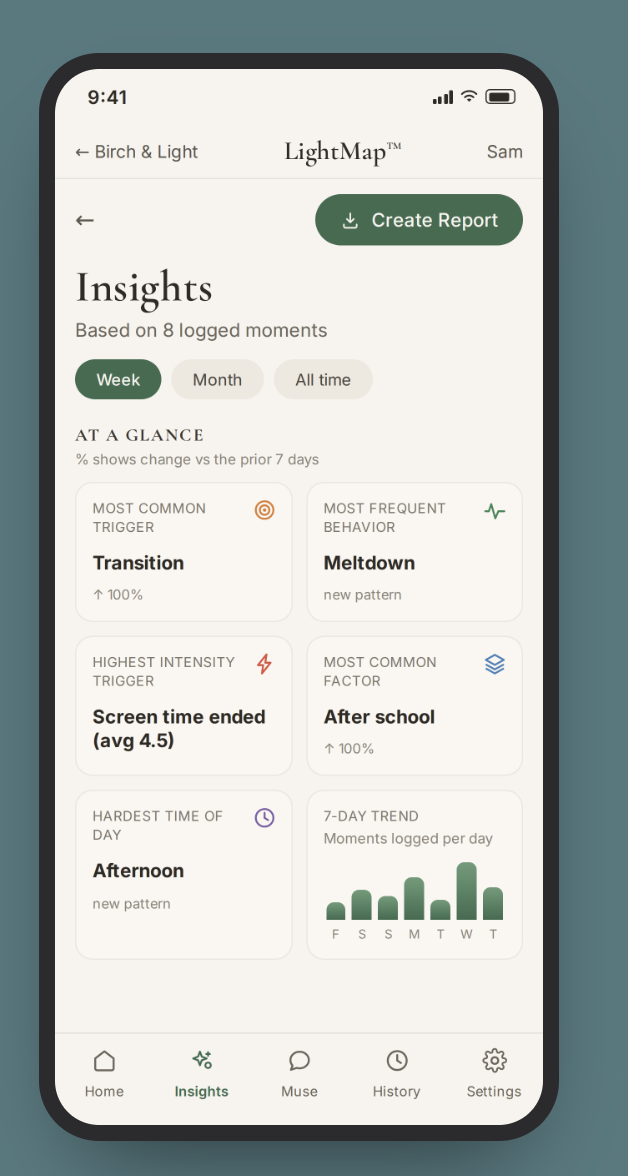
Part of the award-winning Birch & Light Method, honored with the Mom's Choice Gold Award for excellence in family resources.
A story to read together
Sometimes the easiest way in is a story you read side by side.
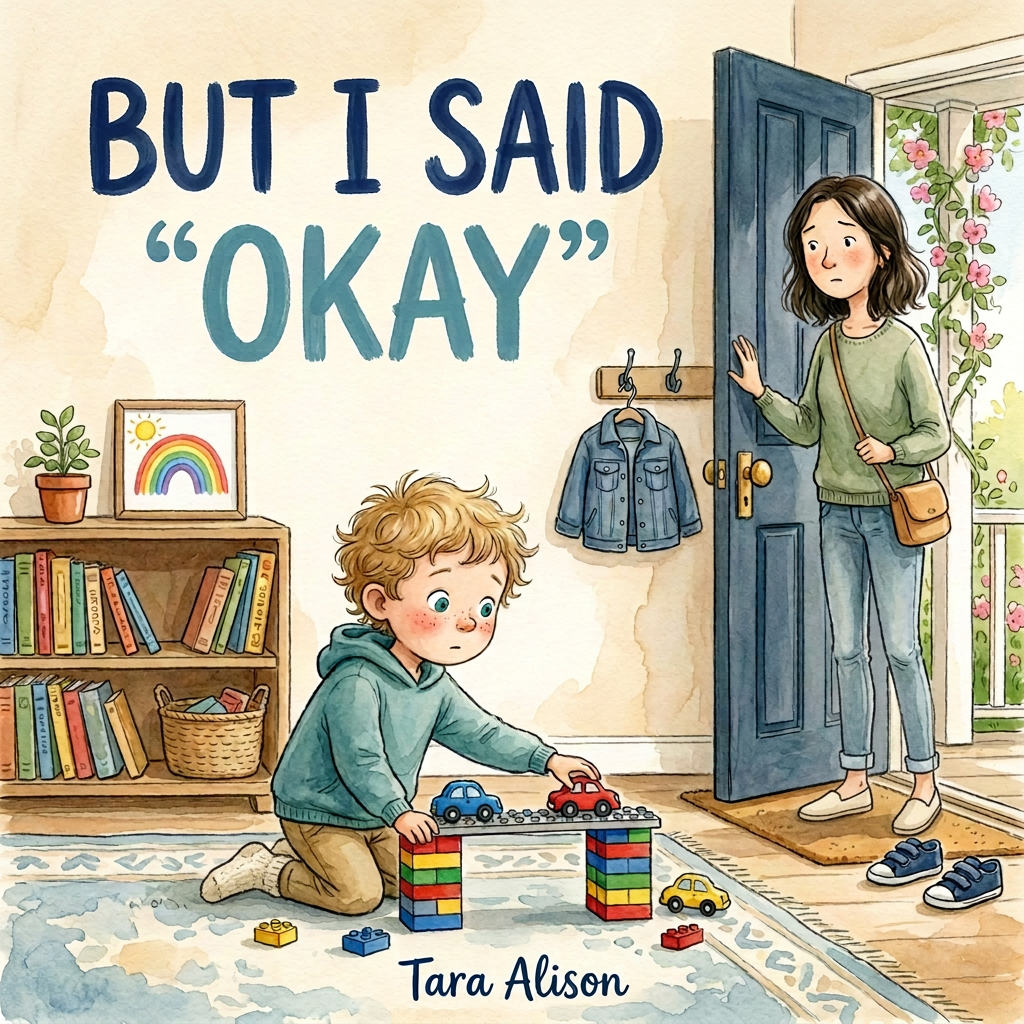 But I Said “Okay”
Owen always says okay. He means it every time. But his attention is still inside the bridge, the dragon, the cave, the music — until Mom realizes that helping him leave one thing matters more than asking him to start the next.
Read the story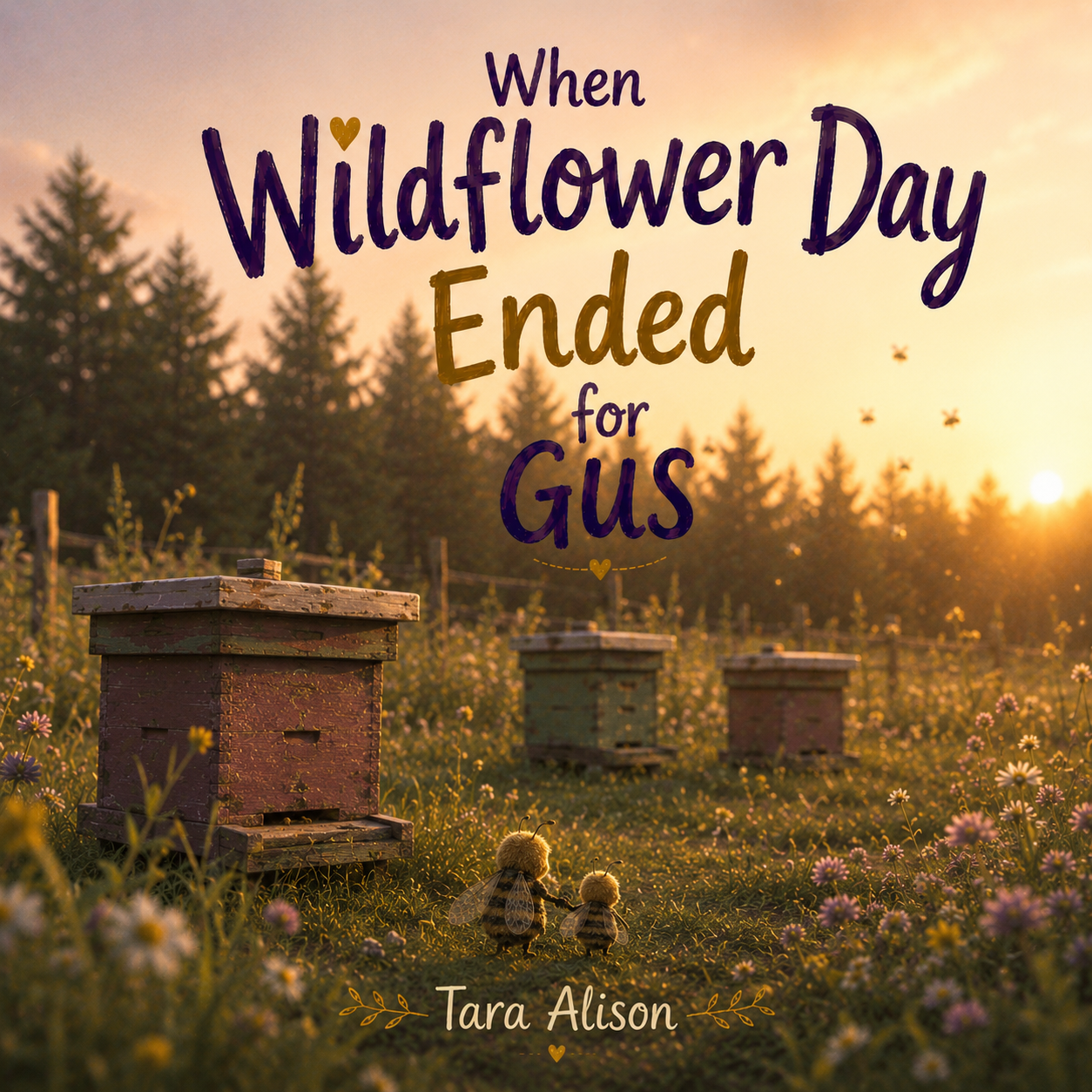 When Wildflower Day Ended for Gus
Gus loves Wildflower Day so much he can't bear for it to end — and learns that beautiful moments don't have to disappear when we leave them.
Read the story
If today was one of those days
A few more from the library, free to read.
Researched and drafted with AI assistance, reviewed before publication. Editorial standards