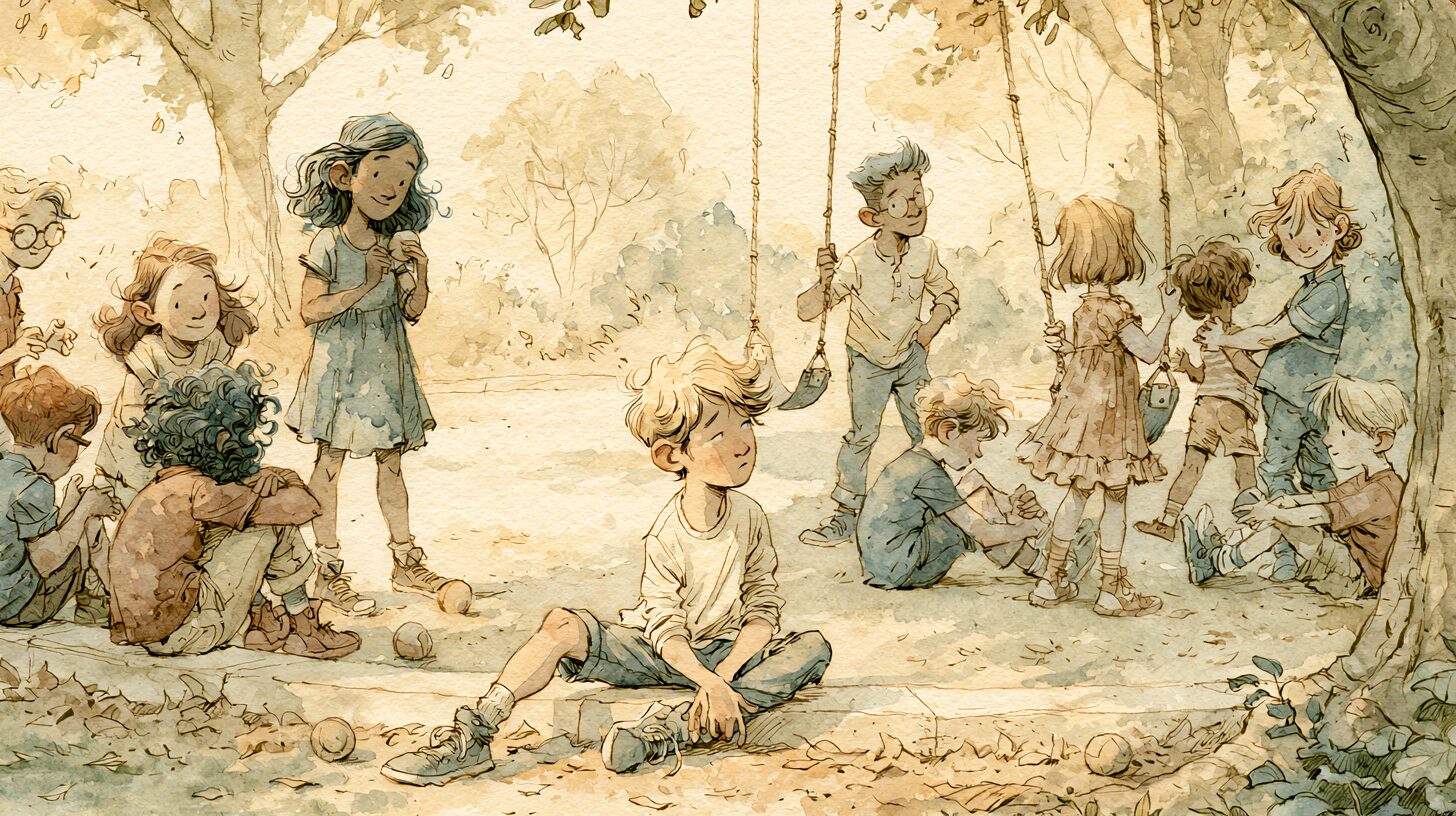
At the party, your child drifts to the edges and plays by themselves. At the playground, they'd rather dig in the corner than join the group. When friends come over, they sometimes wander off to do their own thing. And you find yourself watching, wondering: is this okay? Should I be worried? Should I be pushing them toward the other kids?
It's one of the most common quiet worries parents carry — that a child who prefers their own company is lonely, behind, or missing something they need. Sometimes solitary play is worth a closer look. But far more often, it's a healthy expression of who a child is — and the pressure to fix it can do more harm than the alone-time ever would.
The useful question isn't 'how do I make my child more social.' It's 'what is this alone-time actually doing for them.'
When Solitary Play Is Healthy
For a great many children, choosing to play alone is not a problem to solve. It's a preference, a need, or a strength — and it's worth recognizing the forms that take.
Temperament. Some children are simply wired toward the internal, the quiet, the self-directed. They recharge alone rather than in company, find deep satisfaction in solitary pursuits, and feel genuinely content in their own world. This is a personality, not a deficit — and a child like this playing happily alone is a child doing exactly what they need.
Regulation. For a child who finds social interaction effortful, alone-time is how they recover and reset. Stepping away from the group isn't rejection of other kids — it's the break their nervous system needs in order to come back. Pulling away to play solo at a party may be the very thing that lets them rejoin later.
Depth and focus. Solitary play is where many children do their richest work — building, imagining, creating, exploring an interest without interruption. This kind of deep, absorbed, self-directed play is enormously valuable for development. It is not lesser than social play; it's a different and equally important thing.
A child playing happily alone is usually not a child who is failing to socialize. They're a child doing something they genuinely need.
The Distinction That Matters
So when is alone-time worth a closer look? The key isn't whether a child plays alone — it's the feeling underneath it. There's a meaningful difference between a child who plays alone because they want to and a child who plays alone because they can't do otherwise.
Content solitary play looks like absorption, ease, satisfaction — a child happily in their own world, who could join if they chose to but is genuinely happy where they are. This is healthy, and it needs no intervention.
The kind worth attention looks different: a child who wants to join but doesn't know how, who hovers at the edges longingly, who plays alone after being rejected or because social situations have become a source of anxiety and dread. Here the alone-time isn't a preference — it's a retreat from something that has become too hard. The child would connect if they could, and something is stopping them.
The difference isn't in the behavior. It's in whether the child is choosing solitude or trapped in it.
While you're here, take the guide
What's Underneath is free: the three body-state triggers under most meltdowns, what to say in the minute before it tips over, and how to reset afterward.

You'll get the guide instantly, plus five free articles in your inbox every week. Real challenges (meltdowns, school mornings, picky eating, big feelings) and how to actually handle them. Unsubscribe anytime.
Why the Pressure to Socialize Can Backfire
When parents worry about solitary play and respond by pushing — forcing the child into groups, signing them up for more social activities, communicating that something is wrong with how they are — it can do real harm to a child for whom alone-time is healthy.
It teaches them their natural way of being is unacceptable. It adds anxiety to social situations that may already feel effortful. And it can ironically make connection harder, because a child who feels pressured and judged is a child whose nervous system is now on alert in exactly the settings you're trying to ease them into. For the content solitary player, the pressure creates the very problem it was meant to prevent.
What Tends to Help
Watch the feeling, not the behavior. Before intervening, look at whether your child seems content or distressed in their solitude. Contentment means leave it be. Distress, longing, or retreat-after-rejection means there's something to gently support.
Honor the temperament. If your child is wired toward the quiet and internal, let that be okay. Build their social life around the kind of connection that works for them — deep one-on-one friendships, shared interests, lower-key settings — rather than forcing the high-volume group socializing that drains them.
Support the skill if the skill is missing. If your child wants to join but doesn't know how, that's a skill to teach, not a temperament to honor. Gentle coaching on how to enter play, practiced in low-stakes settings, helps the child who is stuck rather than content.
Protect the alone-time as legitimate. Solitary play is real play, doing real developmental work. Resist treating it as time that should be converted into social time. A child deep in their own world is not wasting the afternoon.
Don't communicate that something's wrong. Perhaps most important: be careful that your worry doesn't reach your child as a message that who they are is a problem. A child who plays alone and feels accepted is in a very different place than one who plays alone and senses they're disappointing you.
The Shift Worth Making
The question to ask about a child who plays alone isn't 'how do I make them more social,' but 'are they content or are they stuck.' Content alone-time is a healthy expression of temperament and a genuine developmental good. Stuck alone-time — the child who wants in and can't find the way — is where gentle support belongs.
For many children, the most loving thing you can do is stop worrying about the solitude and start trusting it. Not every child needs to be in the middle of the group. Some do their best living, and their best growing, in their own quiet world.
Every behavior is a clue.
If you're trying to tell content solitude from a child who feels stuck, LightMap can help you track how your child seems in different social settings — so the pattern beneath it becomes easier to see. Explore LightMap at birchandlight.com/lightmap.
For your child: The Only Blue Macaroon is about the one nobody picks, sitting at the edge of every tray.
Sources: Parten's stages of social play; Coplan and colleagues distinguishing shyness, unsociability, and social avoidance in young children (Developmental Psychology; PMC); research on solitary play subtypes and their differing developmental outcomes (PMC).
For education and reflection, not medical advice. Our terms
See what's underneath
See which situations cost the most
LightMap reads your hard days together and gives you answers. Start with one moment today.
Start with 3 moments Not sure where to start? Ask me.Message Tara on WhatsApp. It really is me, I read everything and will personally respond.Click here to message Tara →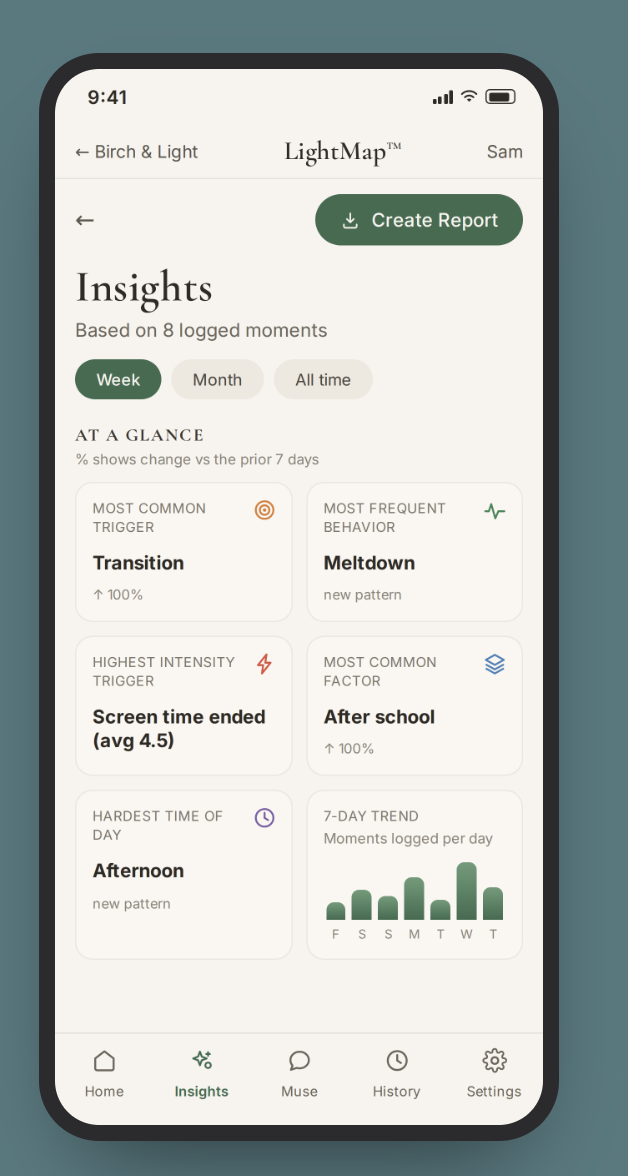

Part of the award-winning Birch & Light Method, honored with the Mom's Choice Gold Award for excellence in family resources.
A story to read together
Sometimes the easiest way in is a story you read side by side.
 Magnolia, Willow, and Pine
When the wind shifts in the clearing and Willow drifts toward Pine, Magnolia learns hurt feelings don’t have to mean closing forever.
Read the story Lyra and the Constellation That Changed
A small star watches her closest friend slowly drift away — and learns that her light was never measured by who stayed beside her.
Read the story
If today was one of those days
A few more from the library, free to read.
Researched and drafted with AI assistance, reviewed before publication. Editorial standards