
You fought for years to get here. Through the pediatricians who said it was behavioral, the specialists who said it was anxiety, the school meetings, the second and third opinions. Finally, someone connected the dots. Your teenager has PANS or PANDAS, there is a name for what happened to your child, and there is a treatment plan sitting on the counter.
And your teen refuses to take any of it.
Maybe they say nothing is wrong with them. Maybe they say it is too late and they are already gone. Maybe they just walk away. Either way, you are holding the answer you fought years for, and the one person it is meant to help wants nothing to do with it.
This is one of the loneliest positions in the whole PANS/PANDAS journey, and almost nothing written about these conditions addresses it. Most treatment guidance assumes a young child whose parents control the spoon. A teenager is a different situation entirely, and it deserves its own honest conversation.
Why refusal makes sense, even when it looks like self-sabotage
Start here, because everything else depends on it: your teen's refusal is not random and it is not spite. Several real forces are stacked on top of each other.
The diagnosis arrived during identity formation. Adolescence is when kids are building their answer to the question "who am I?" A new diagnosis lands on that construction site like a wrecking ball. Accepting treatment can feel like signing a document that says "I am sick, I am different, something is wrong with my brain." Refusing treatment can feel like the only way to say "I am still me." That is not immaturity. That is a person defending their sense of self with the only tool they have.
Autonomy is the developmental job of adolescence. Teens are wired to resist being managed, and a treatment protocol is management in its purest form: swallow this, at this time, because an adult said so. For many teens, especially those with a demand-avoidant streak, the protocol itself registers as a threat regardless of what is in the capsules.
The misdiagnosed years left scars. A teen who spent years being told their symptoms were attitude, laziness, or drama has good reasons to distrust the medical system, and sometimes, painfully, to distrust the adults who brought them to it. A new doctor with a new plan can read as just the latest adult who thinks they know what is wrong with them.
The illness itself is in the room. PANS and PANDAS are believed to involve inflammation affecting brain regions involved in mood, flexibility, and regulation. The irritability, rigidity, and hopelessness that make a teen say "I am already gone" can be, at least in part, the condition talking. This is the cruelest loop in the whole picture: the illness can impair the very capacities a person needs to accept help for the illness.
One caution on that last point. Knowing the illness may be fueling the refusal is useful for your compassion. It is almost never useful to say out loud. "That's just your PANDAS talking" hands a teenager proof that nothing they say will be taken at face value anymore, and it will cost you trust you cannot afford to lose.
Why the compliance frame fails with teens
With a six-year-old, a parent can usually out-persist the resistance. With a fifteen-year-old, you physically cannot make anyone swallow anything, and every escalation teaches them that the treatment is your project, not theirs. The harder you push, the more refusing becomes the one place they hold power.
So the goal has to change. The goal is not compliance. The goal is ownership: a teen who takes the treatment because they have their own reasons to, even reluctant ones. Ownership is slower to build and far more durable, and it is the only version that survives when they leave your house.
While you're here, take the guide
What's Underneath is free: the three body-state triggers under most meltdowns, what to say in the minute before it tips over, and how to reset afterward.

You'll get the guide instantly, plus five free articles in your inbox every week. Real challenges (meltdowns, school mornings, picky eating, big feelings) and how to actually handle them. Unsubscribe anytime.
What actually helps
Let the doctor talk to your teen without you in the room. Ask the prescribing clinician to spend part of the appointment alone with your teenager, teen to doctor, no parent audience. Many teens will ask questions and voice objections to a physician that they will never voice in front of a parent, and hearing the rationale from the person who ordered the treatment removes you from the enforcement role. If your current practitioner is not good at talking to teens rather than about them, that is worth raising directly.
Give them real negotiating power over the protocol. Not over whether to treat, but over how. Which supplement matters most and which could be paused? Capsule, liquid, or gummy? Morning or night? Bundled into one moment or spread out? A functional medicine protocol often has a long tail of items with very different levels of importance. Ask the practitioner to rank them, then let your teen negotiate the bottom of the list. A teen who dropped two supplements in a negotiation is a teen who agreed to take the rest.
Connect treatment to what they want back, not to what worries you. "Your inflammation markers" means nothing to a sixteen-year-old. Sleeping through the night, getting their temper back under control before it costs them a friendship, having the energy for the sport or game or person they care about, those mean everything. Ask what the illness has taken that they miss. Then frame treatment as the path back to that, on their behalf, not yours.
Make improvement their data, not your claim. "You seem better since you started the new medicine" from a parent is easy to dismiss. A simple record they can see for themselves is harder to argue with. Track a few things that matter to them, sleep, rage episodes, good days, in whatever form your teen will tolerate, and let the pattern speak. Some families use a shared note; some use a tool like LightMap to log moments and watch the line move. The point is the same: the evidence should belong to the teen.
Shrink the ask. If the full protocol is a wall, ask the practitioner what the single highest-value intervention is and propose a time-limited experiment: one thing, for a defined stretch, then you both look at the results together and the teen gets a real vote on what happens next. A genuine experiment, with a genuine off-ramp, respects their autonomy in a way a mandate never will.
Helping them understand what happened to them
Many teens refuse partly because nobody has ever explained the condition in a way that makes sense to them. The explanation that tends to land is simple and blame-free: an infection confused your immune system, and it started misfiring at your brain by mistake, friendly fire. The anger, the intrusive thoughts, the feeling of not being yourself, those are symptoms of that misfire, not flaws in who you are. It is medical, it was never your fault, and it is treatable for many people.
For a teen who wants to hear it from someone other than a parent, the documentary "My Kid Is Not Crazy: A Search for Hope in the Face of Misdiagnosis" follows six families through this exact experience and is widely shared in PANS/PANDAS communities, and some older teens connect with the memoir and film Brain on Fire, which tells an adult's story of autoimmune encephalitis, a different but related idea of "the immune system attacked my brain and I came back." Patient and family stories from PANS/PANDAS organizations can also help a teen feel less like the only person on earth this has happened to.
What not to do
Do not stack lectures. After the second explanation, more information is not the missing ingredient. Do not enter a bribery arms race; small incentives are fine, but if the price keeps rising, the teen has learned the treatment is worth more to you than to them. Do not narrate every bad mood as a symptom. And do not sacrifice the relationship to win a dose. If it comes down to a pill tonight or your teen still talking to you next month, the relationship wins, because the relationship is the only channel through which buy-in will ever arrive.
If the refusal is total
Some teens, especially in the rawest stretch after diagnosis, refuse everything for a while. If that is where you are, it does not mean treatment is over. It usually means the teen needs time to absorb the diagnosis before they can act on it, and grief about a diagnosis is real even when the diagnosis is good news to the parents. Keep the door open, keep the pressure low, and consider bringing in a therapist who works with chronically ill or newly diagnosed teens, not to talk them into the supplements, but to give them a place to process what this diagnosis means to them. Buy-in often follows understanding by weeks or months.
And if your teen ever talks about being "gone" in a way that sounds like hopelessness about being alive, rather than frustration about the illness, treat that as its own urgent conversation and bring it to their clinician right away.
You fought for years to get your child an answer. You did not fail because your teenager will not take it yet. You are just in the next chapter, the one where the answer has to become theirs, and that chapter has its own pace. Staying on their side while it unfolds is not giving up. It is the strategy.
Buy-in builds in increments small enough to miss entirely. Logging the small yeses in LightMap shows you movement in the weeks when it feels like there is none.
Sources: PANS Research Consortium diagnostic criteria; Susannah Cahalan's "Brain on Fire"; Tim Sorel's "My Kid Is Not Crazy" documentary.
For education and reflection, not medical advice. Our terms
Before the next flare
Bring your doctor a timeline, not a memory
LightMap reads your hard days together and gives you answers. Start with one moment today.
Start with 3 moments Not sure where to start? Ask me.Message Tara on WhatsApp. It really is me, I read everything and will personally respond.Click here to message Tara →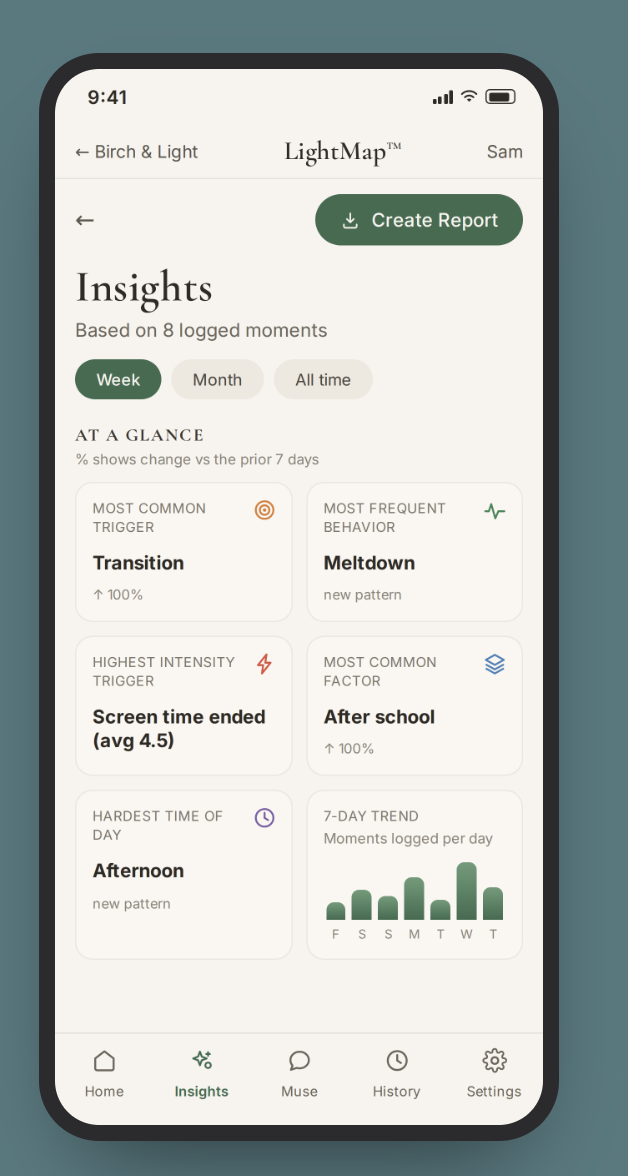

Part of the award-winning Birch & Light Method, honored with the Mom's Choice Gold Award for excellence in family resources.
A story to read together
Sometimes the easiest way in is a story you read side by side.
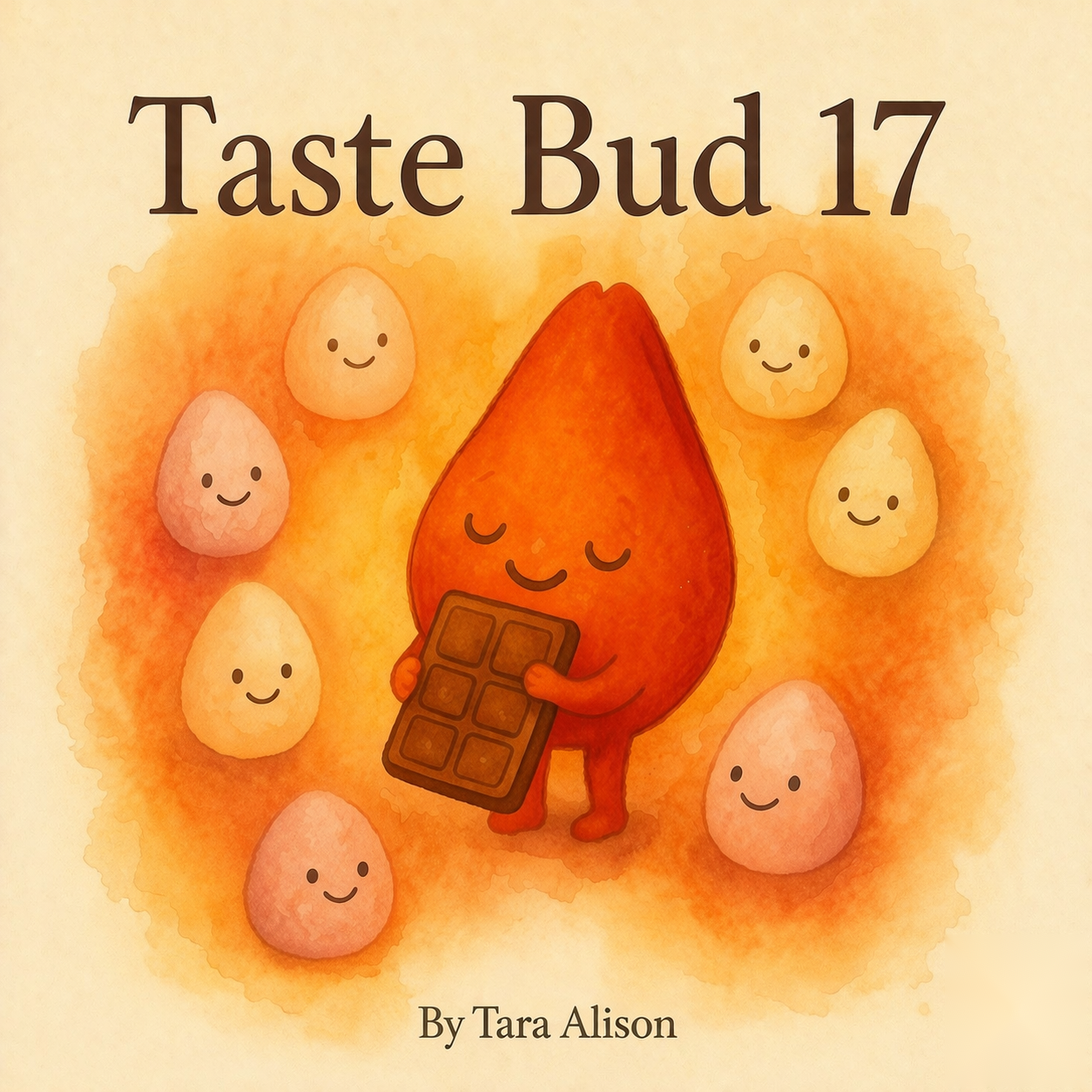 Taste Bud 17
Taste Bud 17 feels everything more — and learns that big sensory feelings deserve the same care as everyone else’s.
Read the story Otto Filled Everything
Otto can't stop filling things with water. His family doesn't understand — until Grandma Willow helps them listen to what his body is actually asking for.
Read the story
If today was one of those days
A few more from the library, free to read.
Researched and drafted with AI assistance, reviewed before publication. Editorial standards