
Two names for inflamed brains, and a family resemblance
If you have lived through a PANS or PANDAS diagnosis, you have probably met the phrase "autoimmune encephalitis" somewhere along the way: in a research paper, a Facebook group, or a specialist's aside that made your stomach drop. This article is for the parent trying to understand how these conditions relate, because the relationship matters, both for hope and for knowing when to push for a bigger workup.
Autoimmune encephalitis, or AE, is the umbrella term for conditions where the immune system produces antibodies that attack the brain's own cells, causing inflammation and a storm of neurological and psychiatric symptoms. The best known form is anti-NMDA receptor encephalitis, but there are many, each defined by which brain target the antibodies hit. AE is rare, serious, diagnosable with specific tests, and, this is the part that changes families' lives, frequently treatable and often substantially reversible when caught.
Where PANS and PANDAS fit
PANS and PANDAS describe abrupt-onset neuropsychiatric symptoms, classically overnight OCD, restrictive eating, rages, regression, tics, and separation anxiety, that follow an infection in a susceptible child. The leading scientific model is post-infectious autoimmunity: an infection (strep, in PANDAS) triggers antibodies that cross-react with brain tissue, particularly the basal ganglia, the region governing movement, habits, and emotional regulation. Researchers in this field have described the condition as a form of basal ganglia inflammation, and some publications frame it explicitly as a milder cousin within the broader autoimmune encephalitis family.
Honesty requires saying that this framing is still debated. Mainstream neurology accepts AE as firmly established, while the autoimmune model of PANS/PANDAS, including antibody panels marketed for it, remains an area of active research and genuine disagreement between specialties. That debate is exhausting to live inside, but it does not change the practical playbook below.
The overlap that matters
- Shared logic: both models describe immune activity disrupting brain function, which is why the treatment conversation in severe PANS borrows from AE medicine: steroids, IVIG, plasmapheresis, and in refractory cases rituximab, alongside treating the triggering infection.
- Shared shape: sudden change in a previously typical child, psychiatric symptoms arriving with neurological ones, and a relapsing course tied to immune events.
- Shared hope: in both, the symptoms are downstream of a process that can sometimes be treated, which is a fundamentally different story than "your child's personality changed forever."
While you're here, take the guide
What's Underneath is free: the three body-state triggers under most meltdowns, what to say in the minute before it tips over, and how to reset afterward.
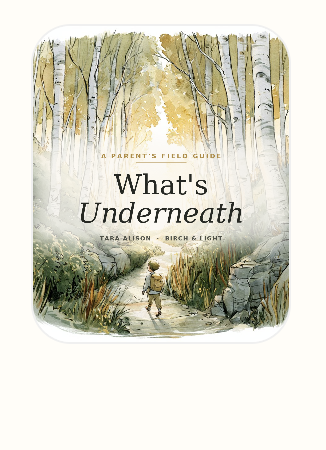
You'll get the guide instantly, plus five free articles in your inbox every week. Real challenges (meltdowns, school mornings, picky eating, big feelings) and how to actually handle them. Unsubscribe anytime.
The differences that matter more
Classic AE is generally more severe and more medically loud. The features that push clinicians from a PANS frame toward a full AE workup include: seizures or possible seizure-like episodes, significant movement abnormalities beyond tics (writhing, rigidity, catatonia), autonomic instability (wild swings in heart rate, blood pressure, temperature), true confusion or encephalopathy, rapidly progressing loss of speech or skills, hallucinations or frank psychosis, and severe insomnia with dysregulation that keeps escalating. Anti-NMDA receptor encephalitis in particular can open with purely psychiatric symptoms in children, which is exactly why the line between "severe PANS" and "early AE" deserves a neurologist's eyes rather than a parent's guesswork.
What the full workup looks like
When AE is on the table, the evaluation typically involves pediatric neurology and may include brain MRI, EEG (which can show characteristic patterns), and a lumbar puncture to test spinal fluid for inflammation and specific autoantibodies, along with blood antibody panels. These tests are what separate the conditions definitively, because AE diagnoses hang on objective findings in a way PANS currently does not. If your child's presentation includes any red flags above, asking directly, "does anything here warrant an autoimmune encephalitis workup, including MRI, EEG, or spinal fluid testing?" is a completely appropriate parent question, and a good clinician will not resent it.
Questions worth bringing to your child's team
- Do any features of this presentation fall outside typical PANS/PANDAS and toward classic AE?
- What symptoms, if they appeared, would change your mind and trigger a neurology referral?
- How are we documenting the timeline, since onset speed, infection links, and symptom clusters drive both diagnoses?
- If immune treatment is proposed, what response would confirm we're on the right track, and by when?
The thread of hope
Families who have walked the AE road often describe the same arc PANS families know: a child who vanished into symptoms and came substantially back with treatment. That arc is why understanding this overlap matters more than fearing it. The scary word, encephalitis, is also the hopeful word, because inflammation is a process, processes can be treated, and children's brains are astonishing at recovery. Your job isn't to diagnose; it's to know the red flags, document everything, and ask the questions that make the right specialist look twice.
Symptom timelines drive every decision in this territory. LightMap keeps yours ready for the appointment that matters.
Sources: PANS Research Consortium clinical guidelines for the evaluation and treatment of PANS and PANDAS (Journal of Child and Adolescent Psychopharmacology; PMC); Swedo et al. on the original PANDAS case definition and subsequent PANS criteria (PMC); Graus et al., clinical approach to diagnosis of autoimmune encephalitis (Lancet Neurology); Dalmau and colleagues on anti-NMDA receptor encephalitis (PMC); peer-reviewed research on basal ganglia autoimmunity and cross-reactive antibodies following streptococcal infection (PMC); Autoimmune Encephalitis Alliance clinical resources; published commentary on the ongoing scientific debate over the autoimmune model of PANS and the validity of commercial antibody panels (PMC).
For education and reflection, not medical advice. Our terms
Before the next flare
Bring your doctor a timeline, not a memory
LightMap reads your hard days together and gives you answers. Start with one moment today.
Start with 3 moments Not sure where to start? Ask me.Message Tara on WhatsApp. It really is me, I read everything and will personally respond.Click here to message Tara →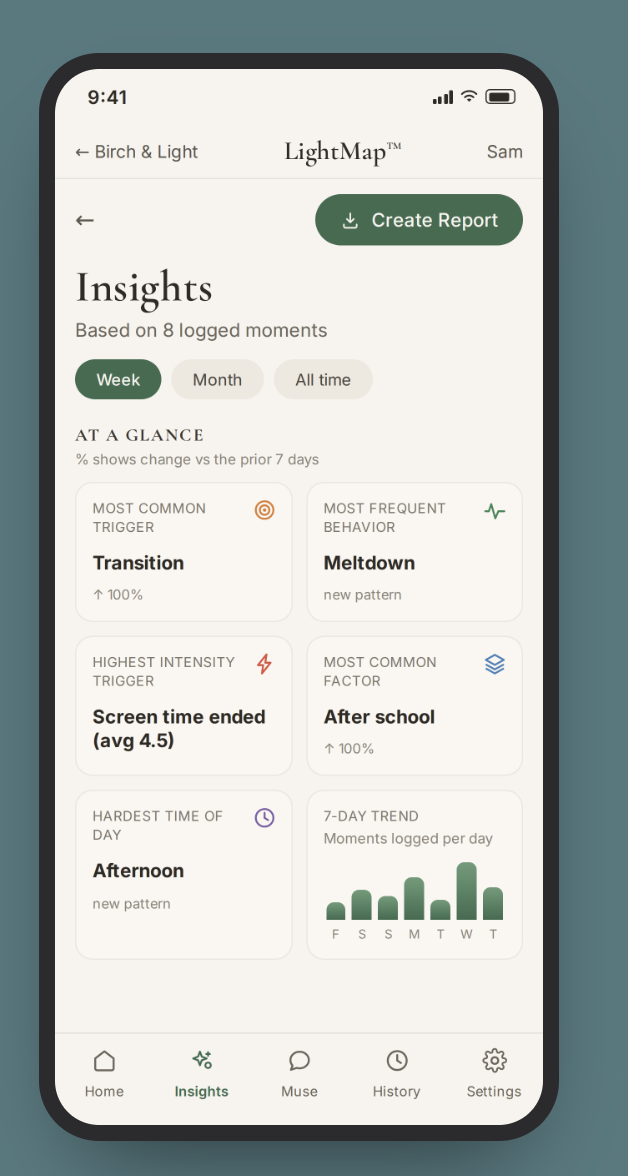
Part of the award-winning Birch & Light Method, honored with the Mom's Choice Gold Award for excellence in family resources.
A story to read together
Sometimes the easiest way in is a story you read side by side.
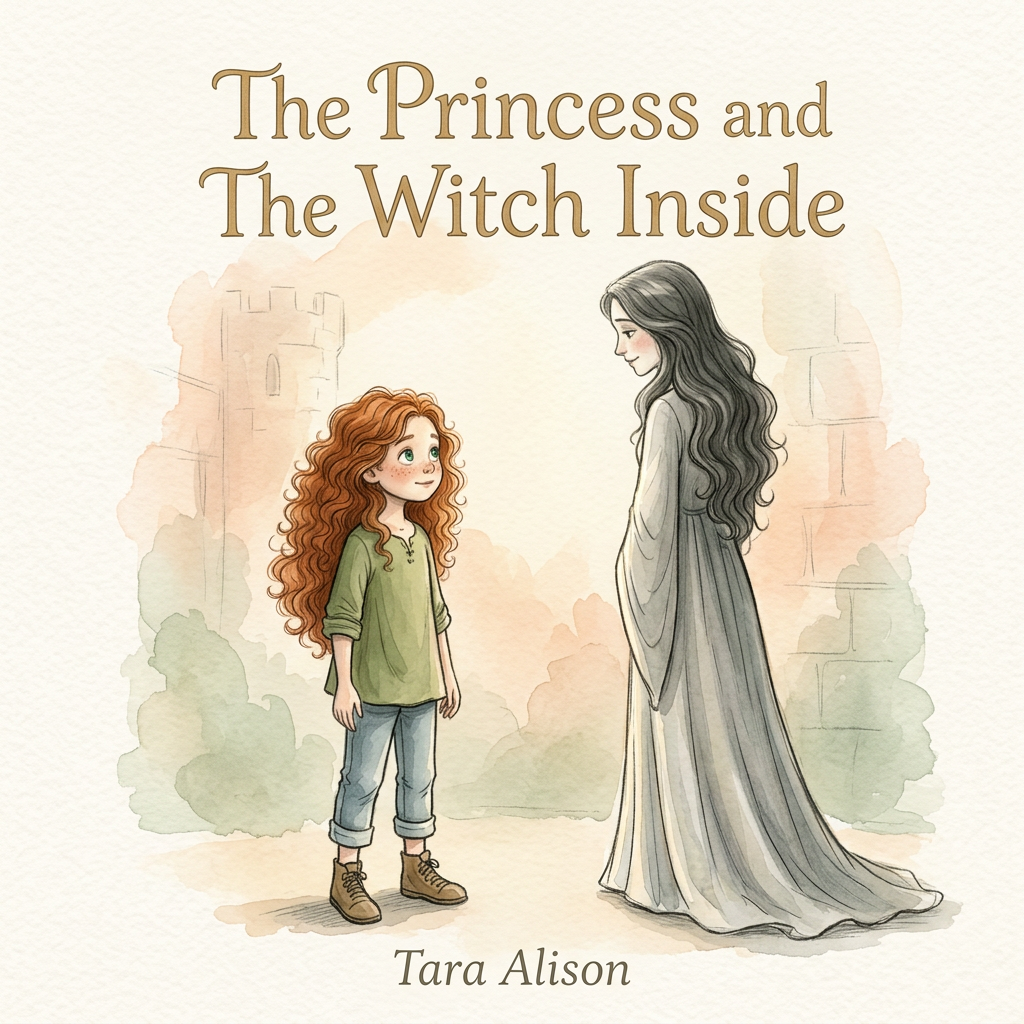 The Princess and the Witch Inside
Esme is loved, but a fast protective part keeps rushing in before she gets a turn. A quiet visitor helps her meet the witch inside — not as an enemy, but as a worried protector — and find her way back to the people she wanted to be with all along.
Read the story The Tower That Looked Fine
A tower in a quiet clearing tries to stay steady through every small thing nobody else seems to notice — until one tiny breath of wind causes her to fall, and a gentle hand begins to gather the blocks back.
Read the story
If today was one of those days
A few more from the library, free to read.
Researched and drafted with AI assistance, reviewed before publication. Editorial standards