
The story usually has the same shape. A child with PANS or PANDAS is put on an SSRI for the anxiety or OCD, and it genuinely helps, calmer, braver, eating better, more themselves. Then somewhere along the way, often after a dose change that landed in the middle of three other changes, a rough stretch arrives. And when the parent brings it to a group, the replies come fast: these kids are sensitive to SSRIs. Wean. We did and never looked back.
Before anyone touches a dose, let's separate what is actually documented from what the comment section believes, because this is one of those topics where both the pro-medication and anti-medication camps talk past the evidence.
First, what SSRIs legitimately do here
Anxiety and obsessive-compulsive symptoms sit at the core of PANS and PANDAS, and SSRIs are among the standard, evidence-supported tools for pediatric anxiety and OCD generally. Many PANS families see real, sustained benefit, and a rocky season does not erase a documented year of help. The question is never "are SSRIs good or bad," it is "what is this dose doing for this child right now," and that question has an owner: the prescriber.
What "sensitivity" actually refers to
The claim circulating in PANS groups is not invented. Published treatment guidance from PANS clinician-researchers notes that these children can be unusually sensitive to medication side effects, SSRIs included, and commonly recommends starting at low doses and increasing slowly, watching for behavioral side effects along the way. That is the documented core of the "sensitive brains" idea: a dosing caution, written for prescribers. One case series found that 14 of 38 children with PANDAS developed behavioral activation on an SSRI, ranging from hyperactivity and irritability to mania, aggression, and suicidality, and a separate case report described a boy whose suicidal behavior stopped once the SSRI was discontinued (Murphy, Storch, and Strawser, Primary Psychiatry, 2006).
The specific phenomenon behind it is called behavioral activation, and it is documented in children on SSRIs generally, not just PANS kids: a minority develop restlessness, irritability, agitation, impulsivity, or sleep disruption on an SSRI, most often in the early weeks after starting or increasing a dose, and it tends to be dose-dependent, meaning it often improves when the prescriber lowers the dose or slows the increase. In a smaller number of cases, especially in PANDAS, it has included more serious effects such as mania or suicidality, which is why any sharp change gets a same-day call rather than a wait-and-see. Activation is real, recognizable, and something the prescriber has a plan for, and a clinician who hears "this got worse after the increase" knows what to consider.
What sensitivity does not mean
It does not mean SSRIs are wrong for PANS kids; it means dosing deserves care. It does not mean that improvement after starting other treatments proves the SSRI was the problem; overlapping changes cannot be untangled by feel. And it emphatically does not mean weaning is a decision a parent should make from group consensus, both because the medication may still be carrying real weight, and because stopping or reducing an SSRI abruptly can produce its own withdrawal effects that then get misread as the illness worsening. Every road here runs through the prescriber, one change at a time.
While you're here, take the guide
What's Underneath is free: the three body-state triggers under most meltdowns, what to say in the minute before it tips over, and how to reset afterward.

You'll get the guide instantly, plus five free articles in your inbox every week. Real challenges (meltdowns, school mornings, picky eating, big feelings) and how to actually handle them. Unsubscribe anytime.
The confound problem, honestly stated
Look at the typical timeline in these stories: a dose change, plus a routine upheaval, plus an infection season, plus, often, new treatments landing all at once. Four or five variables moving together, and a bad stretch that could belong to any of them, or to the underlying condition doing what it does. Nobody, not a Facebook group, not this article, and honestly not even the prescriber on gut feel, can isolate the SSRI's contribution from a narrative. What can: a written timeline. Dates of every dose change and treatment start on one axis, symptom shifts on the other. Families who build this (on paper or in a tracker like LightMap) routinely hand their clinician the single most decision-useful document in the chart.
The questions to bring to the prescriber
Instead of "should we wean," which invites a yes/no to a question that needs a plan, bring these: Could the current dose be contributing to the irritability we're seeing, given the timing? If we suspect it, what would a safe, one-variable test look like, and when, given what else has just changed? What exactly should we watch for in the coming weeks, and what would make you adjust course? And how will we reassess the SSRI's role as the PANS treatment takes effect, since the symptom the SSRI was treating may itself be shrinking?
One standing rule regardless of the answers: any new or sharp change after a medication adjustment, worsening agitation, hopelessness, or any talk of self-harm, is a same-day call to the prescriber, not a wait-and-see. That is standard monitoring guidance for any young person on these medications, and it applies double when more than one has changed recently.
The bottom line
"PANS kids are sensitive to SSRIs" is a real dosing caution that has been flattened, in the retelling, into "SSRIs hurt PANS kids," which the evidence does not say. The honest position lives in the middle: the medication may be helping, the dose may be contributing, both can be true at once, and the way through is a timeline, a prescriber, and one change at a time. The parents who navigate this best are not the ones who picked a camp. They are the ones who brought data.
Bringing data is the whole point, and it is hard to assemble retrospectively. Logging one change at a time in LightMap is how the timeline stays clean enough for a prescriber to act on.
This article is general information, not medical advice. Never start, stop, or change a psychiatric medication except with the prescribing clinician.
Sources: PANS Research Consortium clinical management guidelines, Journal of Child and Adolescent Psychopharmacology, 2017. Murphy TK et al., Primary Psychiatry, 2006, volume 13, page 87. National Institute of Mental Health.
For education and reflection, not medical advice. Our terms
Before the next flare
Bring your doctor a timeline, not a memory
LightMap reads your hard days together and gives you answers. Start with one moment today.
Start with 3 moments Not sure where to start? Ask me.Message Tara on WhatsApp. It really is me, I read everything and will personally respond.Click here to message Tara →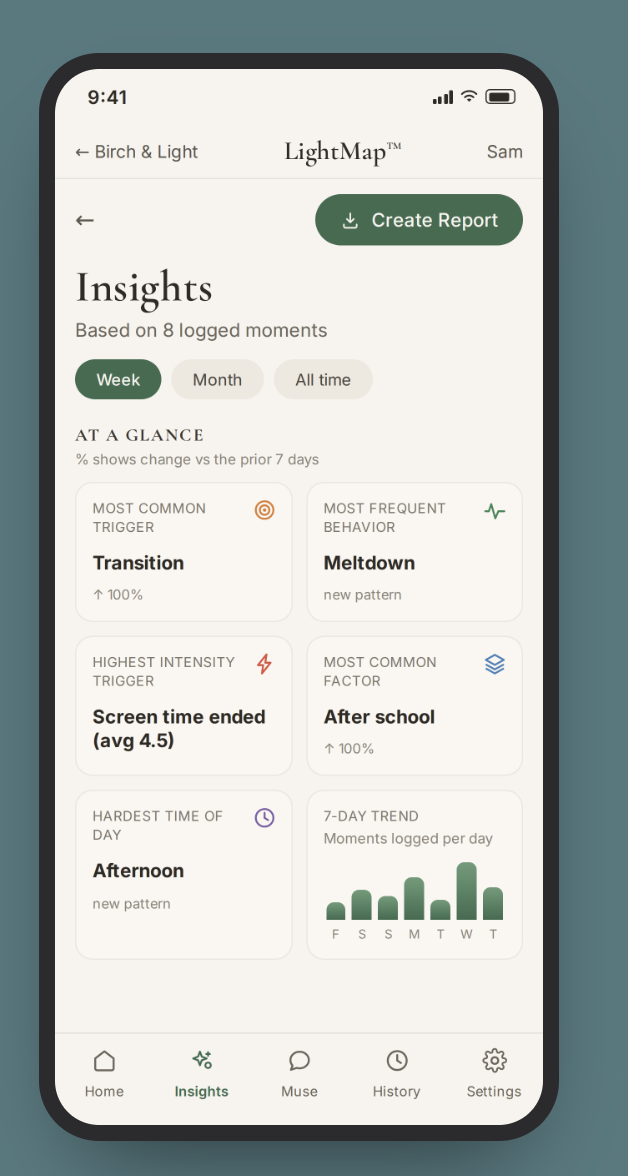

Part of the award-winning Birch & Light Method, honored with the Mom's Choice Gold Award for excellence in family resources.
A story to read together
Sometimes the easiest way in is a story you read side by side.
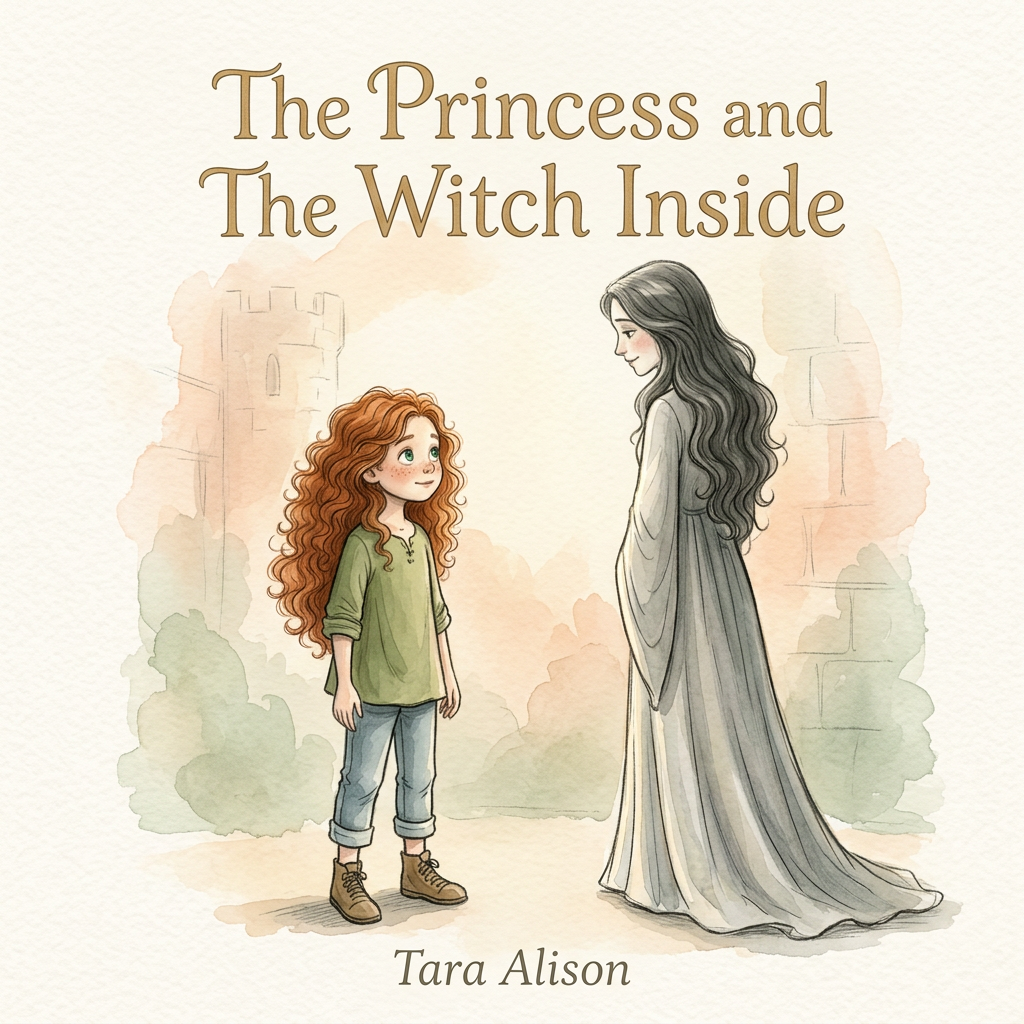 The Princess and the Witch Inside
Esme is loved, but a fast protective part keeps rushing in before she gets a turn. A quiet visitor helps her meet the witch inside — not as an enemy, but as a worried protector — and find her way back to the people she wanted to be with all along.
Read the story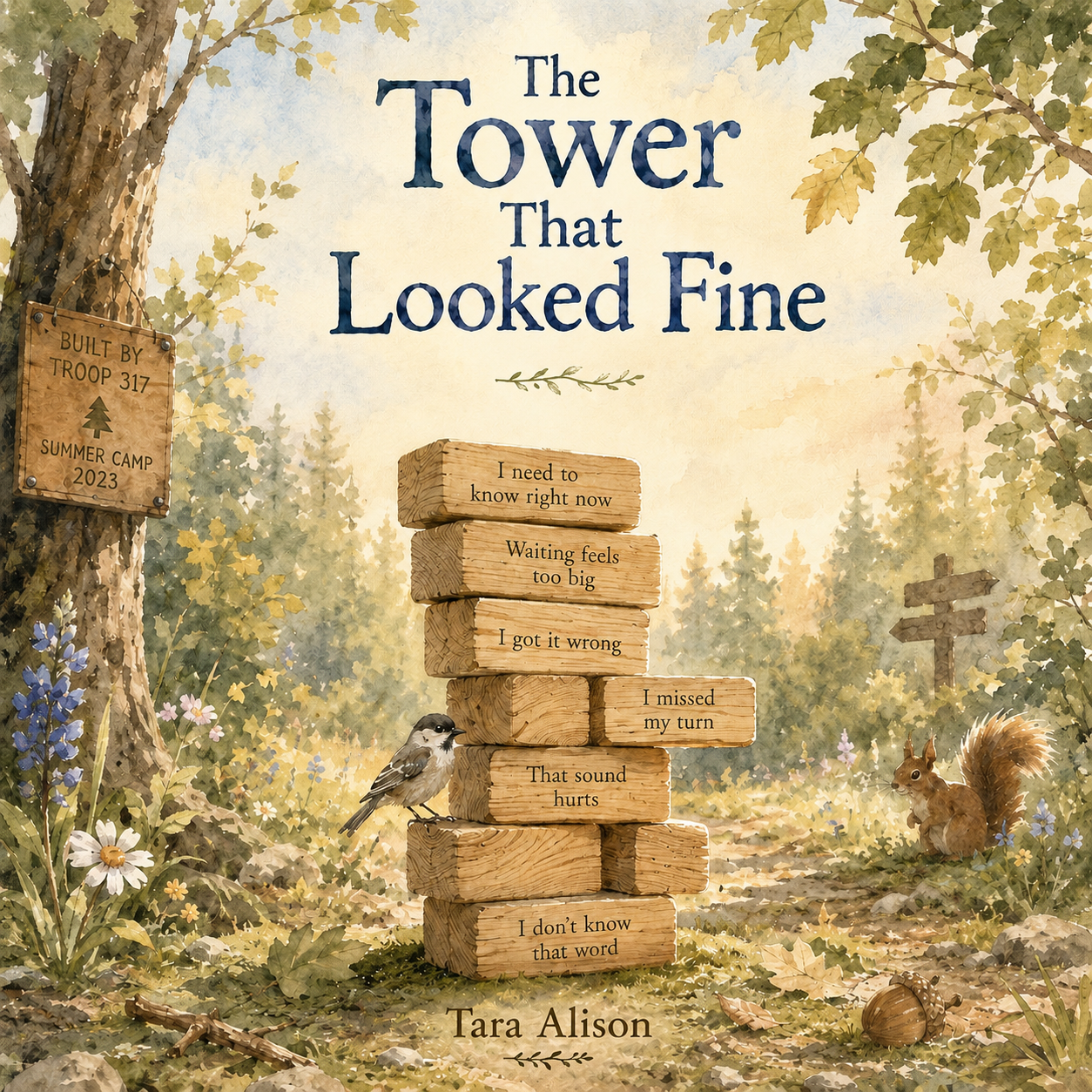 The Tower That Looked Fine
A tower in a quiet clearing tries to stay steady through every small thing nobody else seems to notice — until one tiny breath of wind causes her to fall, and a gentle hand begins to gather the blocks back.
Read the story
If today was one of those days
A few more from the library, free to read.
Researched and drafted with AI assistance, reviewed before publication. Editorial standards