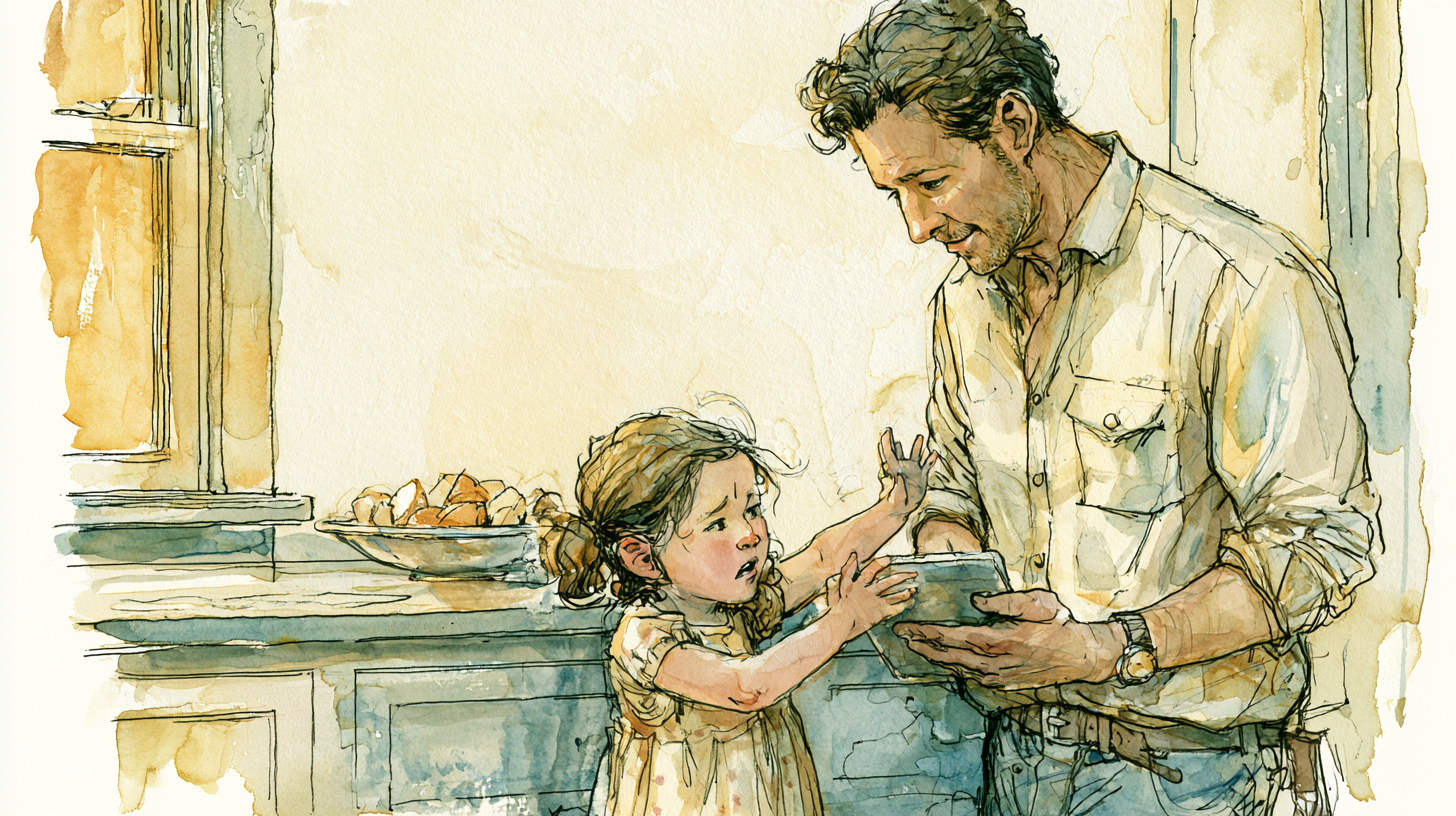
She used to play with anything. Blocks, a stuffed rabbit, a wooden spoon out of the drawer, the box the shoes came in. Now you suggest something and the answer is no before you finish the sentence. Say the word show, or reach for your phone, and she is suddenly right there.
The worry underneath the question is usually not about toys. It is: have I broken something, and can I get it back.
Start with the honest answer
You have not broken her. What you are seeing is a comparison problem, not damage.
A screen answers instantly. Touch it and something happens. Look away and it keeps going without you. It never needs you to invent the next part, it never sits there requiring an idea, and it never gets stuck. Blocks do all of those things. They wait. They need her to supply the story. Next to a screen, that gap is enormous, and a two year old feels it immediately.
So the toys did not become boring. The screen moved the bar, and everything else is now being measured against it. That distinction matters because a bar can move back and damage cannot.
The screen competes even when nobody is watching it
This is the part most parents have never been told, and it changes what you do with your afternoons.
In a study of twelve, twenty four, and thirty six month olds playing with toys for an hour, researchers turned an adult game show on in the background for half the time. The children barely watched it. They glanced over for a few seconds at a stretch, less than once a minute. Their play still fell apart. Play episodes got shorter and focused attention dropped, and the effect was strongest with toys that were new to them.
Read that again with your own living room in mind. The television does not have to be hers, and she does not have to be watching it, for it to be pulling at her while she plays. If a screen is on somewhere in the room during play time, the play you are trying to protect is already being taxed.
Some of this is not about screens at all
There is a second thing happening at this age, and confusing the two will send you chasing the wrong problem.
Somewhere between about eighteen months and three years, most children discover no. Not as rudeness, as a milestone. She is working out that she is a separate person whose preferences are her own, and the fastest way to prove that is to decline whatever the large person suggests. The American Academy of Pediatrics describes this as normal and necessary, and it peaks for a lot of families right around two.
Which means a good portion of the noes you are collecting may have nothing to do with the blocks. They are about who chose the blocks.
There is a clean test. Put a few things out on the floor and say nothing at all. Sit down and start playing with one of them yourself. If she wanders over within a couple of minutes, the toys are fine and she was turning down the invitation, not the object. That is useful information and it takes ten minutes to get.
The question is not how many minutes she had. It is what those minutes replaced.
What the current guidance actually says
In January 2026 the American Academy of Pediatrics rewrote its media guidance for the first time in a decade, and the change is helpful here. The clock stopped being the main instrument. What replaced it is quality, context, and displacement: what is on the screen, who is with her while she watches, and what the screen is pushing out of her day.
The AAP is direct about the design side too. Autoplay, endless feeds, and built-in rewards are engineered to hold attention, and they crowd out sleep, play, and family time. She is not weak-willed. She is two, and she is up against products built by people whose job is to hold her.
The specific numbers still stand for her age. Before eighteen months, screens are discouraged apart from video chat. From two to five, roughly an hour a day of high quality content, watched with you rather than handed over.
While you're here, take the guide
What's Underneath is free: the three body-state triggers under most meltdowns, what to say in the minute before it tips over, and how to reset afterward.

You'll get the guide instantly, plus five free articles in your inbox every week. Real challenges (meltdowns, school mornings, picky eating, big feelings) and how to actually handle them. Unsubscribe anytime.
What actually brings play back
Make the window predictable instead of negotiable. Same time, same length, every day, decided in advance. When screen time is something she can campaign for in the moment, campaigning becomes the most interesting activity in the house, and it will beat the blocks every time. A boring, fixed slot takes the game out of it.
Protect the hour after, not just the hour of. The stretch right after a screen goes off is the worst possible moment to expect independent play, and it is when most parents test it and conclude the worst. Put the window somewhere the landing is soft, and put your best play time somewhere far from it.
Start the play, do not offer it. Offering hands her a decision, and at this age a decision is an opportunity to say no. Sitting on the floor and building something yourself hands her nothing to refuse. If getting from one thing to the next is the whole battle at your house, But I Said "Okay" is a story about a child who means it every time and still cannot leave the thing he is in.
Turn the background off during play. Given what the research shows about attention, this is the cheapest change on the list and probably the one with the largest return.
Let the empty stretch be empty. The flat, restless twenty minutes after the screen goes away is not a sign the plan is failing. It is the part where nothing is happening yet, and it comes before play comes back rather than instead of it.
Watch it together when it is on. Co-viewing is the single thing the AAP keeps returning to for this age, and a shared family device makes it far easier than a tablet that belongs to her.
How long this takes
Nobody can give you a number, and anyone who does is making it up. There is no research establishing a recovery timeline for toddler play after screens.
What parents consistently describe is a rough front end followed by a gradual return, with the first days being the hardest and the change showing up as longer stretches rather than sudden enthusiasm. So do not measure this in whether she seemed happy today. Measure it in how long a single play episode lasts this week compared to last week. That number moves before her mood does.
When to bring it to your pediatrician
Screens are the obvious suspect, so they can hide other things. If alongside the play change you are noticing few words, little pointing or showing you things, no pretend play, or a general narrowing of what she is interested in, mention all of it at the next visit rather than only the screen part. Those are questions for a professional who can see her, and they are much better asked early than watched for another six months.
How long she played before she drifted, what was on in the room, and what came right before the flat stretch: note it in LightMap as it happens, and in a few weeks you are reading a trend instead of guessing.
Sources: Schmidt, Pempek, Kirkorian, Lund and Anderson, "The Effects of Background Television on the Toy Play Behavior of Very Young Children," Child Development 79(4), 2008; Munzer et al., "Digital Ecosystems, Children, and Adolescents," policy statement of the American Academy of Pediatrics Council on Communications and Media, Pediatrics 157(2), 2026; American Academy of Pediatrics, "Helping Kids Thrive in a Digital World: AAP Policy Explained," HealthyChildren.org; American Academy of Pediatrics, "Emotional Development: 2 Year Olds," HealthyChildren.org.
For education and reflection, not medical advice. Our terms
See what's underneath
Understand the why, not just the what
LightMap reads your hard days together and gives you answers. Start with one moment today.
Start with 3 moments Not sure where to start? Ask me.Message Tara on WhatsApp. It really is me, I read everything and will personally respond.Click here to message Tara →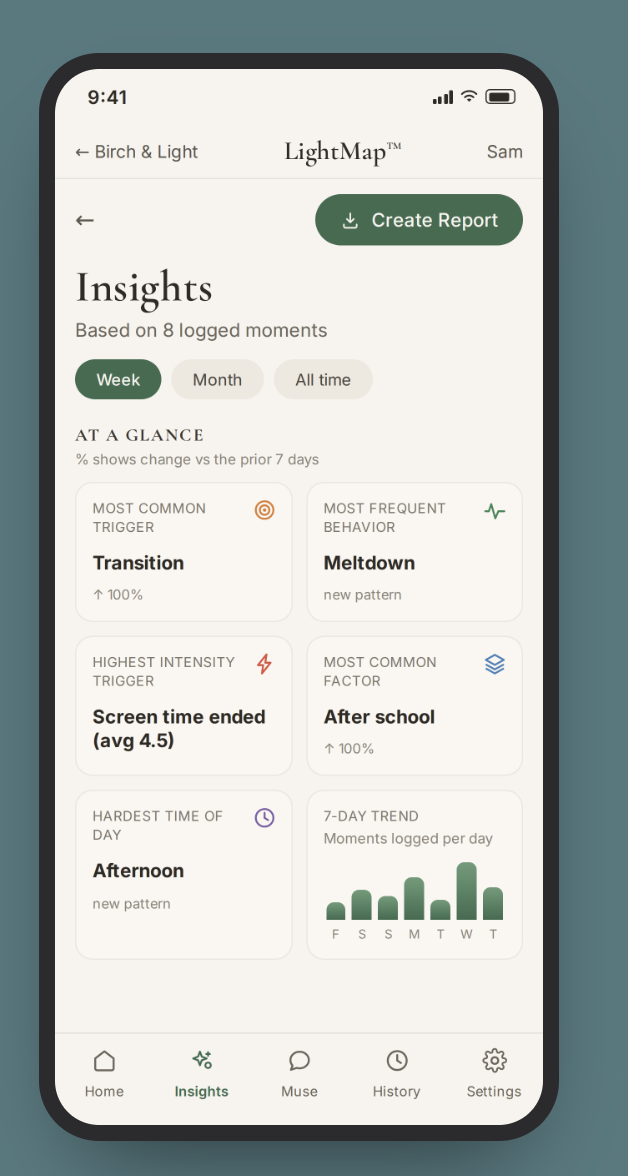

Part of the award-winning Birch & Light Method, honored with the Mom's Choice Gold Award for excellence in family resources.
A story to read together
Sometimes the easiest way in is a story you read side by side.
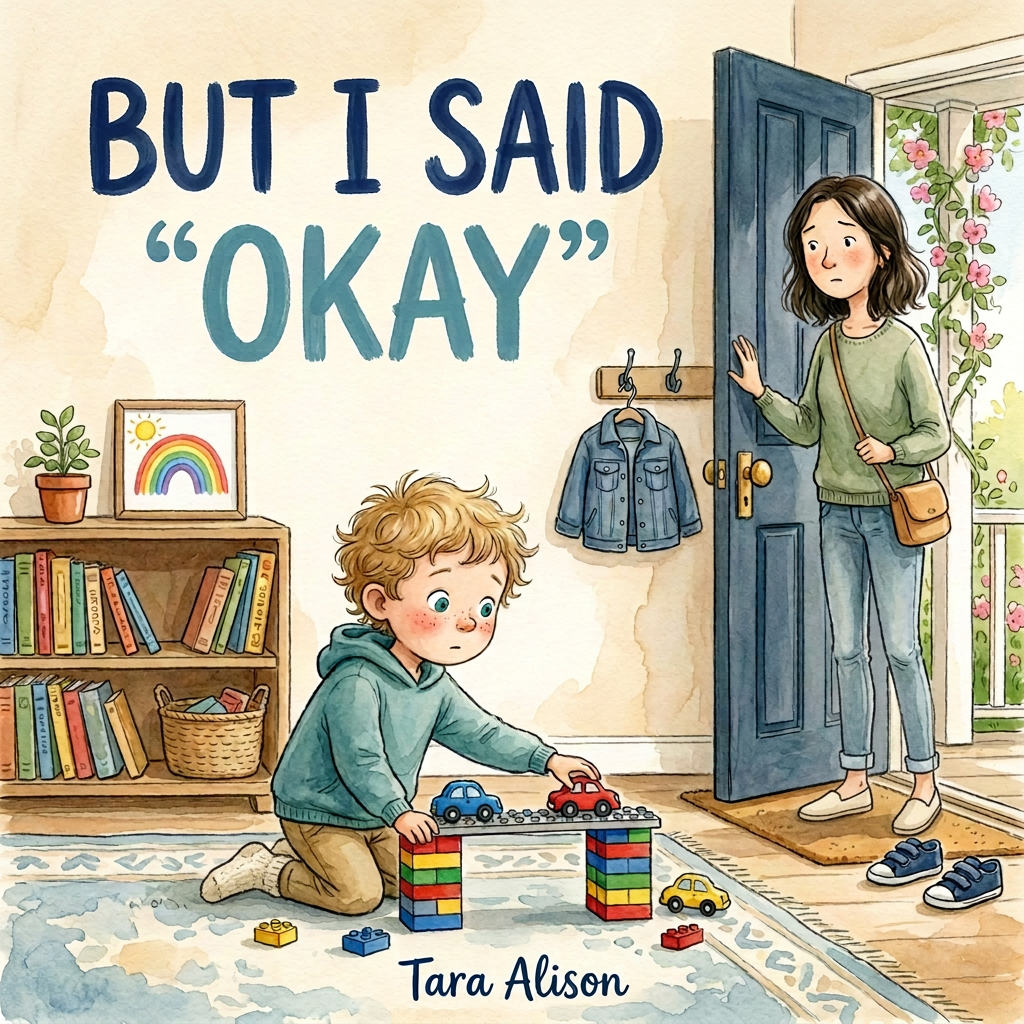 But I Said “Okay”
Owen always says okay. He means it every time. But his attention is still inside the bridge, the dragon, the cave, the music — until Mom realizes that helping him leave one thing matters more than asking him to start the next.
Read the story When Axel's Engine Stayed On
After a big, exciting day, Axel's body is tired but his engine won't quiet down. A gentle story about overstimulated kids who can't settle — and the calm grown-ups who help them.
Read the story
If today was one of those days
A few more from the library, free to read.
Researched and drafted with AI assistance, reviewed before publication. Editorial standards