
If you spend time in PANDAS or PANS parent communities, you have seen the word mold more times than you can count. Mold testing, mold remediation, mycotoxin panels, binders, glutathione, detox protocols with more steps than a school morning. Some parents credit these protocols with getting their child back. Others are three months and several thousand dollars in, fighting a six-year-old over sprays and capsules, wondering if any of it is doing anything.
If that second sentence stung, this article is for you. Not to tell you the protocol is nonsense, and not to tell you it's the answer — but to lay out, as honestly as possible, what's actually established, where the evidence gets thin, and how to evaluate any protocol your family is on. Because you deserve to make these decisions with a clear map, and this corner of the internet rarely offers one.
Why mold keeps coming up in PANDAS circles
It isn't random. PANS and PANDAS are defined by sudden, dramatic symptom flares — and by remissions that can feel just as sudden. When a child's symptoms surge and recede without obvious cause, parents reasonably start hunting for hidden triggers. Infections are the classic candidate, but environment comes next: the house, the school, the water damage behind the bathroom wall.
Add to that a hard truth: many families arrive at mold protocols after mainstream medicine shrugged at them. PANS itself sits in contested territory — diagnostic criteria are still evolving, many pediatricians are skeptical, and parents often feel dismissed. Integrative and functional practitioners, whatever else is true, tend to take these families seriously, run tests, and offer a plan. When you've been told "it's just anxiety" for a year, a practitioner with a binder full of answers is a lifeline. That context matters for everything that follows.
What's actually established about mold and health
Real, well-supported medicine first. Mold exposure genuinely affects some children: mold allergy is well documented, and living in damp, moldy housing is associated with respiratory problems and asthma. If a child has allergic symptoms and there's visible mold or water damage in the home, addressing the moisture problem is standard, uncontroversial advice. Fixing a wet building is never wasted effort.
Where things change is the leap from "mold can cause allergy and respiratory irritation" to "mold toxins circulating in my child's body are driving their neuropsychiatric symptoms and must be detoxed out." That second claim — often called mold toxicity or mycotoxin illness — is not a diagnosis mainstream medicine recognizes. The urine mycotoxin tests used to support it are not validated for diagnosing illness; healthy people can test positive simply from ordinary dietary exposure. This doesn't prove every practitioner using them is wrong about every child. It means the confident certainty these protocols are often sold with is not matched by the underlying science.
What glutathione actually is
Glutathione is an antioxidant your child's body makes on its own, constantly — it's central to how the liver processes all kinds of compounds. It is not an exotic substance. In detox protocols it's usually given as a liposomal liquid or spray on the theory that supplementing it helps the body clear mycotoxins faster.
The honest evidence picture: the theory is plausible-sounding, the clinical support is thin. Whether supplemental glutathione meaningfully changes anything for a child's neuropsychiatric symptoms has simply not been demonstrated. It is generally considered low-risk at typical doses, which is part of why it's so widely recommended — but low-risk is not the same as effective, and "it can't hurt" quietly ignores three real costs: money, the daily burden on the child of one more thing they must take, and the possibility of interaction. That last one deserves emphasis in this population specifically. Detox protocols rarely stop at glutathione; binders in particular can reduce absorption of medications taken near the same time, which matters a great deal if your child is on antibiotics, an SSRI, or steroids for their PANS. Give the prescribing physician a complete written list of every supplement, dose, and timing, not a general mention that your child "takes some supplements," and ask directly whether anything needs to be spaced apart from their medications.
While you're here, take the guide
What's Underneath is free: the three body-state triggers under most meltdowns, what to say in the minute before it tips over, and how to reset afterward.
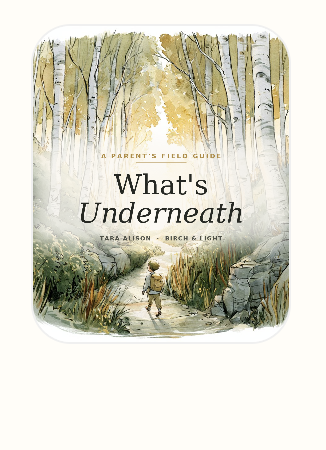
You'll get the guide instantly, plus five free articles in your inbox every week. Real challenges (meltdowns, school mornings, picky eating, big feelings) and how to actually handle them. Unsubscribe anytime.
How to evaluate any protocol — this one or the next one
You don't need a medical degree to evaluate a protocol. You need four questions, asked before or even mid-course:
- What specifically should improve, and by when? A protocol that can't name its own success criteria can never fail — which means it can also never succeed. Ask the practitioner to commit: which symptoms, how much, by what date.
- What does it cost — in money and in the child? Add up the monthly supplement spend honestly. Then add the other ledger: how many daily battles, how much of the parent-child relationship is being spent on administration.
- What's the exit plan? If the target date arrives without the named improvement, what happens? A good practitioner has an answer. "Increase the dose and extend" as the only answer, indefinitely, is a warning sign in any treatment, conventional or alternative.
- One change at a time. Protocols often start five things at once, which makes it impossible to know what helped, what did nothing, and what caused the new symptom. Slower is smarter.
When the treatment becomes its own stressor
Here is the part written for the parent mid-battle over spray number two of three.
Stress is one of the most reliable symptom amplifiers in PANS and PANDAS — nearly everyone on every side of these debates agrees on that. So a daily forced-administration struggle with a distressed child is not a neutral delivery problem. It is itself an input, and possibly a bigger one than the substance being administered. A protocol that generates two meltdowns a day has to clear a higher bar of proven benefit than one that rides along invisibly, because the meltdowns are part of the dose.
A child who melts down over the third spray isn't being non-compliant — a nervous system in fight-or-flight can't do anything else, and no protocol works well on a body stuck in that state. If compliance has become a war, that isn't a parenting failure to push through. It's data. Bring it to the practitioner as exactly that: "the administration is causing daily distress — does the expected benefit justify it, and is there an alternative?" A practitioner who treats that question as non-compliance rather than information is telling you something important.
Where LightMap helps
Every hard question above collapses into one: is this protocol earning its keep? Memory can't answer that — not with symptoms that naturally wax and wane, and not while you're exhausted. A tracked baseline before starting, and a simple daily record after — symptoms, intensity, battles, anything new — turns "I think she might be a little better?" into an actual answer at the eight-week mark. It also turns your follow-up appointments into something the practitioner has to engage with specifically, rather than in vibes.
Every behavior is a clue.
If your child is on a protocol and you honestly can't tell whether it's working, LightMap can hold the record for you. Explore LightMap at birchandlight.com/lightmap.
Frequently asked questions
Is mold detox for PANDAS proven to work?
No. Mold allergy and the health effects of damp housing are well established, and remediating a moldy home is always worthwhile. But "mold toxicity" as a systemic illness treated by supplement-based detox is not a recognized diagnosis, and the protocols have not been demonstrated to improve neuropsychiatric symptoms in studies. Individual families report improvement; with symptoms that naturally flare and remit, individual reports can't separate the protocol from the tide going out on its own.
Is glutathione harmful for kids?
At typical supplemental doses it's generally considered low-risk, which is a question distinct from whether it helps. Any supplement given to a child belongs on their clinician's radar — including the pediatrician, not only the prescribing practitioner. This matters most when a child is also on prescribed medication: binders used alongside glutathione in many protocols can reduce absorption of drugs taken near the same time, so if your child takes antibiotics, an SSRI, or steroids, give the prescriber a written list with doses and timing and ask what needs to be spaced apart.
My child fights the protocol every single day. Do I push through?
Treat the daily battle as information, not an obstacle. Stress reliably worsens these conditions, so a treatment that generates sustained distress is adding an input at the same time it's supposed to be removing one. Raise it directly with the practitioner and ask whether the expected benefit justifies the struggle. You're allowed to weigh your child's daily experience as part of the math.
How long should we give a protocol before deciding?
Decide the checkpoint before you start — or set one today if you didn't. Ask the practitioner to name the expected improvement and the date, track daily from a baseline, and honor the checkpoint when it comes. Symptoms that improved during the window may have improved because of the protocol or alongside it; a tracked record across multiple flares is the closest a family can get to telling the difference.
Sources: American College of Medical Toxicology, American College of Occupational and Environmental Medicine, CDC/NIOSH Morbidity and Mortality Weekly Report.
For education and reflection, not medical advice. Our terms
Before the next flare
Bring your doctor a timeline, not a memory
LightMap reads your hard days together and gives you answers. Start with one moment today.
Start with 3 moments Not sure where to start? Ask me.Message Tara on WhatsApp. It really is me, I read everything and will personally respond.Click here to message Tara →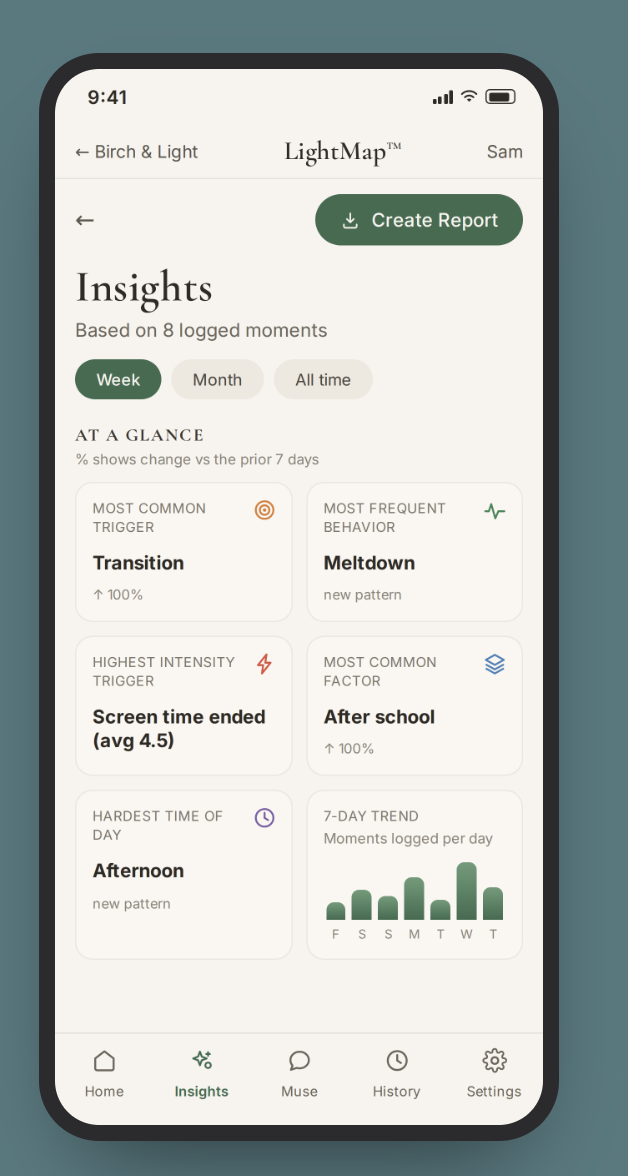
Part of the award-winning Birch & Light Method, honored with the Mom's Choice Gold Award for excellence in family resources.
A story to read together
Sometimes the easiest way in is a story you read side by side.
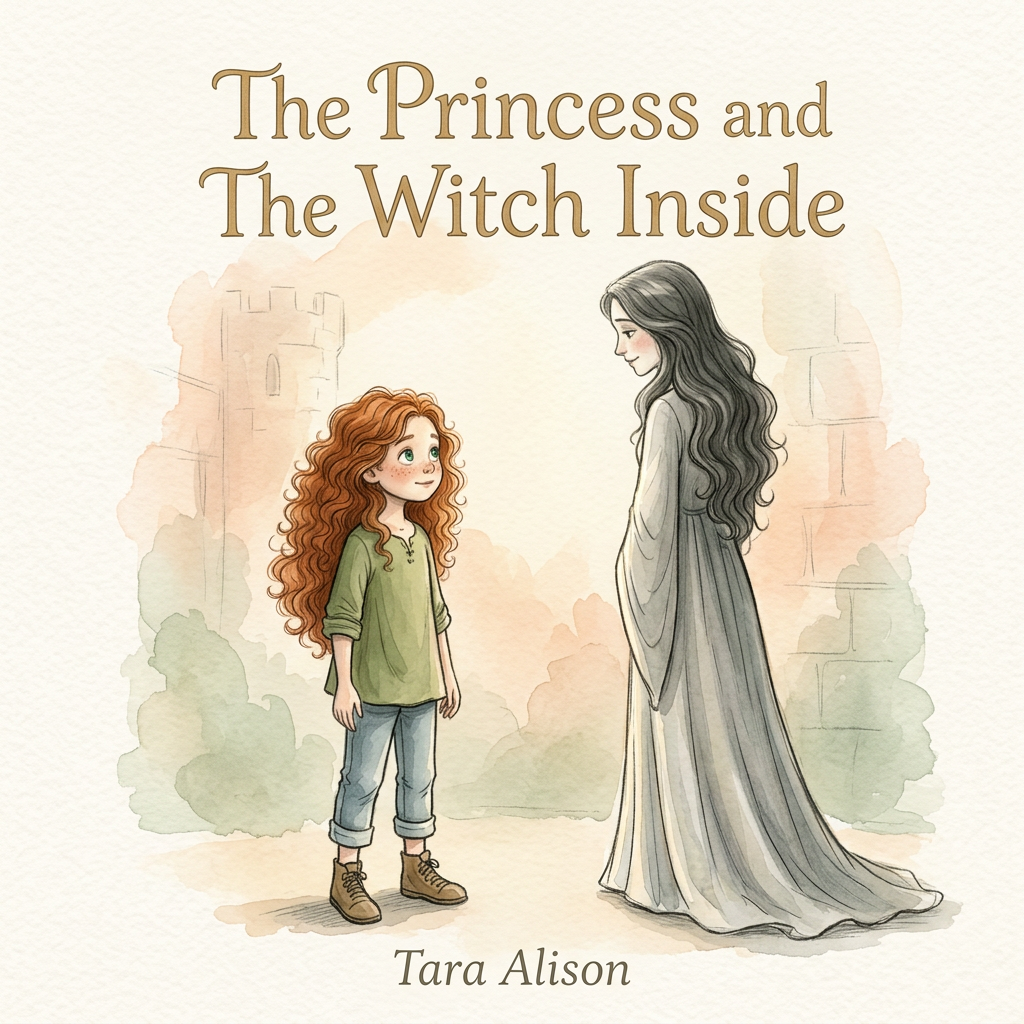 The Princess and the Witch Inside
Esme is loved, but a fast protective part keeps rushing in before she gets a turn. A quiet visitor helps her meet the witch inside — not as an enemy, but as a worried protector — and find her way back to the people she wanted to be with all along.
Read the story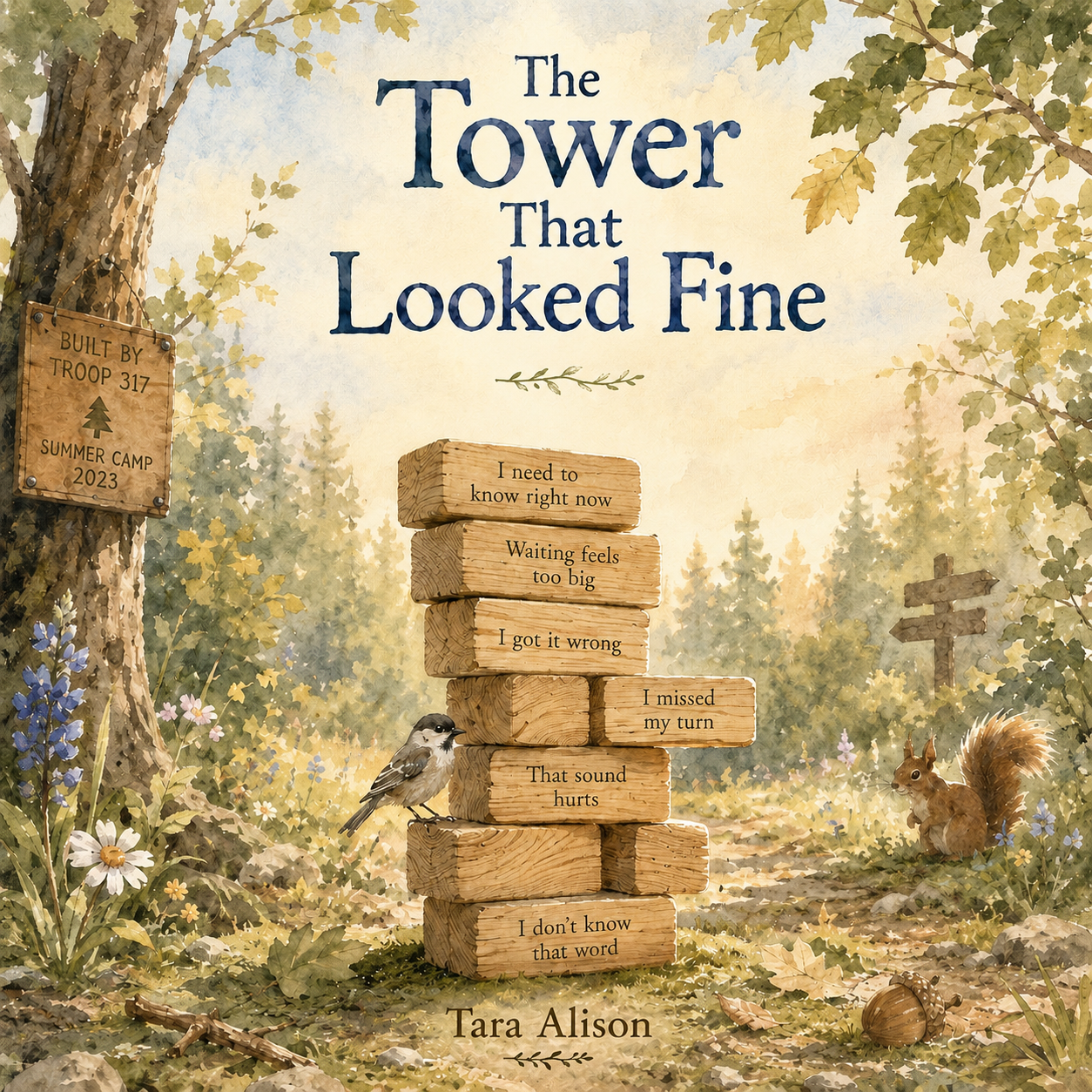 The Tower That Looked Fine
A tower in a quiet clearing tries to stay steady through every small thing nobody else seems to notice — until one tiny breath of wind causes her to fall, and a gentle hand begins to gather the blocks back.
Read the story
If today was one of those days
A few more from the library, free to read.
Researched and drafted with AI assistance, reviewed before publication. Editorial standards