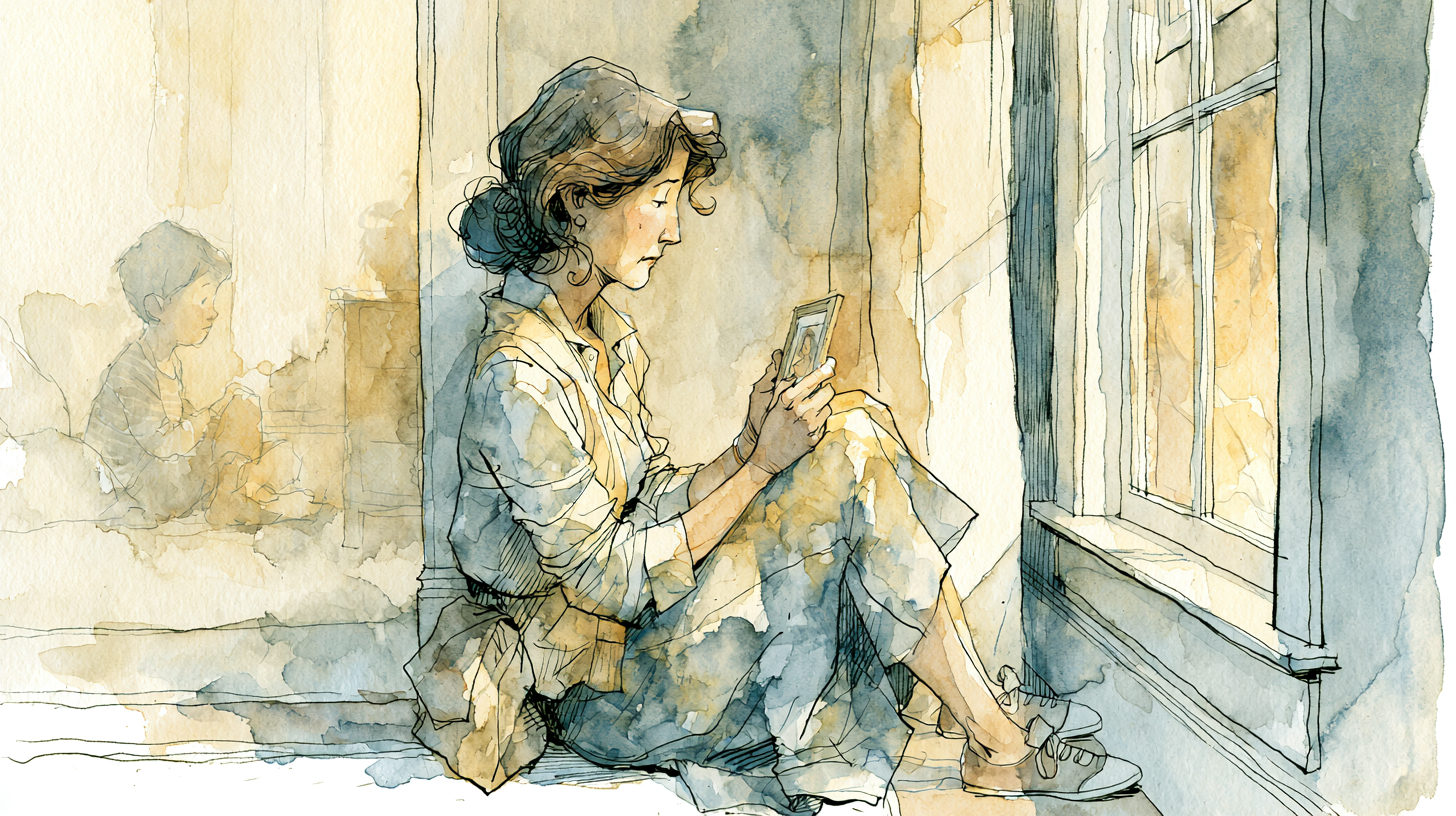
There is a photo on your phone from a few years ago. The kid in it is laughing with their whole face, mid-story, leaning into you. And some nights you scroll to that photo and feel something you would never say at a school pickup: I miss that child. I grieve them. I don''t recognize the one who lives here now.
Then the guilt arrives on schedule, because what kind of parent grieves a child who is alive and down the hall?
A normal one. Let''s start there.
This grief is real, and it is allowed
Something true was lost. The easy laughter, the open door, the child who told you things, the version of daily life where loving them felt effortless. Whether it was taken by adolescence, by anxiety, by illness, by a diagnosis, by a crisis, or by a change you cannot name, the loss is genuine, and grief is the correct response to genuine loss. Parents are just never issued permission for it, because the child is still here, so the grief goes underground, where it ferments into things that look worse: resentment, numbness, the flinch of disappointment your child can absolutely feel.
Naming it, I am grieving, is not a betrayal of the child down the hall. It is the beginning of being able to see them.
What the grief can quietly do
Unexamined, this grief has a dangerous habit: it turns the remembered child into a standard. Every dinner is silently scored against dinners from the photo years. The present kid, who is already having a harder time than the photo kid ever did, senses that they are being compared to someone, and slowly works out the devastating answer: to themselves, and they are losing. Kids in a hard season can survive almost anything except the suspicion that their parent prefers a previous version of them.
So the work is not to stop missing what was. It is to stop letting the missing stand between you and what is.
While you're here, take the guide
What's Underneath is free: the three body-state triggers under most meltdowns, what to say in the minute before it tips over, and how to reset afterward.

You'll get the guide instantly, plus five free articles in your inbox every week. Real challenges (meltdowns, school mornings, picky eating, big feelings) and how to actually handle them. Unsubscribe anytime.
What helps
Grieve on purpose, away from them. Say it out loud to someone safe, a partner, a friend, a therapist, a journal: what exactly you miss, what exactly was lost. Grief processed deliberately stops leaking sideways. This is not wallowing. It is maintenance.
Check the story you''re telling about the change. "I lost my sweet child" is one story. "My child is in a hard chapter" is another. Sometimes the change is development doing what it does, the withdrawal of adolescence is separation, not disappearance, and sometimes it is a signal that something needs attention: anxiety, depression, school pain, something that happened. Grieving is allowed, but grieving is not a substitute for asking what changed, and when, and why. If the shift was sudden or steep, that question may belong in a pediatrician''s office.
Look for the through-lines. The child in the photo is not gone; they are renovated. The humor shows up differently, the tenderness went underground but surfaces around the dog, the storytelling moved to a friend group. Actively hunting for continuity, where does the kid I knew still live in this kid?, retrains your attention, and attention is the thing your child can feel.
Let the current version be met fresh. Somewhere in the house is a person you have partially stopped studying, because you thought you knew them. What do they love right now? What are they afraid of right now? Curiosity about who they are becoming is the antidote to mourning who they were, and kids can tell when a parent has started taking a genuine interest in the current model.
Say the missing thing to them only in its safe form. Not "I miss how you used to be," which lands as you are a disappointment. But "I miss you, want to get food?" is different: it says I want your company, present tense. The first sentence compares. The second invites.
Watch your own water line. Grief for a child''s former self sometimes gets tangled with a parent''s own depletion, marriage strain, or depression, and the photo becomes a place to put a sadness that is actually broader. If the heaviness is constant, that is worth care in its own right, for your sake, and because the parent your child needs is one who is not drowning quietly.
One more thing, said gently: some parents get the old laughter back, changed, older, on new terms. Many discover something better than restoration, a real relationship with the person their child actually became, which turns out to be deeper than the one in the photo, because it survived something. Neither of those futures is reachable from the photo. They both start with the kid down the hall, as they are, tonight.
If part of you is trying to work out whether this is a phase, a pattern, or something that needs help, LightMap can hold what memory distorts: the hard days and the surprisingly good ones, logged as they happen, so you''re seeing your actual child across actual weeks, not the photo versus the worst night.
For your child: Max and the Missing Charm is about real grief over a small lost thing that adults might not think matters.
For education and reflection, not medical advice. Our terms
See what's underneath
Stop guessing what set it off
LightMap reads your hard days together and gives you answers. Start with one moment today.
Start with 3 moments Not sure where to start? Ask me.Message Tara on WhatsApp. It really is me, I read everything and will personally respond.Click here to message Tara →

Part of the award-winning Birch & Light Method, honored with the Mom's Choice Gold Award for excellence in family resources.
A story to read together
Sometimes the easiest way in is a story you read side by side.
 The Tower That Looked Fine
A tower in a quiet clearing tries to stay steady through every small thing nobody else seems to notice — until one tiny breath of wind causes her to fall, and a gentle hand begins to gather the blocks back.
Read the story The Boy at the Edge
A boy finds calm by watching the world move from a window. When his stillness is mistaken for defiance, the moment escalates — and he learns that being calm doesn’t always protect you from being told no.
Read the story
If today was one of those days
A few more from the library, free to read.
Researched and drafted with AI assistance, reviewed before publication. Editorial standards