Feeling like you are failing is common when your child is hard to parent, and the feeling is a poor measure of how you are doing. It shows up when you are depleted, it compares your hardest days to the easy days of other families, and it comes from caring about something you cannot fully control.
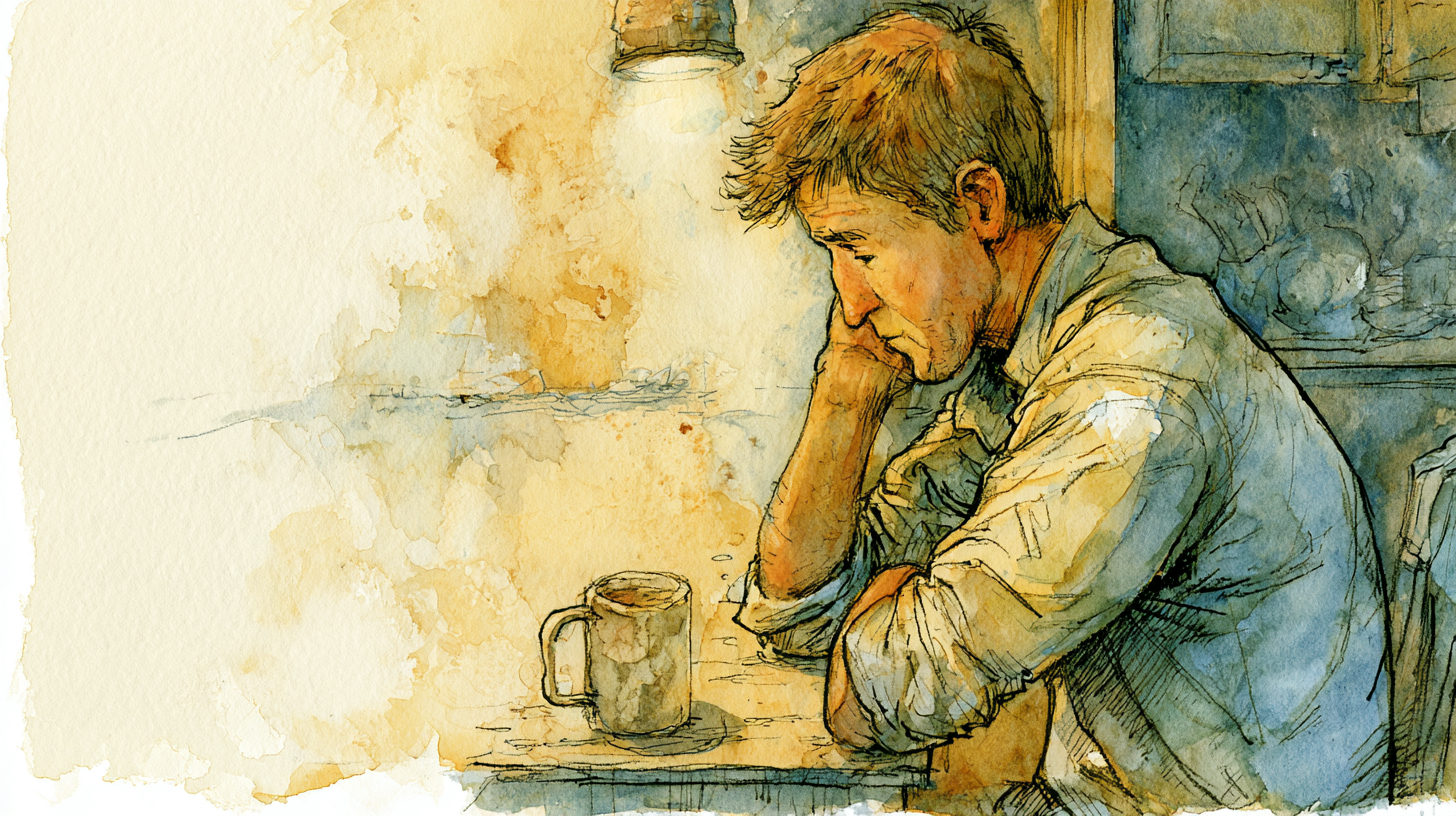
It usually arrives at night. The day ended in yelling again, or tears, or a door slammed by them or by you, and now you are lying in the dark running the footage back and reaching the verdict: I am failing at this. Other people can do this. I can't.
If you searched that sentence tonight, this is written for you, and the first thing it wants to say is not "you're doing great!", because you would not believe it and it would not help. The first thing worth saying is this: the feeling of failing and the fact of failing are two different measurements, and they come apart most dramatically in exactly the kind of parenting you are doing.
Why do parents of harder kids feel like worse parents?
The failure feeling is mostly built from comparison, and the comparison is rigged three ways.
First, you are grading on visible results. Parenting an easygoing child produces calm mornings and pleasant restaurant dinners, results that show. Parenting a child with a sensitive, intense, anxious, or neurodivergent nervous system means enormous skill can go into a day that still ends in a meltdown. The effort is invisible; only the explosion shows. You are comparing your hardest-mode outcomes to other people's easy-mode outcomes and concluding the difference is your competence.
Second, you are comparing your inside to everyone else's outside. You have full access to your own worst moments, the tone you regret, the night you hid in the bathroom, and access only to other families' pickup-line performances and holiday posts. Every parent you envy is also lying awake some night, running footage.
Third, the feeling spikes exactly when it is least accurate: when you are depleted. "I'm failing" at 11pm after a brutal day is not an assessment. It is a symptom, of exhaustion doing the math. Notice that the verdict never arrives on the good afternoons. A measurement that only appears when the instrument is drained is telling you about the instrument.
What the feeling actually is
Here is the reframe that holds up: the failure feeling is the sensation of caring enormously about something you cannot fully control. Parents who are actually failing, checked out, indifferent, phoning it in, do not lie awake feeling like failures. Indifference sleeps fine. The anguish you feel is not evidence of your inadequacy; it is evidence of your investment colliding with a genuinely hard situation. That does not make the days easier. It does relocate the problem: you are not a bad parent having a normal time. You are a normal parent having a hard time, and those need completely different remedies.
While you're here, take the guide
What's Underneath is free: the three body-state triggers under most meltdowns, what to say in the minute before it tips over, and how to reset afterward.

You'll get the guide instantly, plus five free articles in your inbox every week. Real challenges (meltdowns, school mornings, picky eating, big feelings) and how to actually handle them. Unsubscribe anytime.
What deserves my attention instead?
Separate the child's struggles from your report card. The most corrosive equation in your head is my child is struggling, therefore I failed. Children struggle for a hundred reasons, wiring, anxiety, school mismatch, developmental storms, none of which are graded assignments you flunked. You can be a good parent of a struggling child. Most good parents of struggling children spend years not knowing that is a category.
Repair beats perfection, and it is the actual skill. You will lose your temper again. The research on this is genuinely comforting: what shapes kids is not parents who never rupture, but parents who reliably repair, who come back and say "I yelled, that wasn't okay, you didn't deserve that." A repaired rupture teaches more than a conflict-free week: that relationships survive hard moments, that adults take responsibility, that love holds. If you repair, you are not failing. You are modeling the single most transferable relationship skill there is.
Ask whether you are under-resourced, not under-qualified. Much of what registers as "failing" is one adult (or two drowning ones) doing a job sized for a village: no breaks, no sleep, no backup, sometimes no diagnosis yet for a kid who clearly needs understanding. The fix for under-resourced is not self-improvement. It is resources: help with the kid, information about the kid, support for you, a therapist, a parent group, a grandparent shift, an evaluation that finally explains the pattern. Asking is not the failure. It is the competence.
Watch where the feeling points. Occasionally the failure feeling contains a real signal worth extracting, not "I am a failure" but "the yelling is happening too often and I want help with it," or "I keep avoiding them and I don't know why." That specific, actionable kernel deserves action, a counselor, a change, a conversation. Extract the kernel; discard the verdict. And if the feeling has become constant, if it travels with hopelessness, numbness, or dread of your own child, that is depletion deep enough to deserve its own care, not more self-blame. Parents are allowed to need help that is about them.
The measurement your child is using
Your child is not grading the version of you that you prosecute at 11pm. Their measurement is closer to: Does someone keep showing up? When it breaks, does someone come back to fix it? Am I loved by someone who stays? By that rubric, the parent lying awake in the dark, wondering how to do better by a hard-to-parent kid, is usually scoring far higher than they will ever believe. You are still in the room. That was always most of the job.
One practical note: the 11pm verdict is built from memory, and memory keeps only the wreckage. Parents who log actual days in LightMap are routinely surprised to find the week contained more calm, more repair, and more good hours than the feeling reported. Sometimes the kindest thing you can show a tired parent is their own data.
For education and reflection, not medical advice. Our terms
See what's underneath
Stop guessing what set it off
LightMap reads your hard days together and gives you answers. Start with one moment today.
Start with 3 moments Not sure where to start? Ask me.Message Tara on WhatsApp. It really is me, I read everything and will personally respond.Click here to message Tara →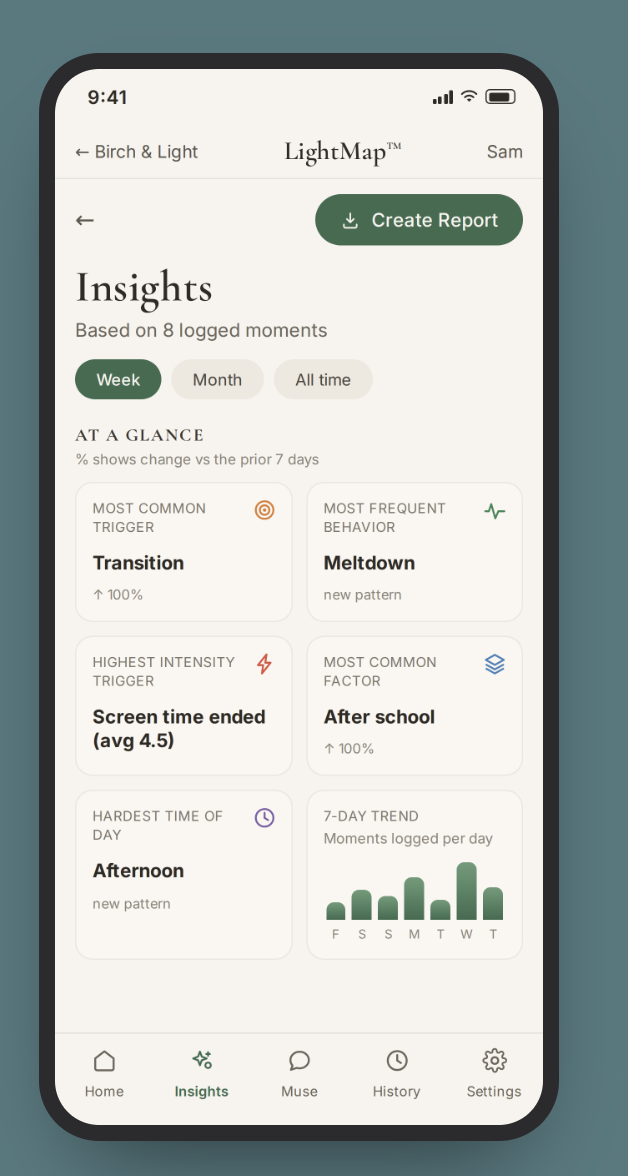

Part of the award-winning Birch & Light Method, honored with the Mom's Choice Gold Award for excellence in family resources.
A story to read together
Sometimes the easiest way in is a story you read side by side.
 June and the Window That Took Time
When June receives special Valentine’s Day window clings from Grandma, she learns that some things take time, help, and persistence.
Read the story Oliver Octopus Used Arm Number Three
Oliver always drew with Arm Number Three. When his teacher tells him to use Arm Number One instead, something hard slowly grows into something strong.
Read the story
If today was one of those days
A few more from the library, free to read.
Researched and drafted with AI assistance, reviewed before publication. Editorial standards