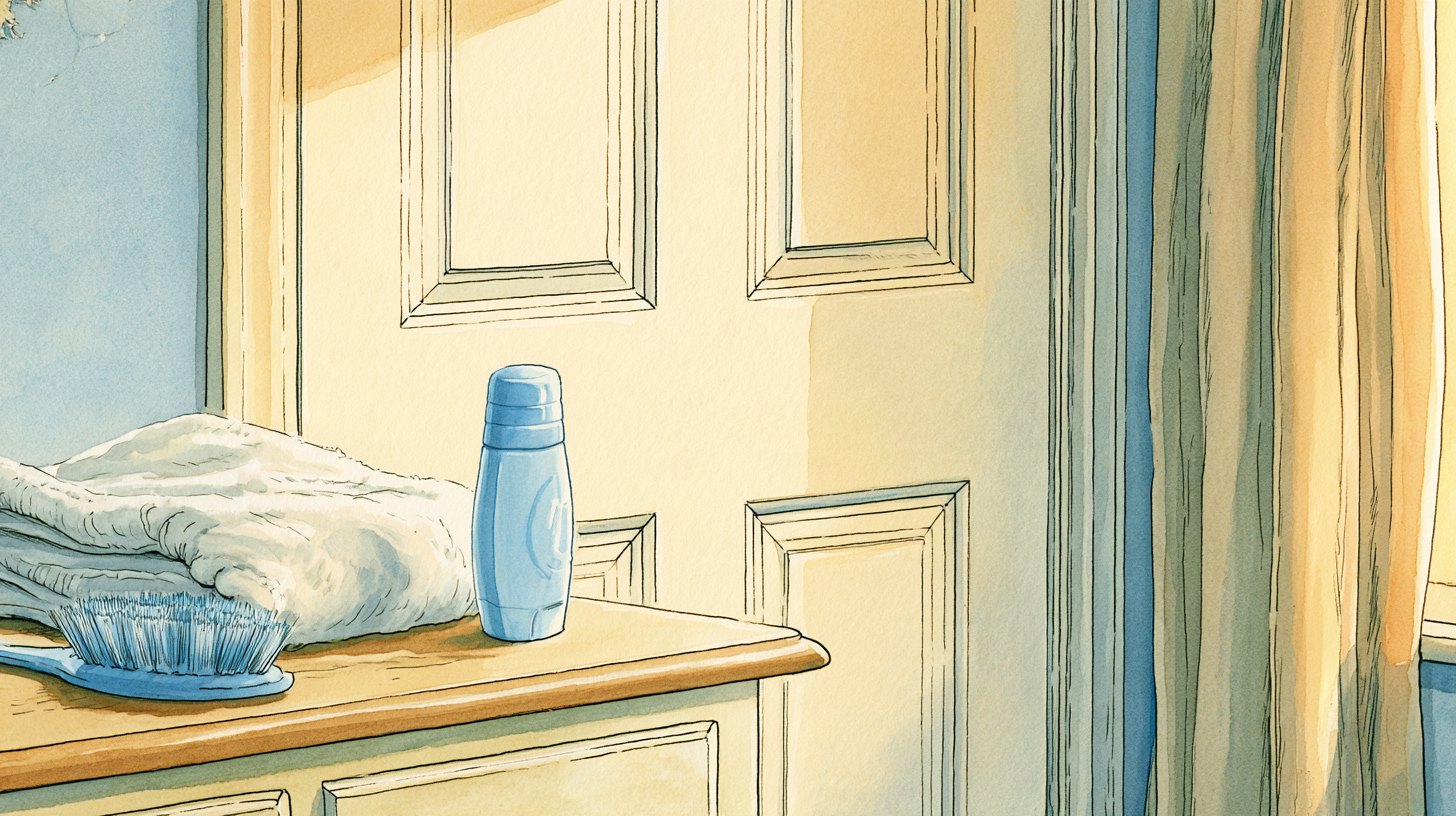
He has not showered in four days. You have asked eleven times. The deodorant you bought is still in the packet on his dresser. And you are starting to understand that other kids are noticing, because he came home yesterday and went straight to his room.
Meanwhile every adult in your life has the same advice, which is that you should make him. You have tried making him. That is how you found out you cannot.
Why the usual approach fails here
Hygiene looks like one task. It is actually five or six, stacked, and a neurodivergent kid can fail at any one of them while looking, from outside, like a kid who does not care.
It is sensory. Water hitting skin at a certain temperature can be genuinely painful. The smell of the shampoo is overwhelming in a small tiled room. Deodorant is cold and sticky and stays on the skin all day, which for a child with tactile sensitivity is not a minor complaint. A toothbrush in the mouth can trigger gagging that is involuntary.
It is interoceptive. Many autistic and ADHD kids have unreliable internal signals. They do not feel dirty. They do not smell themselves. When you say he must know, the honest answer is often that he does not. You are asking him to act on information he is not receiving.
It is executive function. The shower is not one step. It is stop what you are doing, gather clean clothes, get a towel, adjust the temperature, undress, wash in some sequence you have to hold in your head, dry off, dress, deal with the wet towel. That is a project. Kids who cannot start homework cannot start this either, for the same reason.
It is demand. If your child has a PDA profile, the request itself is the barrier. The more you ask, the more impossible it becomes, and by the fourth reminder you are not addressing hygiene anymore. You are in a standoff about autonomy that happens to be located in a bathroom.
And it is timing. Puberty changed the stakes without anyone announcing it. Body odor arrives before the social awareness of body odor does, often by a year or more.
Stop asking. Build a structure.
The nagging is the least effective tool available and it costs you the relationship you need for everything else. Replace it.
Make it an unremarkable part of a sequence. Not a decision he makes each day, which requires motivation he does not have. Shower happens after dinner, before screens, every day, the way brushing teeth happens after breakfast. Sequences run on autopilot. Decisions do not.
Fix the sensory problem before you address the compliance problem. Let him control the water temperature completely. Try unscented everything. A handheld shower head changes this for a lot of kids because it puts the water where he chooses instead of on his head. Deodorant comes in cream, spray, and stick, and a kid who refuses one will sometimes accept another. Baths instead of showers if the falling water is the problem.
Take the steps out of his head. A laminated list in the shower. Not because he cannot remember, but because holding a sequence while managing sensory input is what breaks. Clothes and towel laid out before he goes in removes two of the steps entirely.
Shrink the unit. A full shower is not the only option. A wipe under the arms and clean clothes is not ideal and is enormously better than four more days. Give him the small version as a legitimate choice rather than a failure.
While you're here, take the guide
What's Underneath is free: the three body-state triggers under most meltdowns, what to say in the minute before it tips over, and how to reset afterward.

You'll get the guide instantly, plus five free articles in your inbox every week. Real challenges (meltdowns, school mornings, picky eating, big feelings) and how to actually handle them. Unsubscribe anytime.
The conversation about smell
This one has to happen and it has to happen carefully, because a child who is humiliated about his body will avoid the topic forever.
Say it once, privately, without an audience, in neutral language. Bodies change at your age and they start to smell, everyone's does, mine does, and the reason we wash is so that other people are not distracted by it. Then stop. Do not repeat it, do not use it as leverage later, do not bring it up in front of a sibling.
What you are protecting is his ability to hear it from you rather than from a kid at school who will not be kind about it.
And if it has already happened at school, the response is not "well, this is what I have been telling you." It is help me fix it so it does not happen again, on his side of the table.
Periods, specifically
For girls, this arrives with more urgency and less warning, and the same barriers apply with higher stakes.
Sensory tolerance varies enormously between products, so try more than one before deciding she is refusing. Period underwear removes the executive function problem almost entirely for some kids, because there is no timing, no changing in a school bathroom, no supplies to remember. Track the cycle for her rather than expecting her to. And teach the routine in advance, at home, repeatedly, before it is needed, because learning a new physical sequence during a stressful first occurrence rarely works.
What to let go of
Daily showers are a cultural norm, not a medical requirement. Every other day is fine for most kids. Hair does not need washing daily and washing it less often improves things for many.
Decide which pieces actually matter. Teeth matter, because the damage is permanent and expensive. Underarms and clean clothes matter, because that is what other kids notice. Hair washing twice a week is fine. Some of what you are fighting about is inherited habit rather than necessity, and dropping it frees you to hold the line on the parts that count.
When to look further
If hygiene refusal arrived suddenly in a child who was managing, that is different from a long-standing struggle, and it calls for a conversation with a doctor rather than a change in approach. Sudden loss of a skill a child had, particularly alongside new fears or rituals, is a medical question.
Same if avoidance of the bathroom has become fear rather than reluctance, or if he is avoiding being seen or touched in a way that is new.
The long view
Most kids get there. Not because a parent won the argument, but because the social feedback eventually arrives and lands, and because somebody built the structure that made it possible to act on.
Your job for the next couple of years is to keep him clean enough that the social feedback stays survivable, and to stay someone he can talk to about his body. Those two things are the whole assignment. The daily shower is not.
For education and reflection, not medical advice. Our terms
See what's underneath
See which parts of the day cost the most
LightMap reads your hard days together and gives you answers. Start with one moment today.
Start with 3 moments Not sure where to start? Ask me.Message Tara on WhatsApp. It really is me, I read everything and will personally respond.Click here to message Tara →

Part of the award-winning Birch & Light Method, honored with the Mom's Choice Gold Award for excellence in family resources.
If today was one of those days
A few more from the library, free to read.
Researched and drafted with AI assistance, reviewed before publication. Editorial standards