You've taken the tablet. You've taken dessert. You've counted to three so many times your own child counts along with you. And the behavior hasn't changed. If you're searching how to discipline a child with ADHD, here's the short answer: the methods that work best are not harsher punishments. They're clearer expectations, faster feedback, and far more praise than feels natural, and there's real research behind them.
Why doesn't regular discipline work for a child with ADHD?
Most discipline assumes a child can remember the rule, stop before acting, and connect today's consequence to tomorrow's choice. ADHD makes each of those harder. A child with ADHD often knows the rule perfectly well. What they struggle with is using it in the half second before they act.
That's why a consequence that comes hours later, like losing Saturday's playdate for something that happened Tuesday, rarely changes anything. By the time it lands, the brain has lost the connection. It's also why piling on bigger punishments tends to backfire. Our article on when consequences make your child's behavior worse explains what happens when the penalties keep climbing.
What does the research say works?
The American Academy of Pediatrics strongly recommends parent training in behavior management for parents of children with behavior concerns, including ADHD, from preschool through middle school. This kind of training teaches age-appropriate expectations, strengthens the parent-child relationship, and changes behavior through positive reinforcement and planned ignoring. For children under 6, it's the first treatment the CDC recommends, before medication is tried.
In other words, the "discipline" that works for ADHD is a skill set parents can learn. Here's what it looks like at home.
How do I discipline a child with ADHD?
- Pick two or three behaviors, not twenty. Choose the ones that matter most, like hitting, getting out the door in the morning, or starting homework. Let the small stuff go for now.
- Give one clear instruction at a time. Get close, make eye contact, and say it in a few words: "Shoes on, please." Not "Go get ready, and don't forget your backpack, and why is your room like this."
- Praise fast and specifically. "You put your shoes on the first time I asked. That was fast." Children with ADHD hear a lot of correction. Aim for several positive comments for every correction.
- Use rewards they can see. A sticker chart, a points jar, or tokens toward screen time make progress visible and immediate. Keep rewards small and frequent instead of big and far away.
- Ignore the small stuff on purpose. Whining, sighing and eye rolls often grow when they get a reaction. If it isn't dangerous or destructive, give it no attention, then praise the moment it stops.
- Make consequences quick, small and calm. A short break, losing the toy they threw, or redoing the task the right way. Immediate and predictable beats big and delayed.
- Use time-out as a reset, not a punishment. A few calm minutes in a boring spot helps a dysregulated child come back down. Keep your voice flat and your words few.
- Repair afterward. When it's over, it's over. A hug and a new start tell your child the relationship is safe even when the behavior wasn't.
While you're here, take the guide
What's Underneath is free: the three body-state triggers under most meltdowns, what to say in the minute before it tips over, and how to reset afterward.

You'll get the guide instantly, plus five free articles in your inbox every week. Real challenges (meltdowns, school mornings, picky eating, big feelings) and how to actually handle them. Unsubscribe anytime.
There's a story for this exact struggle
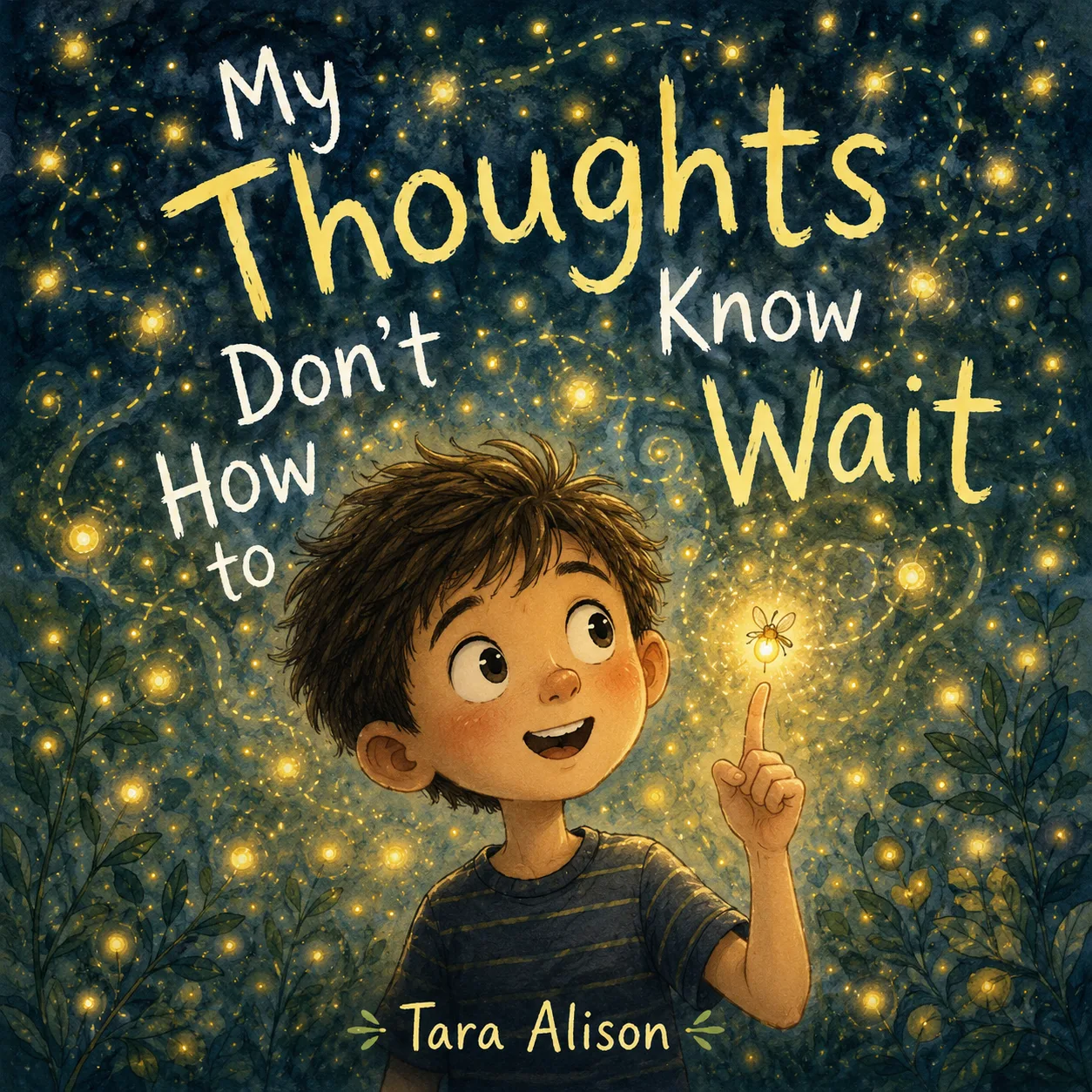
My Thoughts Don't Know How to Wait
Simon's thoughts arrive bright and fast — and feel like they will disappear if he doesn't say them right away. One quiet night beside fireflies, he discovers a small, surprising space between noticing a thought and chasing it.
Free to read. You'll also get five free articles a week. Unsubscribe anytime.
What about yelling, spanking and taking everything away?
They feel like they should work, and they almost never do for long. Yelling adds noise to a brain that's already overloaded. Spanking teaches that big people handle anger by hitting. Taking everything away leaves your child with nothing left to work toward, which is when many children stop trying. If you've done all three this week, you're not a bad parent. You're a tired one. Our article on what to do after you've yelled walks through how to repair it.
What if every request turns into a battle?
Some children push back against nearly every demand, including ones they want to do, and rewards seem to make it worse. If that sounds like your house, read about PDA (pathological demand avoidance). Children with this profile often need a lower-demand approach than standard behavior charts.
Should I get help with this?
Yes, if you can. Parent training programs such as Parent-Child Interaction Therapy (PCIT) and Triple P teach these skills with a coach who watches what's happening in your home and adjusts the plan. Ask your pediatrician for a referral. CHADD's National Resource Center on ADHD, funded by the CDC, also lists parent training resources.
Where is the behavior coming from?
Discipline works best when you know what's setting the behavior off. Is it the hour before dinner? The minute the screen goes off? The morning after a bad night's sleep? Write down what happened, when, and what came right before. Patterns show up faster than you'd expect. Our story My Thoughts Don't Know How to Wait gives your child words for the impulsive moments, so the conversation after isn't only about what went wrong.
This is what LightMap was built for. Log the hard moments, even a little at a time, and LightMap uncovers what is driving them, coaches you on how to handle each one, and shows you which hours of your day need the plan. Start free at LightMap.
Disciplining a child with ADHD isn't about being tougher. It's about being clearer, faster and kinder than feels natural, every single day. That's harder than yelling. It also works.
Start here
Find out what's really going on
The quiz points you toward what's driving it and what tends to help.
Take the quizOr get a free 15 minute LightMap Analysis with TaraFree. No card. 15 minutes.
 Not sure where to start? Ask me.Message Tara on WhatsApp. It really is me, I read everything and will personally respond.Click here to message Tara →

Part of the award-winning Birch & Light Method, honored with the Mom's Choice Gold Award for excellence in family resources.
Sources
Sources: Wolraich ML, et al. "Clinical Practice Guideline for the Diagnosis, Evaluation, and Treatment of Attention-Deficit/Hyperactivity Disorder in Children and Adolescents." Pediatrics 2019;144(4):e20192528. Summarized in American Family Physician 2020;102(1):58-60. Centers for Disease Control and Prevention. "Parent Training in Behavior Management for ADHD." Children's Hospital of Orange County. "Tips for Parents and Caregivers of Children with ADHD." American Academy of Pediatrics. "Supporting Students with ADHD in Schools."
For education and reflection, not medical advice. Our terms
A story to read together
Sometimes the easiest way in is a story you read side by side.
- My Thoughts Don't Know How to Wait
Simon's thoughts arrive bright and fast — and feel like they will disappear if he doesn't say them right away. One quiet night beside fireflies, he discovers a small, surprising space between noticing a thought and chasing it.
Read the story 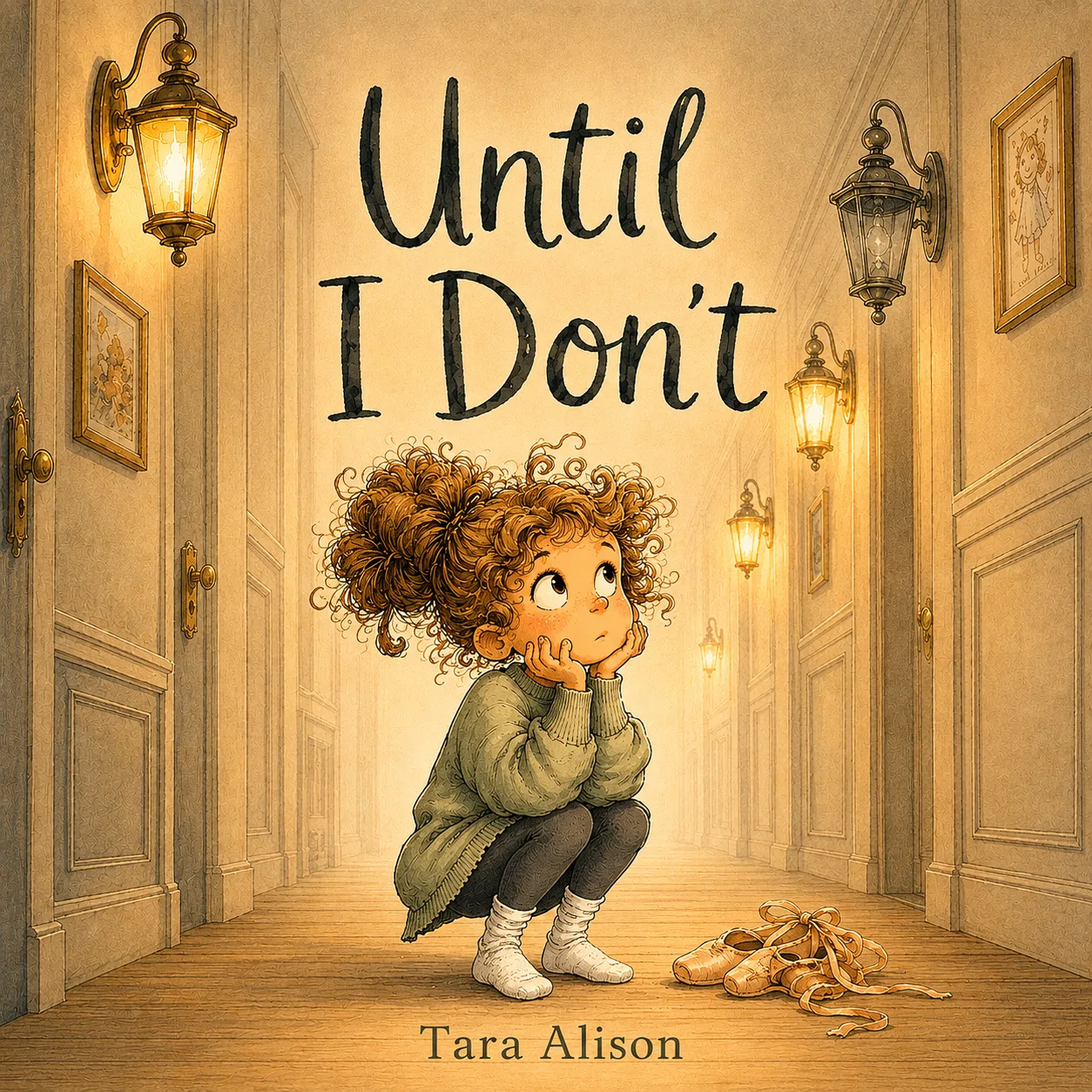 Until I Don't
Rosie shines at dance, at school, with neighbors. At home, the smallest thing can tip her over. One quiet hallway moment helps her family finally find language for the part of her nobody else sees.
Read the story
Researched and drafted with AI assistance, reviewed before publication. Editorial standards