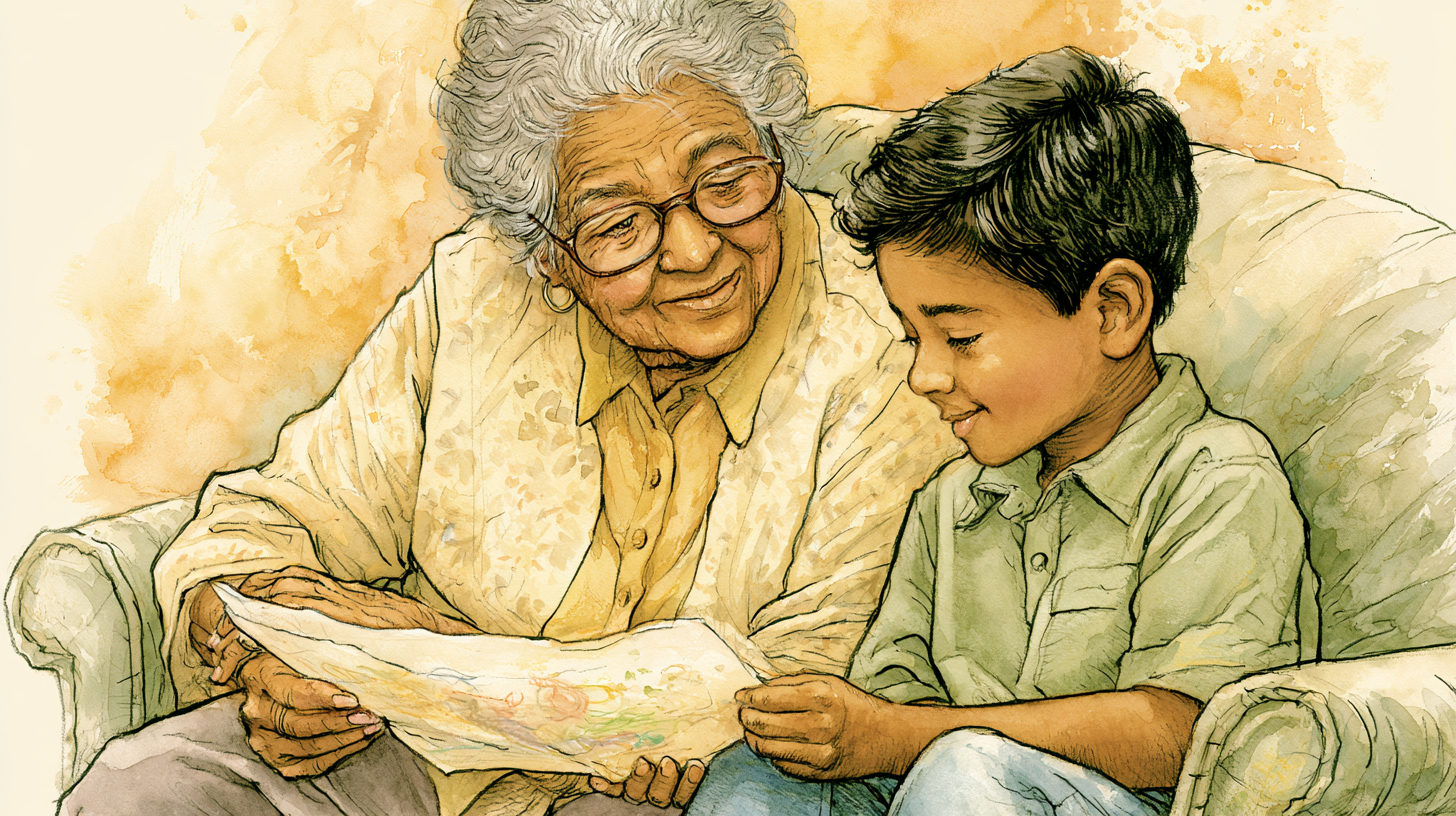
"In my day, we didn't have all these labels." "He just needs firmer boundaries." "You let her get away with too much." "There's nothing wrong with that child that a good routine wouldn't fix."
If you're raising a complex kid, you've probably heard some version of this from a grandparent — often the very people whose support you need most, delivered with total confidence and not a trace of ill intent.
It stings in a particular way, because it isn't a stranger. It's your own parent, or your partner's, telling you that the thing you're working so hard to understand is really just a discipline problem you're too soft to solve. Here is what I want you to consider before the next family dinner.
What this often looks like
- A grandparent offers parenting advice that worked in a different era for different children and doesn't fit the kid in front of them.
- Your child behaves differently at the grandparents' house, and it gets read as proof that your approach is the problem — "see, he's fine with us."
- You find yourself defending your child to the people who are supposed to be in your corner, which is its own specific exhaustion.
- One parent's family is harder to manage than the other's, and that becomes a quiet source of tension between the two of you.
- You start limiting time, or bracing before visits, because the commentary costs more than the help is worth.
Why it happens
Most grandparents aren't trying to undermine you. They raised their kids in a world that understood behavior very differently — when a struggling child was usually called difficult, spoiled, or badly disciplined, and when "firmer" was genuinely the prevailing wisdom. They're not being cruel. They're applying the only framework they were ever given.
There's also something tender underneath some of the resistance. When a grandparent insists nothing is different about your child, they're sometimes protecting themselves from a harder feeling — that something they don't fully understand is happening to a grandchild they love, and that they're powerless to fix it. "He just needs more structure" is, occasionally, easier to say than "I'm frightened and I don't know how to help."
And the "he's fine with us" phenomenon is usually real, which makes it more confusing. Many complex kids genuinely do hold it together at the grandparents' house — a novel setting, a guest, lower demands, shorter visits — and then fall apart at home where it's safe. The grandparents aren't lying about what they see. They're just seeing the held-together version and assuming it's the whole child.
What tends to help
- Explain the why, not just the rules. "We don't do consequences for meltdowns because they make it worse, not better" gives a grandparent something to understand, rather than just a directive to follow. Many come around once they grasp the reasoning, even if they'd never have arrived there themselves.
- Give them a real role. Resistance often softens when a grandparent has a specific way to genuinely help — the one activity they do beautifully with your child, the thing only they can offer. Inclusion lowers the urge to critique from the sidelines.
- Name the "he's fine with us" thing directly and kindly. Explain that kids often save their hardest moments for the people they feel safest with, and that the calm they see at the grandparents' house is part of how the system works — not evidence that home is the problem.
- Let the relationship matter more than the conversion. A grandparent doesn't have to fully understand your child to love them well. Sometimes the realistic goal isn't agreement — it's a warm relationship with a few firm boundaries around the commentary.
While you're here, take the guide
What's Underneath is free: the three body-state triggers under most meltdowns, what to say in the minute before it tips over, and how to reset afterward.

You'll get the guide instantly, plus five free articles in your inbox every week. Real challenges (meltdowns, school mornings, picky eating, big feelings) and how to actually handle them. Unsubscribe anytime.
What tends not to help
Trying to win the argument with information. Handing a grandparent articles or diagnostic criteria usually entrenches them, because it can feel like being told their decades of raising children count for nothing. The facts may be on your side. The delivery still has to honor that they, too, once did this hard job.
Litigating it in front of your child also costs more than it's worth. When a kid watches their parent and grandparent face off over who they are, they absorb the tension without any of the context, and the visit that was supposed to be connection becomes one more stressful event. Disagreements with grandparents are better had privately, adult to adult.
And forcing a choice between your child and your parent — demanding full agreement as the price of access — tends to fracture things that don't need to fracture. Most grandparent relationships can survive a real difference in understanding, as long as the boundaries around your child are clear and the love is intact.
When additional support may be needed
If a grandparent's involvement has moved past unhelpful commentary into actively undermining your child — overriding the things that keep your kid regulated, or treating them in ways that leave them more dysregulated after every visit — it's reasonable to set firmer limits on contact, even though that's painful. Your first responsibility is to the child in your house, not to keeping the peace with the generation above.
It can also help to get on the same page with your partner first, especially when it's their family doing the criticizing. A united front — where the boundary comes from both of you, and ideally the conversation with each set of grandparents is led by their own adult child — protects both your kid and your marriage from getting caught in the middle.
Where LightMap helps
The "he's fine with us" gap is one of the hardest things to explain to a grandparent, because from where they stand, they're telling the truth — they really do see a calmer child. What they don't see is the falling-apart that happens at home, often right after, where it's safe.
Being able to point to the pattern over several weeks can make that gap visible in a way that words alone can't. When you can show that the hard moments cluster at home, in the after-school window, on the days following big social events — the grandparents' visits included — it reframes "he's fine with us" as one true piece of a larger picture, rather than the whole story. It's a gentler way to be believed.
Every behavior is a clue.
Sometimes the pattern across a few weeks explains the child a grandparent only sees on good behavior. Explore LightMap at birchandlight.com/lightmap.
Frequently asked questions
How do I respond in the moment when a grandparent criticizes my parenting?
You don't have to win it there, and you usually can't. A short, warm, firm line — "I know it looks that way; there's more going on than it seems, and we've got it" — closes the moment without a debate. The real conversation, if it's worth having, happens later and in private.
My child acts completely differently at the grandparents' house. Why?
Many kids save their hardest behavior for the people and places where they feel safest, and hold it together in novel or lower-demand settings like a short grandparent visit. The calm the grandparents see is real, but it's often the held-together version, with the release happening later at home. It isn't a sign that your home is the problem.
What if it's my partner's parents and they won't listen to me?
Where possible, the conversation with each set of grandparents lands better coming from their own adult child rather than the in-law. Agree with your partner on the boundary together, then let them carry it to their parents. It protects you from being cast as the villain and keeps the issue from becoming a wedge between the two of you.
For your child: The Mosquito Who Thought He Was a Dragonfly is about being feared and misjudged by strangers for what you look like, rather than who you have always been.
For education and reflection, not medical advice. Our terms
See what's underneath
Stop guessing what set it off
LightMap reads your hard days together and gives you answers. Start with one moment today.
Start with 3 moments Not sure where to start? Ask me.Message Tara on WhatsApp. It really is me, I read everything and will personally respond.Click here to message Tara →

Part of the award-winning Birch & Light Method, honored with the Mom's Choice Gold Award for excellence in family resources.
A story to read together
Sometimes the easiest way in is a story you read side by side.
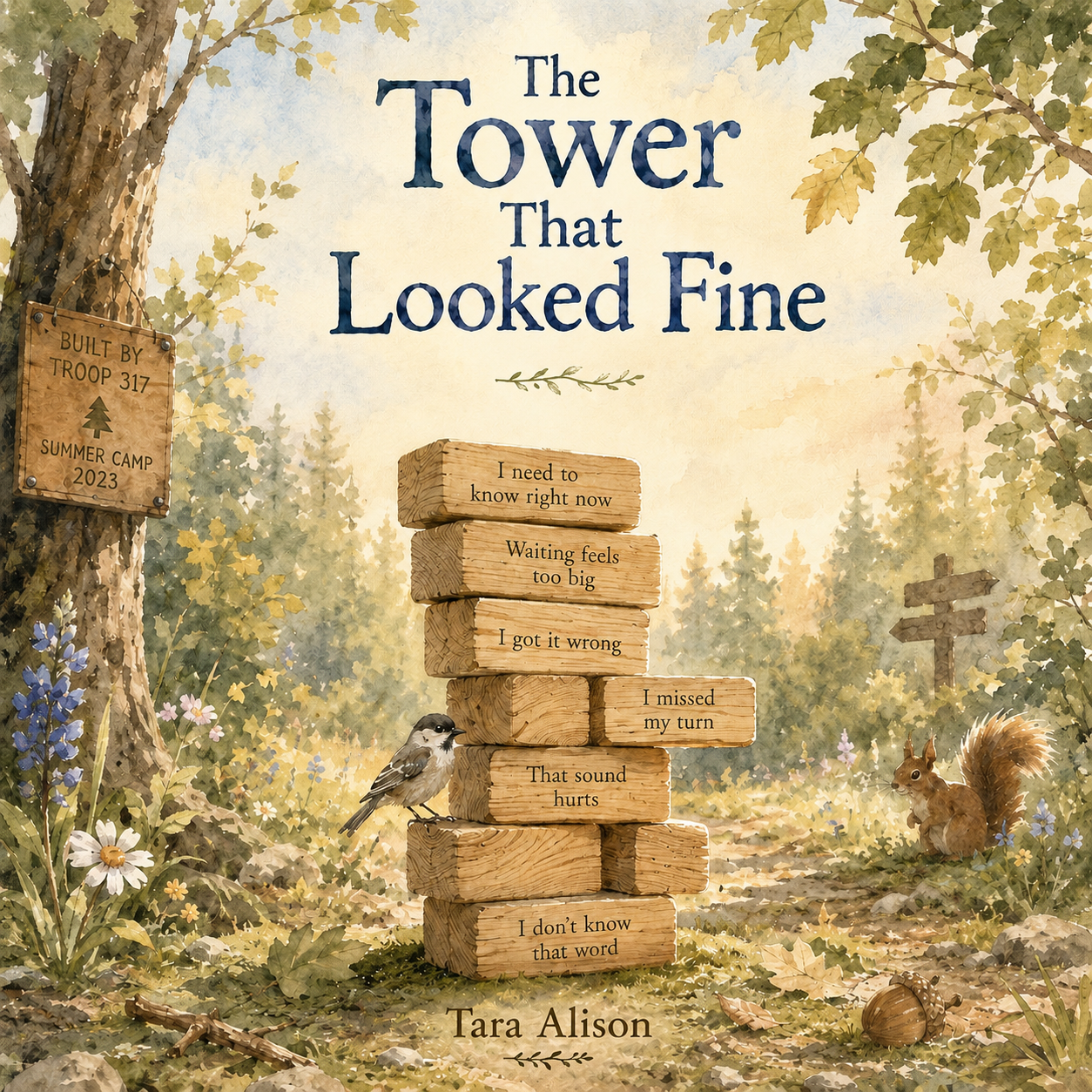 The Tower That Looked Fine
A tower in a quiet clearing tries to stay steady through every small thing nobody else seems to notice — until one tiny breath of wind causes her to fall, and a gentle hand begins to gather the blocks back.
Read the story The Boy at the Edge
A boy finds calm by watching the world move from a window. When his stillness is mistaken for defiance, the moment escalates — and he learns that being calm doesn’t always protect you from being told no.
Read the story
If today was one of those days
A few more from the library, free to read.
Researched and drafted with AI assistance, reviewed before publication. Editorial standards