
One behavior or one bad week cannot tell you, and no single test settles it. ADHD is diagnosed when a child shows six or more signs of inattention or hyperactivity for at least six months, with several showing before age 12, in more than one setting, and clearly getting in the way of daily life.
The teacher's note says your child "has trouble staying on task." Homework takes three hours that should take thirty minutes. Your child loses a jacket a week and interrupts every conversation. Every child does some of this. So how do you know if it is ADHD, or just childhood?
What separates ADHD from ordinary distractibility is how many signs there are, how long they have lasted, how many places they show up, and how much they get in the way. This guide walks through what doctors actually look for, so you can decide whether to ask for an evaluation.
What are the signs of ADHD in a child?
Doctors use the criteria in the DSM-5, which sorts the signs into two groups of nine. A child can have mostly one group, mostly the other, or both.
Inattention can look like:
- Careless mistakes in schoolwork, or missing details
- Trouble staying focused on tasks or play
- Not seeming to listen when spoken to directly
- Not following through on instructions or finishing chores and homework
- Trouble organizing tasks, belongings and time
- Avoiding tasks that take sustained mental effort
- Losing things they need, like homework, glasses or a water bottle
- Being easily distracted
- Forgetfulness in daily activities
Hyperactivity and impulsivity can look like:
- Fidgeting, tapping or squirming in their seat
- Leaving their seat when they are expected to stay
- Running or climbing when it isn't appropriate
- Trouble playing quietly
- Always "on the go," as if driven by a motor
- Talking excessively
- Blurting out answers before the question is finished
- Trouble waiting their turn
- Interrupting or intruding on others' conversations and games
How many signs it takes for a diagnosis
Recognizing your child in a few bullet points is not enough. For a diagnosis, the CDC's summary of the DSM-5 criteria lists four conditions:
- Six or more symptoms from one group or both, for children up to age 16.
- At least six months, at a level that is inappropriate for the child's developmental age.
- Several symptoms were present before age 12.
- More than one setting, such as home and school, with clear evidence the symptoms interfere with school, friendships or family life.
That last point matters most. A child who is focused and calm at school but impossible at home, or the other way around, may be struggling with something other than ADHD.
While you're here, take the guide
What's Underneath is free: the three body-state triggers under most meltdowns, what to say in the minute before it tips over, and how to reset afterward.

You'll get the guide instantly, plus five free articles in your inbox every week. Real challenges (meltdowns, school mornings, picky eating, big feelings) and how to actually handle them. Unsubscribe anytime.
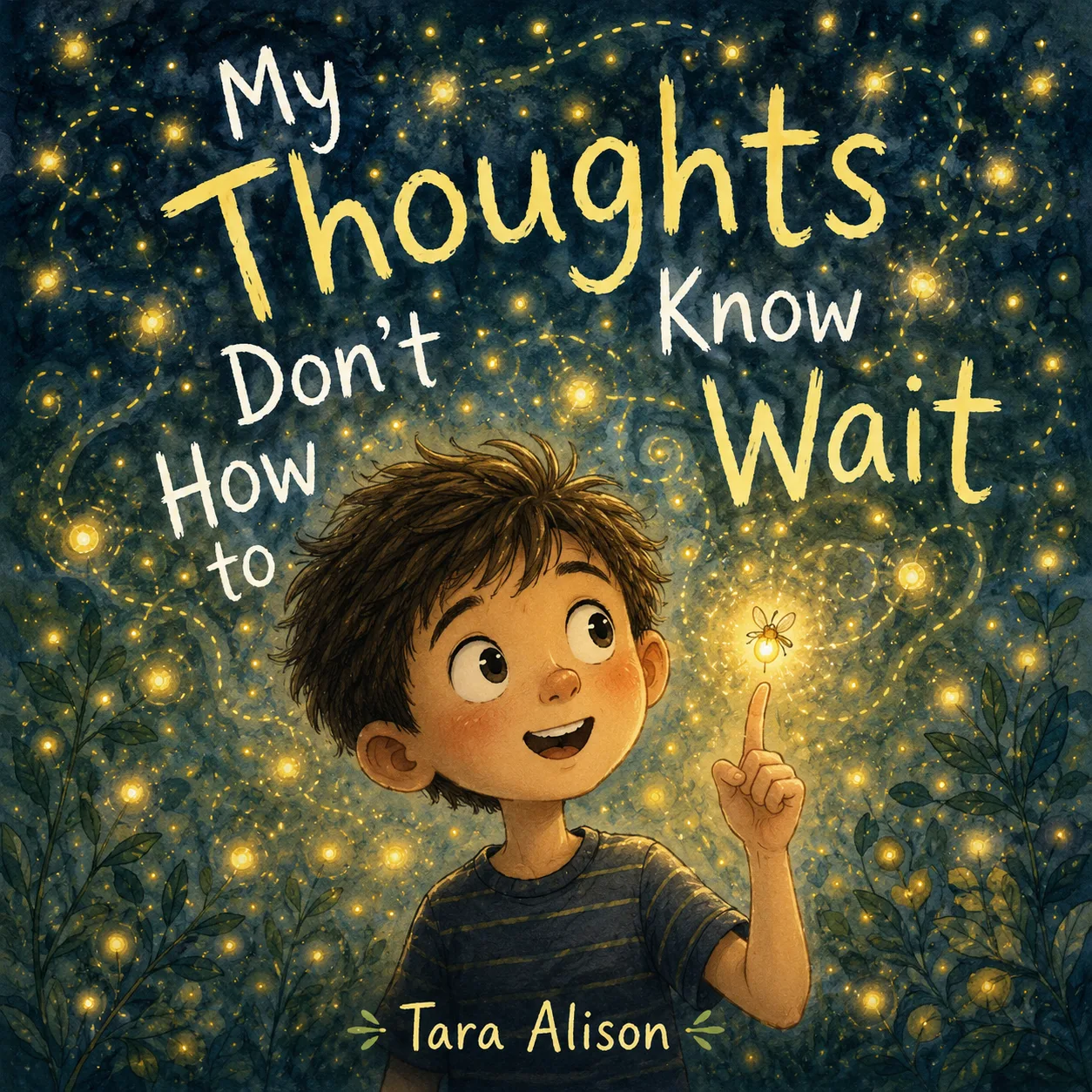
There's a story for this exact struggle
My Thoughts Don't Know How to Wait
Simon's thoughts arrive bright and fast — and feel like they will disappear if he doesn't say them right away. One quiet night beside fireflies, he discovers a small, surprising space between noticing a thought and chasing it.
Free to read. You'll also get five free articles a week. Unsubscribe anytime.
Conditions that can look like ADHD
Many problems can produce the same behaviors. The CDC lists sleep disorders, anxiety, depression and certain learning disabilities as conditions that can look like ADHD or sit alongside it. Hearing or vision problems, stress at home, and a sudden change in behavior after an illness can do it too. A good evaluation looks for these instead of stopping at the first answer that fits.
If your child's attention or behavior changed suddenly, over days or weeks, tell the doctor that clearly. ADHD develops over years. A sudden shift points somewhere else.
How is ADHD diagnosed?
A pediatrician, psychologist or psychiatrist can diagnose ADHD. The American Academy of Pediatrics recommends that the provider gather information from parents, teachers and other adults who see the child in different settings, usually through rating scales and interviews. Expect forms for you and forms for the teacher.
Our step-by-step guide to getting an ADHD diagnosis for your child covers how to start, and what kind of doctor treats ADHD helps you pick who to call.
What to prepare before the appointment
- Write down real examples. "Took 40 minutes to put on shoes Tuesday" helps a doctor far more than "he's distracted."
- Ask the teacher what they see. Does your child struggle in class the way they struggle at home?
- Note sleep, appetite and mood. These can change the whole picture.
- Note the timeline. When did you first notice it? Has it been steady or did something change?
Children often feel the label before they hear it. Our story Thoughts Don't Know How to Wait gives a child with a busy, fast brain a way to understand themselves, whether or not a diagnosis comes.
This is what LightMap was built for. Log what happens day to day, and LightMap pulls the patterns together into a clear record you can share with your child's doctor and school, so the evaluation starts with real examples instead of a feeling. Start free at LightMap.
Asking "does my child have ADHD?" is not overreacting and it is not giving up on your child. It is the first step toward knowing what your child needs, whatever the answer turns out to be.
Start here
Find out what's really going on
The quiz points you toward what's driving it and what tends to help.
Take the quizOr get a free 15 minute LightMap Analysis with TaraFree. No card. 15 minutes.
 Not sure where to start? Ask me.Message Tara on WhatsApp. It really is me, I read everything and will personally respond.Click here to message Tara →

Part of the award-winning Birch & Light Method, honored with the Mom's Choice Gold Award for excellence in family resources.
Sources
Sources: Centers for Disease Control and Prevention, "Symptoms and Diagnosis of ADHD" and "Clinical Care of ADHD in Children" (DSM-5 criteria summary). Centers for Disease Control and Prevention, "Diagnosing ADHD." Wolraich ML, et al. "Clinical Practice Guideline for the Diagnosis, Evaluation, and Treatment of Attention-Deficit/Hyperactivity Disorder in Children and Adolescents." Pediatrics 2019;144(4):e20192528. American Psychiatric Association, Diagnostic and Statistical Manual of Mental Disorders, Fifth Edition, Text Revision (DSM-5-TR), 2022.
For education and reflection, not medical advice. Our terms
A story to read together
Sometimes the easiest way in is a story you read side by side.
- My Thoughts Don't Know How to Wait
Simon's thoughts arrive bright and fast — and feel like they will disappear if he doesn't say them right away. One quiet night beside fireflies, he discovers a small, surprising space between noticing a thought and chasing it.
Read the story 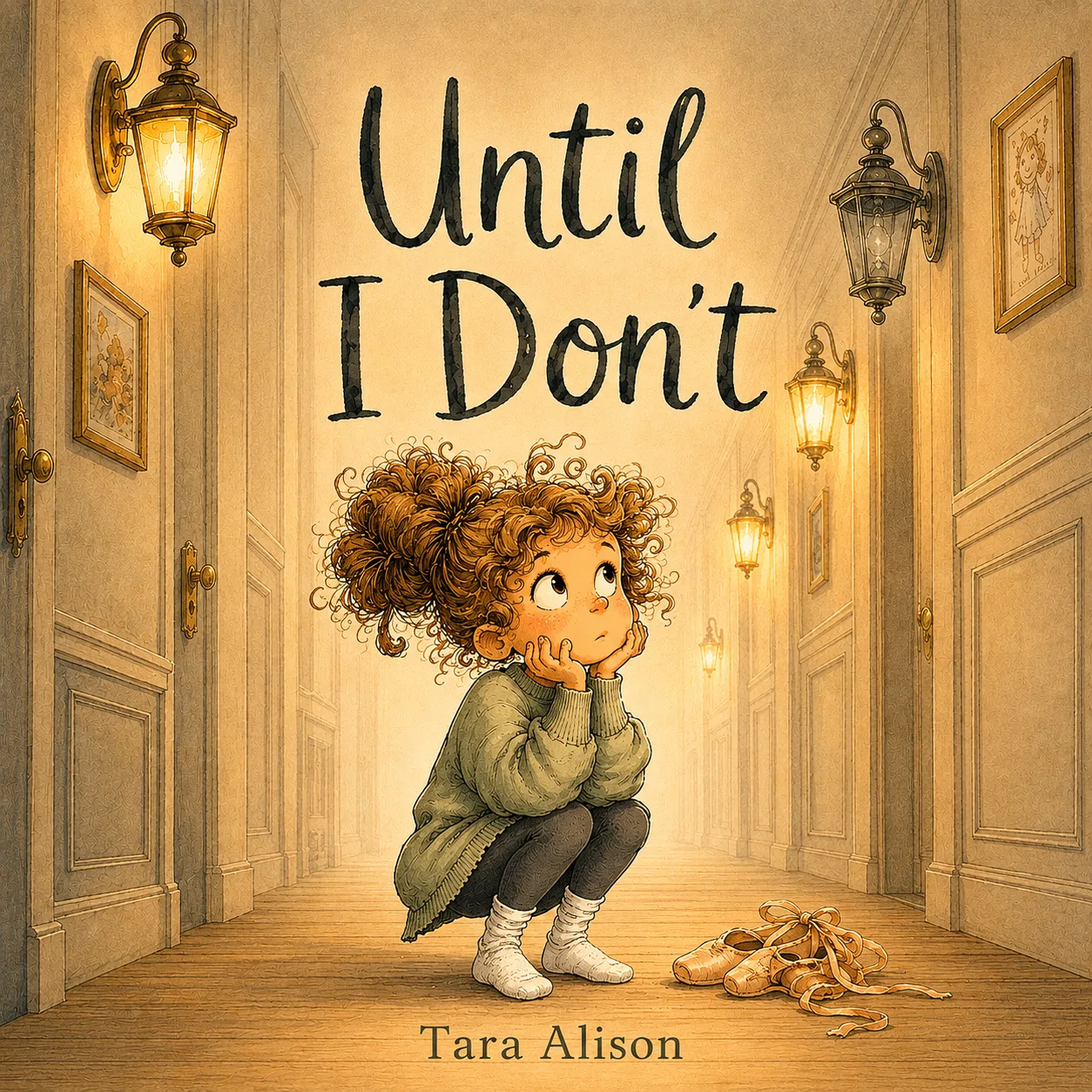 Until I Don't
Rosie shines at dance, at school, with neighbors. At home, the smallest thing can tip her over. One quiet hallway moment helps her family finally find language for the part of her nobody else sees.
Read the story
Researched and drafted with AI assistance, reviewed before publication. Editorial standards