
The letter says the service is not medically necessary. Your child's clinician says it is. And the letter is written in a way that makes the decision sound final, which it is not.
Insurers deny behavioral health claims at a high rate and count on most families stopping there. The families who do not stop win a great deal of the time.
Find out what kind of plan you have first
This is the step that determines everything else, and almost nobody does it.
A fully insured plan is one where the insurance company carries the risk. A self-funded plan is one where your employer carries the risk and the insurer just administers it. They look identical on the card and they take completely different escalation routes.
Check the card for the words self-funded or ASO, which stands for administrative services only. Check the Summary Plan Description. Ask your employer's HR directly. A rough tell: if the card says administered by an insurer but the plan is named after the employer, it is probably self-funded.
It matters because self-funded plans fall under a federal law called ERISA. Complaints about them go to the US Department of Labor, not to your state insurance department, and your state's own insurance rules may not apply at all. Families spend months complaining to a regulator with no jurisdiction over their plan.
Get the actual reason
Denial letters are vague on purpose. Before you write anything, request two documents in writing.
The first is the full denial rationale, including the specific clinical criteria applied and the name and credentials of the reviewer who made the decision.
The second is the plan's comparative analysis for non-quantitative treatment limitations. That is a mouthful and it is the single most useful phrase in this entire process. Federal parity law requires plans to apply the same standards to mental health care as they apply to comparable medical and surgical care. If your child is being asked to fail at three lower levels of care before a higher one is approved, ask whether the plan requires the same stepwise failure before approving a comparable medical service. Usually it does not. That gap is a parity argument, and it sits alongside medical necessity rather than replacing it.
The internal appeal
You generally have 180 days from the denial to file the internal appeal. How long the plan has to decide depends on the type of claim: around 30 days for a request about care not yet received, around 60 days if the service already happened and this is an after-the-fact denial. Urgent ones are much faster, often around 72 hours, and continuing care for a child who is deteriorating frequently qualifies as urgent. Ask for expedited review by name if that applies.
What goes in it:
A letter of medical necessity from the treating clinician, written against the plan's own criteria rather than in general terms. If the plan uses a particular set of criteria, the letter should walk through them point by point.
The clinical record. Notes, assessments, prior treatment history, and what has already been tried and failed.
Your own documentation. Dates, incidents, school contacts, emergency visits. Parents underestimate this. A dated record of what actually happened at home is evidence, and insurers see very little of it.
A short chronology of every interaction with the insurer, including dates, names, and what each representative said. Patterns of delay matter later.
While you're here, take the guide
What's Underneath is free: the three body-state triggers under most meltdowns, what to say in the minute before it tips over, and how to reset afterward.

You'll get the guide instantly, plus five free articles in your inbox every week. Real challenges (meltdowns, school mornings, picky eating, big feelings) and how to actually handle them. Unsubscribe anytime.
External review, which is where this often turns
If the internal appeal fails, medical necessity denials generally go to an independent external review under the Affordable Care Act. An outside reviewer, not the insurer, decides, and the decision is binding on the plan.
The federal deadline is four months from the final internal denial notice. Some states are shorter. Expedited external review for urgent situations is decided within about 72 hours.
Two exceptions to know. Plans that have been grandfathered since March 2010 are not required to offer external review, so confirm status before you file. And federal employee plans run through a separate process at the Office of Personnel Management rather than through state review.
This stage is where behavioral health denials get reversed most often, and it is the stage most families never reach, because the internal denial reads as the end of the road.
Complain in parallel, not afterward
You do not have to wait for the appeal to finish before contacting a regulator. Sometimes an informal call from a regulator resolves it before any formal investigation starts.
For self-funded employer plans, that is the Department of Labor's Employee Benefits Security Administration. For fully insured and individual market plans, it is your state insurance department.
Cite parity by name in the complaint, with a specific comparison. Not the general claim that mental health is treated worse. The specific claim that this plan required X for your child's behavioral health care and does not require X for a comparable medical service.
Protect yourself financially while it runs
Ask the provider whether they will hold the balance while the appeal is pending, which many will. Ask about a sliding scale or a payment plan in case it fails. Keep every bill and every explanation of benefits.
And keep going to appointments if you can. A gap in treatment during an appeal gets used as evidence that the treatment was not necessary.
When not to fight
Not every denial is a battle. If the claim is small, and the denial reflects a genuine plan exclusion rather than a judgment call about necessity, the hours may cost more than the claim.
Save the effort for medical necessity denials, level of care denials, and anything where a clinician and an insurer disagree about what your child needs. Those are the ones that get overturned.
If your child is in crisis, do not wait on any of this
An appeal decides who pays. It does not decide what your child needs today. If your child is talking about not wanting to be alive, or hurting himself, call or text 988, or 911 in an emergency, and sort the coverage out afterward.
Our research says these are the usual deadlines and routes, as of August 2026. It is not legal advice, and this one turns entirely on your plan type, so the general case may not be your case. Check it directly. Your Summary Plan Description and your denial letter carry the terms that actually apply to you, and the Department of Labor's Employee Benefits Security Administration publishes free guidance on appeals and will take questions by phone.
Sources: US Department of Labor Employee Benefits Security Administration; ACA external review requirements at 45 CFR 147.136; Mental Health Parity and Addiction Equity Act.
For education and reflection, not medical advice. Our terms
See what's underneath
Send the appeal with something behind it
LightMap reads your hard days together and gives you answers. Start with one moment today.
Start with 3 moments Not sure where to start? Ask me.Message Tara on WhatsApp. It really is me, I read everything and will personally respond.Click here to message Tara →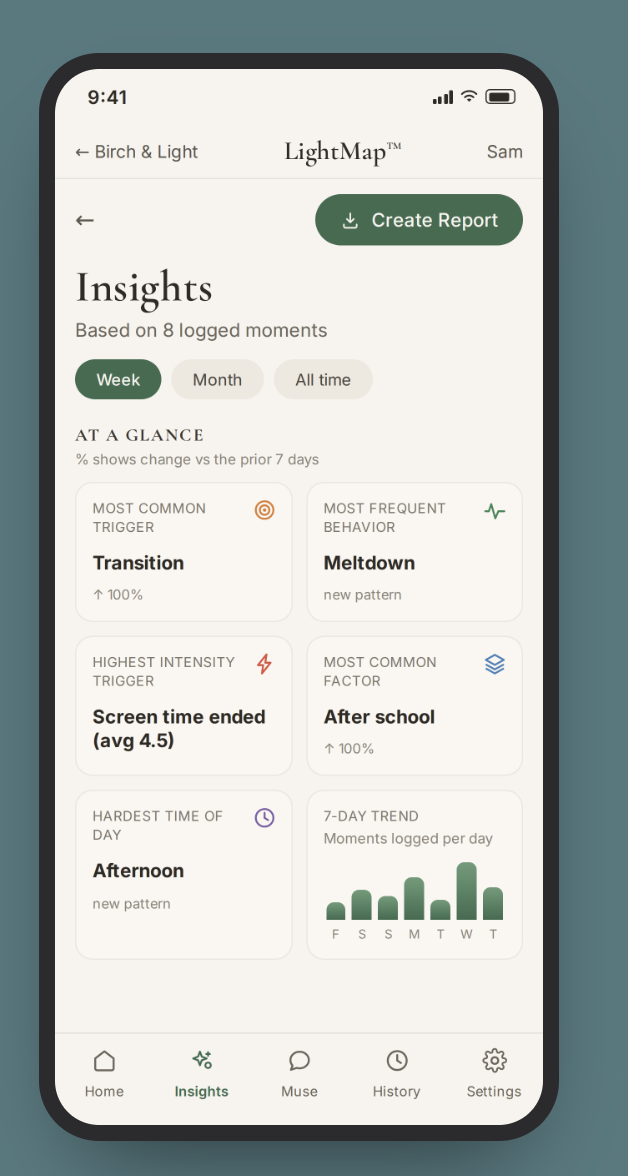

Part of the award-winning Birch & Light Method, honored with the Mom's Choice Gold Award for excellence in family resources.
If today was one of those days
A few more from the library, free to read.
Researched and drafted with AI assistance, reviewed before publication. Editorial standards