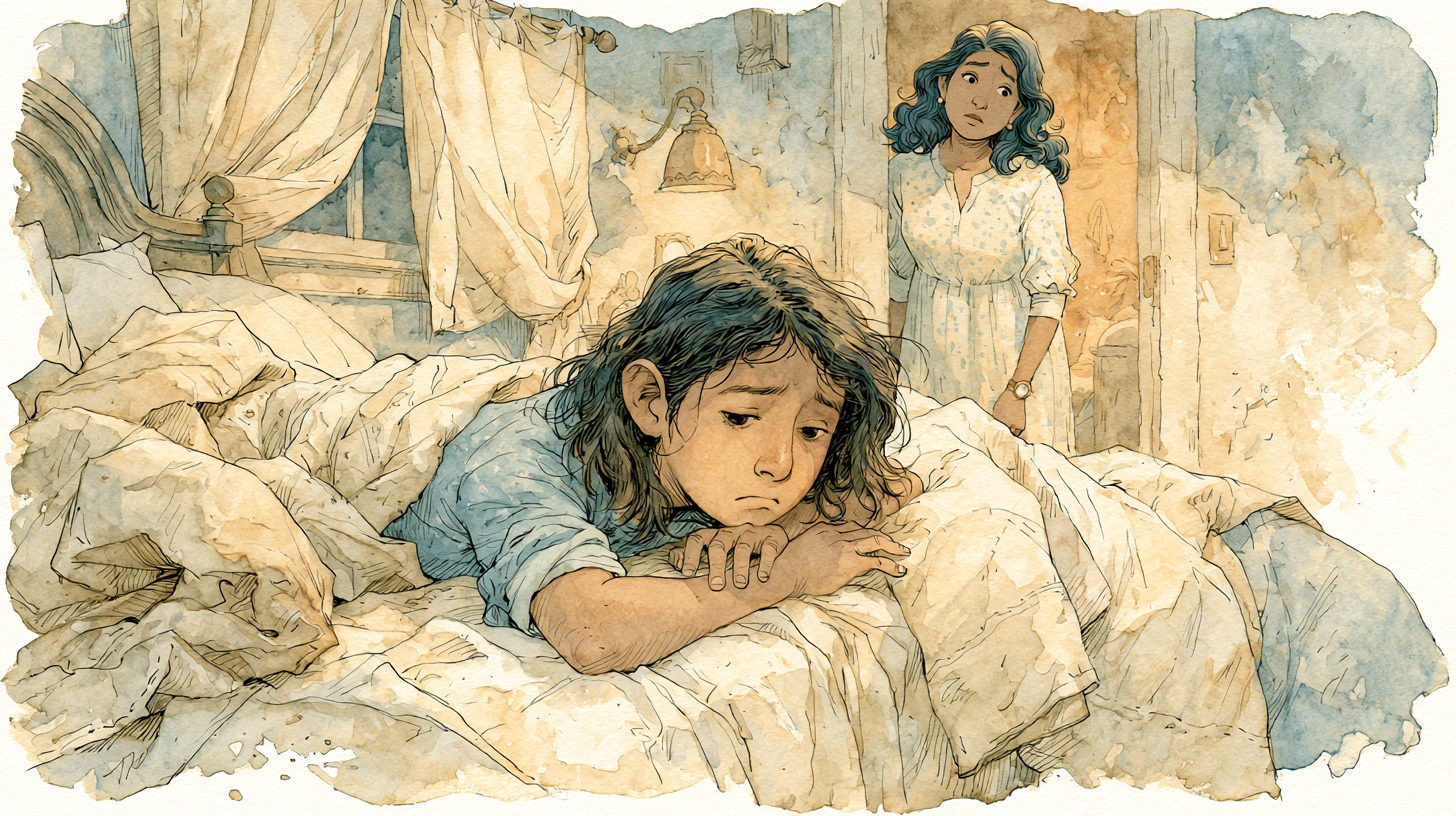
If they were happy in there, it would almost be easier. But your child is not enjoying the bed. They are in it all day, phone or no phone, curtains closed, and when you check on them they tell you, flatly or tearfully, that they are miserable. They hate this. And they do not get up.
To a parent, this looks like a paradox with an obvious solution: if you are miserable in bed, leave the bed. The fact that they do not is the single most important piece of information in the room.
The bed is not the preference. It is the ceiling.
A child who stays somewhere that makes them miserable is not choosing comfort. They are out of capacity. The bed is simply what zero looks like. Getting up, showering, facing the kitchen, facing questions, facing the day: each of those has a cost, and their account is empty. "Miserable but horizontal" beats "miserable plus overwhelmed," so the body stays.
This is why "just get up, you''ll feel better" bounces off. It is often even true. But it is advice addressed to a capacity they do not currently have, and repeated loudly, it becomes one more thing to fail at without leaving the bed.
Recovery, avoidance, or warning sign
Not all bed-days mean the same thing, and telling them apart matters.
Recovery looks like a depleted kid refilling: a brutal week, a big performance, the end of a school year, and a weekend spent as a burrito. The tell is that the tank actually refills. By Sunday evening there are signs of life. This version is healthy, even if it looks alarming, and the right response is protecting it, not interrupting it.
Avoidance looks like the bed as a bunker from something specific: a friendship on fire, a class they''re drowning in, something they dread that resets every morning. The tell is the pattern, worst on school nights and Sunday, better on true no-demand days. This version needs the dreaded thing found and addressed, because the bed is only the symptom.
The warning sign is when the misery is the weather, not the response: weeks of flatness, things they loved gone gray, sleep upside down, eating changed, "what''s the point" language. A miserable child who cannot leave the bed and cannot say why, day after day, is showing you what low mood looks like at their age. This version is not a parenting technique problem. It is a check-in with your pediatrician, soon, and if you ever hear hopelessness or talk of not wanting to be here, that conversation happens now, not at the next physical.
While you're here, take the guide
What's Underneath is free: the three body-state triggers under most meltdowns, what to say in the minute before it tips over, and how to reset afterward.

You'll get the guide instantly, plus five free articles in your inbox every week. Real challenges (meltdowns, school mornings, picky eating, big feelings) and how to actually handle them. Unsubscribe anytime.
How to reach a child in the cave
Go in without an extraction plan. Sit on the floor of their room with no agenda for two minutes. No sermon, no curtains flung open. The message is "you are not in trouble for being empty," and it is the only message that lowers the wall.
Shrink the day to one thing. Not "get up, shower, eat, come to the store." One: "Come sit on the porch with me for five minutes, then you can go back." Micro-asks succeed where full days fail, and one success changes the body''s math more than any pep talk.
Feed and water the burrow. A glass of water, toast, a shower eventually. Bodies in the cave still have needs, and meeting them without commentary is care they can accept without having to perform recovery.
Track it, gently. Which days, after what, how long, what helped. One bad Sunday is a Sunday. A rising trend across weeks is information that you, and possibly a professional, need.
The paradox resolves once you see it clearly: they are not staying in bed instead of feeling better. They are staying in bed because feeling better is not currently reachable, and the bed is where you find them while that is true. Your job is not to argue them upright. It is to lower the cost of the first step, and to notice, honestly, whether the tank is refilling or the water line is dropping.
If you''re trying to tell recovery from warning sign, LightMap helps you see the trend line instead of relying on worry and memory: log the cave days, tag what preceded them, and watch which direction the pattern is moving.
Sources: Peer-reviewed research on anhedonia and behavioral activation in adolescent depression (PMC); Raymaker et al. on autistic burnout (Autism in Adulthood; PMC); Carskadon on adolescent sleep and circadian timing (PMC).
For education and reflection, not medical advice. Our terms
See what's underneath
See it coming before the shutdown
LightMap reads your hard days together and gives you answers. Start with one moment today.
Start with 3 moments Not sure where to start? Ask me.Message Tara on WhatsApp. It really is me, I read everything and will personally respond.Click here to message Tara →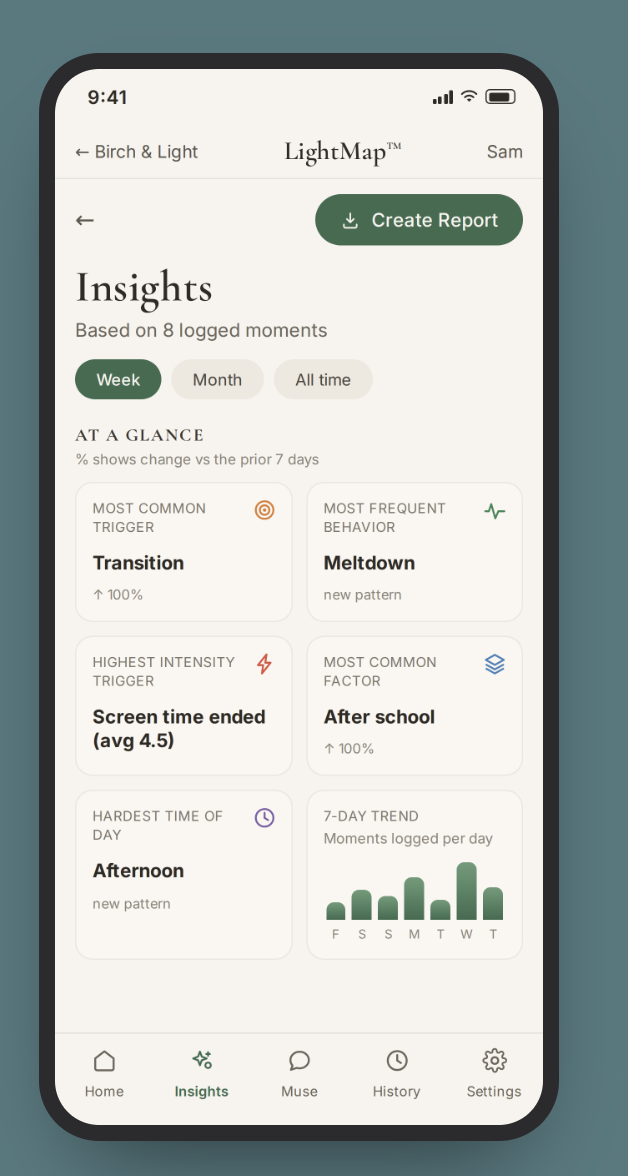

Part of the award-winning Birch & Light Method, honored with the Mom's Choice Gold Award for excellence in family resources.
A story to read together
Sometimes the easiest way in is a story you read side by side.
 Until I Don't
Rosie shines at dance, at school, with neighbors. At home, the smallest thing can tip her over. One quiet hallway moment helps her family finally find language for the part of her nobody else sees.
Read the story The Tower That Looked Fine
A tower in a quiet clearing tries to stay steady through every small thing nobody else seems to notice — until one tiny breath of wind causes her to fall, and a gentle hand begins to gather the blocks back.
Read the story
If today was one of those days
A few more from the library, free to read.
Researched and drafted with AI assistance, reviewed before publication. Editorial standards