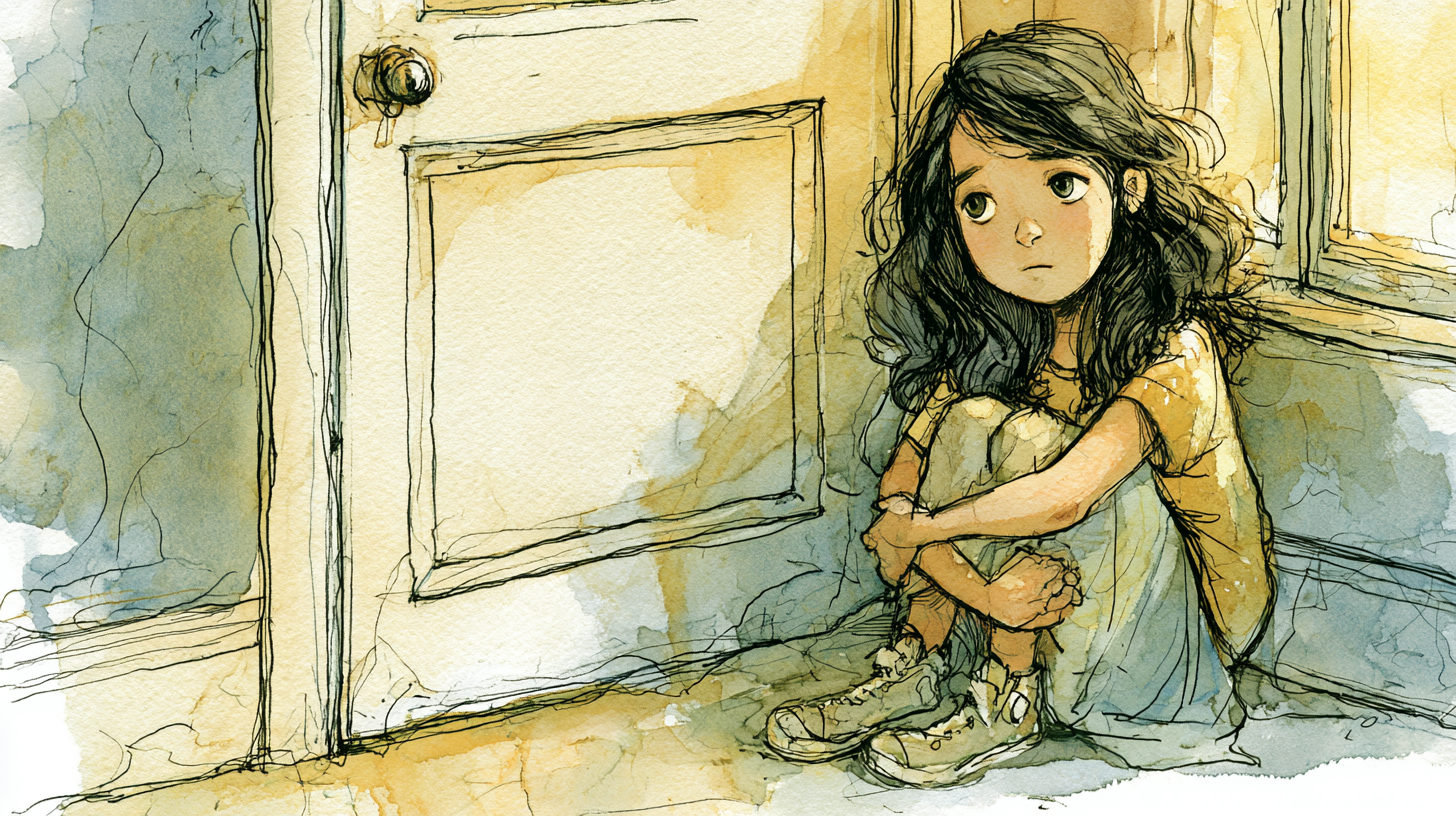
Something happens — a hard moment, a correction, a disappointment, a request that landed wrong — and your child disappears. The bedroom door shuts. Maybe it locks. And then: nothing. No talking, no coming out, no response to anything you say through the wood. You stand in the hallway, and it can feel like rejection, like stubbornness, like a problem you are now supposed to solve by getting them to open up and talk.
But the closed door is almost always doing a job. And the job is rarely the one it appears to be. It is not, in most cases, a door slammed against you. It is a door pulled closed around a child whose nervous system has reached its limit and is reaching for the one thing that might bring it back down.
What the Closed Door Is Doing
When a child becomes flooded — overwhelmed past what they can manage — the body's deep instinct is to reduce input. Fewer voices. Fewer faces. Fewer demands. Less light, less noise, less of everything coming at them. A room with the door shut is simply the most available version of that. It is the fastest route to lowering the volume on a world that has become too loud.
Seen this way, the closing of the door is not aggression and it is not defiance. It is regulation — attempted in the only way the child can manage in that moment. They are not trying to wound you or win a standoff. They are trying to get back to steady, and retreat is the tool they have.
This is also why talking through the door so often makes everything worse. More words are more input. The child shut the door specifically to bring the input down; raising your voice, asking questions, issuing instructions, or pleading all push more of exactly what overwhelmed them in the first place. You are, without meaning to, keeping them in the state they were trying to escape.
Shutdown, Not Defiance
It helps to understand what is likely happening inside, because it reframes nearly everything about how to respond.
They may genuinely not be able to talk yet. In a shutdown state, language is often one of the first capacities to go offline. "Come out and tell me what's wrong" can be asking for something the child literally cannot do right now — not won't, can't. The words aren't available, and demanding them only adds pressure to a system that has none to spare.
The distance is the point, not the problem. For some children, needing space before they can reconnect is not a preference or a manipulation — it is a requirement. Their system has to come down before connection is possible again. The distance they are taking is not rejection of you. It is the precondition for being able to come back to you.
Quiet behind a door is not the same as calm. It is easy to assume that a child who has gone silent has settled. More often, they are still working — a flooded system slowly coming back down, which takes far longer than we tend to expect. The silence is the process, not the resolution.
The door isn't shut against you. It's shut around a child who is trying to find their way back to steady.
While you're here, take the guide
What's Underneath is free: the three body-state triggers under most meltdowns, what to say in the minute before it tips over, and how to reset afterward.

You'll get the guide instantly, plus five free articles in your inbox every week. Real challenges (meltdowns, school mornings, picky eating, big feelings) and how to actually handle them. Unsubscribe anytime.
Why the Instinct to Push Backfires
Everything in a worried parent says to get the door open, get eyes on the child, get them talking, fix it now. It is a loving instinct. But applied to a shutdown, it usually deepens the very state you are trying to end.
Pushing — more words, more urgency, more presence at the door — reads to an overwhelmed nervous system as more threat, more demand, more input it cannot process. The child digs further in, not because they are being difficult, but because their system is doing what it must to protect itself. The harder you push on the door, the higher the wall behind it gets.
What Tends to Help
Lower the input rather than raise it. Fewer words. A calm, quiet presence instead of a stream of questions. "I'm here when you're ready" lands far better than "open this door right now." You are trying to make the outside of the door feel safe and low-demand, so that coming out doesn't mean re-entering the flood.
Let the distance do its work. Giving space is not giving up, and it is not letting them "get away with it." For a child in shutdown, space is frequently the exact thing that allows reconnection to happen sooner. The counterintuitive truth is that backing off often brings them out faster than pressing in.
Reconnect after, not during. The conversation about what happened — what set it off, what might help next time — works once the system is back online, not while the child is still behind the door in the thick of it. Save the processing for after the storm, when there is actually a regulated child to talk to.
Watch the pattern. Notice what tends to send them behind the door. After what kind of moment? Which demands, which times of day, which situations? Over time, that pattern tells you what is overwhelming them and when — which is the information that lets you help before it reaches the point of retreat.
The Shift Worth Making
A child who locks themselves away is not a child who needs to be drawn out by force. They are a child whose system reached for distance because distance is what it needed in that moment. The work, then, is not getting the door open faster. It is understanding what keeps closing it — and meeting the overwhelm underneath, earlier, before it builds to the point of retreat.
When you can see the shutdown for what it is — regulation, not rejection — the whole encounter changes. You stop fighting the door, and you start addressing the thing that sent your child behind it.
Every behavior is a clue.
If your child keeps retreating behind a closed door, LightMap can help you track what tends to come before it — the moments, the triggers, the timing — so the pattern beneath the shutdowns becomes easier to see. Explore LightMap at birchandlight.com/lightmap.
Sources: Peer-reviewed research on withdrawal and hypoarousal as stress responses (PMC); Raymaker et al. on autistic burnout (Autism in Adulthood; PMC); attachment research on distress and proximity regulation (PMC); Steinberg on adolescent autonomy (PMC).
For education and reflection, not medical advice. Our terms
See what's underneath
See it coming before the shutdown
LightMap reads your hard days together and gives you answers. Start with one moment today.
Start with 3 moments Not sure where to start? Ask me.Message Tara on WhatsApp. It really is me, I read everything and will personally respond.Click here to message Tara →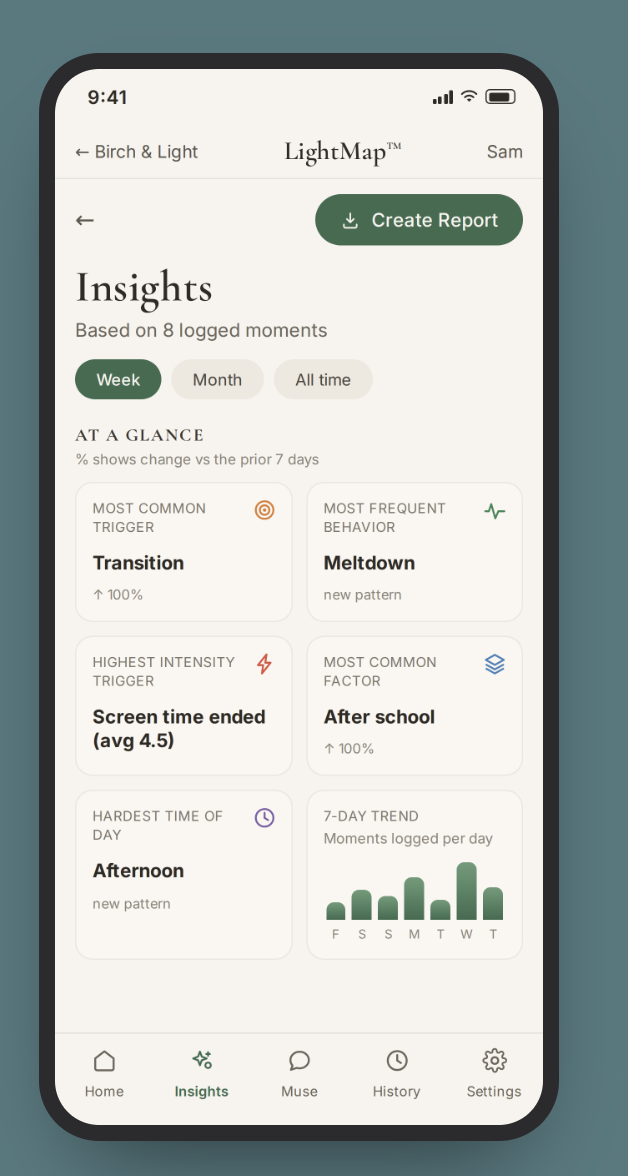

Part of the award-winning Birch & Light Method, honored with the Mom's Choice Gold Award for excellence in family resources.
A story to read together
Sometimes the easiest way in is a story you read side by side.
 Until I Don't
Rosie shines at dance, at school, with neighbors. At home, the smallest thing can tip her over. One quiet hallway moment helps her family finally find language for the part of her nobody else sees.
Read the story The Tower That Looked Fine
A tower in a quiet clearing tries to stay steady through every small thing nobody else seems to notice — until one tiny breath of wind causes her to fall, and a gentle hand begins to gather the blocks back.
Read the story
If today was one of those days
A few more from the library, free to read.
Researched and drafted with AI assistance, reviewed before publication. Editorial standards